Artwork
Icoa Zug
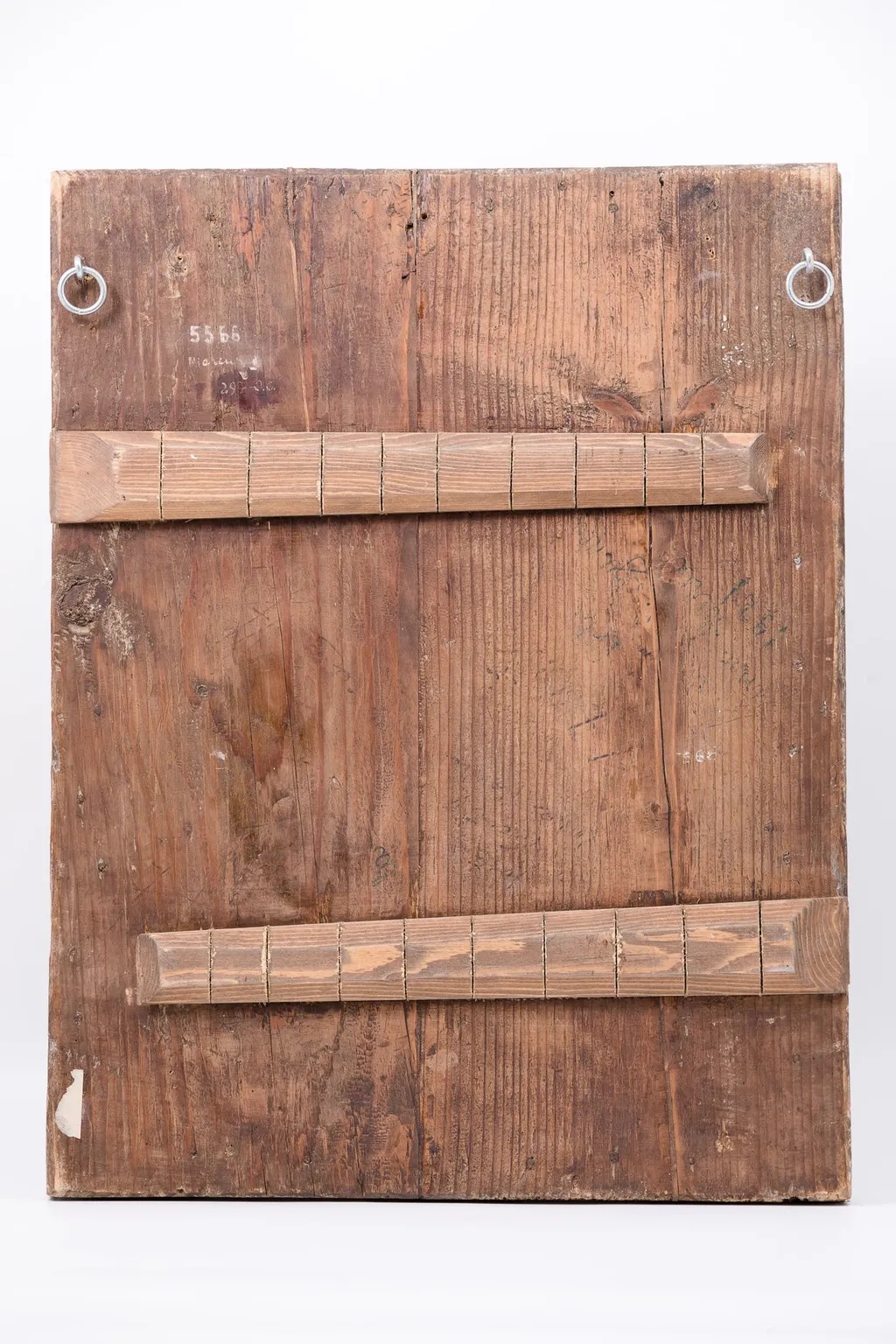
Icoa Zug is a drawing by the Romanticist artist Petru Zugravu din Topârcea. It dates from 1799 and is held in the collection of the ASTRA National Museum Complex.
About this work
Overview
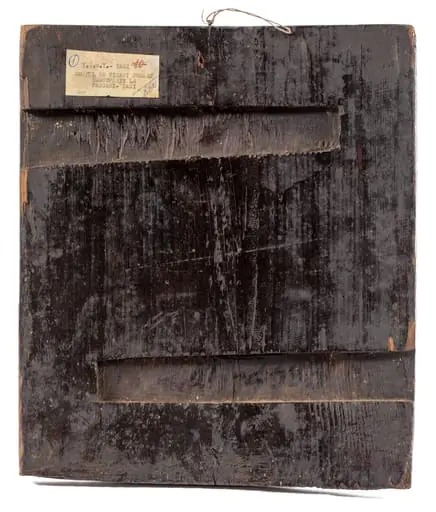
Metal rings at the top corners suggest it was designed for wall suspension, indicating a functional role in its original context.
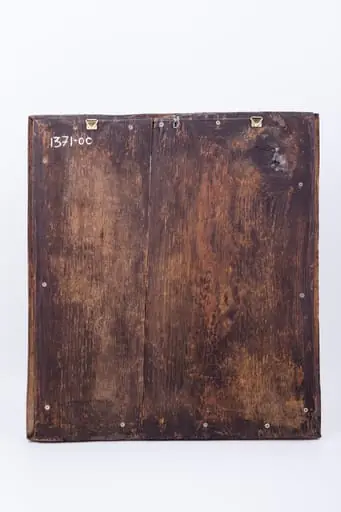
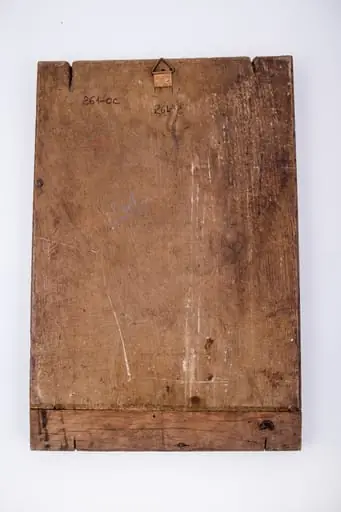
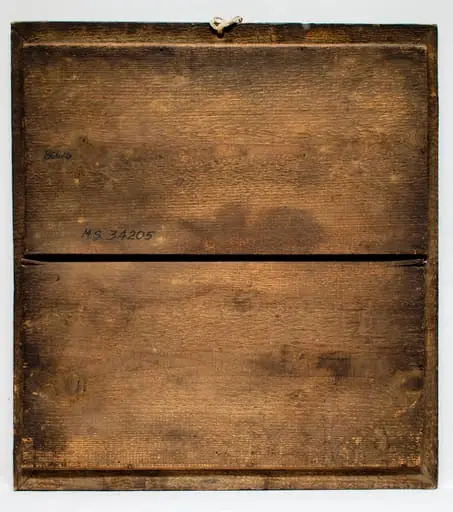
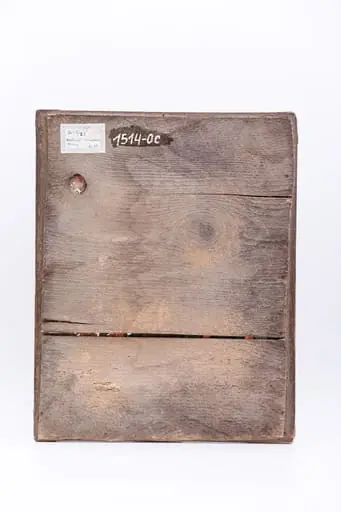
Icoa Zug is a drawing on wood, dated 1799, attributed to Petru Zugravu din Topârcea. The visible surface is the reverse of the support panel, not the artwork itself. The wooden board, lightly colored and reinforced with two horizontal slats, was likely used to mount and stabilize the drawing. Metal rings at the top corners suggest it was designed for wall suspension, indicating a functional role in its original context.
Subject & Meaning
The drawing’s subject is not visible in the provided image, as only the reverse of the panel is shown. The title 'Icoa Zug' may refer to a person, place, or religious figure, common in regional devotional traditions. Without the front surface, the intended imagery and narrative remain unknown, though the object’s structure implies it was part of a devotional or domestic setting.
Technique & Style
The work is executed as a drawing on wood, a practice common in rural Eastern European religious art. The use of a wooden panel with reinforcing slats reflects practical craftsmanship rather than fine art conventions. The absence of visible drawing on the reverse suggests the artist focused on the front surface, while the board’s construction prioritized durability and display over aesthetic finish.
History & Provenance
The board shows signs of age: scratches, wear marks, and a small paper label in the bottom left corner, possibly an inventory or ownership tag. The metal hanging rings and structural reinforcements indicate prior display or transport. Its survival in this condition suggests it was preserved as an object of local significance, though its full history before modern documentation remains undocumented.
Context
Created in 1799, the piece originates from a period when religious imagery in rural Moldavia was often produced by local artisans rather than trained painters. Such works were typically used in homes or small chapels. The panel’s construction aligns with vernacular traditions, where functionality and spiritual utility outweighed formal artistic training or stylistic innovation.
Legacy
Icoa Zug survives as a fragment of a broader tradition of folk religious art in Eastern Europe. Its preservation as a reverse panel highlights how such objects were valued for their material presence rather than their visual content alone. It contributes to understanding the material culture of 18th-century rural communities, where art served daily spiritual needs through humble, utilitarian forms.
Artist & collection
Artist
A Transylvanian church artist active in the late 1700s, Petru Zugravu din Topârcea drew delicate religious images on paper and wood.

 Icoana este de iconostas, pictată într- manieră barocă. Maica Domnului este ridicată în timpul de rugăciune și ascultare, smerenie și primire de bunăvoie. Dumnezeu-Fiul și Maica Domnului sunt înveșmântați în roșu vermillon și brun-negru, Dumnezeu-Tatăl este înveșmântat în crem-bej. În registrul îndepărtat superior este cerul luminos deschis, Dumnezeu-Fiul ține pe brațul stâng Crucea, iar Maica Domnului are mâinile împreunate în cruce pe piept. Dumnezeu-Tatăl și Dumnezeu-Fiul așează împreună coroana de împărăteasă a Cerurilor pe capul Fecioarei Maria. În registrul superior, printr-o mandorlă de nouri și un semicerc de raze solare, deschizându-se cerurile, se coboară Sfântul Duh, sub forma unui porumbel, pe un mănunchi de raze de lumină. Maica Domnului este încoronată ca Împărăteasa Cerurilor de către Dumnezeu-Tatăl și Dumnezeu-Fiul. Inscripția în româno-chirilică se traduce Sfânta Treime Sfântul Duh. Cromatica este armonioasă: roșu stacojiu, negru, brun, bej, gri, alb, auriu. Trăsăturile chipurilor sunt expresive. Icoana este pictată în manieră barocă. Intreaga compoziție iconografică este armonios echilibrată structural, pe o multitudine de nouri și mandorle de nouri rotunzi, reprezentând spațiul de interferență a pământului cu Împărăția Cerurilor, uimitoare fiind prezența chipurilor de îngeri care locuiesc nourii. Icoana este de la începutul secolului al XIX-lea, din Rășinari, Mărginimea Sibiului.
 Icoasemn
 Icoaerel
 Scena Cinei celei de Taină se desfășoară într-un interior sugerat de elemente arhitectonice, coloane, candelabru, candele. În centrul icoanei este Mântuitorul Iisus Hristos binecuvântând mâncarea, la masă, alături de ucenici și apostoli. Cu brațul stâng îl ține lipit de piept pe Ioan cel iubit. Pe masă sunt așezate un potir pentru vin și tacâmuri și farfurioare mici.Personajele au chipurile expresive, veșmintele personajelor și faldurile feței de masă, cât și draperiile sunt pictate cu măiestrie de pictor. Veșmintele sunt predominant roșii. Cromatica este armonioasă și echilibrată, pornindu-se gradual dinspre exterior înspre interior, de la albastru spre alb, ajungându-se la albul luminos al mesei celor dăruite. Compoziția este încadrată de elemente de arhitectură, coloane, arcade, creându-se, astfel, intimitatea Cinei celei de Taină. Totul este concentric, strângându-se în jurul Potirului. Elemente de arhitectură se întrezăresc printre cele 5 coloane. Se întrezărește o cruce formată din axa verticală Potirul și candela și cea orizontală - brațele Îmbrățișării Mântuitorului - Dragostea jertfelnică atotcuprinzătoare. Icoana este a lui Savu Moga, din Arpașu de Sus, Țara Făgărașului. Icoana este datată 1877. Inscripția din româno-chirilică se traduce Cina cea de Taină.
 Icoaitud
 Sfântul Serghie
 Icoaceil
 Prăz6.
 Icoambla
 Icoana îi redă 1/1 pe sfinții Nicolae și pe arhidiaconul Ștefan, în picioare, ușor semiprofil. Asocierea celor doi sfinți nu are o motivație iconografică, probabil a fost dorința comanditarului. Sfântul Nicoale este reprezentat în veșminte arhierești, fără mitră pe cap(ipostaza de vară), binecuvântând cu mâna dreaptă, în stânga ținând Evanghelia închisă. Are părul și barba cărunte, ondulate, fruntea înaltă, trăsăturile fine. Înveșmântat cu sacos auriu tivit cu galon cu șir de perle și pietre scumpe, mânecuțe și galon la gât . Epitrahil alb, cu cruci drepte și motiv scalariform în partea de jos.Omoforul mare, de culoare roșie și bedernița romboidală atârnată de mâna stângă. Aureole trasate cu o linie albă îngustă. În pandant, arhidiaconul Ștefan, primul dintre martiri, ușor întors către sfântul Nicoale, cădelnițând cu o mână, cu cealaltă ținând la piept o biserică având trei turle înalte. Redat tânăr, fără barbă, în veșminte diaconești:stihar lung, bogat ornamentat cu motive florale mari, pe fond alb-albăstrui. Fondul icoanei auriu pal, cu irizări. Median, pe latura de sus, soarele?(sau mandorla de raze a Duhului Sfânt) Paleta cromatică dominată de nuanțele de auriu, restul culorilor(verde, cafeniu, negru, alb, fiind în armonie cu acest fond. Desenul este fin, proporțiile bizantine respectate, compoziția echilibrată, armonioasă. Inscripția în partea de sus, cu chirilice cu caractere specifice Munteniei.
 Icoait,
 Împlinindu-se trei ani de la Nașterea PreaCuratei Fecioare Maria, drepții ei părinți Ioachim și Ana, păstrându-și făgăduința, o aduc în dar Lui Dumnezeu pe cea născută. Împreună cu rudeniile din Nazaret și cu cetele de fecioare tinere, cu făclii aprinse, părinții au dat-o în Biserică în Ierusalim, pe Prunca Maria arhiereului Zaharia, care a dus-o în Sfânta Sfintelor. PreaCurata Fecioara Maria Prunca este înveșmântată în roșu și este micuță de trei anișori, cu trăsături mature de înțelepciune duhovnicească. Veșmintele Sfinților Părinți sunt albastre și roșii, ocru și stacojii. Maica Domnului Prunca Maria este ținută de mânuță de Sfinții Părinți Ioachim și Ana. Fondul este albastru regal în interior, galben-luminos pe margini și alb, exterior, cele trei straturi fiind dispuse concentric. Inscripția din româno-chirilică se traduce Sf Maria. Întreaga compoziție este armonizată și prin încadrarea în chenarul decorativ fitomorf, format din ghirlanda de 7 ruje - trandafiri roșii. În spatele Mariei este o floare, care amintește de Sfântul Arhanghel Gavriil, aducător de BuneleVestiri. Cromatica este armonioasă: roșu vermillon, albastru regal și bleu-ciel, cobalt, galben-chihlimbar, ocru, alb, negru.