Artwork
Icoana este pictată pe sticlă, reprezentând Botezului Domnului. Iisus Hristos în apa Iordanului este reprezentat central, încadrat de o parte și de cealaltă de Sf. Ioan Botezătorul și de un înger cu năframă în mâini. Deasupra lor Sfântul Duh reprezentat în chip de porumbel revarsă raze asupra personajelor. Într-un nor pictat la partea superioară a imaginii este înscris în grafie chirilică textul: „Botezul lui HS”. Fundalul pe care sunt redate personajele este de culoare albastră pe acesta fiind ilustrate flori în culorile alb și maro. Cromatică: auriu; roșu; maro; galben; negru; albastru.
Icoana este pictată pe sticlă, reprezentând Botezului Domnului. Iisus Hristos în apa Iordanului este reprezentat central, încadrat de o parte și de cealaltă de Sf. Ioan Botezătorul și de un înger cu năframă în mâini. Deasupra lor Sfântul Duh reprezentat în chip de porumbel revarsă raze asupra personajelor. Într-un nor pictat la partea superioară a imaginii este înscris în grafie chirilică textul: „Botezul lui HS”. Fundalul pe care sunt redate personajele este de culoare albastră pe acesta fiind ilustrate flori în culorile alb și maro. Cromatică: auriu; roșu; maro; galben; negru; albastru. is a drawing by Unknown. It dates from 1850 and is held in the collection of the ASTRA National Museum Complex. This work is a painted image on glass, mounted on a light wooden panel with visible grain and knots.
About this work
Overview
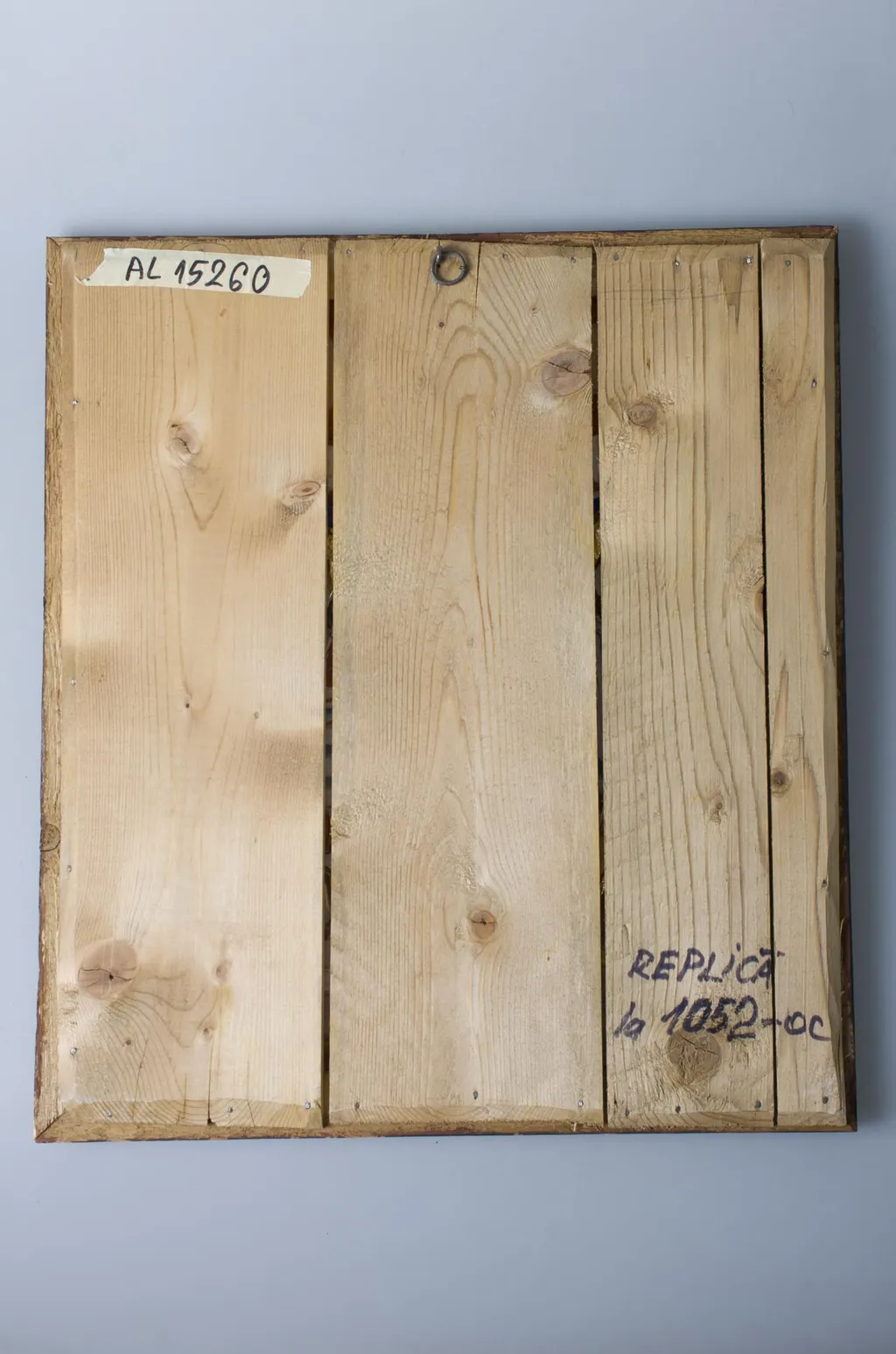
The original likely served liturgical purposes, while this version appears to be a later reproduction, possibly for educational or devotional use.
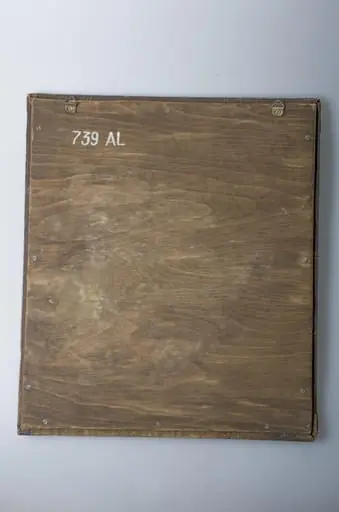
This work is a painted image on glass, mounted on a light wooden panel with visible grain and knots. A handwritten note on the right identifies it as a replica, suggesting it is a copy of an earlier devotional icon. The panel is divided into three vertical sections, designed to support the glass substrate. The original likely served liturgical purposes, while this version appears to be a later reproduction, possibly for educational or devotional use.
Subject & Meaning
The scene depicts the Baptism of Christ, with Jesus standing in the Jordan River, flanked by John the Baptist and an angel holding a garment. Above, the Holy Spirit is shown as a dove radiating light upon the figures. Above the scene, Cyrillic script reads, "Botezul lui HS"—"The Baptism of the Lord." The composition follows traditional Eastern Orthodox iconography, emphasizing divine revelation and the Trinity manifest in the moment of baptism.
Technique & Style
Painted on glass, the image employs a palette of gold, red, brown, yellow, black, and blue, typical of Byzantine-influenced icons. Figures are rendered with stylized forms and flat perspective, prioritizing spiritual symbolism over naturalism. Delicate floral motifs in white and brown adorn the blue background, adding ornamental depth without disrupting the sacred hierarchy. The glass medium allows for luminous color effects, enhancing the celestial atmosphere of the scene.
History & Provenance
The wooden panel bears no date or maker’s mark, but the presence of a "REPLICA" inscription indicates it was produced after the original icon, likely in the 19th or early 20th century. Glass painting was a common technique in Eastern European iconography, particularly in regions under Ottoman or Russian influence. This version may have been made to replace a damaged original or to serve as a teaching aid in a monastery or parish.
Context
Icons on glass were widely used in Orthodox Christian communities, especially where wood was scarce or where durability was needed. The Baptism of Christ was a frequent subject, symbolizing purification and divine endorsement. The inclusion of Cyrillic script confirms its origin within a Slavic liturgical tradition. Such images were not merely decorative but functioned as focal points for prayer and theological instruction in domestic and ecclesiastical settings.
Legacy
This replica preserves the visual language of a centuries-old tradition, even as its material form signals a shift from sacred object to reproduced artifact. While the original glass icon may have been venerated in a church, this version reflects the broader dissemination of religious imagery in modern times. Its existence underscores how devotional art was reproduced and adapted across generations, maintaining continuity while acknowledging its status as a copy.
Artist & collection

 Domestic Scene
 Giacomo and Cardinal Marco, investing Andrea, Abbot of San Zeno, with his Benefice
 The Nymph of Fontainebleau
 Portrait of a Woman
 Madonna and Child with Saints in the Enclosed Garden
 Venus and Minerva
 Family Group of Four on Sofa
 Wall painting from Room H of the Villa of P. Fannius Synistor at Boscoreale
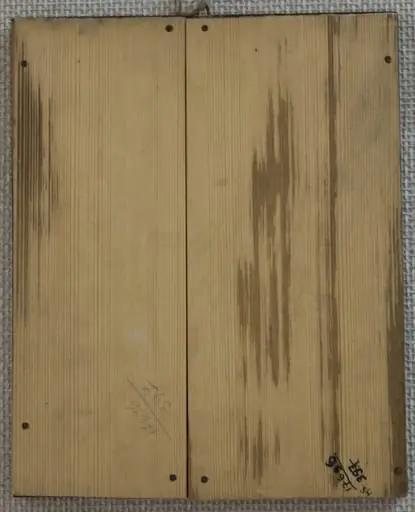 Icoana reprezintă Botezul lui Isus Hristos, care se prăznuiește pe 6 ianuarie("Boboteaza") Iisus Hristos, în picioarele goale, cu un ștergar verde în jurul mijlocului, brațele încrucișate pe piept, primește botezul cu apă de la Sfântul Ioan Botezătorul. care ține în mână o cruce mică. Acesta este înveșmântat cu o mantie roșie și tunică verde. De partea cealaltă a lui Isus,Arhanghelul Gavriil cu un ștergar pe brațe. Veșminte în culori colmplementare, roșu - orange cu verde. Aureolele sunt realizate cu foiță de aur. Deasupra lor, într-un semicerc de nori, Sf Duh. Din rațiuni de cromatică, zugravul i-a pictat aripile porumbelului alb cu verde și cafeniu.În colțurile superioare sunt nori umbriți, cromatica sugerând corespondența planului terestru(apa) cu cel celest. Scena se petrece pe malul Iordanului. Icoana are caracteristicile specifice picturii niculene: stângăcia, simplitatea și primitivismul desenului; compoziția sumară, redusă la extrem, intensitatea culorilor. Rama profilată, culoarea lemnului natur, "dosar"(capac) din lemn.
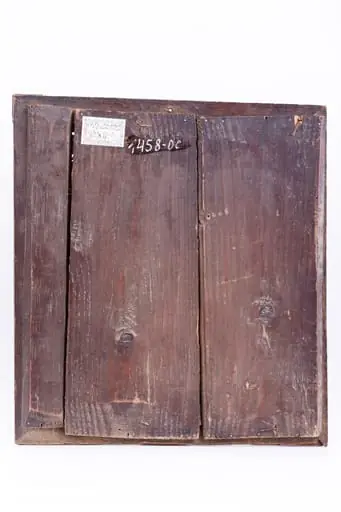 Icoana îi reprezintă împreună pe Sfântul Mare Ierarh Nicolae, Sfântul Ioan Botezătorul și Sfântul Mare Mucenic Teodor Tiron. Veșmintele Sfântului Nicolae sunt sacos gri și roșu vermillon, cu patrafir-epitrahil auriu cu verde, două bedernițe verzi, de o parte și de alta a veșmântului. În mijloc, este Sfântul Ioan Botezătorul și Înaintemergătorul Domnului Iisus Hristos îmbrăcat cu un himation alb-gri-negru, din păr de cămilă, și o mantie roșie, purtând crucea biruinței. Alături este Sfântul Mare Mucenic Teodor Tiron, îmbrăcat cu haine de oștean-militar, tunică și vestă de zale aurie, cu mantie roșie cu interiorul galben, de lumină. În mâna dreaptă are spada credinței. Fondul icoanei este albastru cobalt, în registrul superior și roz, în registrul inferior. Pe latura inferioară, icoana este încadrată de elemente florale - trei ruje mari, trandafiri roșii, cu frunze verzi. Inscripția din româno-chirilică se traduce Sf Nicolae Sf Ioan Botezătorul Sf Teodor Tiron. Icoana este de Țara Oltului.
 Temadin
 Mântuitorul Iisus Hristos, fiind răstignit pe Cruce, având în dreapta pe Maica Domnului Îndurerată și în stânga pe ucenicul cel iubit Sfântul Apostol și Evanghelist Ioan. Mântuitorul Iisus Hristos Răstignit pe Cruce are o țesătură verde-forest în jurul mijlocului și a coapselor. Crucea este orange. În registrul superior sunt elementele astrale: Soarele și Luna. Fondul icoanei este cerul albastru ultramarin bleumarin întunecat de noapte și tristețe și galben-solar în spatele Crucii, prefigurând Lumina Învierii Domnului Iisus Hristos. Cerul este bogat ornamentat cu elemente astrale - soarele și luna, stilizate floral. În spațiul inferior, este un câmp galben solar de lumină. Cromatica este armonioasă: roșu vermillon, orange, albastru ultramarin bleumarin, gri antracit, galben solar, brun, crem, bej, bronziu, alb, negru. Icoana este din Nordul Transilvaniei, Nicula.
 Mântuitorul Iisus Hristos, fiind răstignit pe Cruce, are în dreapta Crucii o scară, aducându-ne aminte de Scara Raiului. Mântuitorul Iisus Hristos Răstignit pe Cruce are o țesătură roz putred în jurul mijlocului și a coapselor. Crucea este brună. În registrul inferior sunt sulița, buretele îmbibat în oțet, uneltele și instrumentele de tortură mucenicească. Icoana are și elemente antropomorfe - craniul lui Adam. Fondul icoanei este cerul albastru regal și bronziu în spatele Crucii, prefigurând Lumina Învierii Domnului Iisus Hristos. Cerul este bogat ornamentat cu elemente astrale - soarele și luna, stilizate floral. În spațiul inferior, este un câmp galben solar de lumină. Cromatica este armonioasă: roz putred, albastru ceruleum, regal, gri antracit, galben solar, brun, crem, bej, bronziu, alb, negru. Icoana este din Nordul Transilvaniei, Nicula.
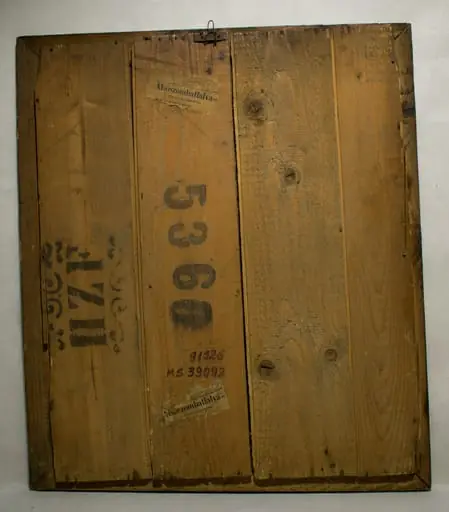 Icoana îi înfățișează pe Arhanghelii Mihail și Gavriil din ușor semiprofil, în picioare, ținând fiecare câte o sabie în mâna dinspre exterior. Mihail ține în mâna stângă un potir ridicat, iar Gavriil cumpăna(în iconografie și sabia și balanța fac parte dintre atributele arhanghelului Mihail). Amândoi sunt redați tineri, cu plete lungi, negre, fără barbă. Arhanghelul Mihail este înveșmântat militar, Arhanghelul Gavriil poartă veșminte lungi, în aceleași culori, decorate pe poale cu motiv fitomorf. Redați înaripați, în jurul capului au nimburi aurite, cu o porțiune incandescentă în jur.Plasați deasupra unor nori albi. Câmp albastru ultramarin, înstelat și decorat cu flori albe punctiforme. În planul doi o construcție cu elemente din arhitectura locală redate în stilul specific.Lateral și superior compoziția este încadrată de câte o ghirlandă din semicercuri duble hașurate. Paleta cromatică este armonioasă, dominată de roșu și bleumarin. Rama alcătuită din patru stinghii drepte, îmbinate oblic la colțuri, decorate vag cu un motiv vălurit dispus longitudinal. Dosul este relizat din scândură subțire de brad, dispusă orizontal.
 Icoațiun
 Icoana Îl reprezintă pe Iisus Hristos pe tron arhieresc, Învățător și Împărat, Binecuvântând, având alături pe Maica Domnului și pe Sfântul Mare Mucenic Gheorghe. Reprezentarea aceasta este asemănătoare cu tematica iconografică numită Deisis. Deisis este o tematică fundamentală din iconografia bizantină, reprezentându-L pe Domnul Iisus Hristos în ipostasul de Mare Judecător, fiind Împărat pe Tron, având în dreapta pe Maica Domnului și în stânga pe Sfântul Ioan Botezătorul și Înaintemergătorul Domnului. Această tematică este nucleul Judecății De Apoi. Mântuitorul Iisus Hristos Mare Judecător are în mâna stângă Sfânta Evanghelie deschisă și cu mâna dreaptă binecuvântează. De data aceasta, în locul Sfântului Ioan Botezătorul este Sfântul Gheorghe. Mântuitorul Iisus Hristos are veșminte roșii, cu interiorul galben-verde, cu epitrahil albastru, cu două cruci negre brodate. Tronul arhieresc este bogat ornamentat cu elemente decorative geometrizante aurii, sugerând arhitectura unui palat, Împărăția Cerurilor într-o metaforă picturală. În registrul superior, înspre interiorul icoanei, pe fondul de verde-văratic al văzduhului plin de Sfântul Duh sunt prezente elementele astrale: stele albe și roșii. Alături sunt Maica Domnului, în partea dreaptă a Mântuitorului și Sfântul Mare Mucenic Gheorghe Purtător de Biruință, în partea stângă. Cromatica este armonioasă: roșu vermillon, albastru regal, galben-chihlimbar, verde-văratic spanac-vocado, brun, acajou, crem, alb, negru. Icoana este de o frumusețe deosebită. După stilul picturii, desen și cromatică, compoziție și minuțiozitatea detaliului este o icoană din Țara Oltului. Inscripția din româno-chirilică se traduce IC XC Iisus Hristos.
 Icoana este pictată pe dosul unei bucăți de sticlă de formă dreptunghiulară în ax vertical. Sfântul mare Ierarh Nicoale, 3/4, în veșminte de arhierești, redat frontal, cu mitră înaltă, bipartită pe cap, ține Evanghelia în stângă iar cu mâna dreaptă binecuvintează.Barba căruntă, ondulată, scurtă, părul lung, negru, lăsat pe umeri. Ochii, negri, înguști, asimetrici, gura roșie.În jurul capului aureolă galbenă cu motiv fitomorf. Înveșmântat cu un sacos roșu cu linii de fald albe, galon aurit decorat cu motiv fitomorf, stihar alb cu albastru și linii de fald albe, roșii, bleu. Epitrahilul, veșmântul liturgic cel mai important este verde, lung, chenar auriu punctat pe margini, steluțe negre. Relieful - succesiune de benzi late de culoare roșie, bleumarin și verde, brăzdate de linii subțiri, roșii și albe. Sfântul este încadrat de un portal semicircular, cu marginea ondulată, fond bleumarin, jos elemente arhitecturale schematizate. Lateral și superior un chenar dublu din semicercuri în culori alternante roșu, ocru, verde, bleumarin. Restul câmpului este de culoare verde deschis cu elemente fitomorfe. Desenul este îngrijit, dar prezintă asimetrii, stângăcii, disproporții. Paleta cromatică bogată, culorile intense. Țăranii îl țineau pe sfântul Nicolae "aducător de noroc, apărător de boli, apărător de vărsat și de lovituri" Rama îngustă, realizată din patru șipci îmbinate oblic, decorată cu un motiv vălurit, dispus longitudinal. Dos-scânduri de brad, dispuse vertical și fixate în cuie metalice.
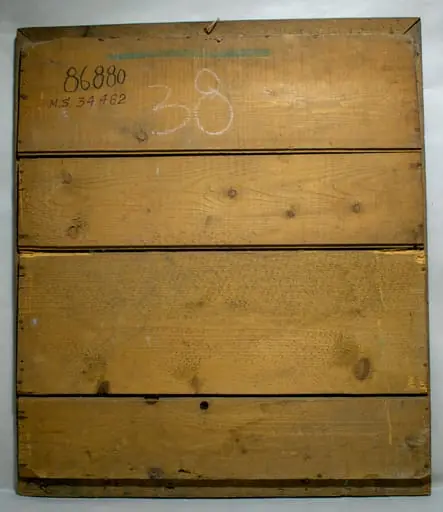
 Icoana este pictată pe dosul unei bucăți de sticlă de formă dreptunghiulară în ax orizontal. Stilul specific Țării Oltului. Sfântul Ilie, ca stăpân al tunetelor și fulgerelor și al ploii, purtat de un car de foc pe cer. În registrul inferior proorocul Elisei în două ipostaze. Sfântul Ilie, cărunt, înveșmântat cu o tunică verde cu poale roșii și faldurile marcate cu alb așezat într-o trăsură de inspirație locală , trasă de patru cai roșii înaripați , pe un registru în lanț de nouri pastelați cu marginile alb gri.Sfântul ține în mâna stângă un bici și hațurile cailor. În registrul inferior, colțul drept, proorocul Elisei cu mâinile ridicate primește haina sf. Ilie, ca semn al investiturii cu puterile acestuia. Elisei poartă o tunică verde, cu brâul galben și mantie roșie. În colțul drept este redat arînd pământul cu un plug poleit tras de doi boi albi, cu coarne exagerat de mari și cozi de cai, în fața cărora este înhămat un cal alb gri.Aici este redat cărunt cărunt, înveșmântat cu o haină scurtă de culoare grena. După unele interpretări ar fi vorba de strămoșul Adam. Chipurile sunt expresive, ochii negri, proporțiile corpului sunt reduse, pentru a putea sugera scenariul epic. Relieful este sugerat de coline verzi, galbene și grena. Sunt introduse elemente de decor specifice picturii pe sticlă din Țara Oltului: flori de diferite forme, frunze steluțele liniare roșii în partea de jos(pe fond alb) roșii și albe pe cerul din registrul superior. Pe latura superioară sunt pictate draperii roșii, comprimate în colțuri. Compoziția este echilibrată, desenul fin, cu stângăcii specifice picturii tradiționale, dar se observă maniera studiată și virtuozitatea autorului. Paleta cromatică este variată(alb, roșu, verde, albastru, galben, negru, grena), culorile intense, clare. Rama este alcătuită din patru șipci simple din lemn de brad, băițuite, îmbinate oblic la colțuri
 Sfântul Mare Mucenic Gheorghe este așezat călare pe un cal alb, cu pete gri, omorând balaurul verde cu lancea, pe care o ține cu amândouă mâinile. Balaurul este pictat cu verde-brad, având corpul de reptilă. Fondul este albastru bleu-ciel, în registrul superior și roșu-galben-verde, în cel inferior, în centrul icoanei ușor întrepătrundu-se toate culorile. Tunica Sfântului Mucenic Purtător de Biruință este roșie cu verde, având pantalonii albaștri și cămașa de cavaler roșie. Mantia fluturândă a Sfântului Mucenic este albastră. În registrul superior, pe cer, sunt 6 elemente florale roșii cu frunze lungi verzi, echilibrând întreaga compoziție. Rujele din ghirlanda decorativ-ancadratoare au motivul zăluței albe în interior. Fiind o icoană de Nicula, imaginea picturală este armonioasă, cu un desen simplu, curat. Cromatica este armonioasă; roșu vermillon, albastru bleu-ciel și cobalt, verde brad, ocru, brun, gri, alb și negru. Inscripția din româno-chirilică se traduce Gheorghe. Icoana este rafinată prin acuratețea desenului, compoziția echilibrată și armonia cromatică. Icoana este de Nicula-Gherla.
 Icoana este pictată pe sticlă, reprezentând încoronarea Maicii Domnului de către Sfânta Treime. Iisus este reprezentat purtând crucea pe umărul stâng, iar cu dreapta ținând mitra. Dumnezeu Tatăl este ilustrat cu barbă, ținând mitra cu o mână deasupra capului Maicii Domnului, iar cu mâna stângă protejând globul pământesc. În partea centrală sunt scrise cu caractere chirilice cuvintele „Sf Treime”. În registrul superior se află un porumbel reprezentând Sfântul Duh, care împrăștie raze pe pământ. De asemenea întâlnim reprezentări de nori și stele, sugerând că acest eveniment are loc în ceruri. Cromatica: roșu, verde, albastru, alb, negru, gri, ocru.