Artwork
Iisus Pantocrator
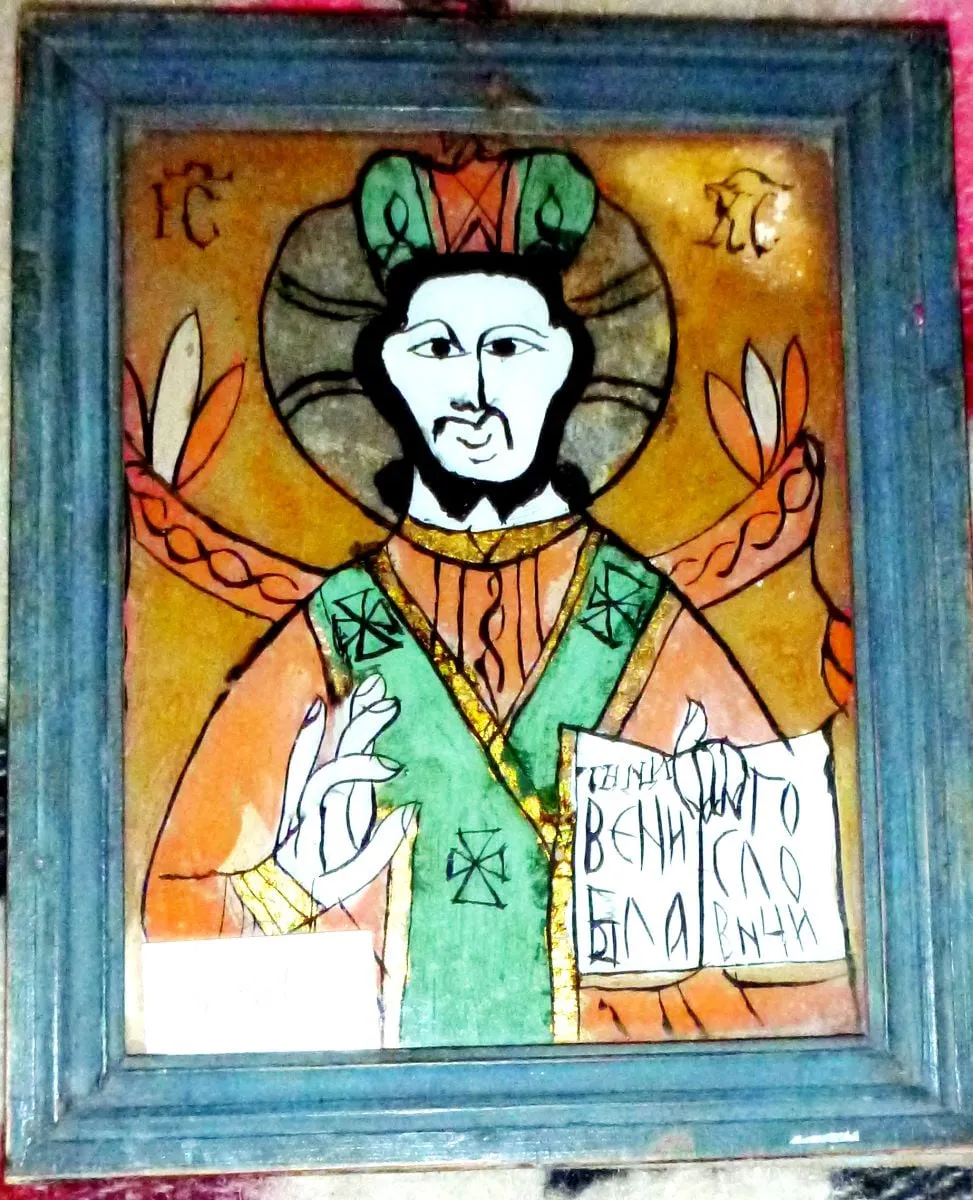
Iisus Pantocrator is a drawing by Unknown. It dates from 1850 and is held in the collection of the Bistrita-Năsăud Museum Complex. This image depicts Christ Pantocrator, a traditional Byzantine representation of Christ as ruler of all.
About this work
Overview
The background is a muted gold field adorned with stylized leaf motifs, common in religious icons of the medieval period.
This image depicts Christ Pantocrator, a traditional Byzantine representation of Christ as ruler of all. Rendered in a flat, two-dimensional style, the figure faces forward with a solemn expression. The background is a muted gold field adorned with stylized leaf motifs, common in religious icons of the medieval period. The work lacks perspective or modeling, emphasizing spiritual presence over naturalism.
Subject & Meaning
Christ is shown holding a closed scroll inscribed with sacred text, symbolizing divine wisdom and authority. His right hand is raised in a gesture of blessing, while his beard and halo affirm his divine identity. The green robe with gold trim signifies both royalty and eternal life. The composition follows established iconographic conventions meant to inspire reverence rather than depict a physical likeness.
Technique & Style
The image employs a rigid, frontal pose typical of Eastern Orthodox iconography. Facial features are simplified, with no attempt at shading or three-dimensionality. The scroll’s lettering mimics hand-copied script, reinforcing its sacred origin. Gold leaf and flat pigments were likely used, with minimal detail to focus attention on the figure’s spiritual essence rather than material realism.
History & Provenance
Though exact origins are unrecorded, the style and iconography suggest production within a Byzantine or post-Byzantine workshop, possibly between the 12th and 15th centuries. It entered the collection of the Museum of Ethnography as part of a broader assembly of religious artifacts, likely acquired through ecclesiastical or colonial channels during the 19th or early 20th century.
Context
This icon belongs to a widespread tradition in Eastern Christianity, where such images served as focal points for prayer and liturgical veneration. Created for use in homes or chapels, they were not decorative but functional, embodying theological beliefs through standardized visual language. Similar works appear across the Orthodox world, from Constantinople to the Balkans and Russia.
Legacy
The enduring presence of this icon in a museum setting reflects its role as a cultural artifact that bridges religious practice and historical study. While no longer used in worship, it continues to inform scholarly understanding of medieval visual theology and the transmission of sacred imagery across regions and centuries.
Artist & collection
 Domestic Scene
 Giacomo and Cardinal Marco, investing Andrea, Abbot of San Zeno, with his Benefice
 The Nymph of Fontainebleau
 Portrait of a Woman
 Madonna and Child with Saints in the Enclosed Garden
 Venus and Minerva
 Family Group of Four on Sofa
 Wall painting from Room H of the Villa of P. Fannius Synistor at Boscoreale
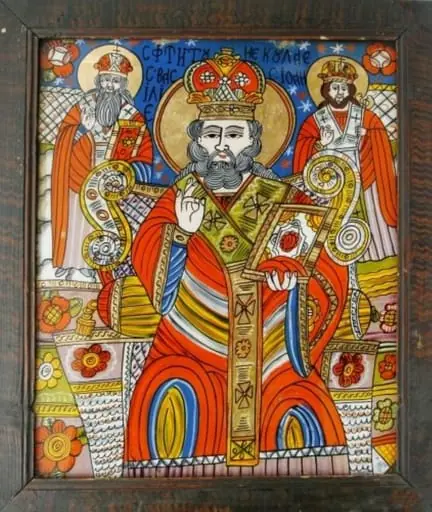 Sfântul Ierarh Nicolae (variantă a icoanei Sfânții Trei Ierarhi)
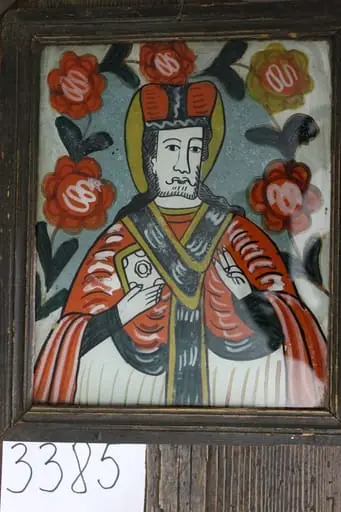 Sfantul Nicolae
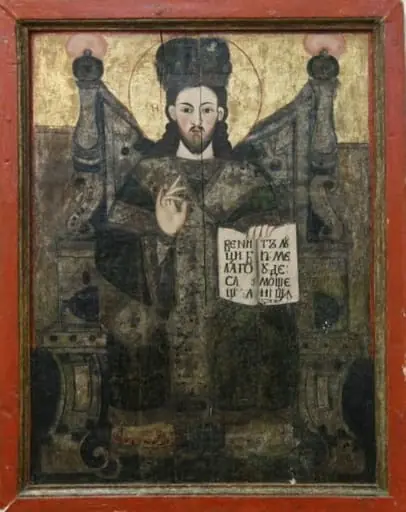 Iisus Hristos mare învățător
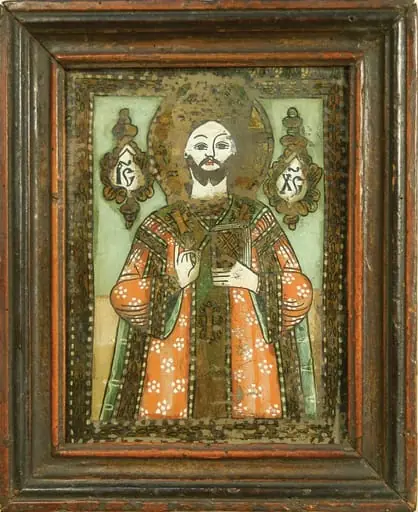 Iisus Hristos Mare Arhiereu și Învățător
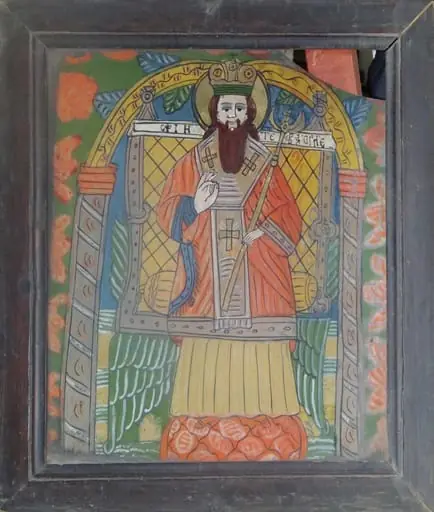 Sf. Vasile cel Mare
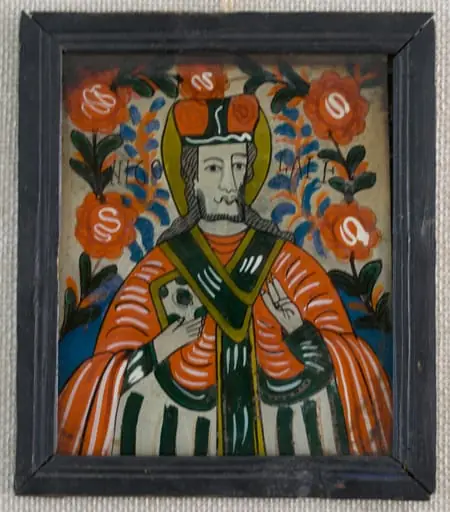 Icoana îl reprezintă pe Sf. Nicolae 3/4, în veșmânt de marea ierarh, cu mitră pe cap, sub o arcadă de flori. Desenul este naiv, stângaci, ușor încărcat cu detalii. Sfântul, cu mitră înaltă pe cap, bipartită, aureolă de culoare galbenă, binecuvintează cu stânga diformă, cu unghii ascuțite, zugravul a desenat tiparul fără să țină seama de faptul că urma să picteze "în oglindă".În dreapta ține Evanghelia. Părul și barba sunt cărunte, părul lung, privirea este îndreptată ușor lateral. Mustățile mici, husărești. Înveșmântat cu un sacos roșu cu falduri din linii albe, epitrahil alb cu cruci negre și blicuri albe, stihar alb cu vrâste verzi.Câmpul icoanei este alb, cu o ghirlandă de trandafiri care se unesc deasupra aureolei, dublate de doup ramuri cu frunze albastre pliate pe conturul umerilor și capului personajului. Treimea inferioară: fond albastru de Prusia Cromatica este dominată de roșu și alb, culorile intense. Rama de culoare neagră, alcătuită din patru stinghii îmbinate oblic la colțuri. Dosul este din lemn subțire de brad.
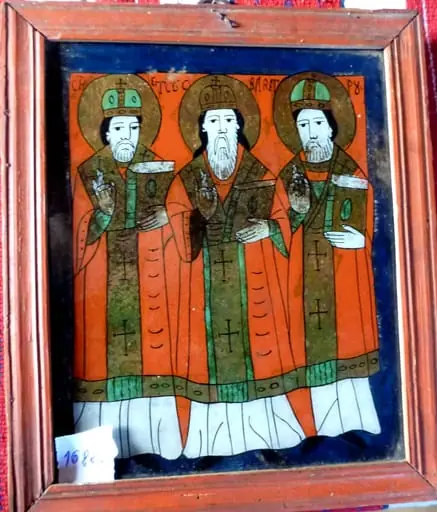 Sfinții Părinți
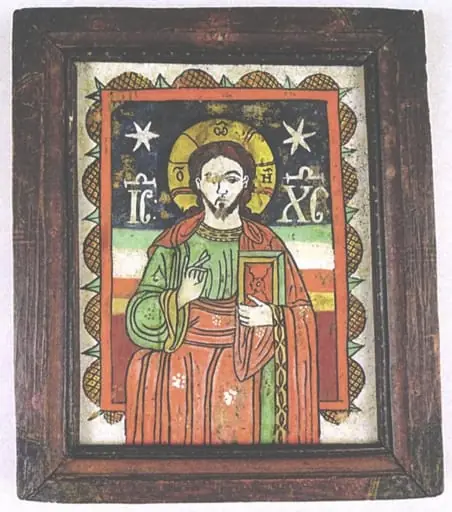 Iisus Hristos binecuvântând
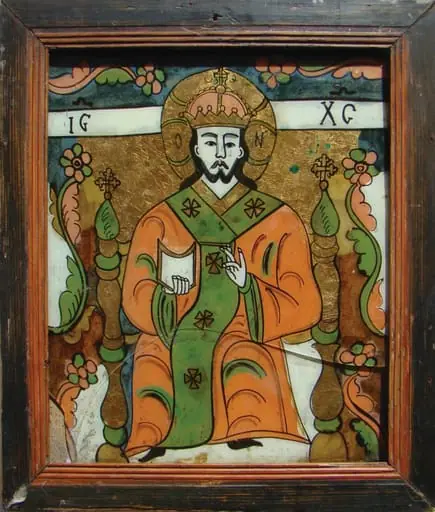 Iisus Hristos Mare Arhiereu și Învățător, tronând
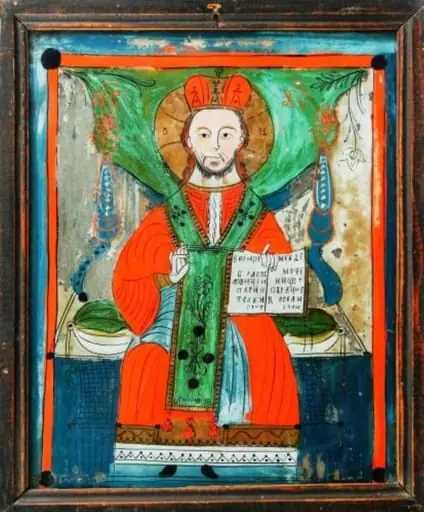 Iisus Hristos mare Învățător