Artwork
Kali
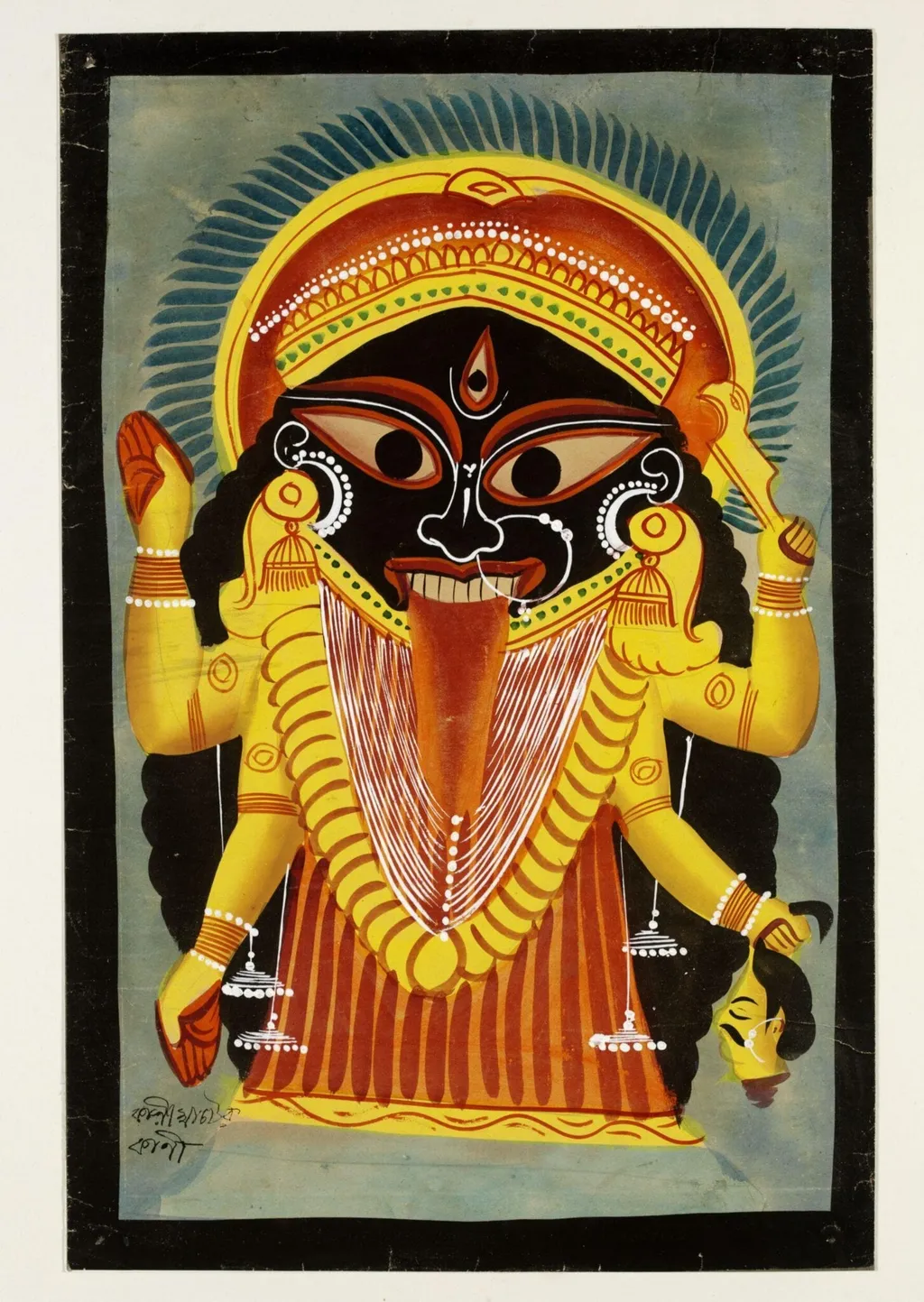
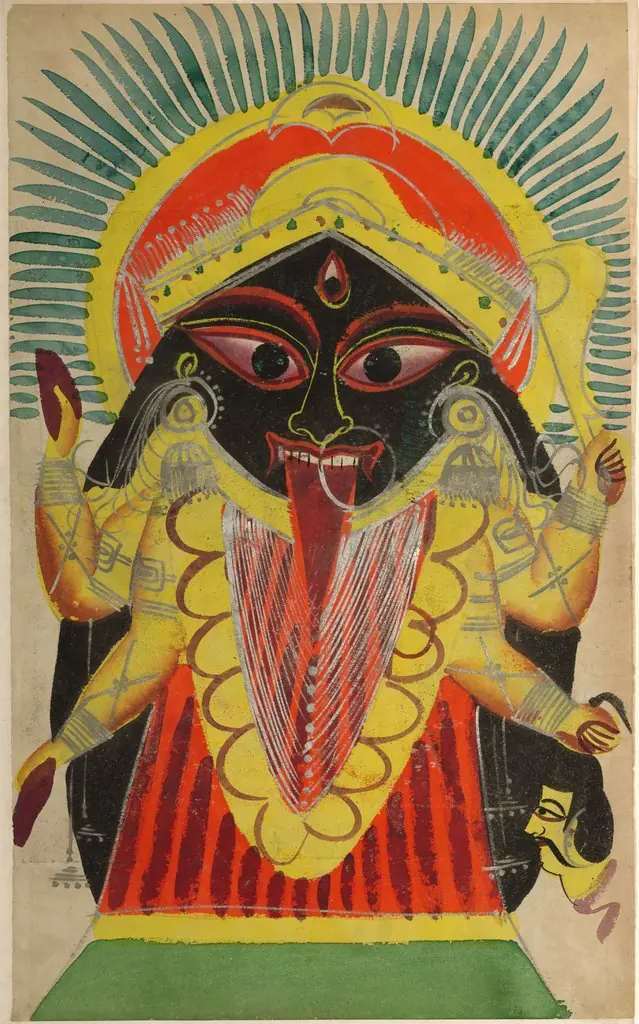
Kali is a paint painting by the Impressionist artist Unknown. It dates from 1885 and is held in the collection of the Victoria and Albert Museum.
About this work
Overview
The work is attributed to an anonymous artist and reflects the Kalighat painting tradition, which emerged in 19th-century Bengal.
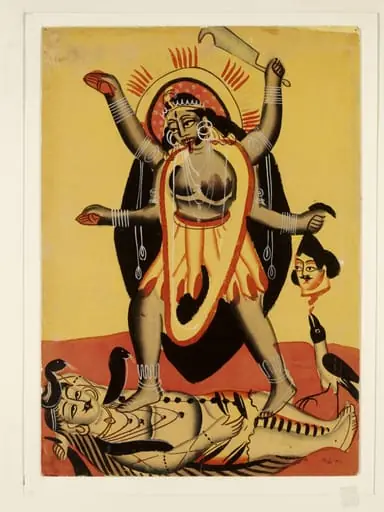
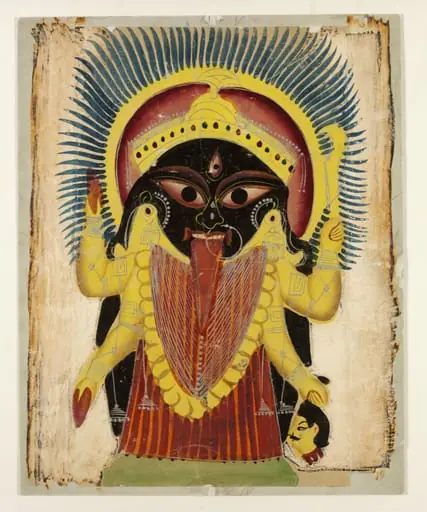
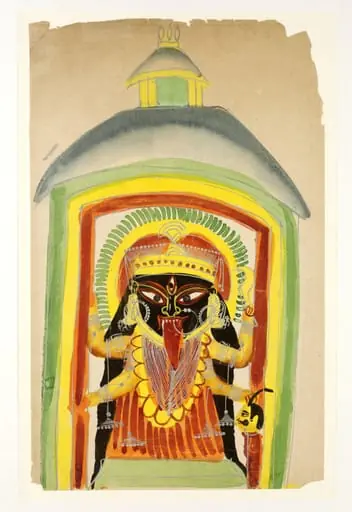
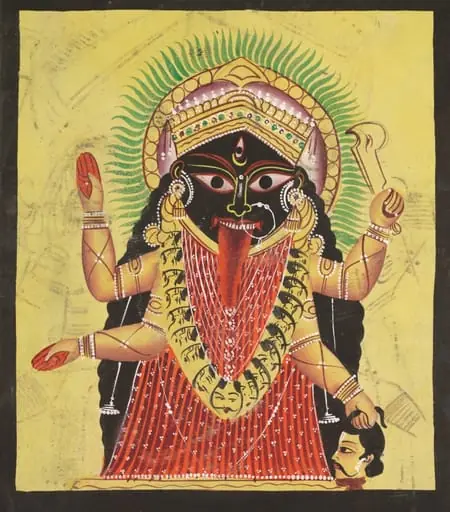
Painted in 1885, this opaque watercolour on paper depicts the Hindu goddess Kali. The work is attributed to an anonymous artist and reflects the Kalighat painting tradition, which emerged in 19th-century Bengal. Executed with bold outlines and flat areas of vivid pigment, it was acquired from Miss M. Steele, whose collection originated from her mother’s holdings, suggesting a private, possibly domestic, context of preservation.
Subject & Meaning
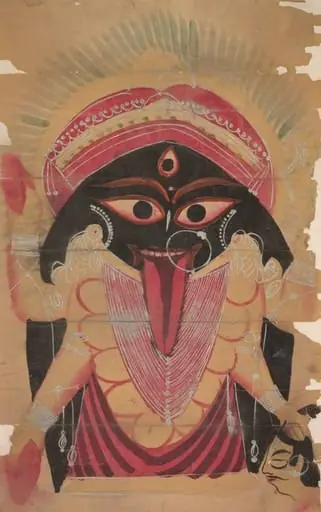
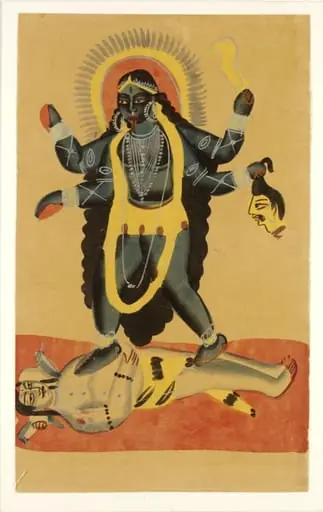
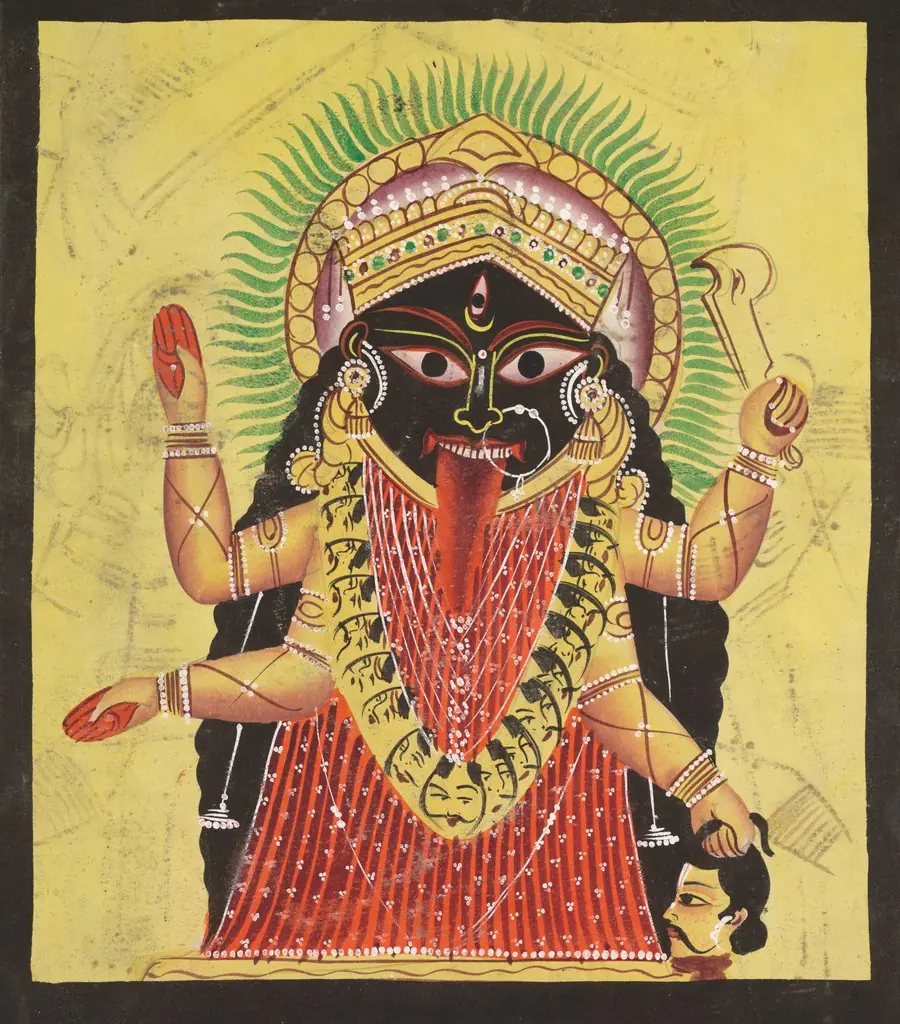
The figure represents Kali, a powerful goddess associated with time, destruction, and transformation. Her dark skin, wide eyes, and protruding tongue convey ferocity, while her four arms hold symbolic implements—often a sword, severed head, bowl, and gesture of protection. The red circle behind her head may signify divine energy or cosmic fire, reinforcing her role as both destroyer and liberator within Hindu cosmology.
Technique & Style
The painting employs opaque watercolour on paper, a hallmark of Kalighat art. Strong black outlines define the form, while saturated hues—red, yellow, and gold—are applied in flat, unmodulated planes. The lack of perspective and stylized anatomy reflect a folk aesthetic, prioritizing symbolic clarity over naturalism. This approach was suited for mass reproduction and devotional use in urban Calcutta.
History & Provenance
The painting entered the collection of Miss M. Steele, inherited from her mother, indicating a lineage of private ownership outside institutional frameworks. Its journey from a regional artistic practice to a private Western-held collection reflects broader patterns of 19th-century cultural exchange. No record of its original commission or sale survives, leaving its intended audience and purpose partially obscured.
Context
Kalighat paintings arose near the Kalighat temple in Calcutta, produced by itinerant artists for pilgrims and urban patrons. They blended religious iconography with contemporary social commentary, often rendered quickly and affordably. This work fits within that tradition, using simplified forms and vivid color to convey divine presence in a rapidly modernizing society.
Legacy
As a representative of Kalighat art, this painting contributes to the understanding of how Indian devotional imagery adapted to urban markets and colonial-era aesthetics. Though unsigned and unattributed, its stylistic consistency with known examples anchors it within a broader artistic movement that influenced later modern Indian painters and collectors.
Artist & collection

 Domestic Scene
 Giacomo and Cardinal Marco, investing Andrea, Abbot of San Zeno, with his Benefice
 The Nymph of Fontainebleau
 Portrait of a Woman
 Madonna and Child with Saints in the Enclosed Garden
 Venus and Minerva
 Family Group of Four on Sofa
 Wall painting from Room H of the Villa of P. Fannius Synistor at Boscoreale