Artwork
Kali
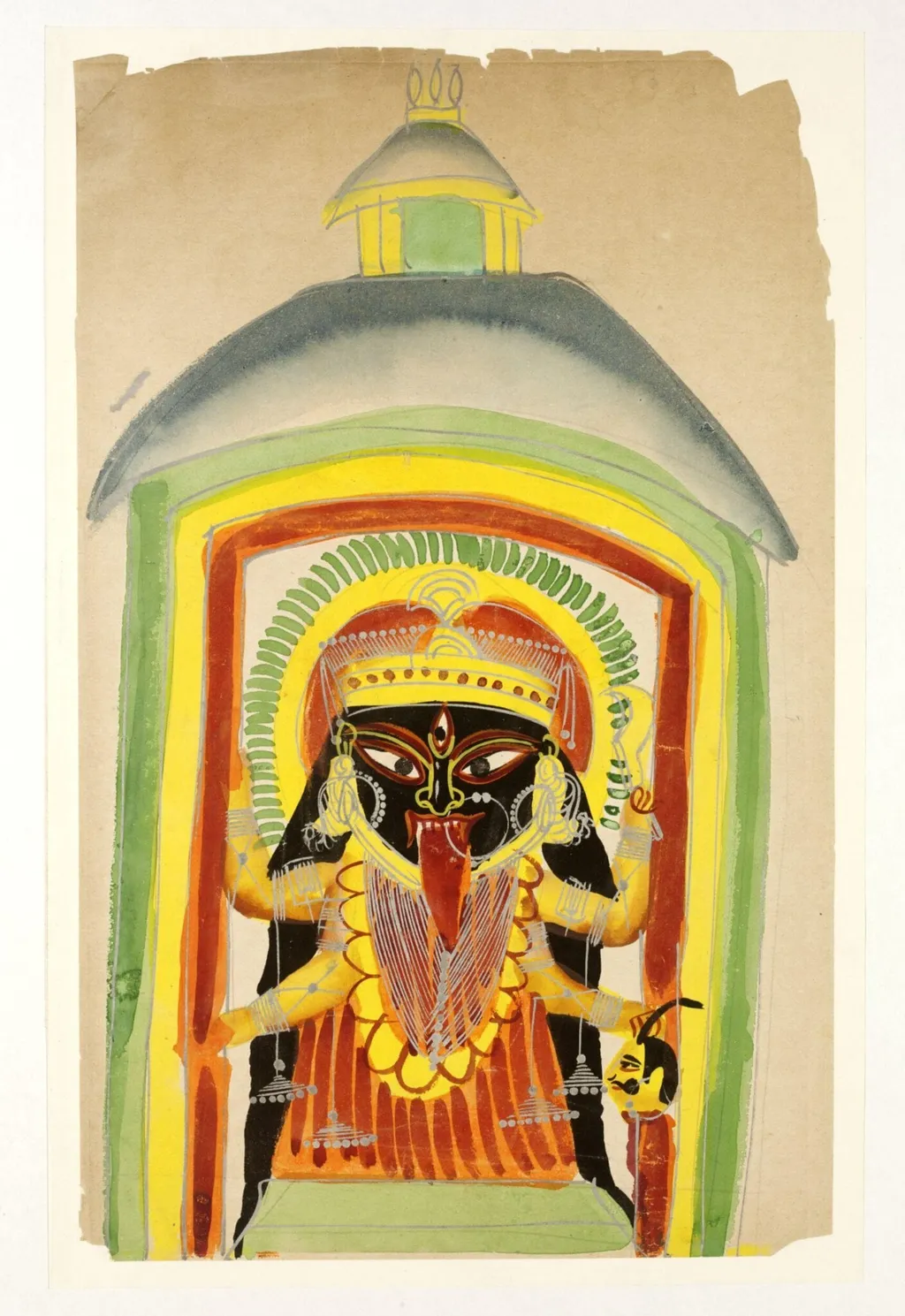
Kali is a paint painting by the Impressionist artist Unknown. It dates from 1890 and is held in the collection of the Victoria and Albert Museum.
About this work
Overview
Created in the 19th century, it belongs to the Kalighat tradition of Calcutta, where artists produced devotional images for pilgrims and local patrons.
This watercolour and tin-alloy painting on paper portrays the Hindu goddess Kali within a simplified shrine structure. Created in the 19th century, it belongs to the Kalighat tradition of Calcutta, where artists produced devotional images for pilgrims and local patrons. The work was donated to the collection in 1955 by M. N. Varvill, Esq., preserving a key example of popular Bengali religious art from the period.
Subject & Meaning
Kali is depicted with four arms, dark skin, and a distinctive tall headdress, her face marked with white facial patterns. She holds symbolic objects in each hand, consistent with iconographic traditions associating her with destruction, protection, and transcendence. The shrine-like setting frames her as a sacred presence, reflecting her role as both fearsome and benevolent in Hindu belief, particularly within regional devotional practices of eastern India.
Technique & Style
The painting employs bold, flat areas of colour—black, red, yellow, and green—applied with swift, confident brushwork. Tin-alloy was used to add metallic highlights, enhancing the divine radiance of the figure. Forms are reduced to essential shapes, and spatial depth is minimized, characteristic of Kalighat’s rapid, economical style developed by artists working near the Kalighat temple in Calcutta.
History & Provenance
The painting originates from the Kalighat school, which flourished in mid-19th century Calcutta as a response to urbanization and changing religious patronage. Produced by itinerant artists near the Kalighat temple, such works were sold to pilgrims as affordable devotional images. It entered the collection in 1955 through donation by M. N. Varvill, whose acquisition helped preserve this genre outside its original context.
Context
Kalighat paintings emerged alongside the growth of British colonial Calcutta, blending traditional Hindu iconography with new commercial demands. Artists adapted classical deities into stylized, easily reproducible forms for mass consumption. This piece reflects the intersection of religious devotion and urban market culture, where spiritual imagery was both preserved and transformed for a changing audience.
Legacy
As one of many Kalighat works preserved in institutional collections, this painting contributes to the understanding of 19th-century Indian visual culture beyond elite art traditions. It illustrates how devotional art responded to social change, maintaining religious symbolism while adopting new materials and techniques. Its survival offers insight into the continuity and adaptation of Hindu iconography in modernizing India.
Artist & collection

 Domestic Scene
 Giacomo and Cardinal Marco, investing Andrea, Abbot of San Zeno, with his Benefice
 The Nymph of Fontainebleau
 Portrait of a Woman
 Madonna and Child with Saints in the Enclosed Garden
 Venus and Minerva
 Family Group of Four on Sofa
 Wall painting from Room H of the Villa of P. Fannius Synistor at Boscoreale
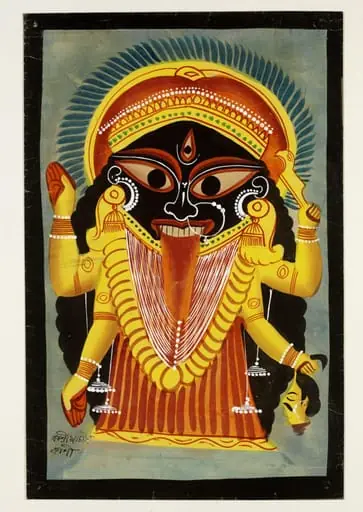 Kali
Kali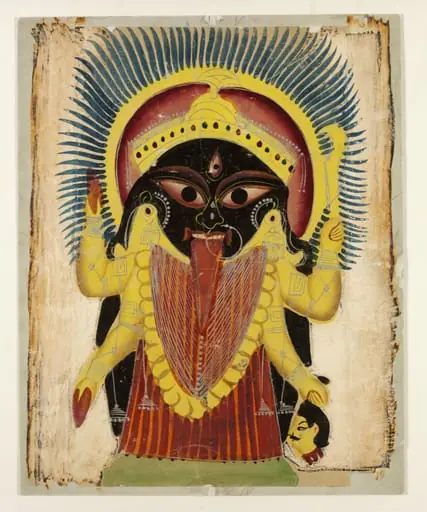 Kali
Kali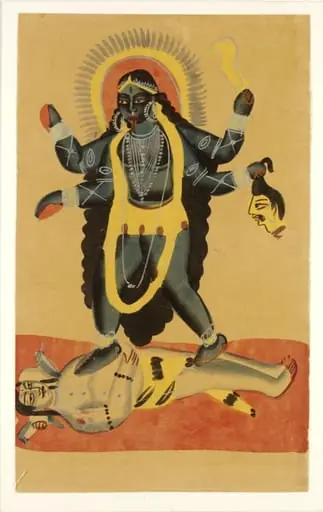 Kali and Shiva
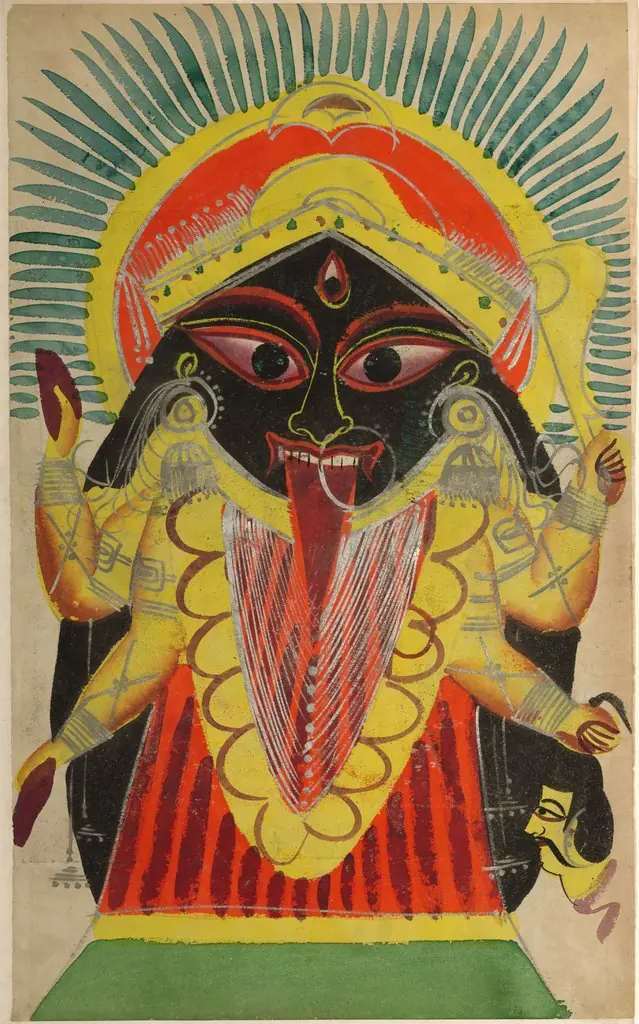 The Goddess Kali (recto), from a Kalighat album
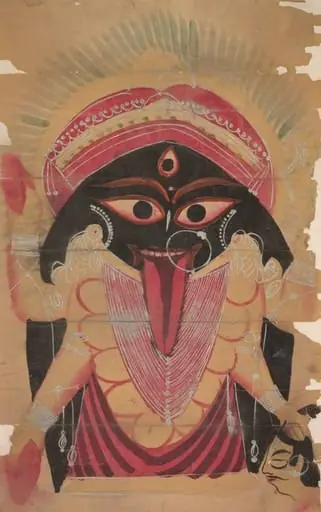 Kali
Kali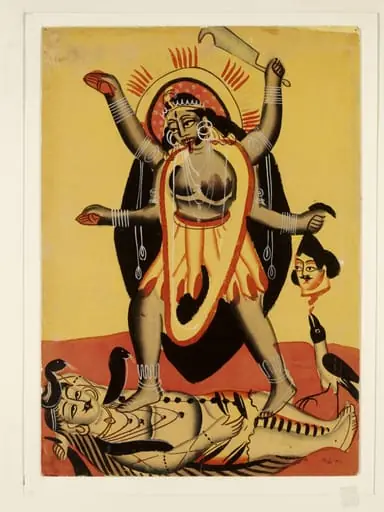 Kali dancing on Shiva
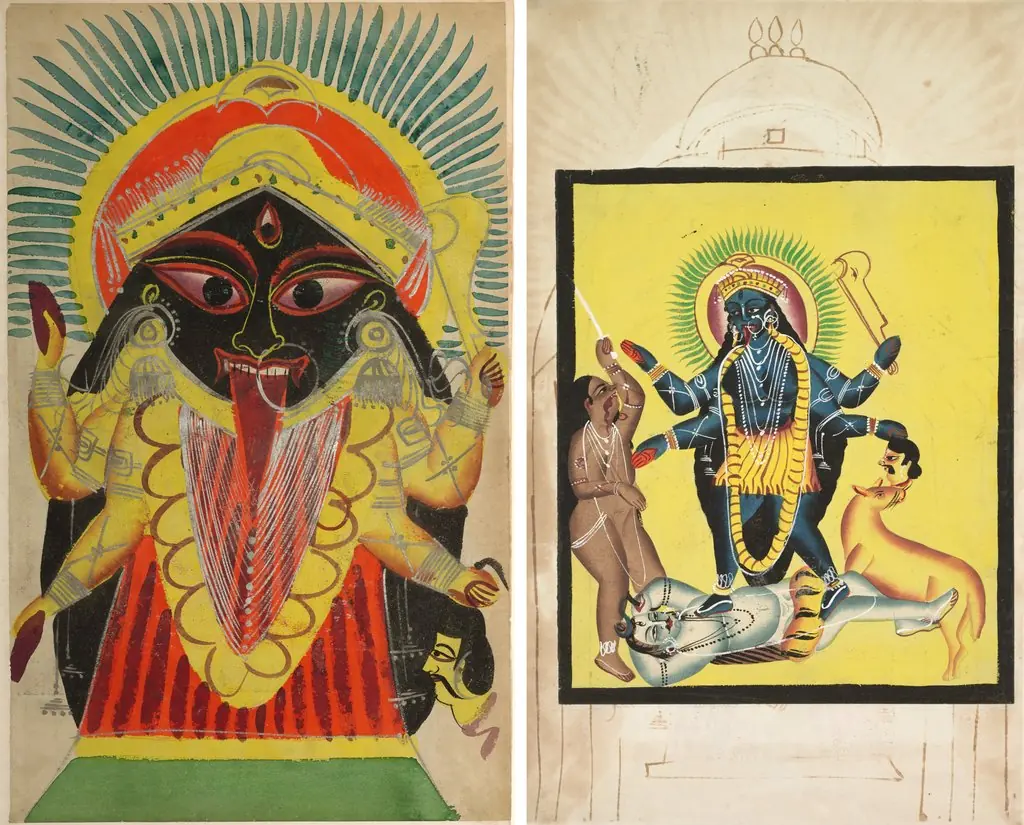 Leaf from a Kalighat album: The Goddess Kali (recto); Kali Standing on Shiva (verso)
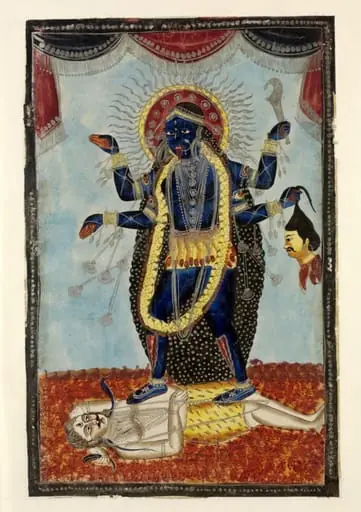 Kali and Shiva
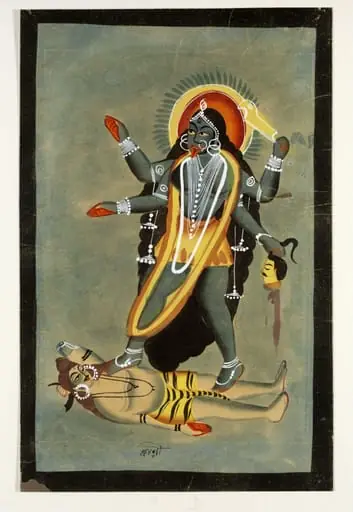 Krishna as Kali, and Shiva
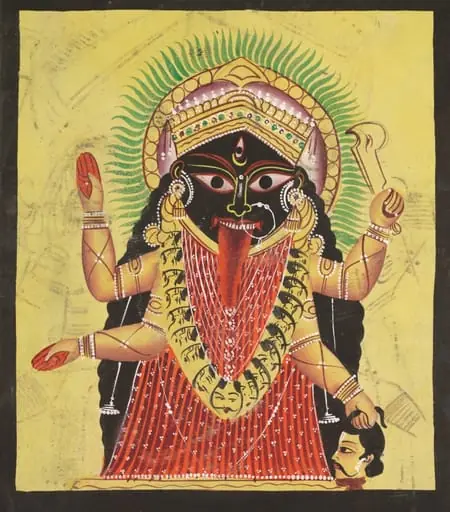 Kali Enshrined (verso), from a Kalighat album
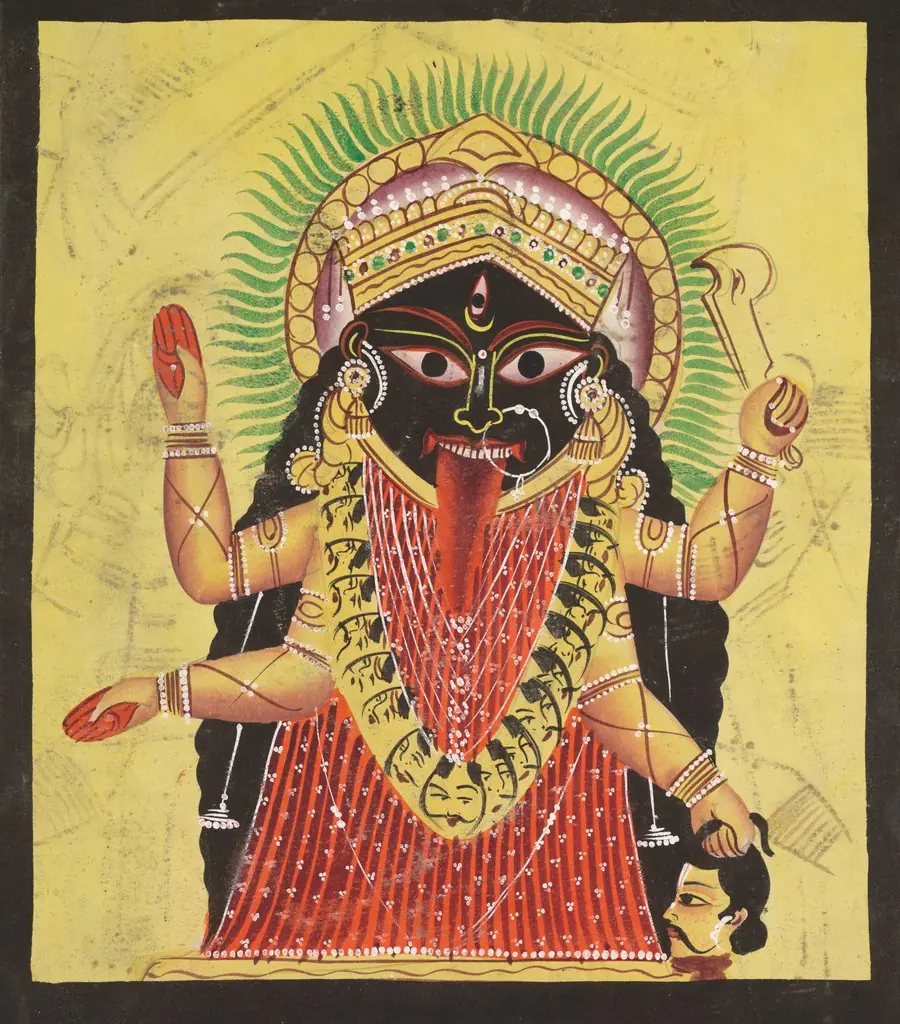 Kali Enshrined (verso), from a Kalighat album