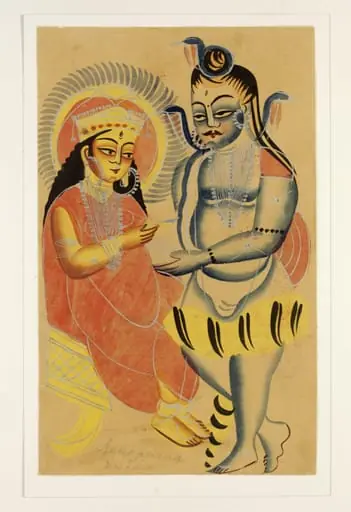
Artwork
Kama and Shiva
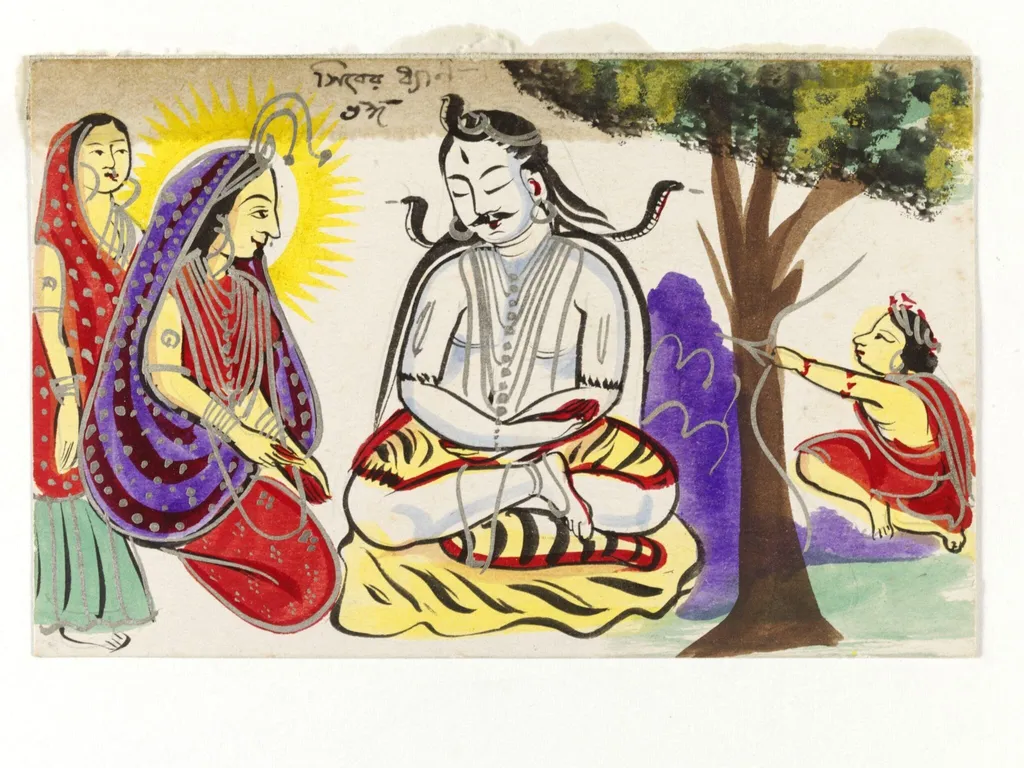
Kama and Shiva is a paint painting by the Impressionist artist Unknown. It dates from 1890 and is held in the collection of the Victoria and Albert Museum.
About this work
Overview
Rendered in flat, vivid hues, the composition features four figures against a stylized backdrop of a tree and radiant sun.
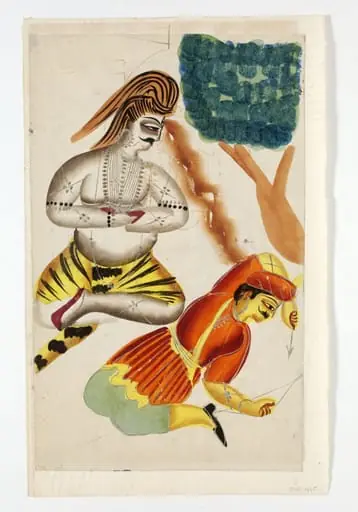
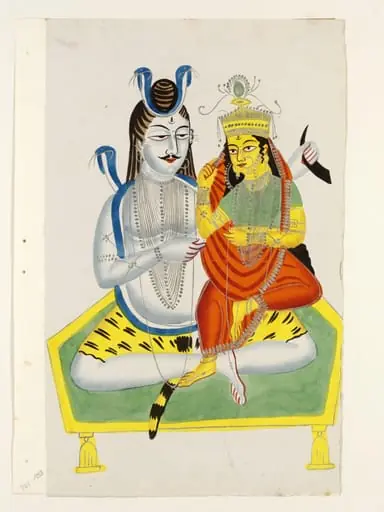
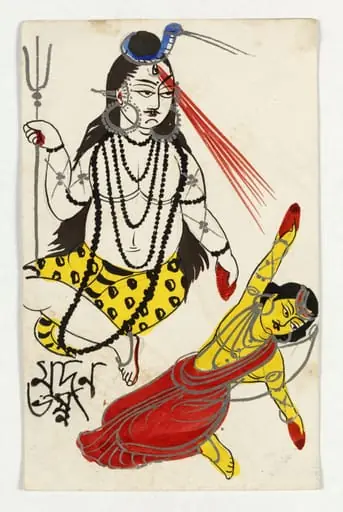
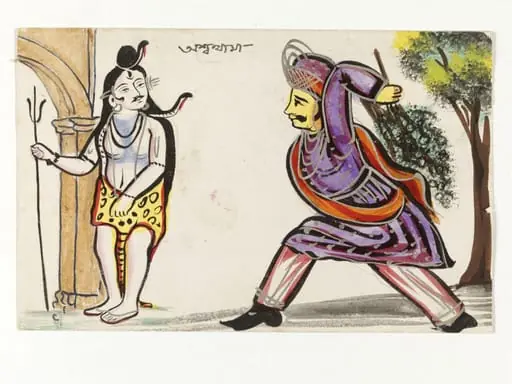
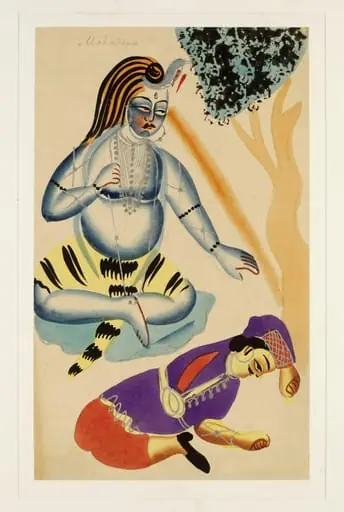
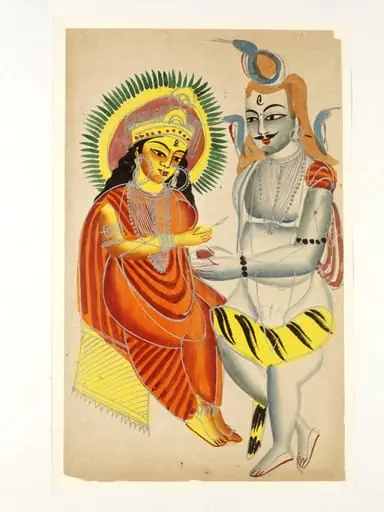
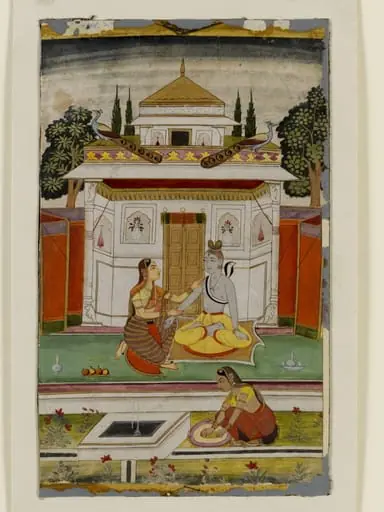
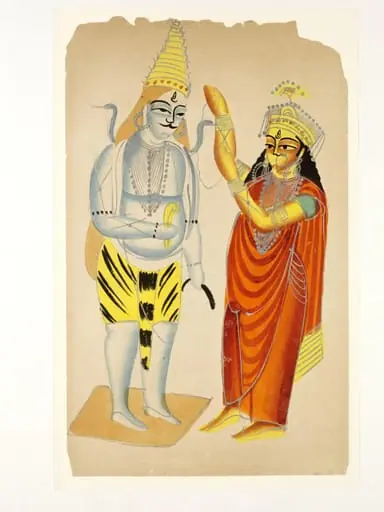
This 1890 watercolor and tin alloy painting on cardboard portrays a mythological moment involving Kama and Shiva. Rendered in flat, vivid hues, the composition features four figures against a stylized backdrop of a tree and radiant sun. The use of metallic alloy adds subtle luminosity, while the simplified forms and bold outlines reflect a decorative, non-naturalistic approach common in regional Indian painting traditions of the period.
Subject & Meaning
The scene illustrates Kama, the god of desire, preparing to shoot his arrow at Shiva, the ascetic deity. Shiva, seated with serpents in his hair and a tiger skin beneath him, embodies renunciation. The two standing women may represent his consorts or symbolic forces, while Kama, seated on the ground with bow and arrow, embodies the disruptive power of love. The moment captures tension between spiritual detachment and worldly passion.
Technique & Style
The painting employs watercolor and tin alloy on cardboard, creating a luminous yet restrained surface. Colors are applied in broad, flat planes without shading, emphasizing pattern over depth. Outlines are crisp, and forms are reduced to essential shapes, suggesting influence from folk and courtly miniature traditions. The metallic accents catch light subtly, enhancing the ritualistic atmosphere without overwhelming the composition.
History & Provenance
Created in 1890, the work likely originated in a regional atelier in northern or western India, where hybrid styles blending Mughal, Rajput, and colonial influences were common. Its materials and format suggest it was made for private devotion or as a decorative object, possibly commissioned by a collector or temple patron. It entered the Victoria and Albert Museum’s collection in the late 19th or early 20th century as part of broader efforts to document Indian artistic practices.
Context
During the late 19th century, Indian artists increasingly produced works for European collectors, often adapting traditional iconography to suit new audiences. This painting reflects a continuity of Hindu mythological themes, even as techniques shifted toward more decorative, less narrative styles. Similar works from this era were displayed in colonial exhibitions, where they were valued for their color and exoticism rather than theological depth.
Legacy
The painting contributes to a body of 19th-century Indian art that preserved mythological narratives through stylized visual language. Though not widely known outside museum collections, it exemplifies how traditional iconography persisted amid changing patronage and artistic methods. Its preservation in institutions like the Victoria and Albert Museum ensures its role in documenting the evolution of Indian visual culture during the colonial era.
Artist & collection

 Domestic Scene
 Giacomo and Cardinal Marco, investing Andrea, Abbot of San Zeno, with his Benefice
 The Nymph of Fontainebleau
 Portrait of a Woman
 Madonna and Child with Saints in the Enclosed Garden
 Venus and Minerva
 Family Group of Four on Sofa
 Wall painting from Room H of the Villa of P. Fannius Synistor at Boscoreale