Artwork
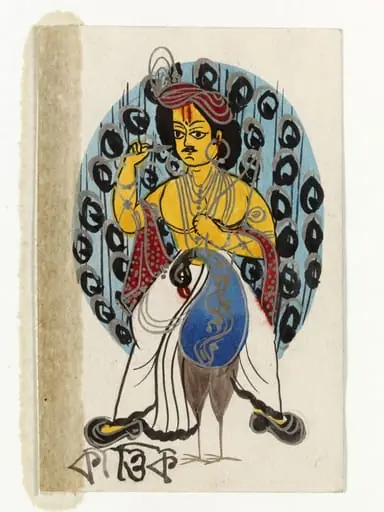
Karttikeya
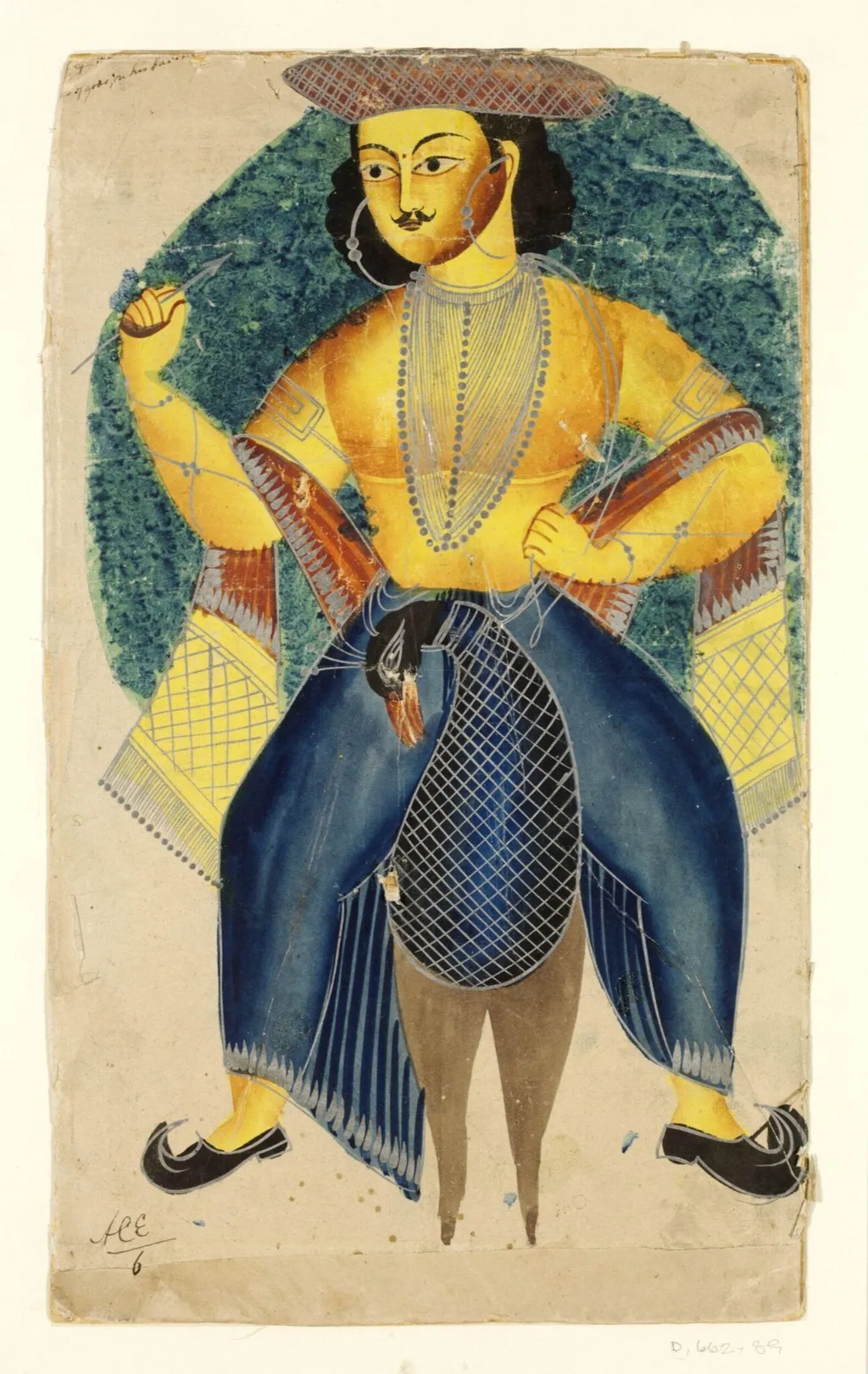
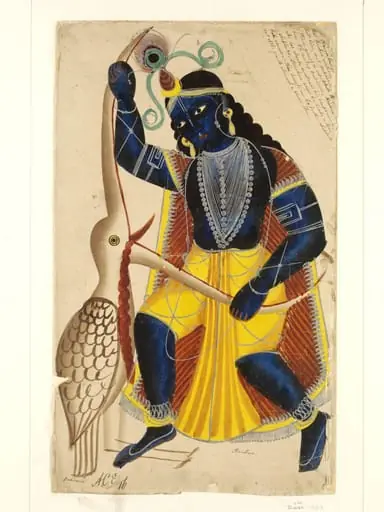
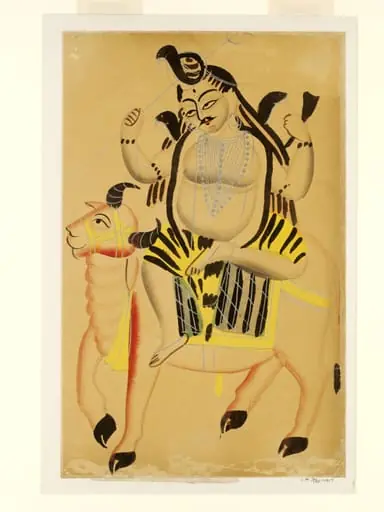
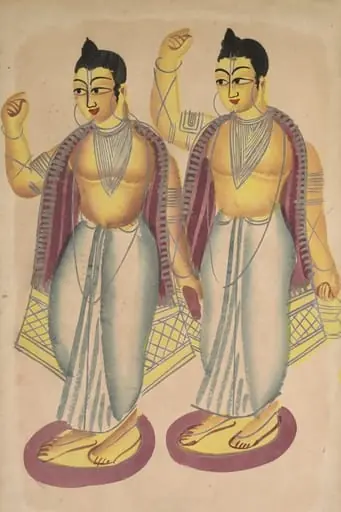
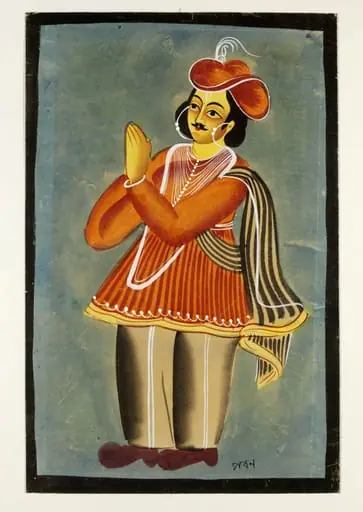
Karttikeya is a paint painting by the Impressionist artist Unknown. It dates from 1850 and is held in the collection of the Victoria and Albert Museum.
About this work
Overview
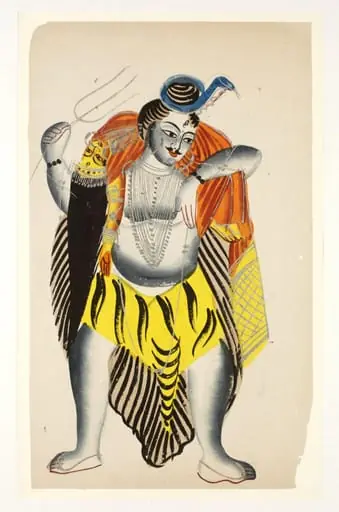
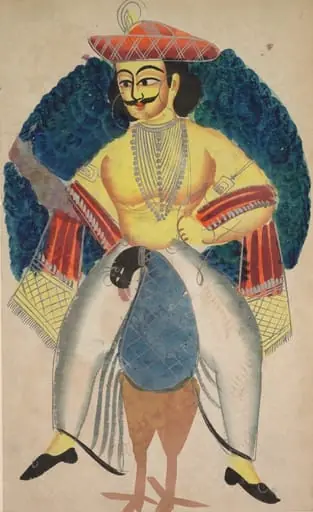
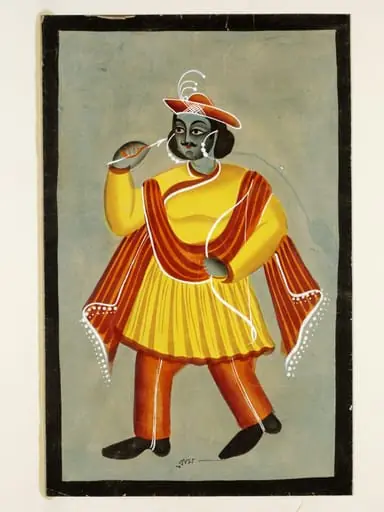
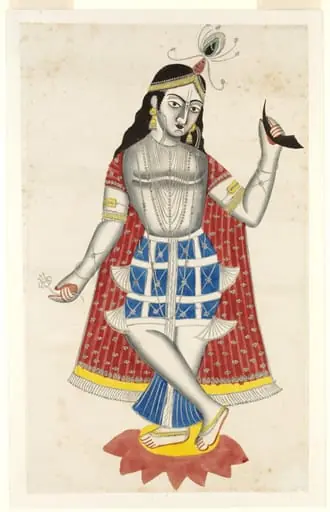
This mid‑nineteenth‑century watercolor on paper portrays the Hindu deity Karttikeya. Rendered in vivid hues, the figure stands against a plain green backdrop, his muscular form emphasized by bold, flat coloration and a lack of chiaroscuro. The composition centers on a confident, dynamic pose that conveys readiness for action.
Subject & Meaning
The central figure is Karttikeya, the god of war and son of Shiva, traditionally depicted as a youthful, armed warrior. Here he is shown with a yellow chest wrap and blue, criss‑crossed trousers, his right hand holding a small object—likely a symbolic weapon or attribute—while the left hand rests on his hip, reinforcing his martial authority.
Technique & Style
Executed in watercolor, the work employs a limited palette of bright primary colors applied in flat washes without gradation, creating a graphic quality. Tin alloy details are added to accent certain elements, a technique occasionally used in Indian miniature traditions to introduce reflective highlights. The overall style favors simplicity over intricate background narrative.
History & Provenance
The painting dates to approximately 1850 and was produced by an unidentified artist. It entered the Department of Prints and Drawings collection in 1889 after being purchased from the dealer G. Wild. It is catalogued under reference RP 51/2237 within the museum’s holdings.
Artist & collection

 Domestic Scene
 Giacomo and Cardinal Marco, investing Andrea, Abbot of San Zeno, with his Benefice
 The Nymph of Fontainebleau
 Portrait of a Woman
 Madonna and Child with Saints in the Enclosed Garden
 Venus and Minerva
 Family Group of Four on Sofa
 Wall painting from Room H of the Villa of P. Fannius Synistor at Boscoreale