Artwork
Khojasta talking to the parrot
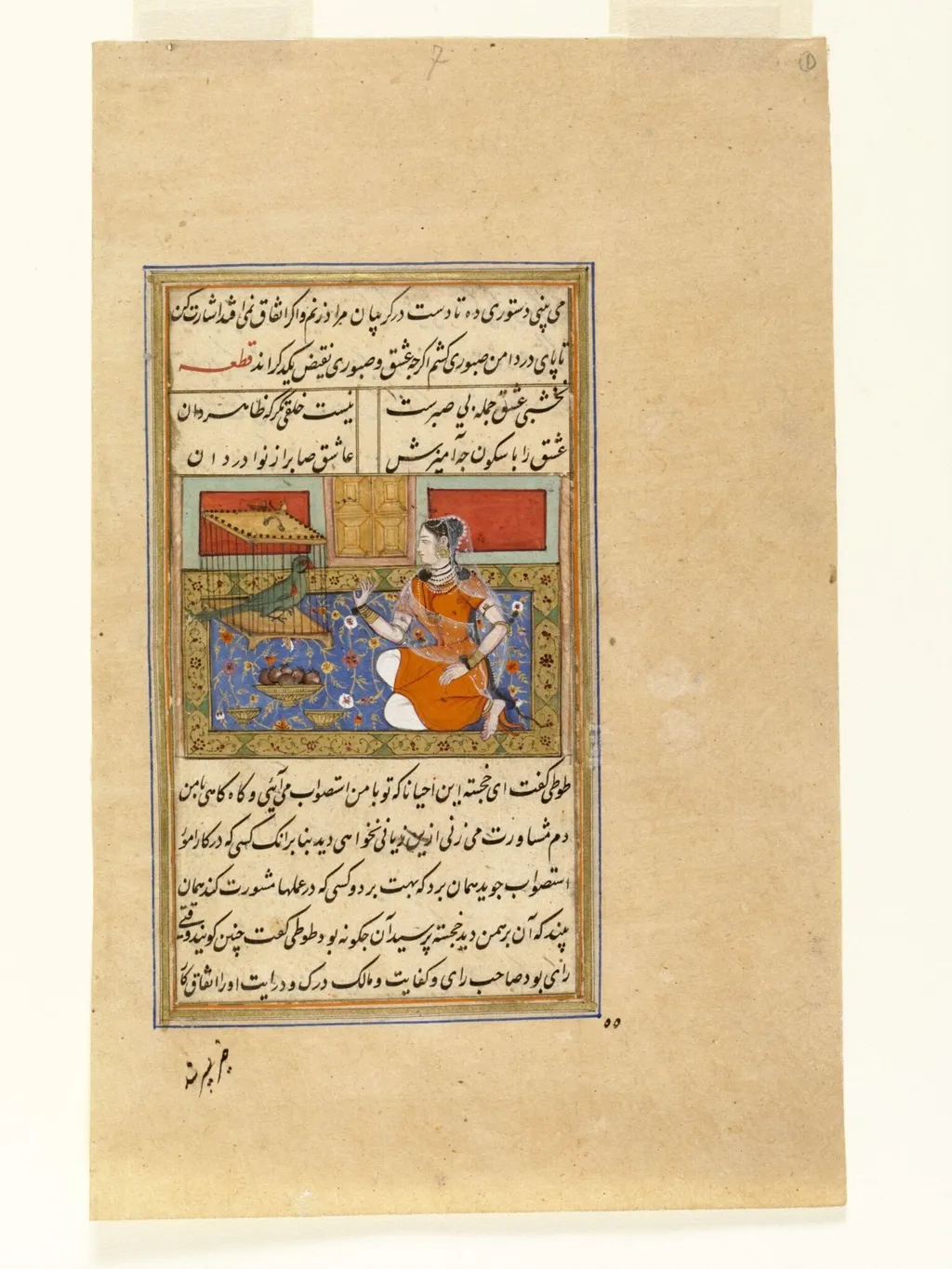
Khojasta talking to the parrot is a paint painting by the Mughal Painting artist Unknown. It dates from 1550 and is held in the collection of the Victoria and Albert Museum. This miniature painting, part of a detached folio, depicts the figure Khojasta in conversation with a parrot.
About this work
Overview
This miniature painting, part of a detached folio, depicts the figure Khojasta in conversation with a parrot. It originates from a Persian illustrated manuscript of the Tuti Nama, a collection of stories in which a parrot entertains its mistress with tales. The work is executed in the miniature painting tradition typical of Mughal court commissions of the late 16th century.
Subject & Meaning
The scene illustrates a moment from the narrative in which the parrot, acting as a storyteller, seeks to distract Khojasta from seeking a lover while her husband, a merchant, is away. The dialogue between woman and bird underscores themes of fidelity, temptation, and the persuasive power of narrative.
Technique & Style
Rendered in fine ink and watercolor on paper, the miniature displays the delicate line work, vibrant mineral pigments, and intricate detailing characteristic of Mughal court art. The composition balances a richly patterned interior with a naturalistic rendering of the parrot, reflecting the synthesis of Persian literary tradition and Indian artistic conventions.
History & Provenance
By the early 19th century it was in the possession of General Jean François Allard, a French officer serving Maharaja Ranjit Singh, who acquired it in Lahore.
The folio likely belonged to a copy of the Tuti Nama commissioned by Emperor Akbar around 1580. By the early 19th century it was in the possession of General Jean François Allard, a French officer serving Maharaja Ranjit Singh, who acquired it in Lahore. Allard later gave the volume to Baron Félix Sébastien Feuillet de Conches. The manuscript was subsequently disassembled; Sir Alfred Chester Beatty purchased a large portion, including 102 paintings, for his Dublin library in 1937, while other miniatures entered the art market. The Victoria and Albert Museum acquired this particular painting in 1966.
Context
The Tuti Nama belongs to a broader tradition of Persian storytelling texts that were adapted and illustrated under Mughal patronage. The work reflects the court’s interest in moral and romantic narratives, as well as the cultural exchange between Persian literary models and Indian visual idioms during Akbar’s reign.
Artist & collection

 Domestic Scene
 Giacomo and Cardinal Marco, investing Andrea, Abbot of San Zeno, with his Benefice
 The Nymph of Fontainebleau
 Portrait of a Woman
 Madonna and Child with Saints in the Enclosed Garden
 Venus and Minerva
 Family Group of Four on Sofa
 Wall painting from Room H of the Villa of P. Fannius Synistor at Boscoreale
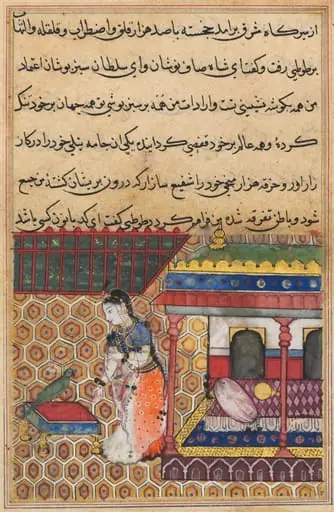 The parrot addresses Khujasta at the beginning of the thirty-eighth night, from a Tuti-nama (Tales of a Parrot)
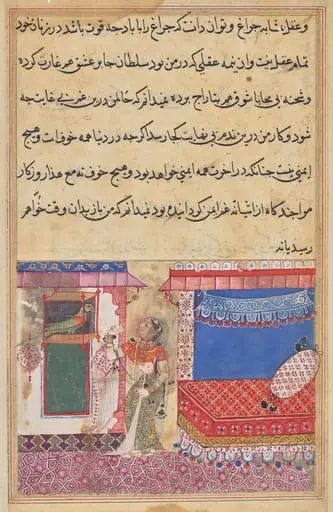 The Parrot Addresses Khujasta at the Beginning of the Eighteenth Night, from a Tuti-nama (Tales of a Parrot)
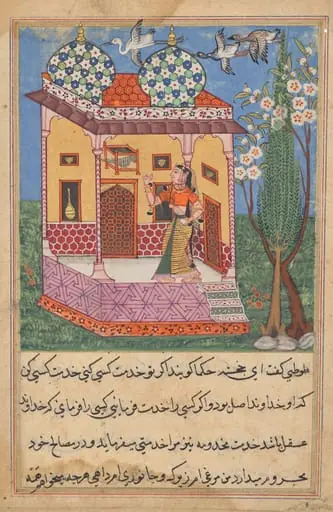 The Parrot Addresses Khujasta at the Beginning of the Twenty-sixth Night, from a Tuti-nama (Tales of a Parrot)
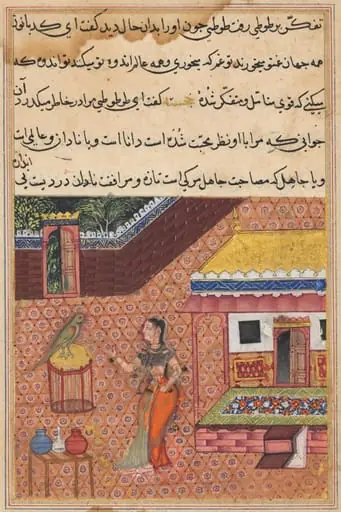 The parrot addresses Khujasta at the beginning of the thirty-fourth night, from a Tuti-nama (Tales of a Parrot)
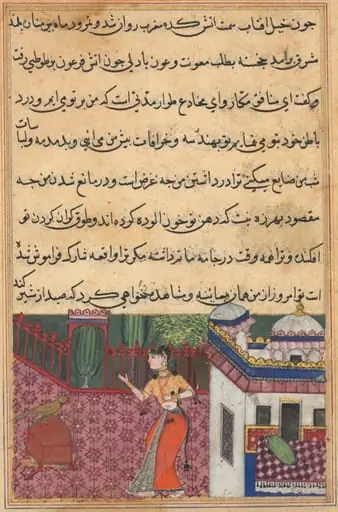 The parrot addresses Khujasta at the beginning of the thirty-third night, from a Tuti-nama (Tales of a Parrot)
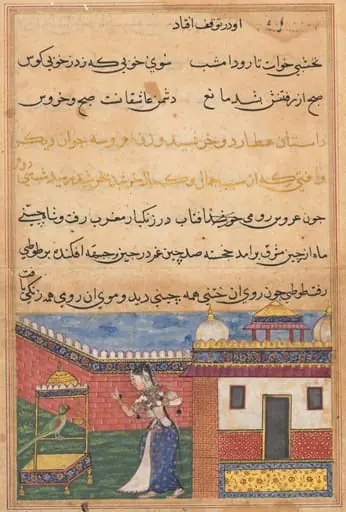 The parrot addresses Khujasta at the beginning of the thirty-second night, from a Tuti-nama (Tales of a Parrot)