Artwork
The parrot addresses Khujasta at the beginning of the thirty-eighth night, from a Tuti-nama (Tales of a Parrot)
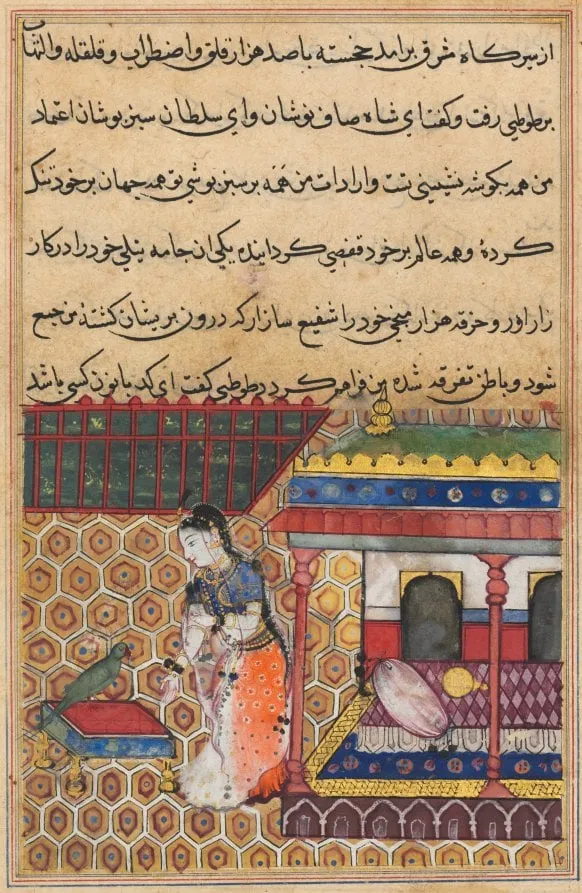
The parrot addresses Khujasta at the beginning of the thirty-eighth night, from a Tuti-nama (Tales of a Parrot) is an unspecified painting by the Mughal Painting artist Unknown. It dates from 1560 and is held in the collection of the Cleveland Museum of Art.
About this work
You see a woman in a bright red dress sitting on the floor, listening to a green parrot perched on a stand.
You see a woman in a bright red dress sitting on the floor, listening to a green parrot perched on a stand. The room is small, with patterned carpets and a window letting in soft light.
This painting is from a book of stories told by a parrot to delay a woman’s secret meeting. The parrot’s tales are so long that dawn breaks before she can leave. The details—like the woman’s jewelry and the parrot’s feathers—are painted with tiny, careful brushstrokes.
If you like this, look up *Mughal India, court of Akbar (reigned 1556–1605)*.
Overview
This painting is one of many illustrations from a Mughal manuscript of the Tuti-nama, a collection of frame stories in which a parrot recounts tales to delay its mistress from meeting a lover. Executed in the late 16th century, it captures a quiet moment of suspension—time halted by narrative. The scene is intimate, confined to a modest interior where the parrot’s voice holds dominion over the woman’s intentions.
Subject & Meaning
Khujasta, seated on the floor, is caught between desire and distraction. The parrot, perched on a stand, begins a new fable—this one about animals uniting against an elephant—to postpone her nocturnal rendezvous. Each tale serves as a moral pause, subtly reinforcing restraint. The narrative structure reflects a cultural emphasis on wisdom over impulse, using storytelling as both entertainment and ethical intervention.
Technique & Style
The artist employs fine, precise brushwork to render textures: the sheen of Khujasta’s red garment, the individual feathers of the parrot, and the intricate patterns of the carpet. Soft daylight filters through a window, casting gentle shadows that enhance the room’s intimacy. Colors are rich but restrained, typical of Mughal court painting, where detail serves narrative clarity rather than decorative excess.
History & Provenance
Created during the reign of Emperor Akbar, this painting belonged to an illustrated manuscript commissioned for the imperial library. The Tuti-nama was translated from Persian into Persianate Urdu and illustrated by a team of artists under royal patronage. Surviving fragments of this manuscript are held in major collections, with this scene among the best-preserved examples of early Mughal narrative illustration.
Context
The Tuti-nama tradition originated in Sanskrit storytelling and was adapted into Persian literature before reaching the Mughal court. Akbar’s interest in cross-cultural tales encouraged the translation and illustration of such works. The parrot’s role as a moral guide reflects broader courtly values—patience, wit, and the power of speech to alter action—making the manuscript both a literary and political artifact.
Legacy
This painting exemplifies how Mughal artists fused Persian narrative traditions with Indian visual sensibilities. Its influence extended to later illustrated manuscripts and reinforced the role of the book as a vehicle for both art and moral instruction. Though the Tuti-nama was eventually overshadowed by other literary forms, its visual legacy endures in the precision and quiet drama of its miniatures.
Artist & collection

 Domestic Scene
 Giacomo and Cardinal Marco, investing Andrea, Abbot of San Zeno, with his Benefice
 The Nymph of Fontainebleau
 Portrait of a Woman
 Madonna and Child with Saints in the Enclosed Garden
 Venus and Minerva
 Family Group of Four on Sofa
 Wall painting from Room H of the Villa of P. Fannius Synistor at Boscoreale
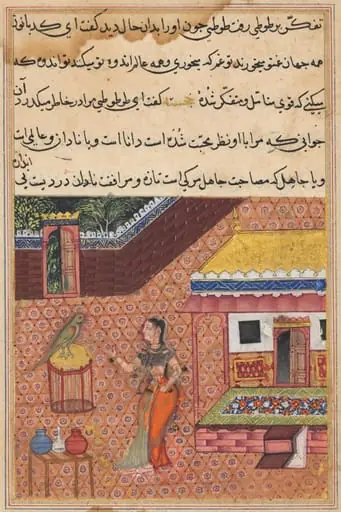 The parrot addresses Khujasta at the beginning of the thirty-fourth night, from a Tuti-nama (Tales of a Parrot)
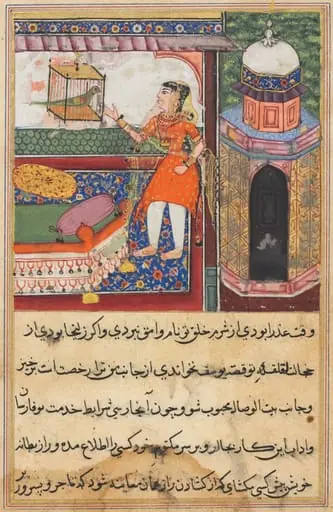 The Parrot Addresses Khujasta at the Beginning of the Tenth Night, from a Tuti-nama (Tales of a Parrot)
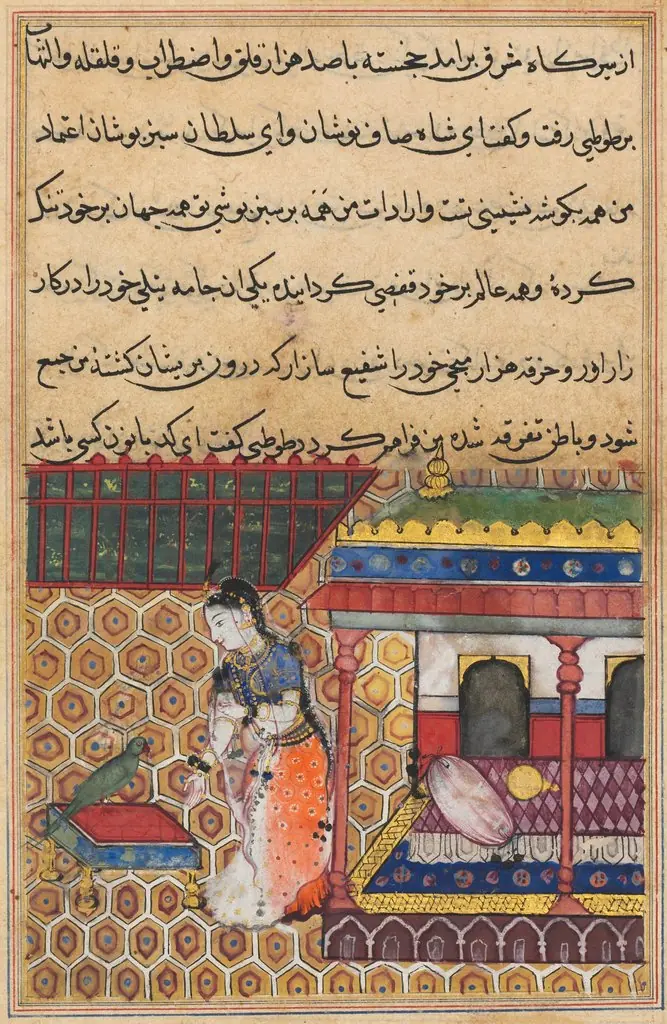 The parrot addresses Khujasta at the beginning of the thirty-eighth night, from a Tuti-nama (Tales of a Parrot)
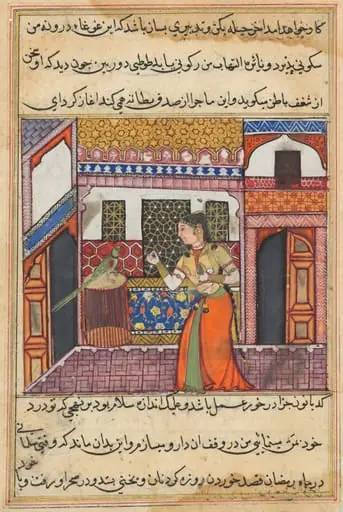 The parrot addresses Khujasta at the beginning of the forty-third night, from a Tuti-nama (Tales of a Parrot)
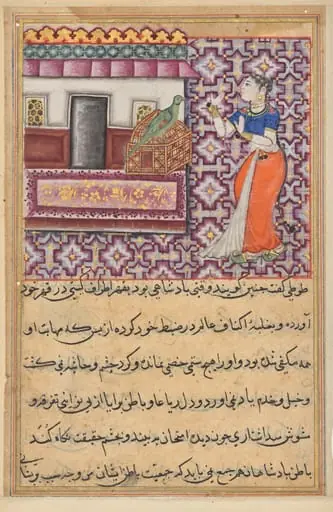 The parrot addresses Khujasta at the beginning of the fiftieth night, from a Tuti-nama (Tales of a Parrot): Fiftieth Night
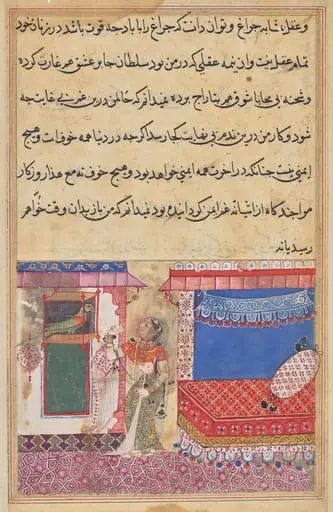 The Parrot Addresses Khujasta at the Beginning of the Eighteenth Night, from a Tuti-nama (Tales of a Parrot)
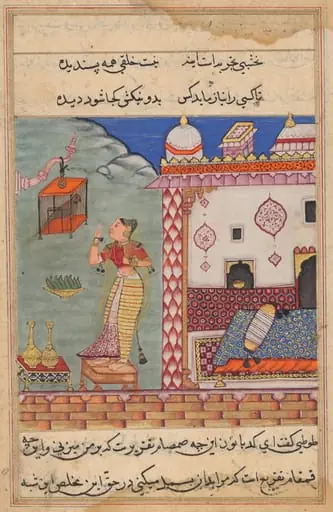 The Parrot Addresses Khujasta at the Beginning of the Twenty-seventh Night, form a Tuti-nama (Tales of a Parrot)
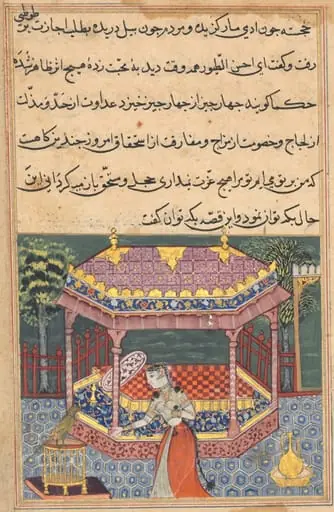 The parrot addresses Khujasta at the beginning of the thirty-seventh night, from a Tuti-nama (Tales of a Parrot)
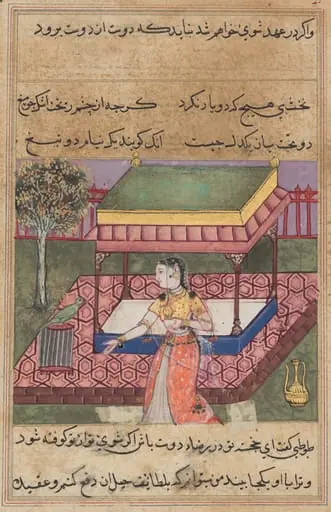 The parrot addresses Khujasta at the beginning of the fortieth night, from a Tuti-nama (Tales of a Parrot)
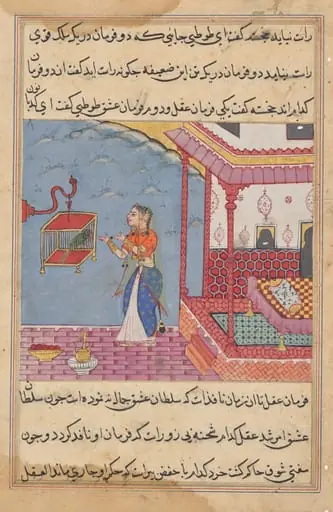 The Parrot Addresses Khujasta at the Beginning of the Twenty-Fourth Night, from a Tuti-nama (Tales of a Parrot)
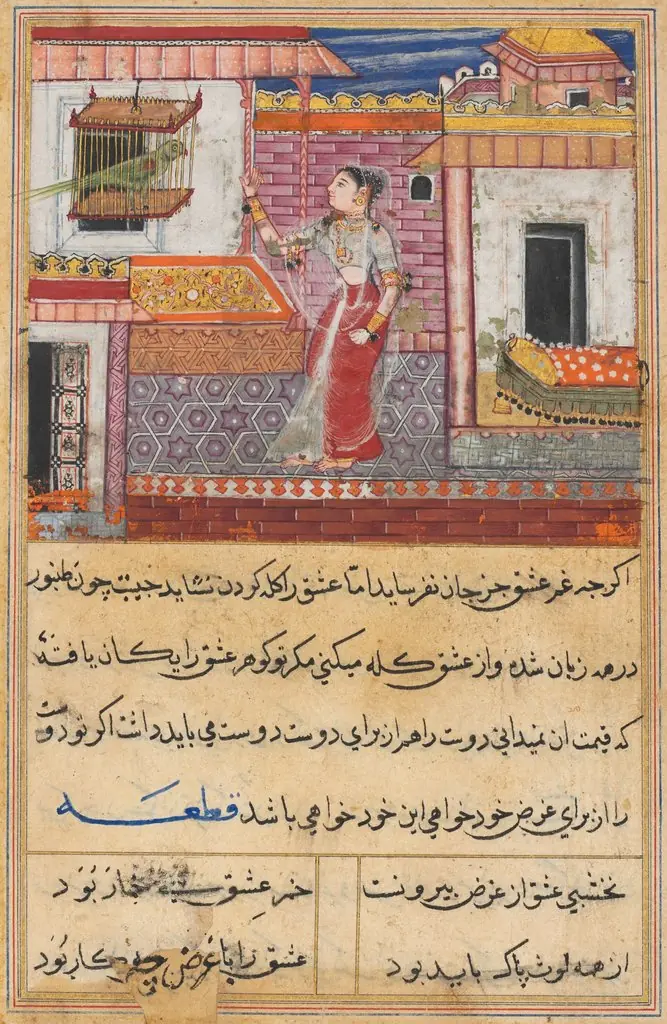 The Parrot Addresses Khujasta at the Beginning of the Thirteenth Night, from a Tuti-nama (Tales of a Parrot)