Artwork
The parrot addresses Khujasta at the beginning of the thirty-fourth night, from a Tuti-nama (Tales of a Parrot)
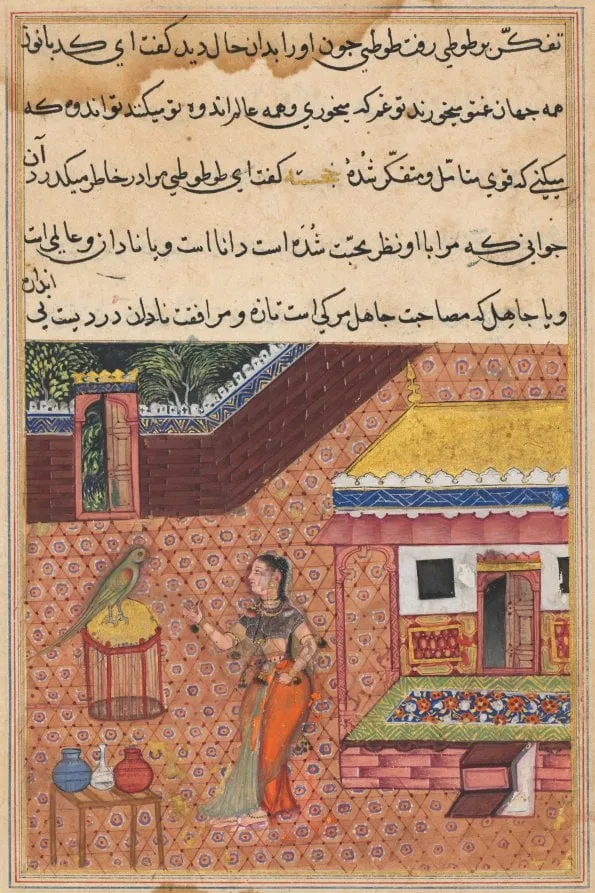
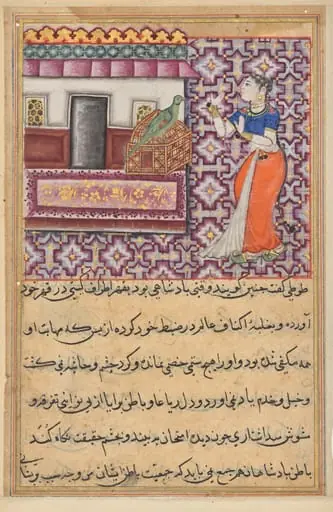
The parrot addresses Khujasta at the beginning of the thirty-fourth night, from a Tuti-nama (Tales of a Parrot) is an unspecified painting by the Mughal Painting artist Unknown. It dates from 1560 and is held in the collection of the Cleveland Museum of Art. This painting illustrates a scene from the Tuti-nama, a collection of fifty-two frame stories told over consecutive nights.
About this work
You see a woman in a red dress sitting on a terrace, listening to a green parrot perched on a stand beside her.
You see a woman in a red dress sitting on a terrace, listening to a green parrot perched on a stand beside her.
This painting comes from a book of stories told over fifty-two nights. The parrot distracts Khujasta with tales so she won’t sneak out to meet her lover while her husband is away. The bright colors and fine details show how artists in Akbar’s court blended Persian and Indian styles.
To see more art from this time, look up Mughal India, court of Akbar (reigned 1556–1605).
Overview
This painting illustrates a scene from the Tuti-nama, a collection of fifty-two frame stories told over consecutive nights. The parrot, Tuti, narrates to Khujasta, a noblewoman confined to her quarters, to divert her from clandestine meetings while her husband is away. The image captures the moment of storytelling, emphasizing the parrot’s role as both entertainer and moral guardian within the narrative structure of the manuscript.
Subject & Meaning
Khujasta, seated on a terrace in a red garment, listens intently as a green parrot perches beside her on a stand. The parrot’s tales—of a merchant’s daughter rescued from a fairy and a raja’s wife witnessing a resurrection—are designed to delay her from pursuing forbidden romance. The scene reflects a broader theme: the use of narrative to control desire and uphold social order, turning storytelling into a tool of moral discipline.
Technique & Style
The painting exhibits fine brushwork and vivid pigments characteristic of Mughal court ateliers. Artists combined Persian miniature traditions—such as intricate patterns and flattened perspective—with Indian sensibilities in color and naturalism. The terrace setting, architectural details, and textile textures reveal a synthesis of styles, reflecting the cosmopolitan culture of Akbar’s imperial workshop.
History & Provenance
Created during the reign of Emperor Akbar (1556–1605), this work belonged to an illustrated manuscript commissioned for the imperial library. The Tuti-nama was among the earliest major projects of Akbar’s atelier, produced by a team of Hindu and Muslim painters under royal patronage. The manuscript’s survival in fragments underscores its historical significance as a benchmark for early Mughal illustration.
Context
The Tuti-nama was adapted from an older Arabic tale collection and reimagined for an Indo-Persian court. Its framing device—stories told over nights to delay a woman’s infidelity—resonated with courtly concerns about female agency and control. The project reflected Akbar’s interest in cross-cultural storytelling and his efforts to unify diverse artistic traditions under imperial patronage.
Legacy
This painting exemplifies the foundational phase of Mughal painting, where Persian aesthetics merged with indigenous Indian forms to create a new visual language. The Tuti-nama series influenced later imperial manuscripts, setting precedents for narrative composition and naturalistic detail. Its survival offers insight into the intellectual and artistic priorities of Akbar’s court during a period of cultural consolidation.
Artist & collection

 Domestic Scene
 Giacomo and Cardinal Marco, investing Andrea, Abbot of San Zeno, with his Benefice
 The Nymph of Fontainebleau
 Portrait of a Woman
 Madonna and Child with Saints in the Enclosed Garden
 Venus and Minerva
 Family Group of Four on Sofa
 Wall painting from Room H of the Villa of P. Fannius Synistor at Boscoreale
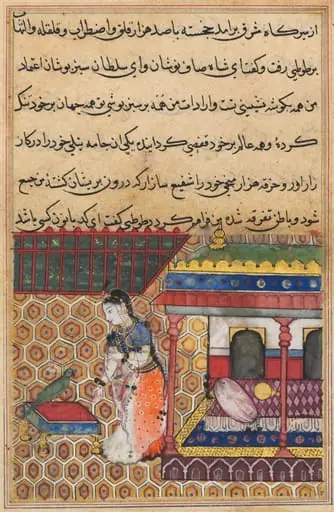 The parrot addresses Khujasta at the beginning of the thirty-eighth night, from a Tuti-nama (Tales of a Parrot)
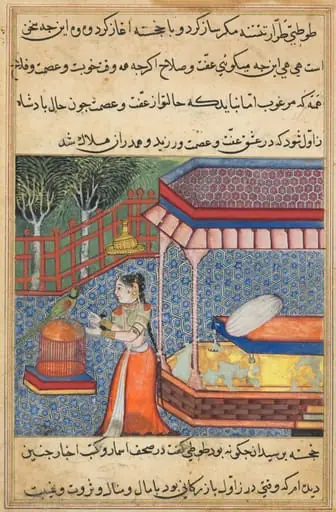 The parrot addresses Khujasta at the beginning of the thirty-sixth night, from a Tuti-nama (Tales of a Parrot)
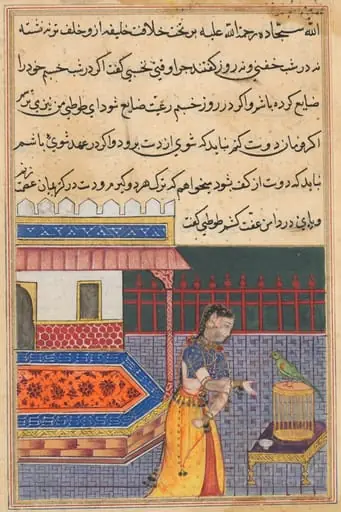 The parrot addresses Khujasta at the beginning of the forty-first night, from a Tuti-nama (Tales of a Parrot): Forty-first Night
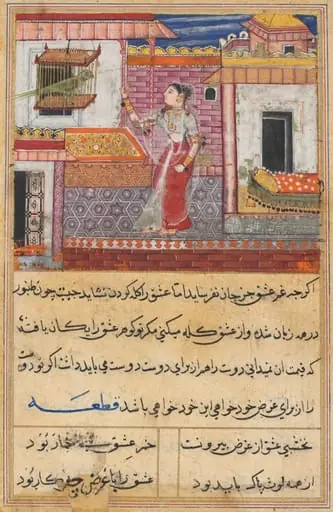 The Parrot Addresses Khujasta at the Beginning of the Thirteenth Night, from a Tuti-nama (Tales of a Parrot)
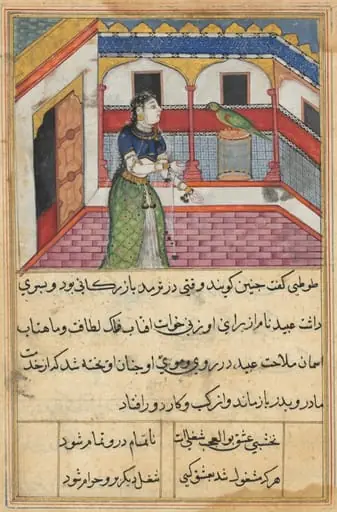 The parrot addresses Khujasta at the beginning of the forty-second night, from a Tuti-nama (Tales of a Parrot)
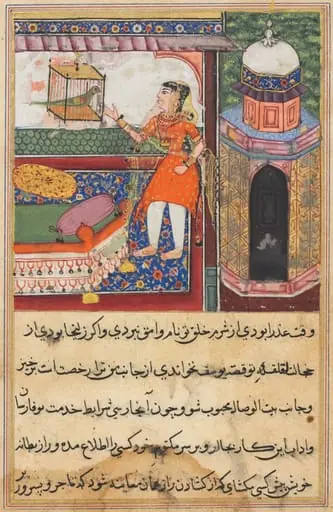 The Parrot Addresses Khujasta at the Beginning of the Tenth Night, from a Tuti-nama (Tales of a Parrot)
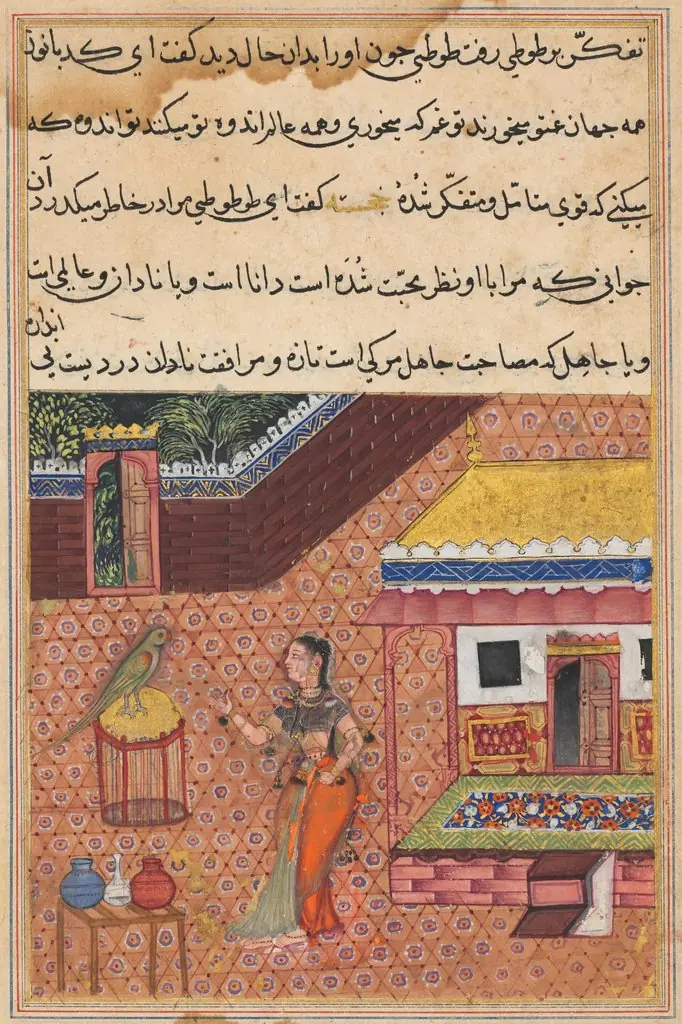 The parrot addresses Khujasta at the beginning of the thirty-fourth night, from a Tuti-nama (Tales of a Parrot)
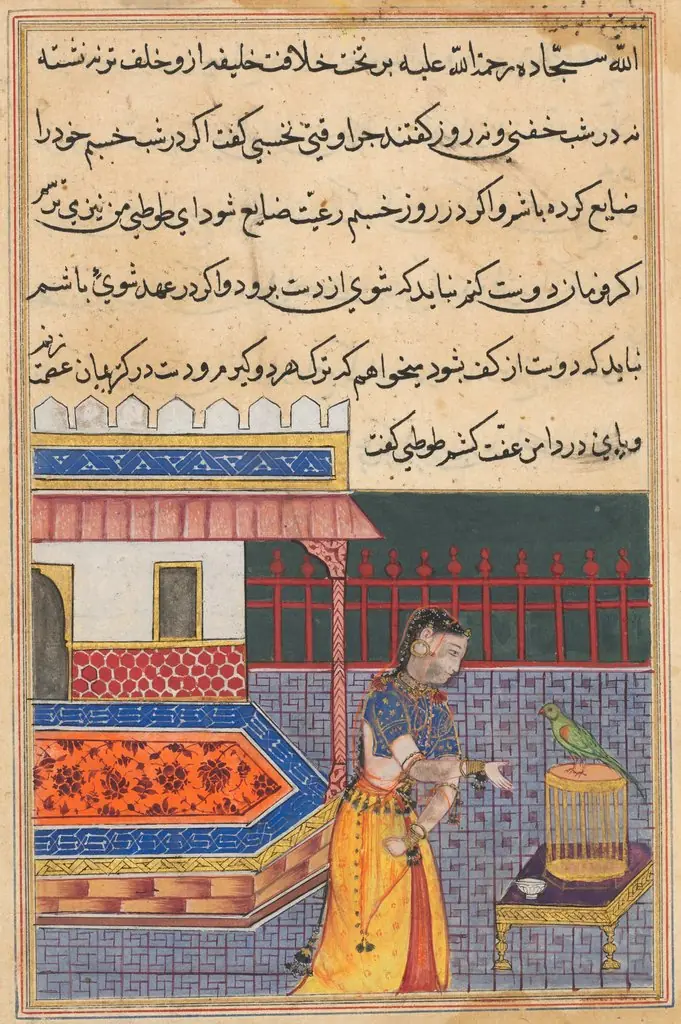 The parrot addresses Khujasta at the beginning of the forty-first night, from a Tuti-nama (Tales of a Parrot): Forty-first Night
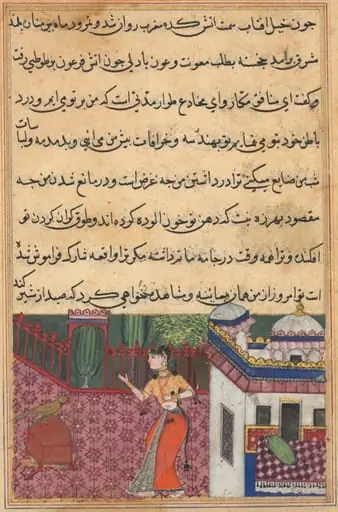 The parrot addresses Khujasta at the beginning of the thirty-third night, from a Tuti-nama (Tales of a Parrot)
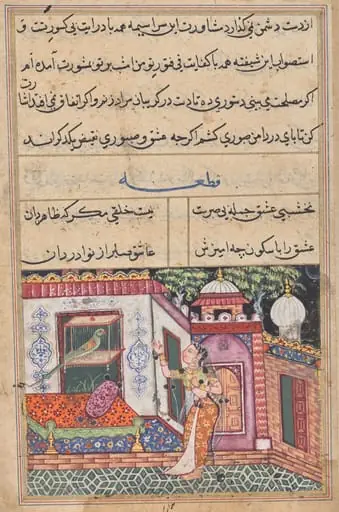 The Parrot Addresses Khujasta at the Beginning of the Eleventh Night, from a Tuti-nama (Tales of a Parrot)
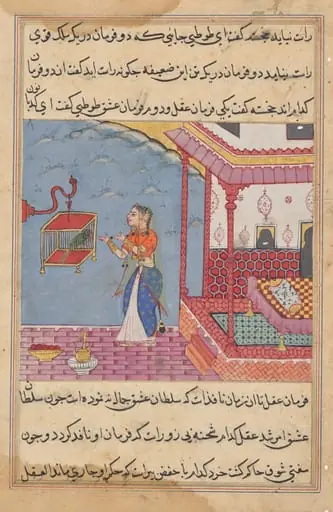 The Parrot Addresses Khujasta at the Beginning of the Twenty-Fourth Night, from a Tuti-nama (Tales of a Parrot)
 The parrot addresses Khujasta at the beginning of the fiftieth night, from a Tuti-nama (Tales of a Parrot): Fiftieth Night