Artwork
King Janaka and Rama
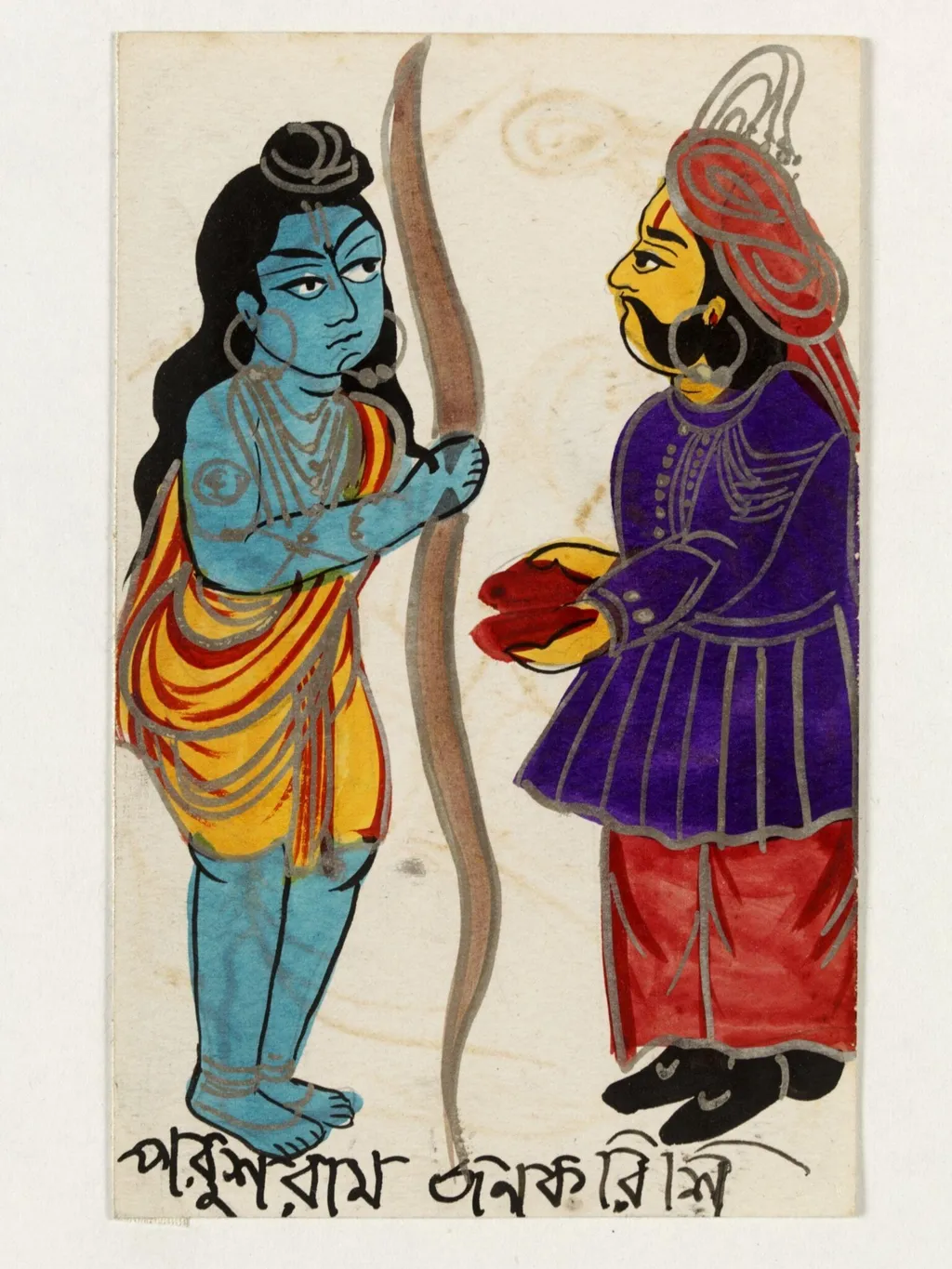
King Janaka and Rama is a paint painting by the Impressionist artist Unknown. It dates from 1890 and is held in the collection of the Victoria and Albert Museum.
About this work
Overview
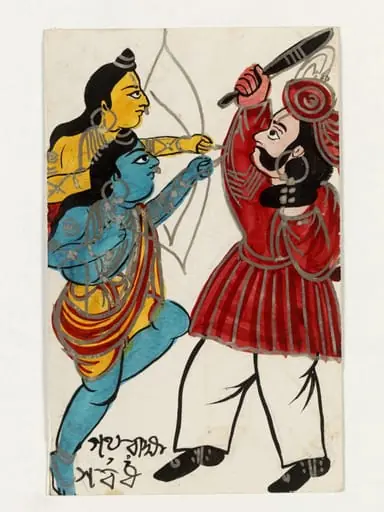
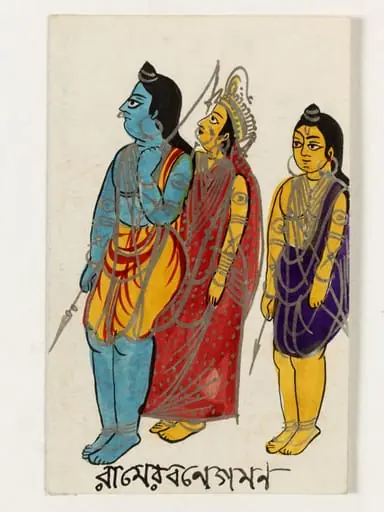
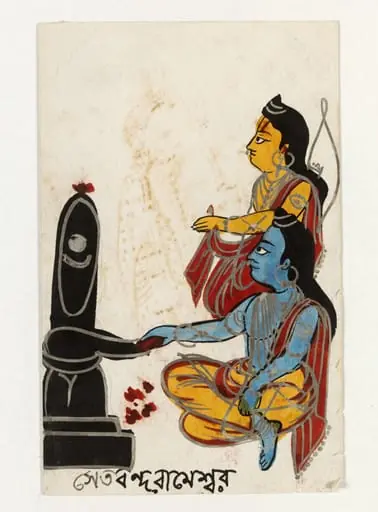
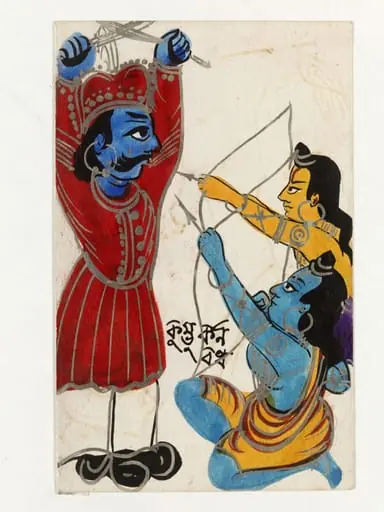
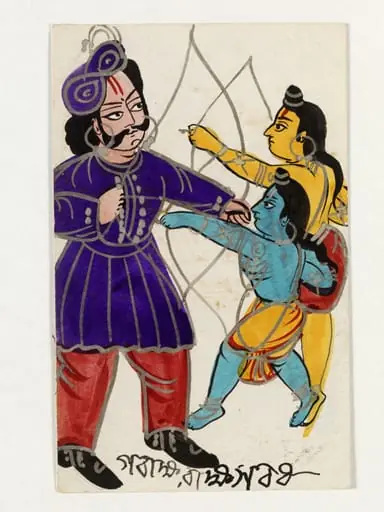
This 19th-century painting on paper combines watercolor and tin alloy to depict a pivotal scene from Hindu mythology, specifically Sita's swayamvara, featuring King Janaka and Rama. Executed in the characteristic style of Kalighat paintings from Calcutta during the British Raj, it blends mythological themes with subtle reflections of colonial-era societal dynamics.
Subject & Meaning
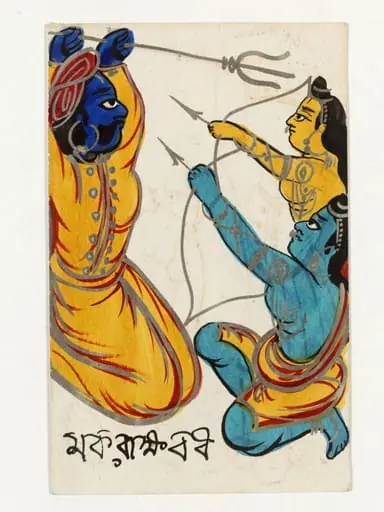
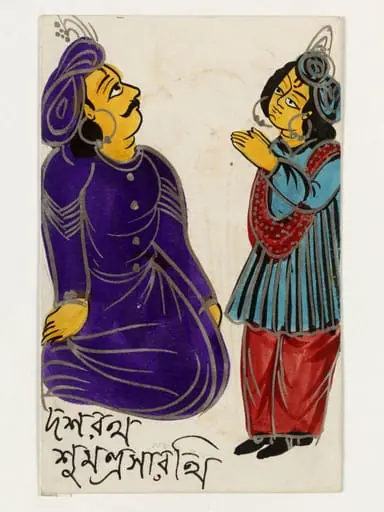
The painting illustrates a moment of tension during Sita's swayamvara, where Parasurama challenges Rama (Ramachandra) to string Vishnu's bow. King Janaka, Sita's father, stands alongside Rama, highlighting the scene's familial and divine stakes. The composition conveys the narrative's emotional intensity through the juxtaposition of the two central figures.
Technique & Style
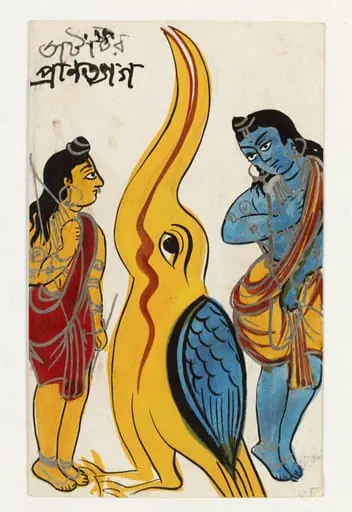
Characterized by bold, flat colors and simplified forms, the painting exemplifies the Kalighat style. Rapid brushwork and bold outlines define the figures against the background. The incorporation of tin alloy adds a distinctive element to the watercolor, enhancing the visual vibrancy.
History & Provenance
Produced in Calcutta under the British Raj, this painting is part of the Kalighat tradition, which often explored local mythological themes alongside subtle commentary on colonial life. Specific provenance details for this work are not provided.
Context
Similar to other Kalighat paintings, this work can be contextualized alongside examples held by institutions like the Victoria and Albert Museum, which house extensive collections of this regional art form from the colonial era.
Artist & collection

 Domestic Scene
 Giacomo and Cardinal Marco, investing Andrea, Abbot of San Zeno, with his Benefice
 The Nymph of Fontainebleau
 Portrait of a Woman
 Madonna and Child with Saints in the Enclosed Garden
 Venus and Minerva
 Family Group of Four on Sofa
 Wall painting from Room H of the Villa of P. Fannius Synistor at Boscoreale