Artwork
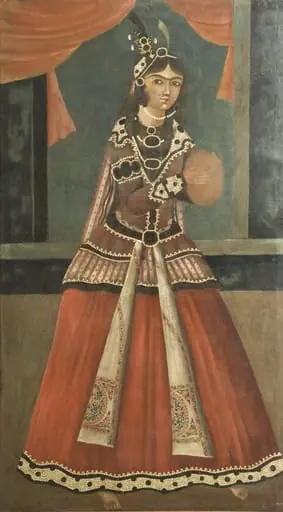
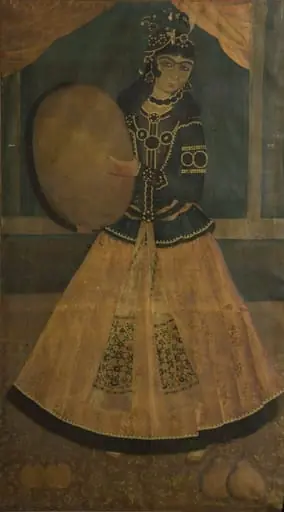
Lady Dancing and Playing Castanets
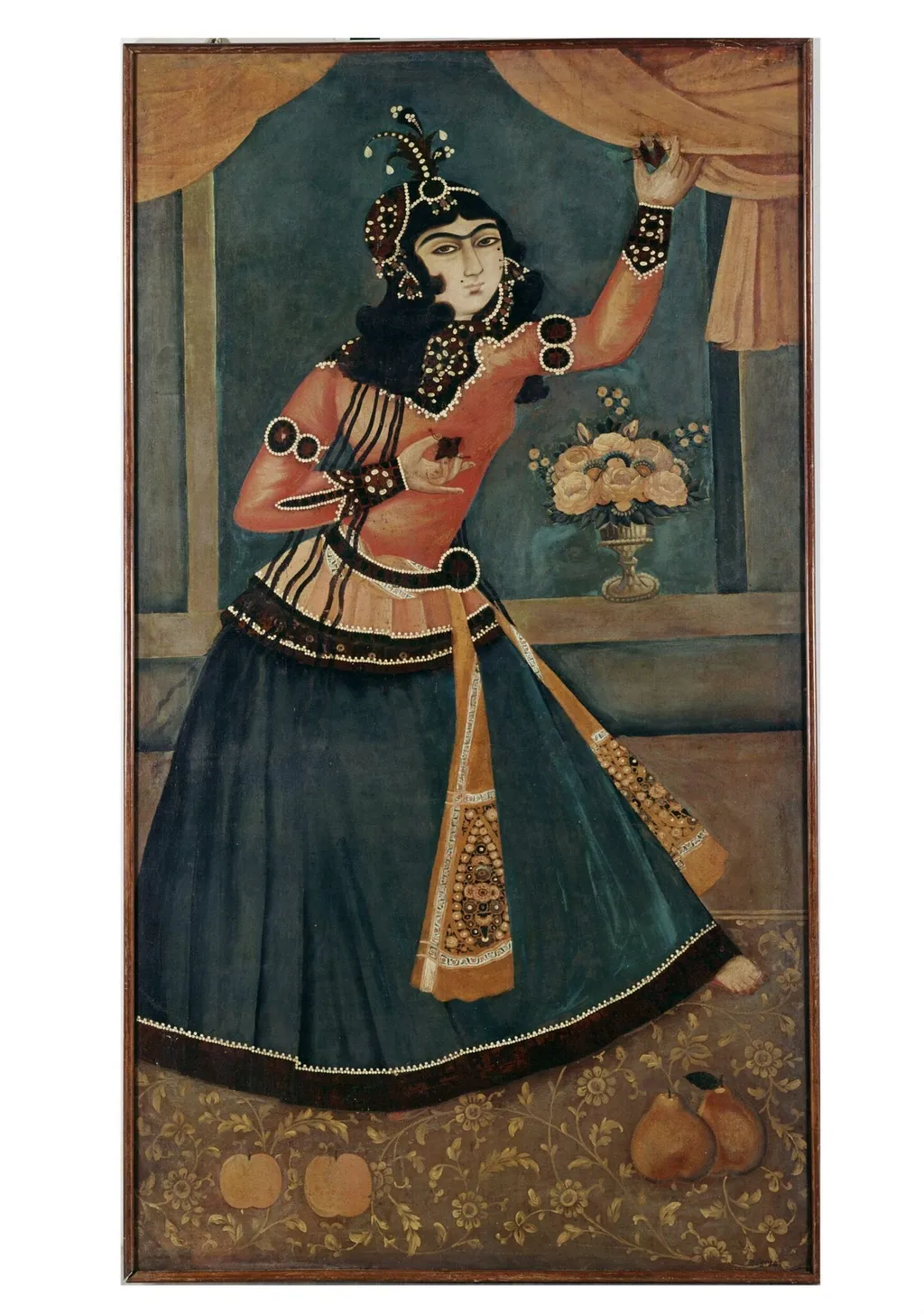
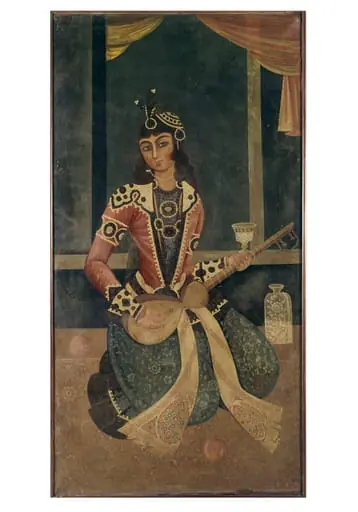
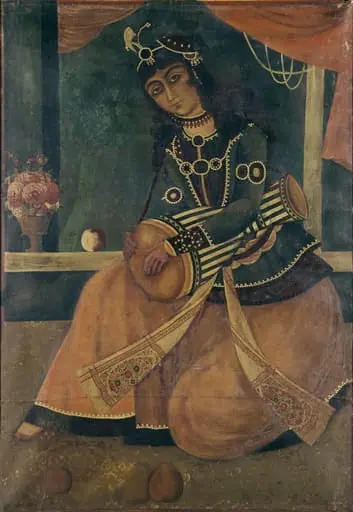
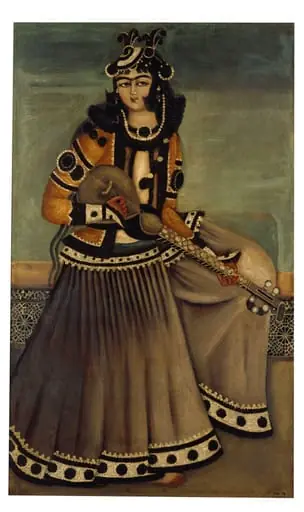
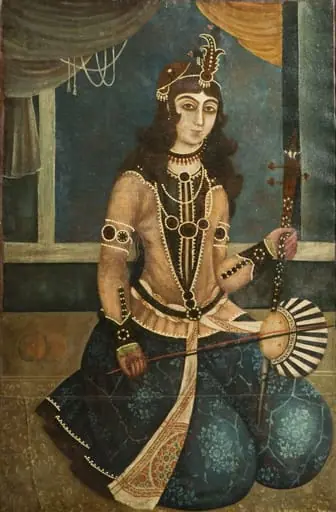
Lady Dancing and Playing Castanets is an oil painting by the Romanticist artist Unknown. It dates from 1800 and is held in the collection of the Victoria and Albert Museum. This oil painting, acquired by the Victoria and Albert Museum in 1876, belongs to a series once installed in a Qajar-era palace in Tehran.
About this work
The painting is interesting because it was possibly removed from a palace in Tehran, which was decorated with similar oil paintings.
The painting shows a lady dancing and playing castanets.
She's dressed in a long, flowing skirt and has a big smile on her face.
The painting is interesting because it was possibly removed from a palace in Tehran, which was decorated with similar oil paintings.
The lady in the painting is the main focus, and her figure is flattened, which is a characteristic of this style.
The painting's history is also notable, as it was part of a group purchased by a museum in 1876.
The painting can be compared by learning about the technique of glazing.
Overview
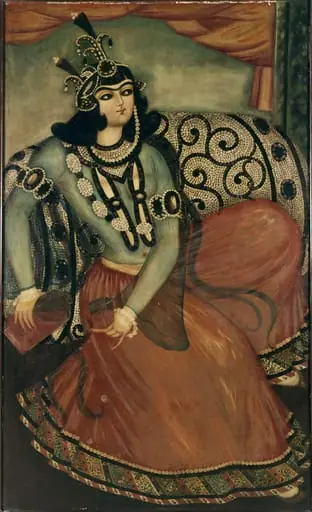
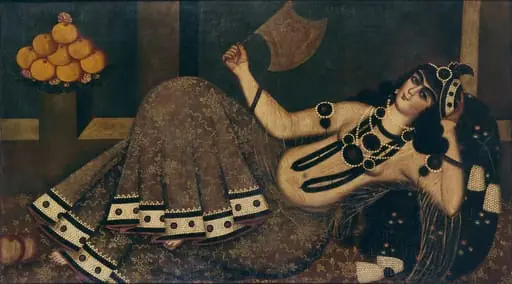
This oil painting, acquired by the Victoria and Albert Museum in 1876, belongs to a series once installed in a Qajar-era palace in Tehran. Likely commissioned during the reign of Fath 'Ali Shah (1797–1834), it reflects a revival of oil painting in Iran following decades of decline after the Afghan invasions. The work is one of many wall-mounted portraits depicting figures from royal circles, rendered in a distinctive flattened style with rich ornamentation.
Subject & Meaning
The subject is a woman engaged in dance, holding Iranian castanets, her expression lively and unguarded. Her elaborate attire and posture suggest a figure from the royal harem, though the scene is not a documented portrait but an idealized representation. These images were not intended as individual likenesses but as decorative symbols of courtly leisure, reinforcing the grandeur and refinement of the Qajar court through imagined moments of private entertainment.
Technique & Style
Painted in oils, the work employs a flattened perspective and elongated forms typical of early Qajar portraiture. Despite European influence on the medium after 1600, the composition retains Persian conventions: minimal spatial depth, emphasis on textile patterns, and stylized facial features. Glazing techniques may have been used to achieve luminous color layers, particularly in the fabric and skin tones, blending local aesthetics with imported methods.
History & Provenance
The painting was part of a larger collection removed from a palace built under Fath 'Ali Shah and later acquired by the V&A in 1876. Its origin as a wall panel suggests it was one of many such works used to adorn interior spaces in royal residences. The group’s removal and sale to a European institution reflect broader patterns of cultural displacement during the 19th century, as Qajar courts modernized and foreign collectors sought Persian art.
Context
Oil painting in Iran experienced a resurgence under the Qajar dynasty after the instability of the 18th century. Fath 'Ali Shah’s patronage encouraged artists to adapt European techniques to Persian subjects, resulting in a hybrid visual language. These wall paintings, often depicting courtly women, served both decorative and symbolic functions, projecting an image of refined power and cultural continuity amid political change.
Legacy
The painting stands as a testament to the Qajar era’s unique artistic synthesis, where indigenous traditions met foreign materials and methods. While once part of an immersive palace environment, its current display as a standalone object alters its original context. It remains a key example of how Persian visual culture evolved through cross-cultural exchange, preserving a moment when courtly imagery was reimagined for a new age.
Artist & collection

 Domestic Scene
 Giacomo and Cardinal Marco, investing Andrea, Abbot of San Zeno, with his Benefice
 The Nymph of Fontainebleau
 Portrait of a Woman
 Madonna and Child with Saints in the Enclosed Garden
 Venus and Minerva
 Family Group of Four on Sofa
 Wall painting from Room H of the Villa of P. Fannius Synistor at Boscoreale