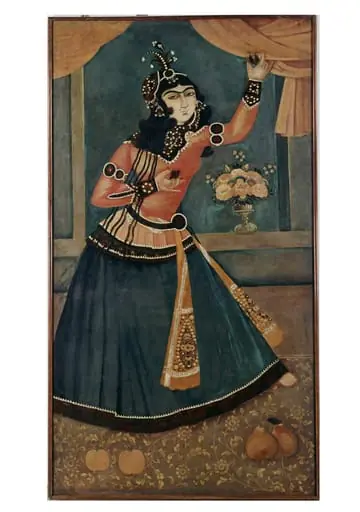
Artwork
Seated Woman Pouring Wine
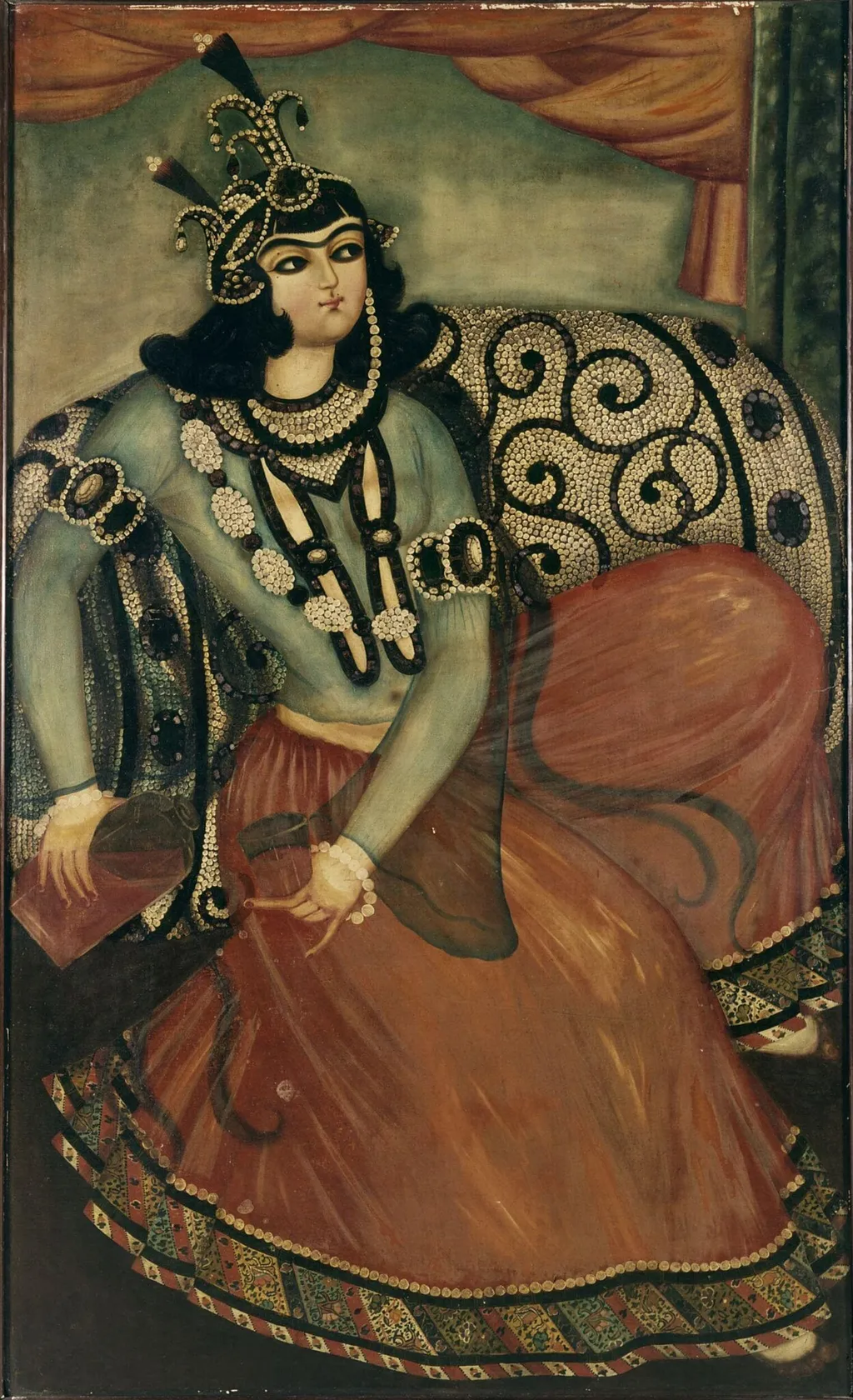
Seated Woman Pouring Wine is an oil painting by the Romanticist artist Unknown. It dates from 1800 and is held in the collection of the Victoria and Albert Museum. This oil painting, acquired by the Victoria and Albert Museum in 1876, belongs to a series once installed in a Qajar-era palace in Tehran.
About this work
The woman's figure is flattened, which is an interesting detail - it might be due to the way the painting was meant to be displayed, possibly built into a wall.
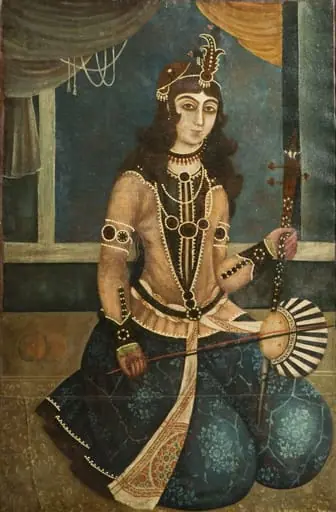
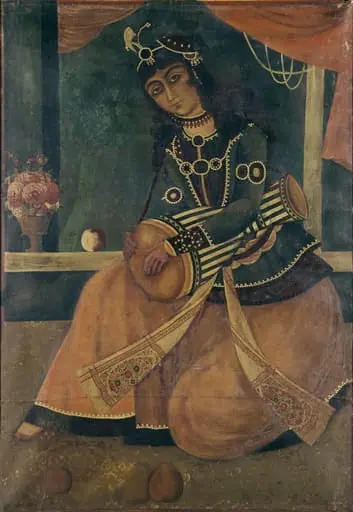
The painting shows a woman sitting and pouring wine.
She's the main focus, and the background is simple.
The woman's figure is flattened, which is an interesting detail - it might be due to the way the painting was meant to be displayed, possibly built into a wall.
The painting's history is also interesting. It was bought by the Victoria and Albert Museum in 1876, and it's thought to have come from a palace in Tehran.
The palace was built by Fath 'Ali Shah, who liked to decorate his homes with oil paintings like this one.
You can learn more about this style by looking into the technique of chiaroscuro.
Overview
This oil painting, acquired by the Victoria and Albert Museum in 1876, belongs to a series once installed in a Qajar-era palace in Tehran. Likely commissioned during the reign of Fath 'Ali Shah, it reflects a revival of oil painting in Iran after a period of decline following the Afghan invasions. The work is one of many wall-integrated portraits depicting figures from royal interiors, characterized by stylized forms and rich ornamentation.
Subject & Meaning
The figure is a woman seated on the floor, leaning against cushions as she pours wine from a flask into a glass. Her posture and setting suggest an intimate, private moment within a royal harem. Though the scene appears casual, its inclusion in palace decoration implies a symbolic function—perhaps evoking luxury, leisure, or the refined culture of the court, rather than documenting a specific individual.
Technique & Style
The painting employs oil on panel, a medium introduced to Iran through European trade after 1600. The figure is rendered with flattened proportions and minimal spatial depth, typical of Qajar portraiture. Decorative elements—textiles, jewelry, and furnishings—are rendered with meticulous detail, contrasting with the subdued background. This stylistic choice prioritizes ornamental richness over naturalism, aligning with courtly aesthetic preferences.
History & Provenance
The painting was part of a collection removed from a palace built under Fath 'Ali Shah and later acquired by the Victoria and Albert Museum in 1876. Its origin in a royal residence links it to a broader program of wall-mounted oil portraits commissioned by the Qajar court. The timing of its acquisition coincides with European interest in Persian art, though its exact path from Tehran to London remains undocumented.
Context
Oil painting in Iran experienced a resurgence under the Qajar dynasty, which reunified the country in the late 18th century. Fath 'Ali Shah actively promoted this medium, commissioning large series of portraits for his palaces. These works blended Persian iconographic traditions with European techniques, creating a distinctive visual language that emphasized status and courtly life over realism.
Legacy
This painting contributes to the understanding of Qajar visual culture as a hybrid tradition, neither fully Western nor purely indigenous. While such works were once considered decorative curiosities in Western collections, they are now recognized as significant artifacts of 19th-century Persian court life. Their preservation allows ongoing study of how local artistic practices adapted to new materials and patronage systems.
Artist & collection

 Domestic Scene
 Giacomo and Cardinal Marco, investing Andrea, Abbot of San Zeno, with his Benefice
 The Nymph of Fontainebleau
 Portrait of a Woman
 Madonna and Child with Saints in the Enclosed Garden
 Venus and Minerva
 Family Group of Four on Sofa
 Wall painting from Room H of the Villa of P. Fannius Synistor at Boscoreale