Artwork
Woman Carrying a Plate of Sweets
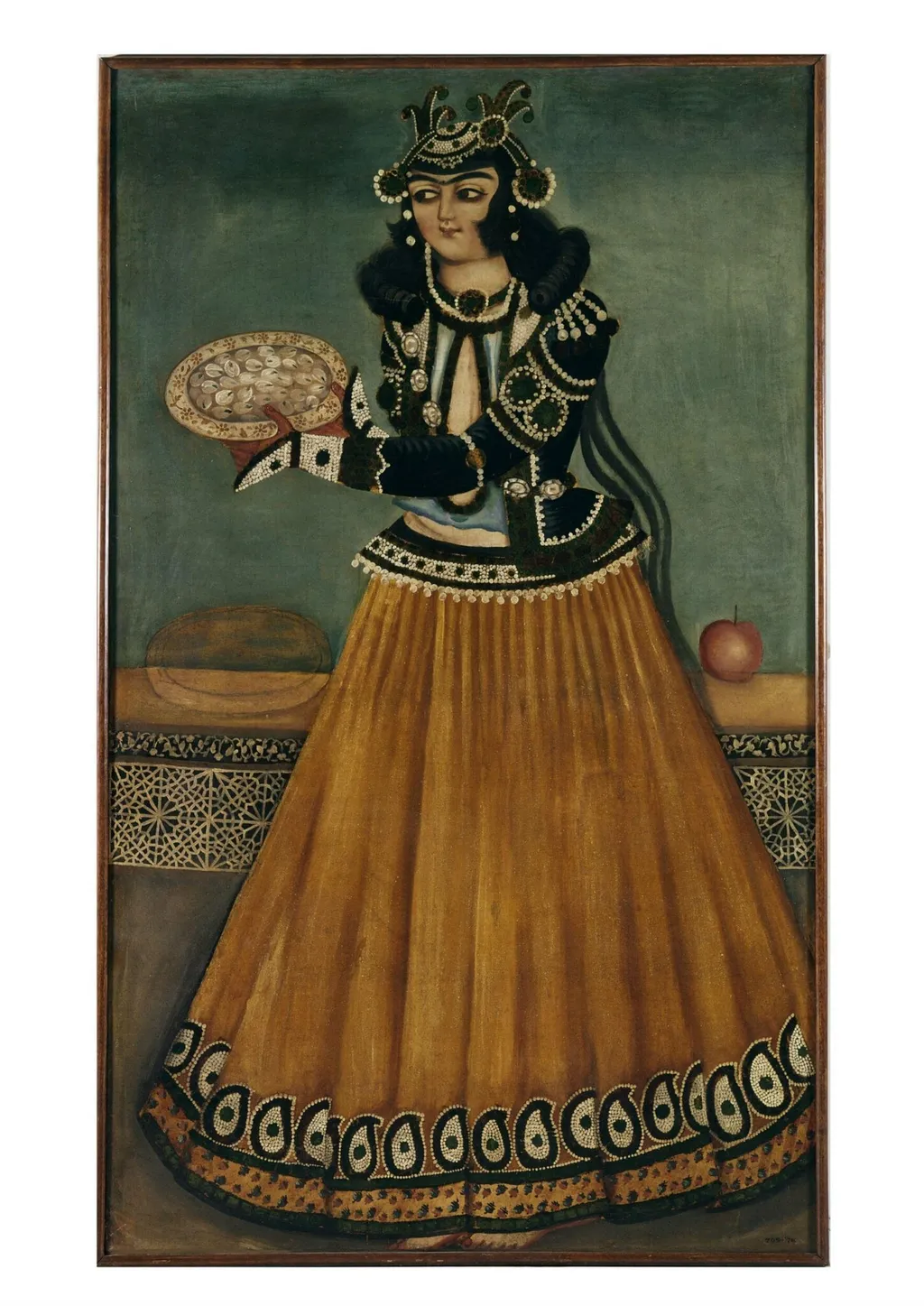
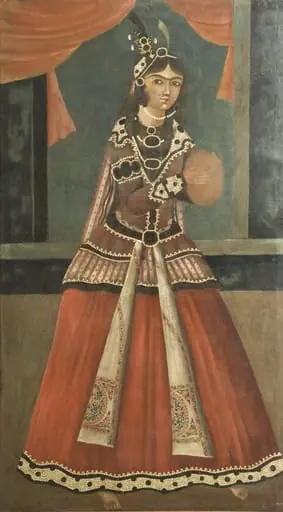
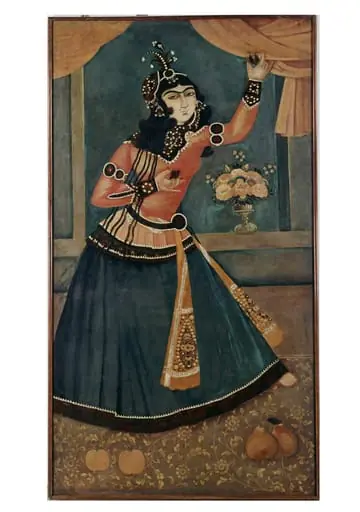
Woman Carrying a Plate of Sweets is an oil painting by the Romanticist artist Unknown. It dates from 1820 and is held in the collection of the Victoria and Albert Museum. The work depicts a solitary female figure holding a tray of confectionery, rendered in oil on canvas.
About this work
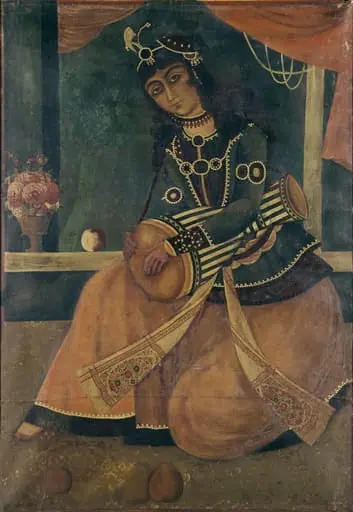
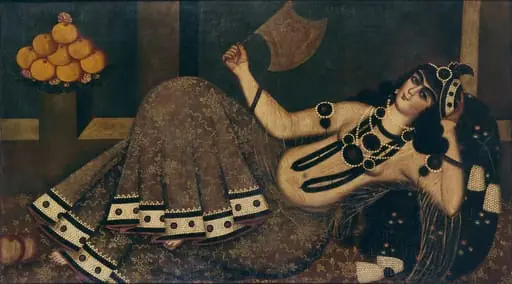
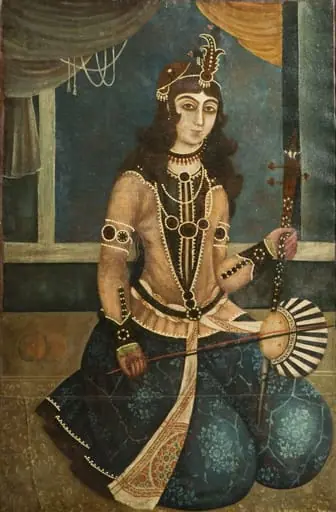
The painting is interesting because it was likely part of a series of oil paintings built into the walls of a palace in Tehran.
The painting shows a woman carrying a plate of sweets.
She's dressed in traditional clothes and has a calm face.
The painting is interesting because it was likely part of a series of oil paintings built into the walls of a palace in Tehran.
The woman is the main focus, and her figure is flattened, like the other paintings in the series.
These paintings were often used to decorate the residences of Fath 'Ali Shah, who reigned from 1797 to 1834.
The fact that this painting was removed from a palace and is now in a museum is a notable part of its history.
You can learn more about this style by looking into the technique of glazing.
Overview
The work depicts a solitary female figure holding a tray of confectionery, rendered in oil on canvas. The composition is characterized by a flattened silhouette and intricate ornamental detailing that emphasize surface pattern over three‑dimensional modeling. The figure’s serene expression and traditional attire focus the viewer’s attention on the act of offering, a motif common in decorative palace panels of early nineteenth‑century Iran.
Subject & Meaning
The central figure is presented as a member of a royal harem, a conventional theme in courtly art that conveys hospitality and the pleasures of court life. By holding a plate of sweets, the woman embodies the role of a gracious host, suggesting abundance and the refined sensibilities of the Qajar elite. The calm demeanor reinforces an idealized vision of feminine poise within the domestic sphere of the palace.
Technique & Style
Executed in oil, the painting employs a glazing technique that builds luminous layers of pigment, allowing subtle color shifts across the richly patterned garments. The figure’s outline is deliberately flattened, a stylistic choice that aligns with the decorative wall panels favored by Fath‑Ali Shah’s residences. Fine linear ornamentation and a limited spatial depth create a tapestry‑like surface, typical of Qajar court painting.
History & Provenance
Acquired by the Victoria and Albert Museum in 1876, the panel was recorded at that time as originating from the Shah’s palace in Tehran. It is likely one of several panels integrated into the walls of a palace constructed under Fath‑Ali Shah (reigned 1797–1834). The removal of such panels for European collections reflects 19th‑century interest in Persian decorative arts and the dispersal of court interiors.
Context
Oil painting entered Iran after the early seventeenth century through commercial contact with Europe, but production waned after the Afghan invasion of 1722. The Qajar dynasty’s consolidation of power in the 1780s revived the medium, with Fath‑Ali Shah’s patronage fostering a distinctive court style that blended European techniques with Persian ornamental traditions. This panel exemplifies that resurgence, illustrating how royal commissions shaped the visual culture of the period.
Artist & collection

 Domestic Scene
 Giacomo and Cardinal Marco, investing Andrea, Abbot of San Zeno, with his Benefice
 The Nymph of Fontainebleau
 Portrait of a Woman
 Madonna and Child with Saints in the Enclosed Garden
 Venus and Minerva
 Family Group of Four on Sofa
 Wall painting from Room H of the Villa of P. Fannius Synistor at Boscoreale