Artwork
Landscape with a Ruin
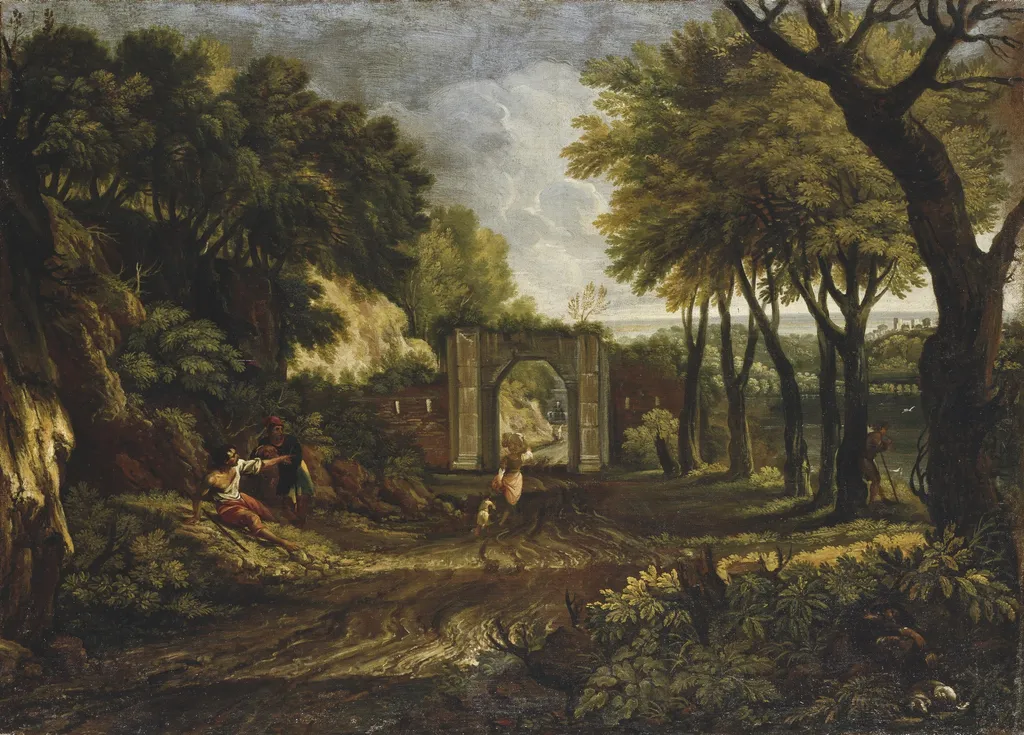
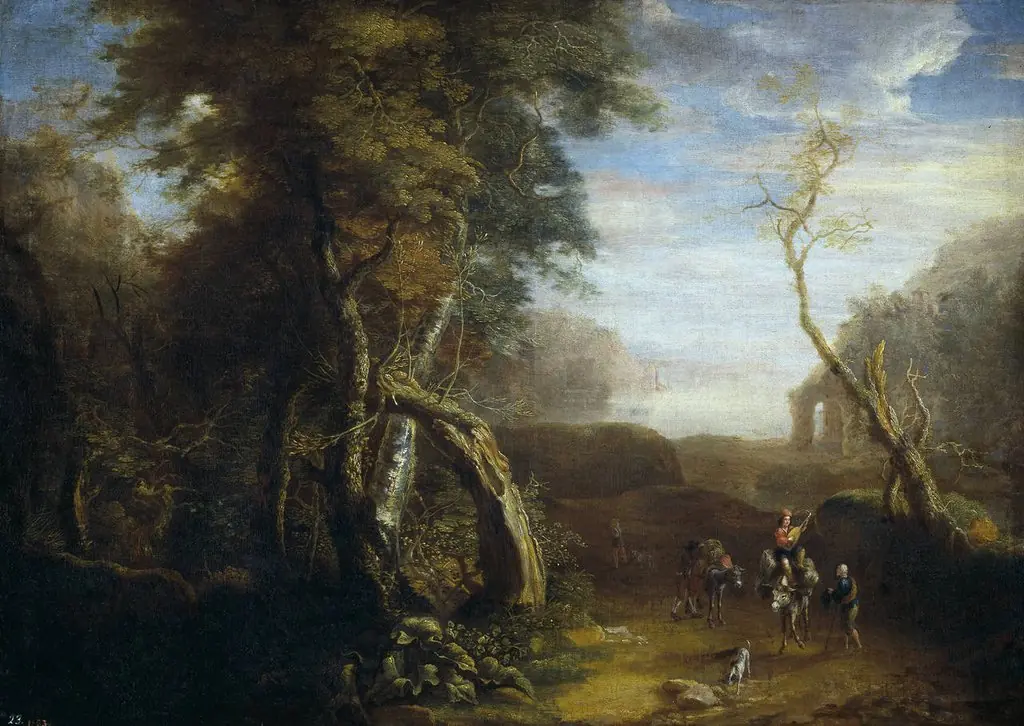
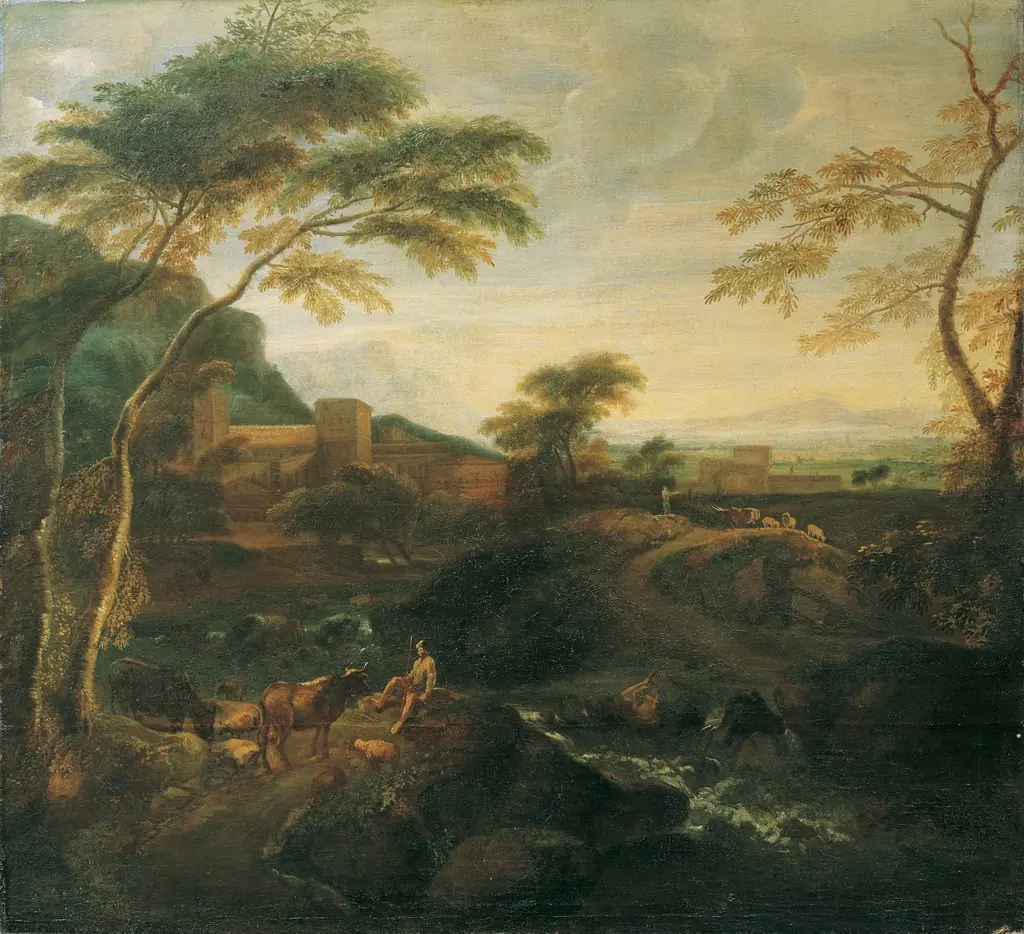
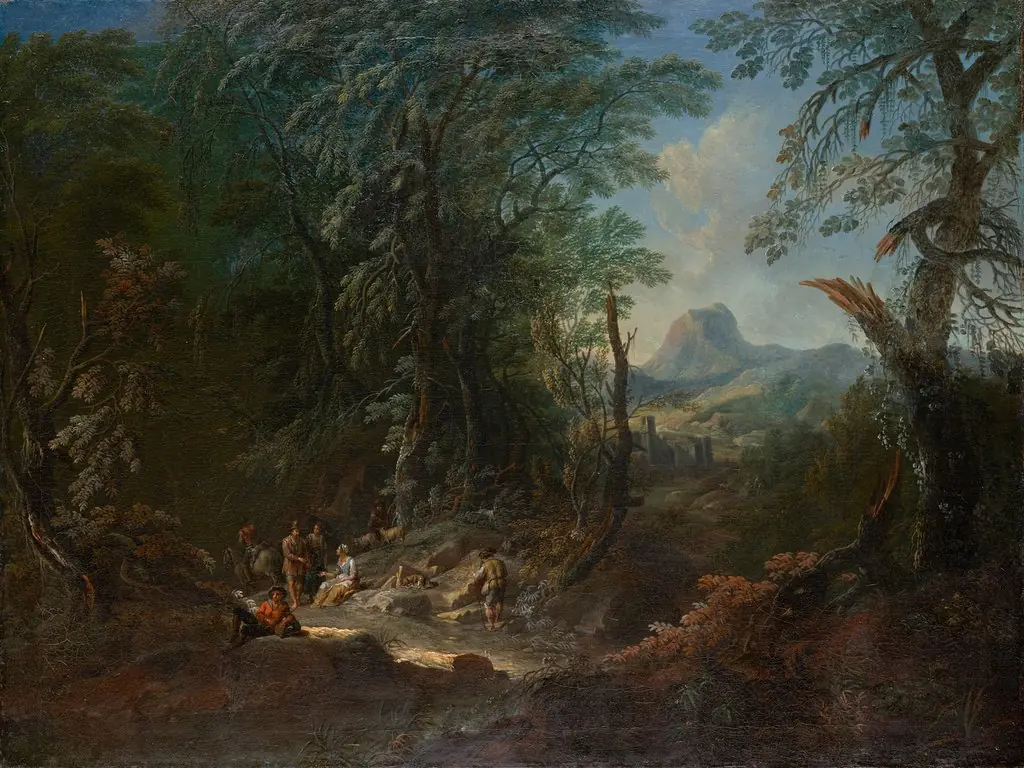
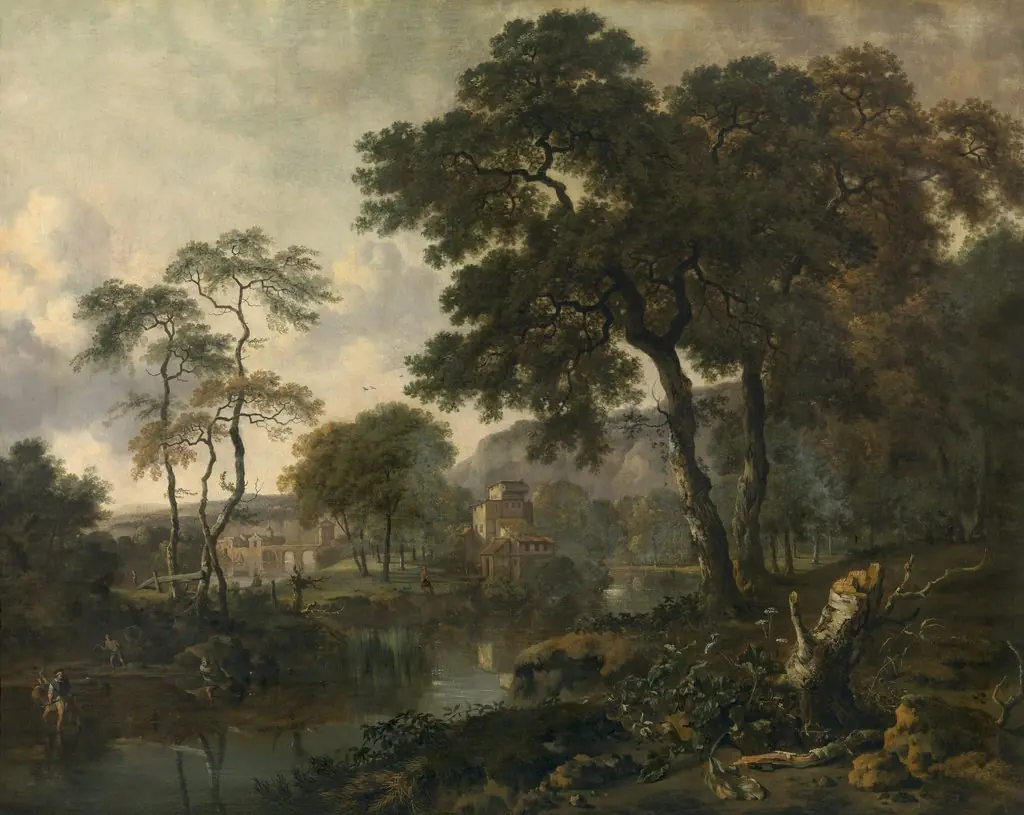
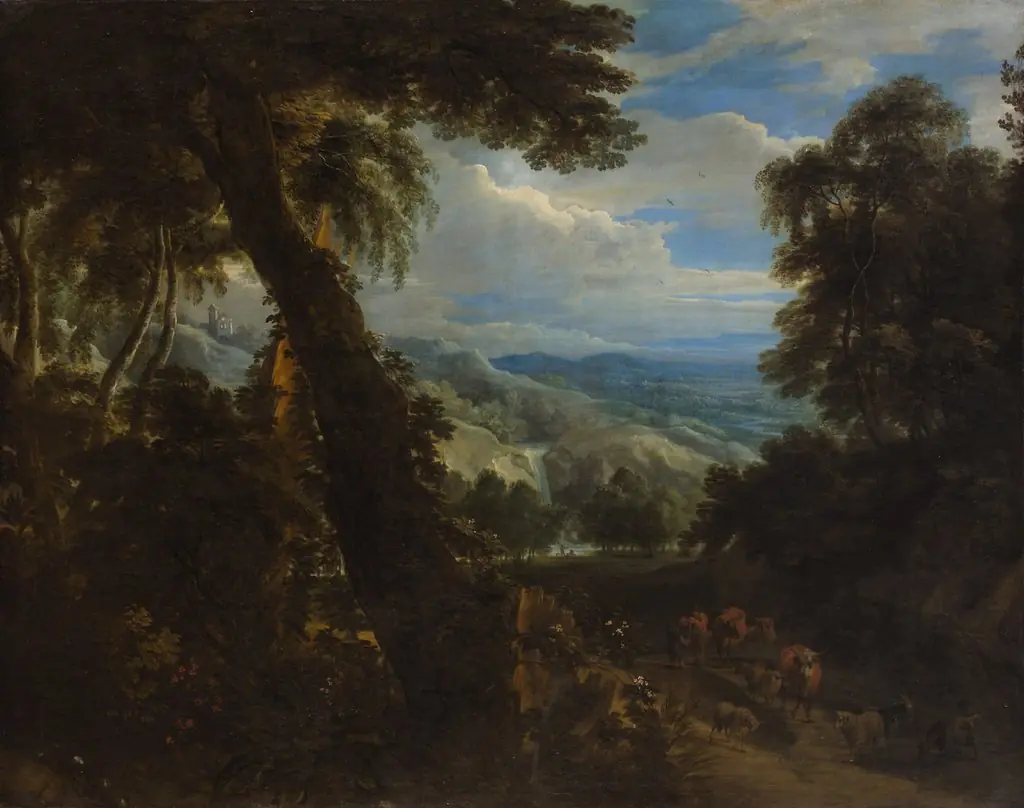
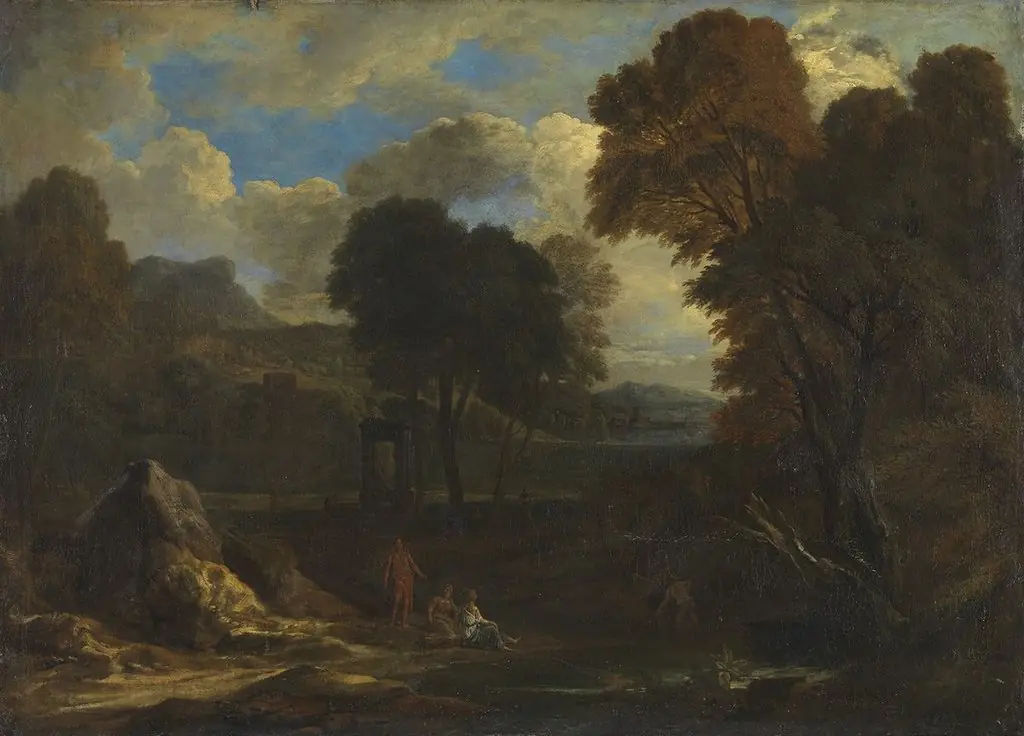
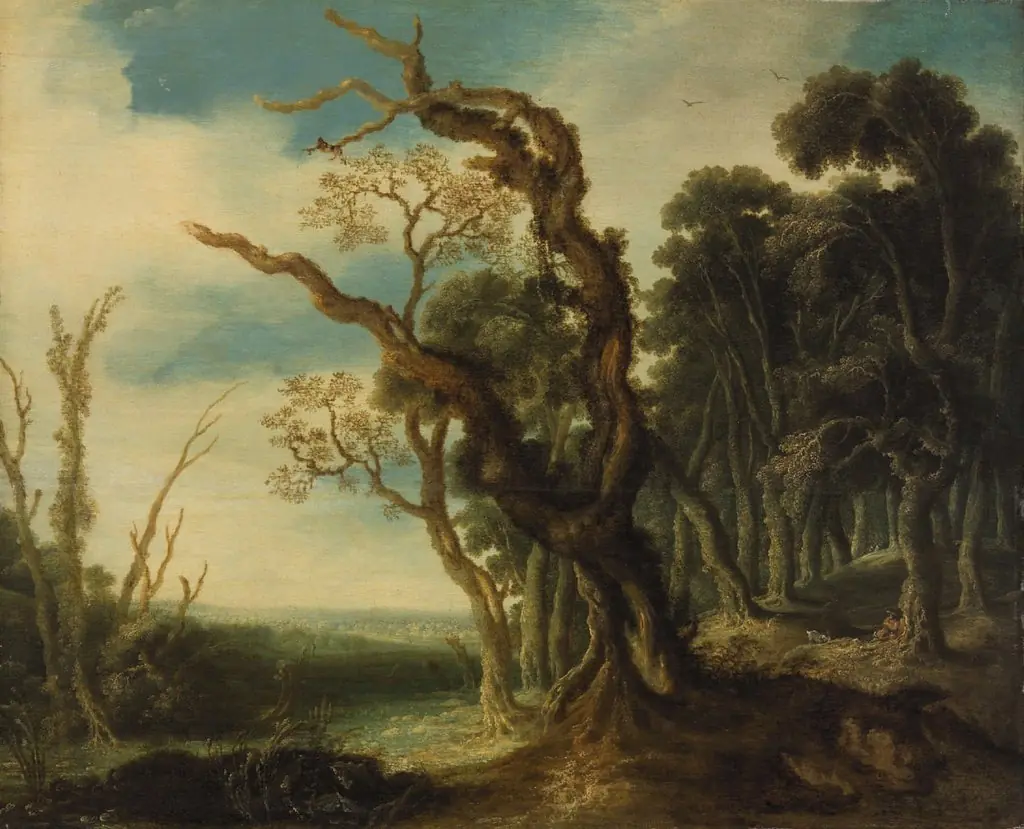
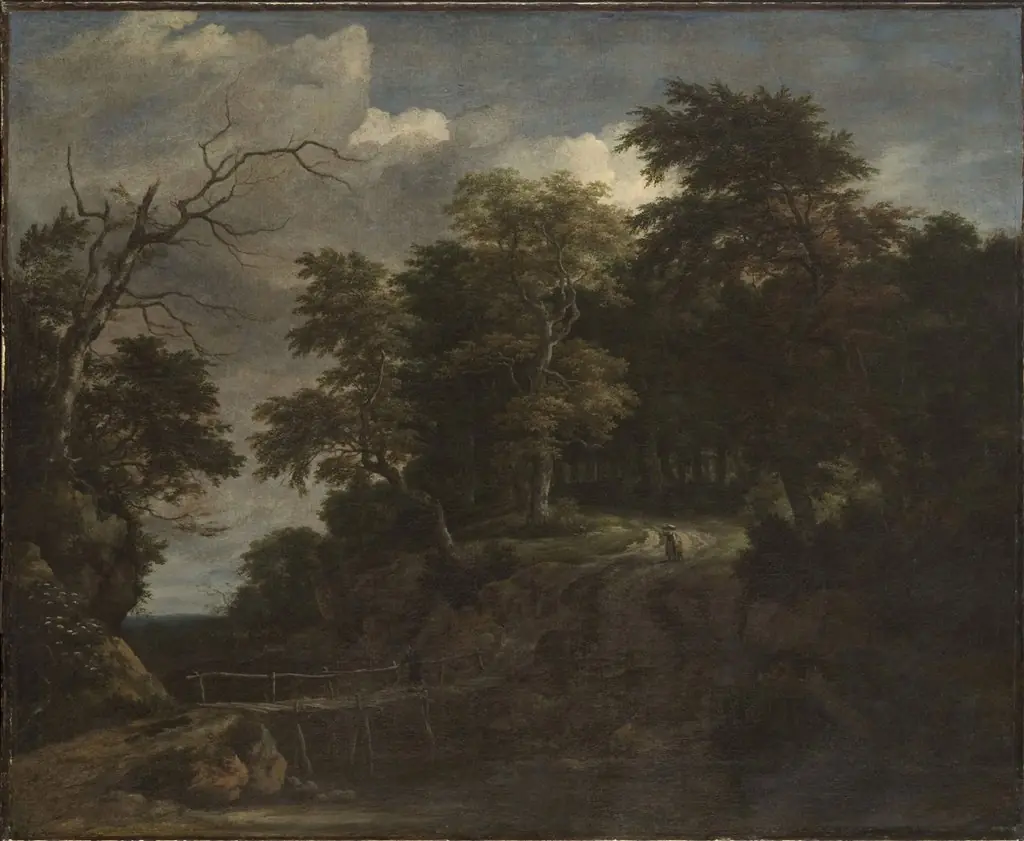
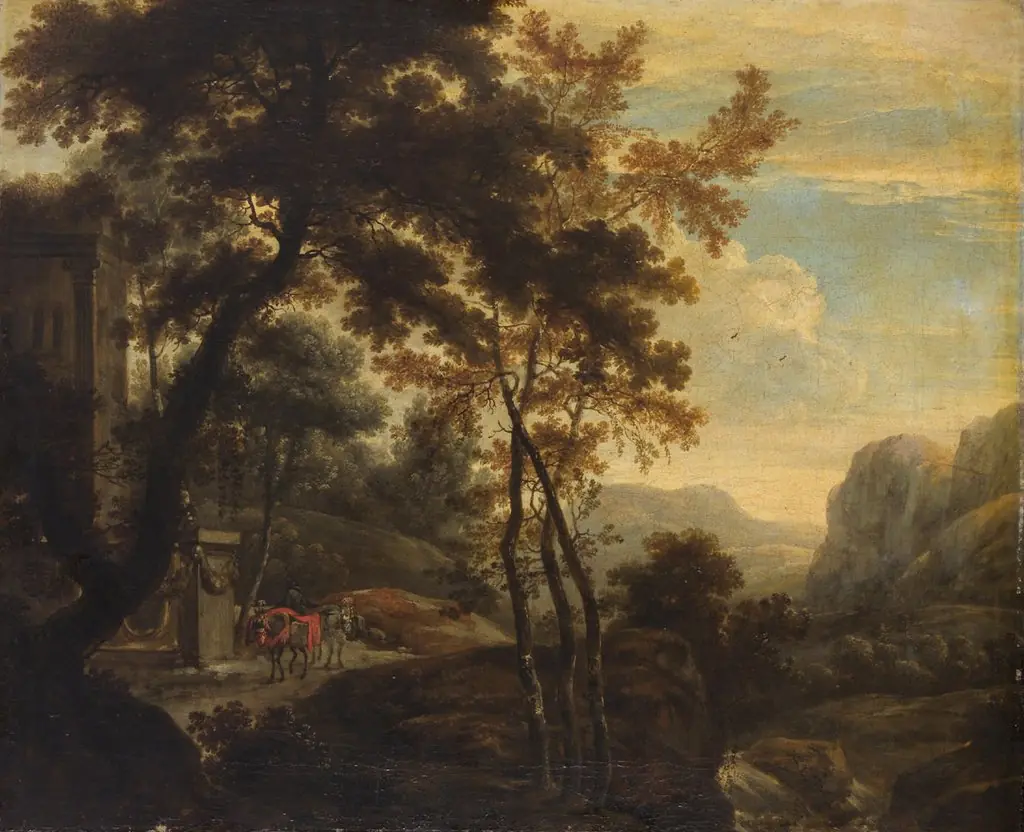
Landscape with a Ruin is an oil painting by Unknown. It dates from 1850 and is held in the collection of the Nationalmuseum. This oil painting depicts a quiet rural landscape centered on a crumbling architectural ruin.
About this work
Overview
A solitary figure sits on a stone, gesturing toward an unseen point, drawing attention to the ruin in the distance.
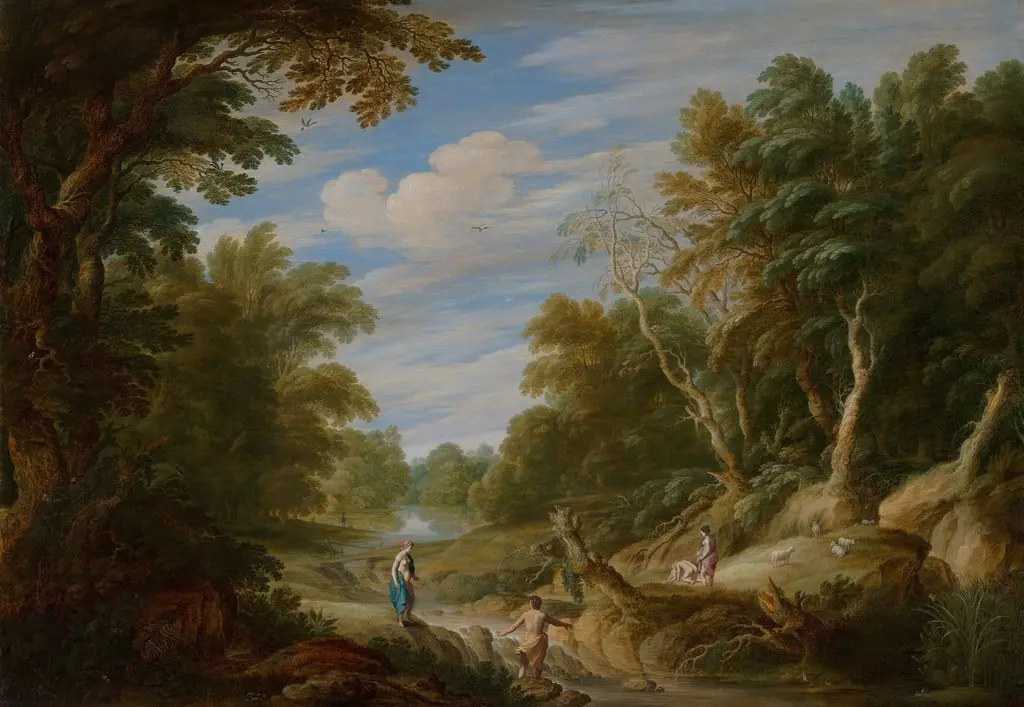
This oil painting depicts a quiet rural landscape centered on a crumbling architectural ruin. A narrow river with a small cascade flows through the foreground, flanked by dense foliage. A solitary figure sits on a stone, gesturing toward an unseen point, drawing attention to the ruin in the distance. The palette is dominated by muted greens and browns, reinforcing a subdued, naturalistic atmosphere.
Subject & Meaning
The figure’s gesture and the presence of the ruin suggest contemplation of time and decay. The lone human presence, small against the landscape, implies humility before nature and history. The ruin, neither fully collapsed nor restored, evokes quiet nostalgia rather than dramatic loss, inviting reflection on impermanence without overt narrative.
Technique & Style
The composition uses subtle tonal gradations to create depth, with lighter areas guiding the eye toward the ruin. Foliage is rendered with loose, textured brushwork, while the architecture is simplified into massed forms. Light falls unevenly, suggesting atmospheric perspective rather than sharp chiaroscuro, enhancing the scene’s quiet realism.
History & Provenance
The painting’s origin and early ownership are undocumented. Its style aligns with 17th-century Dutch and Flemish landscape traditions, where ruins were commonly included to evoke historical continuity. No known records link it to a specific artist or collection prior to modern cataloging.
Context
During the 17th century, landscapes with ruins were popular in Northern Europe, reflecting both aesthetic interest in nature and philosophical engagement with antiquity. Such scenes often served as meditations on the passage of time, resonating with contemporary humanist thought and the growing interest in classical ruins as symbols of transience.
Legacy
The painting contributes to a broader tradition of landscape art that integrates architectural remnants to evoke mood over narrative. While not widely exhibited or studied, it exemplifies how minor works of the period preserved cultural attitudes toward nature, memory, and the passage of time through understated visual means.
Artist & collection

 Domestic Scene
 Giacomo and Cardinal Marco, investing Andrea, Abbot of San Zeno, with his Benefice
 The Nymph of Fontainebleau
 Portrait of a Woman
 Madonna and Child with Saints in the Enclosed Garden
 Venus and Minerva
 Family Group of Four on Sofa
 Wall painting from Room H of the Villa of P. Fannius Synistor at Boscoreale