Artwork
Landscape with an Angel Bearing the Crown of Martyrdom; Saint James the Greater and Hermogenes (on verso)
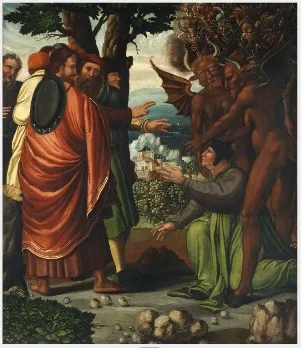
Landscape with an Angel Bearing the Crown of Martyrdom; Saint James the Greater and Hermogenes (on verso) is an unspecified painting by the High Renaissance artist Unknown. It dates from 1520 and is held in the collection of the National Gallery of Ireland.
About this work
Overview
This painting presents a narrative scene set against a rugged natural backdrop, with figures arranged to emphasize emotional and spiritual tension.
This painting presents a narrative scene set against a rugged natural backdrop, with figures arranged to emphasize emotional and spiritual tension. A central tree anchors the composition, while the figures are grouped in a dynamic, asymmetrical formation. The use of strong contrasts in light and shadow guides attention toward the kneeling figure and the outstretched hand of the standing individual, suggesting a moment of revelation or intervention.
Subject & Meaning
The scene likely illustrates a moment from the martyrdom of Saint James the Greater, with the angel bearing the crown symbolizing divine recognition of his sacrifice. The kneeling figure may represent Hermogenes, a convert or witness, while the standing figure could be the saint himself or a divine messenger. The gathering crowd implies communal witness, reinforcing themes of faith, suffering, and spiritual reward.
Technique & Style
The artist employs chiaroscuro to model forms and heighten emotional intensity, with deep shadows contrasting against illuminated robes and skin. Rich, saturated colors—particularly the red cloak—draw focus without overwhelming the composition. The rocky terrain and textured tree bark add tactile realism, while the spatial arrangement creates depth through overlapping planes and atmospheric perspective.
History & Provenance
The painting’s verso bears an image of Saint James the Greater and Hermogenes, suggesting it was part of a double-sided panel, common in devotional altarpieces of the late medieval or early Renaissance period. Its original context was likely ecclesiastical, intended for private or chapel veneration. No definitive record of its early ownership survives, but its construction points to a Northern European workshop.
Context
Created during a period when religious narratives dominated visual culture, the work reflects the growing emphasis on emotional engagement in sacred stories. The inclusion of specific saints and symbolic elements like the martyr’s crown aligns with hagiographic traditions popular in devotional art. The naturalistic landscape, though stylized, signals a shift toward integrating earthly settings with divine events.
Legacy
Though not widely documented in major collections, the painting exemplifies the transition from symbolic medieval iconography toward more psychologically nuanced religious scenes. Its dual-sided format and use of chiaroscuro place it within a broader regional tradition that influenced later Renaissance altarpieces, particularly in the Low Countries and Spain.
Artist & collection

 Domestic Scene
 Giacomo and Cardinal Marco, investing Andrea, Abbot of San Zeno, with his Benefice
 The Nymph of Fontainebleau
 Portrait of a Woman
 Madonna and Child with Saints in the Enclosed Garden
 Venus and Minerva
 Family Group of Four on Sofa
 Wall painting from Room H of the Villa of P. Fannius Synistor at Boscoreale
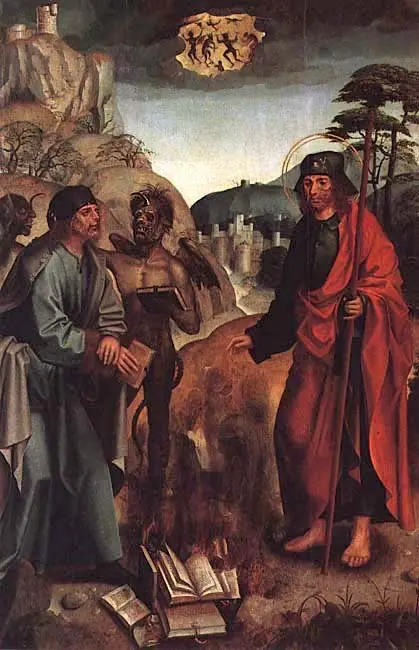 Santiago and Hermógenes
 The King’s Spies Bring Him News of Dymphna’s Hideout
 Pregação de São João Baptista
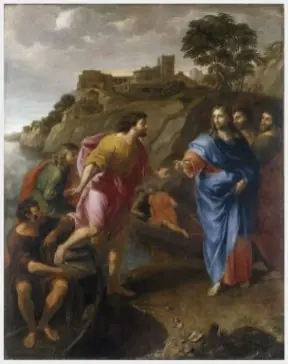 The Calling of the Sons of Zebedee
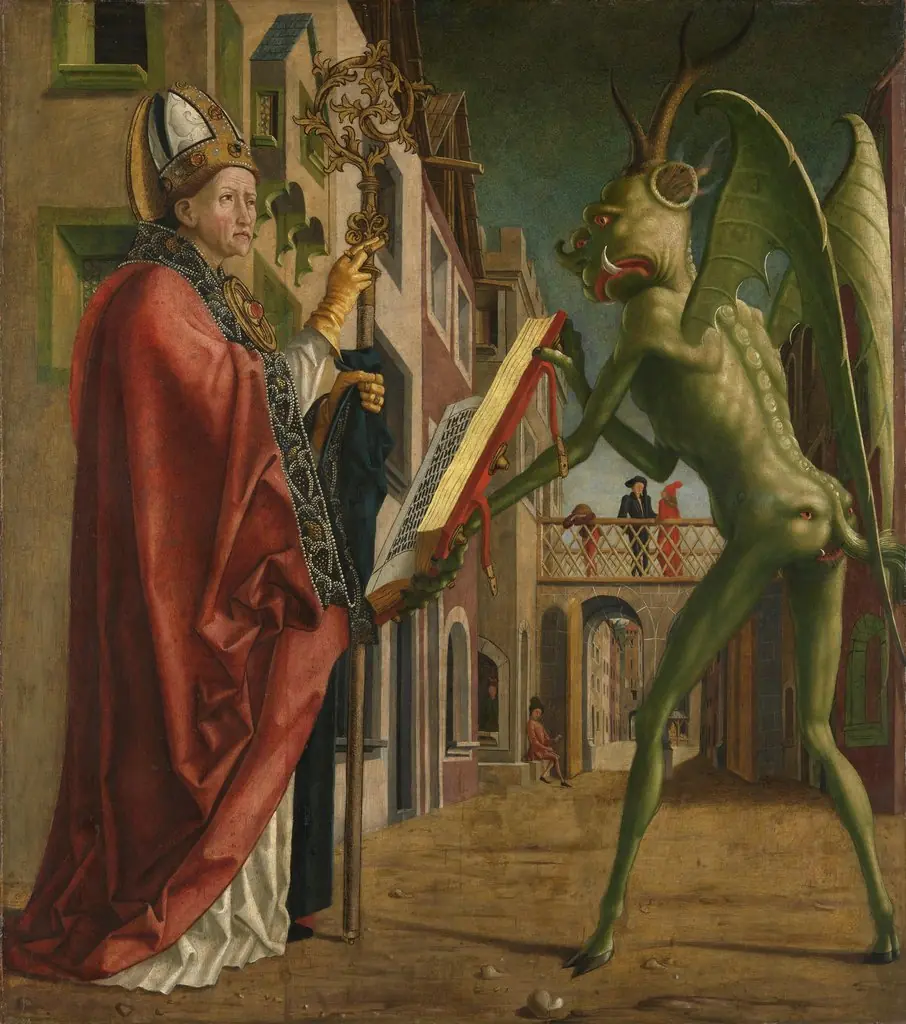 Kirchenväteraltar, Flügelaußenseite: Der Teufel weist dem hl. Augustinus das Buch der Laster vor
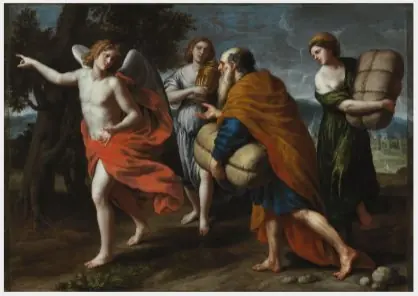 An Angel Leading Lot and his Daughters out of Sodom
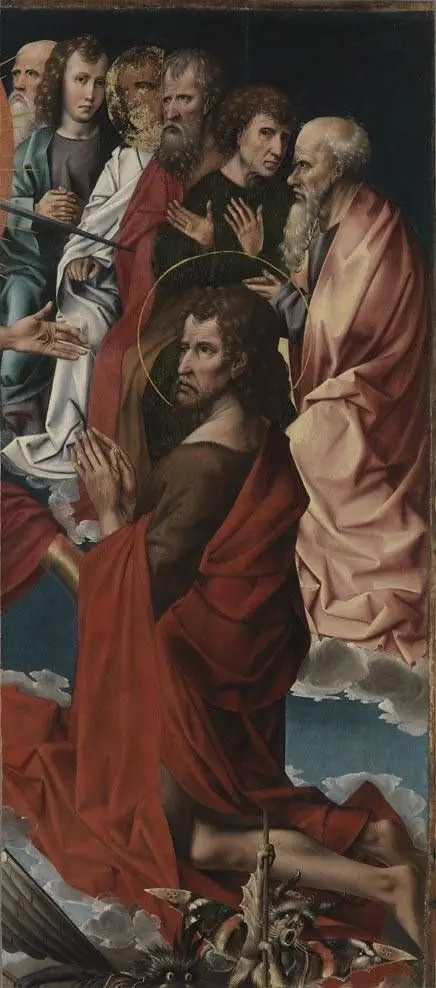 Last Judgement: Saint John the Baptist with six apostles
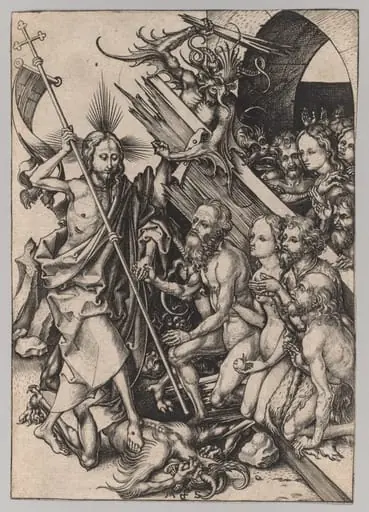 The Passion: Christ in Limbo
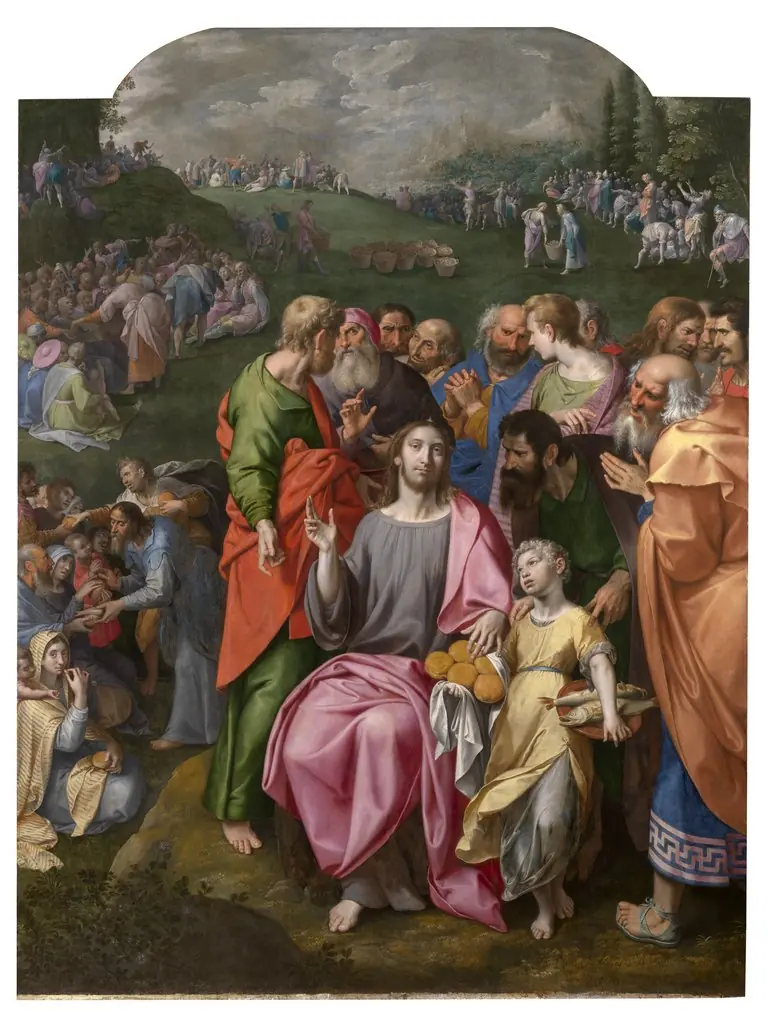 The Multiplication of Loaves and Fishes
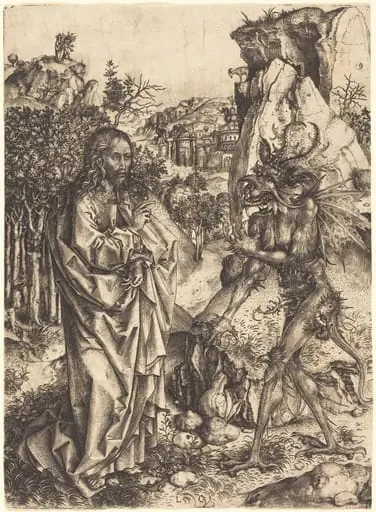 The Temptation of Christ