Artwork
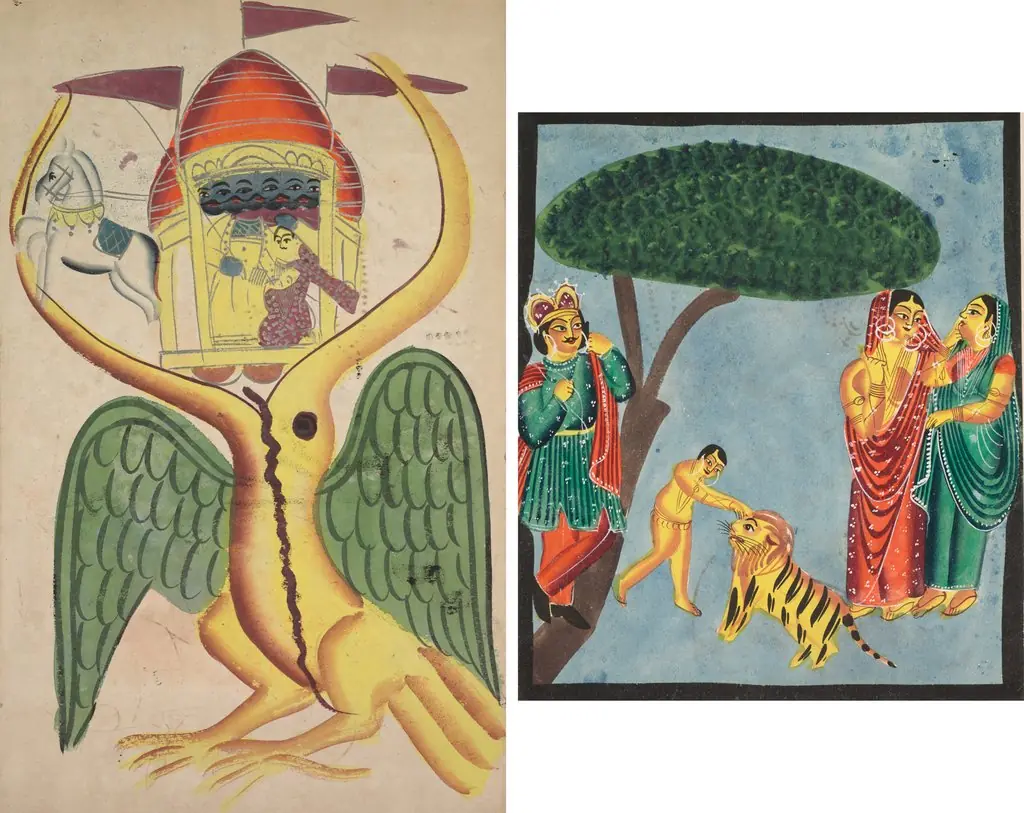
Leaf from a Kalighat album: Jatayu hinders Ravana’s chariot, trying to prevent the abduction of Sita (recto); Dushyanta watching his son Bharat playing with the tiger at the end of the Abhijnanashakuntalam (verso)
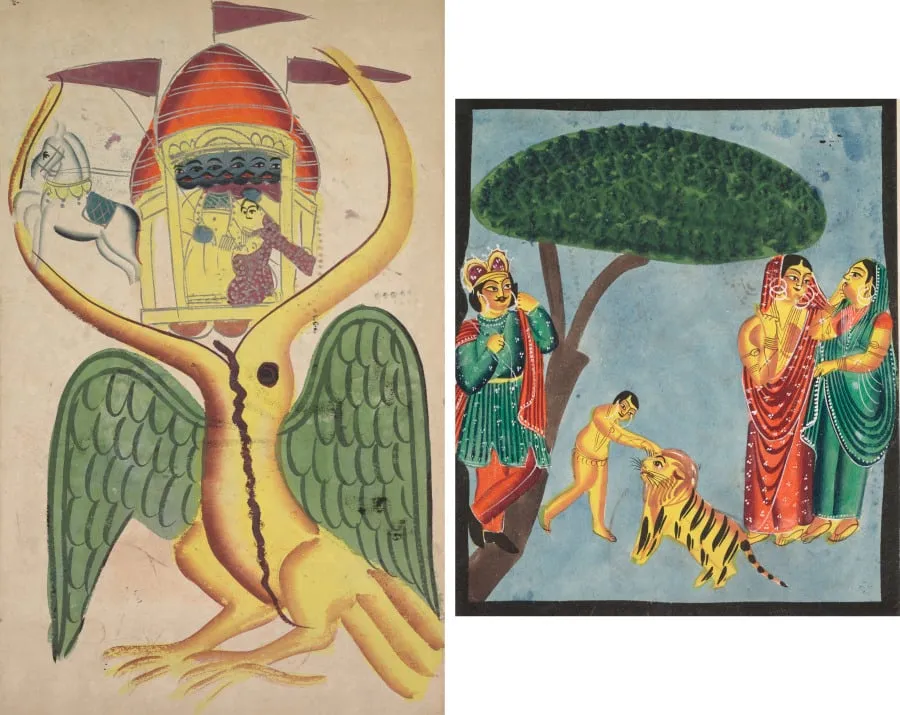
Leaf from a Kalighat album: Jatayu hinders Ravana’s chariot, trying to prevent the abduction of Sita (recto); Dushyanta watching his son Bharat playing with the tiger at the end of the Abhijnanashakuntalam (verso) is an unspecified painting by the Patna School of Painting artist Unknown. It dates from 1890 and is held in the collection of the Cleveland Museum of Art. This double-sided painting comes from a small album produced in 19th-century Kolkata near the Kalighat temple.
About this work
Overview
Made on inexpensive paper with bold outlines and flat pigments, these works were affordable devotional images sold to pilgrims and local buyers.
This double-sided painting comes from a small album produced in 19th-century Kolkata near the Kalighat temple. Each side depicts a distinct episode from Hindu epics: one showing Jatayu’s attempt to stop Ravana’s abduction of Sita, the other portraying Dushyanta observing his son Bharat with a tiger cub. Made on inexpensive paper with bold outlines and flat pigments, these works were affordable devotional images sold to pilgrims and local buyers.
Subject & Meaning
The recto illustrates Jatayu, the vulture king, seizing Ravana’s chariot in his beak to halt the abduction of Sita, a moment from the Ramayana. Rather than emphasizing defeat, the image highlights his courage and devotion, portraying him as an active protector. The verso shifts to a scene from the Mahabharata’s precursor, the Abhijnanashakuntalam, where King Dushyanta watches his infant son Bharat play with a tiger, symbolizing harmony between royalty and nature.
Technique & Style
Executed in the Kalighat style, the painting uses strong, fluid ink outlines and unmodulated color applied quickly on paper. Figures are simplified, with exaggerated gestures to convey narrative clarity. The lack of perspective and flattened space reflects a folk aesthetic, prioritizing symbolic expression over realism. The same sheet’s dual imagery suggests efficient use of materials and a visual rhythm suited to oral storytelling traditions.
History & Provenance
Produced in the mid-1800s by itinerant artists near Kalighat Temple in Kolkata, these paintings were sold as inexpensive souvenirs to temple visitors. The double-sided format was practical, conserving materials while offering two sacred narratives. Their mass production and low cost indicate a thriving local market for devotional art, distinct from elite courtly traditions, and reflect the growing urban culture of colonial Bengal.
Context
Kalighat paintings emerged as urban folk art during British colonial rule, blending traditional Hindu iconography with contemporary social observation. While many depicted deities or satirical scenes, this album leaf preserves two classical tales, showing how mythic narratives remained central to popular devotion. The pairing of heroic struggle and domestic serenity suggests a broader cultural interest in dharma—duty and moral order—across different life stages.
Legacy
These works represent a shift in Indian art from temple-centric patronage to a commercial, public sphere. Their accessibility helped preserve epic narratives among non-elite audiences. Though later replaced by lithographs and photographs, Kalighat paintings influenced modern Indian artists seeking to reclaim indigenous visual language, establishing a precedent for art rooted in everyday life and shared myth.
Artist & collection

 Domestic Scene
 Giacomo and Cardinal Marco, investing Andrea, Abbot of San Zeno, with his Benefice
 The Nymph of Fontainebleau
 Portrait of a Woman
 Madonna and Child with Saints in the Enclosed Garden
 Venus and Minerva
 Family Group of Four on Sofa
 Wall painting from Room H of the Villa of P. Fannius Synistor at Boscoreale
 Leaf from a Kalighat album: Jatayu hinders Ravana’s chariot, trying to prevent the abduction of Sita (recto); Dushyanta watching his son Bharat playing with the tiger at the end of the Abhijnanashakuntalam (verso)
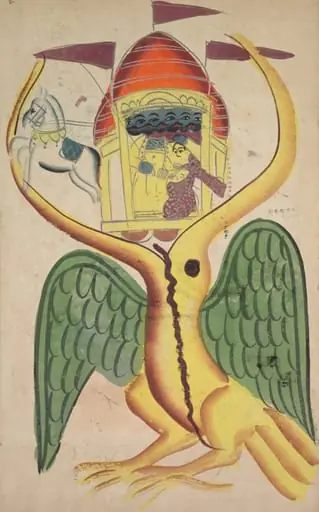 Jatayu hinders Ravana’s chariot, trying to prevent the abduction of Sita (recto), from a Kalighat album
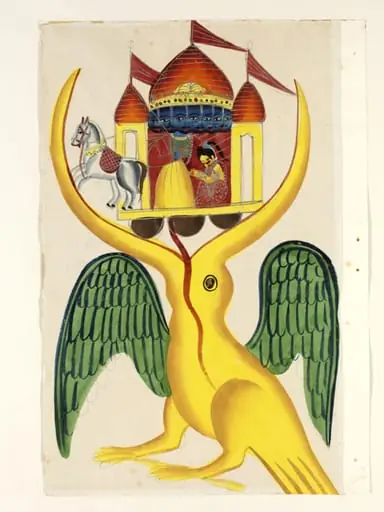 Jatayu, Sita and Ravana
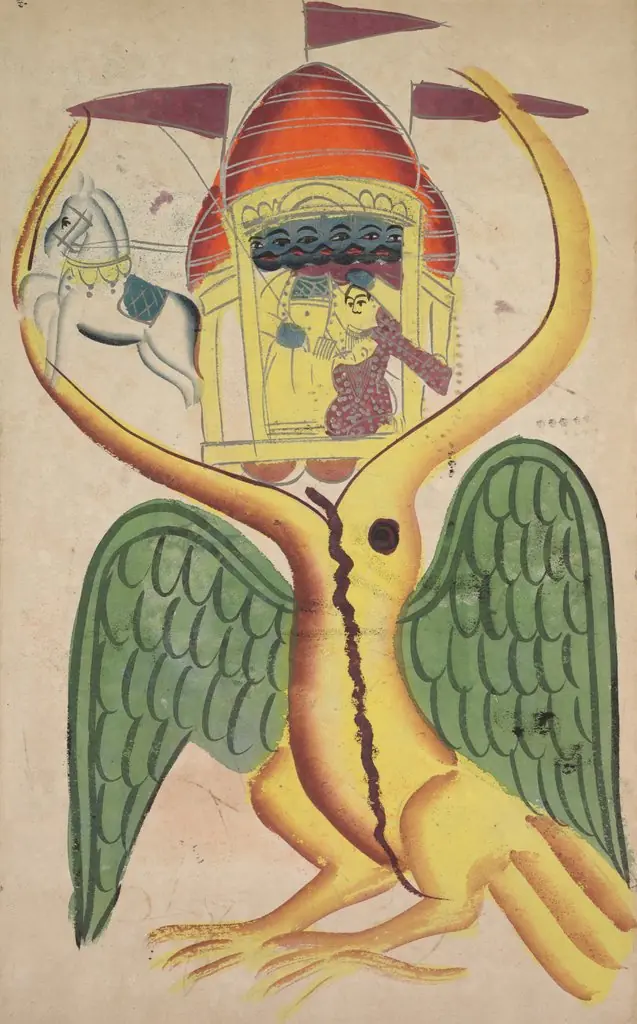 Jatayu hinders Ravana’s chariot, trying to prevent the abduction of Sita (recto), from a Kalighat album
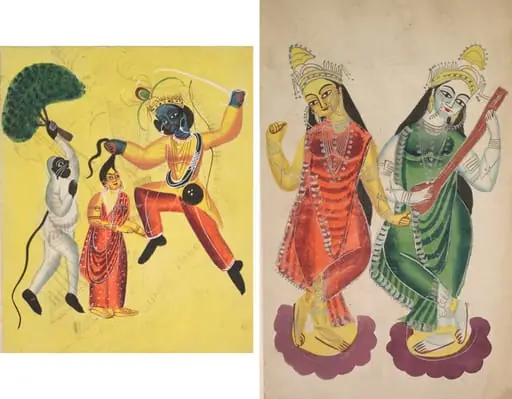 Leaf from a Kalighat album: Hanuman attacks Indrajit holding an apparition of Sita by the hair (recto); Goddesses Lakshmi and Sarasvati (verso)
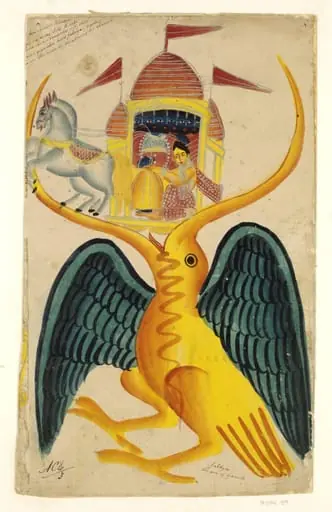 Ravana, Sita and Jatayu
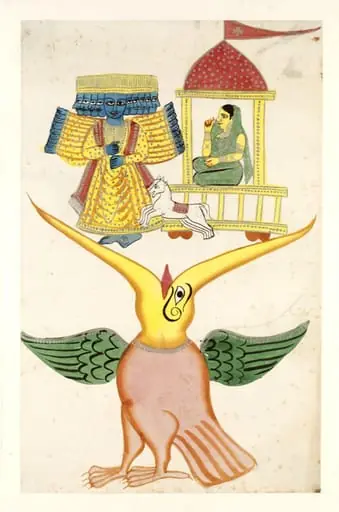 Jatayu, Ravana and Sita
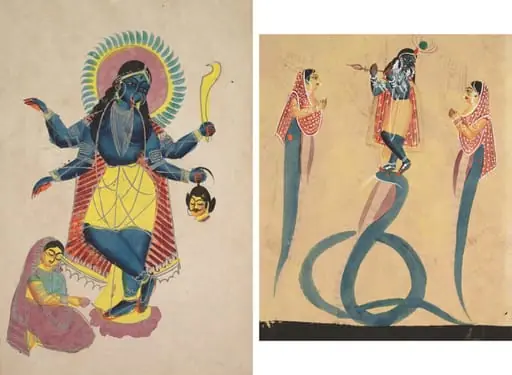 Leaf from a Kalighat album: Krishna as Kali worshipped by Radha (recto); Krishna quells the serpent Kaliya (verso)
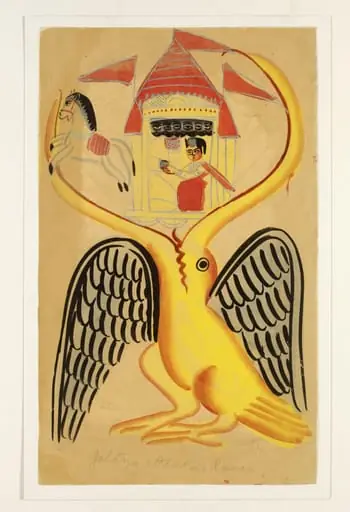 Jatayu, Ravana and Sita
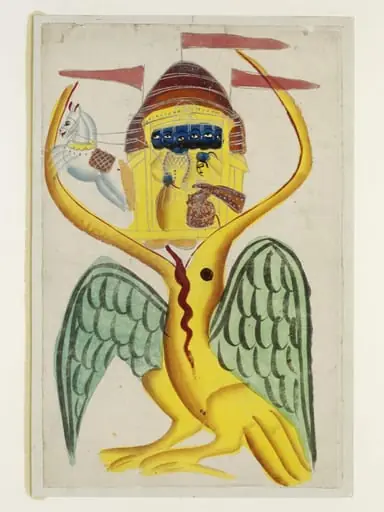 Ravana, Sita and Jatayu
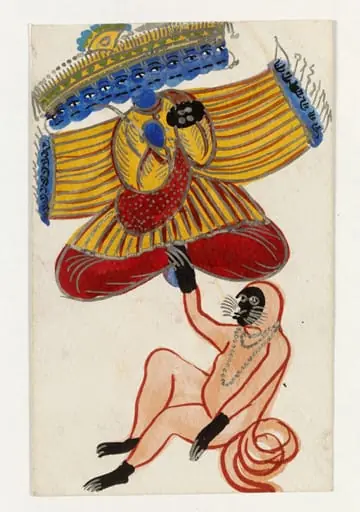 Hanuman and Ravana