Artwork
Jatayu, Ravana and Sita
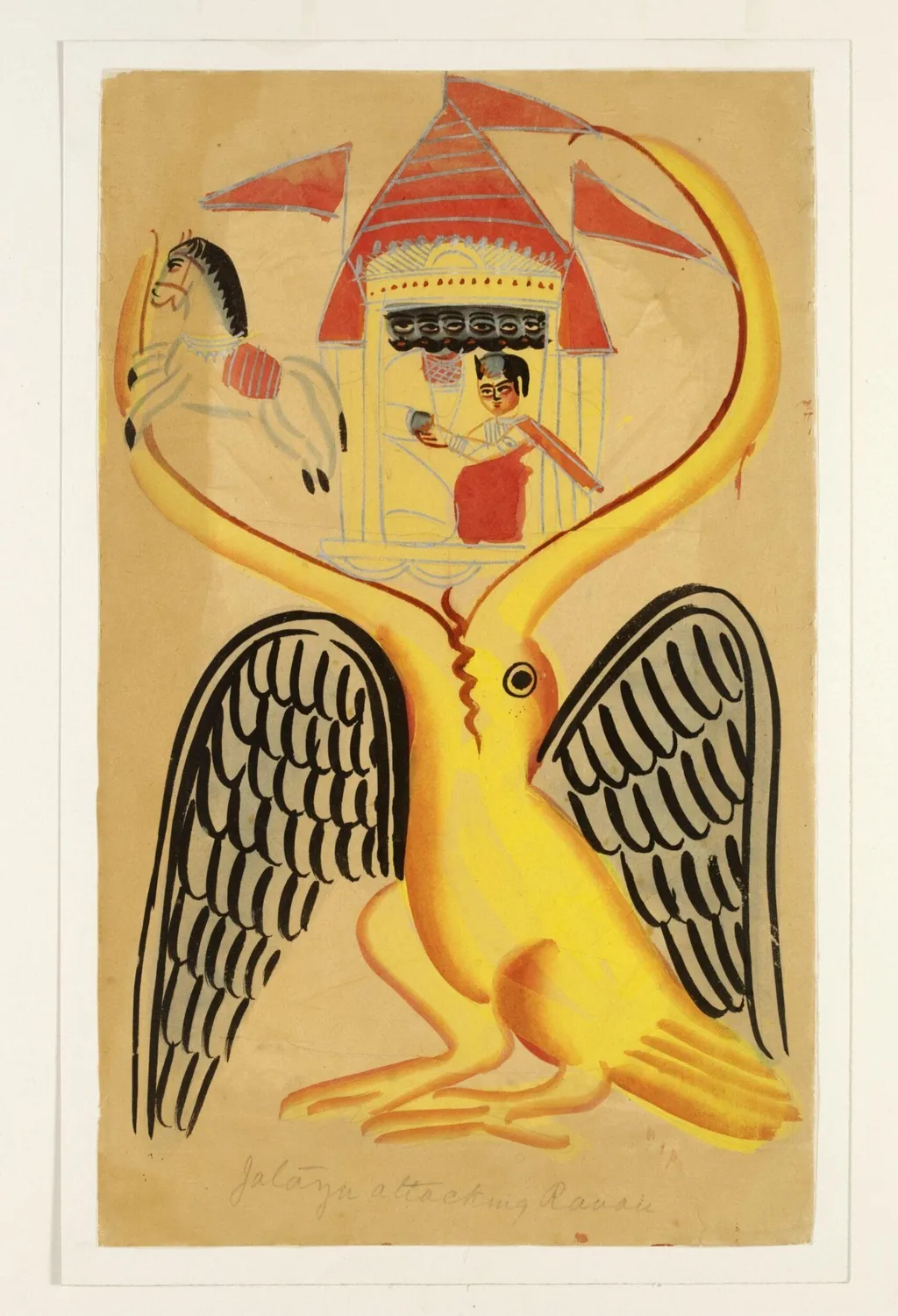
Jatayu, Ravana and Sita is a paint painting by the Impressionist artist Unknown. It dates from 1885 and is held in the collection of the Victoria and Albert Museum.
About this work
Overview
Created in 1885, this opaque watercolor on paper illustrates a dramatic episode from the Ramayana, where the bird‑like hero Jatayu confronts the demon king Ravana during the kidnapping of Sita. The composition is rendered in vivid hues and simplified forms, giving the scene a graphic, narrative quality.
Subject & Meaning
The work captures the moment Jatayu, portrayed as a large yellow bird with a human‑like face, lunges at Ravana, symbolising loyalty and sacrifice. A small red pavilion bearing a man with a ball and a standing woman appears on the bird’s back, adding a layer of domestic contrast to the mythic conflict.
Technique & Style
Executed in opaque watercolor, the artist employs bold, flat colors and minimal detailing, reminiscent of storybook illustration. The stark yellow background, black wing outlines, and the red roof of the pavilion create strong visual contrasts, while the simplified shapes convey movement and emotion without elaborate shading.
History & Provenance
The painting belongs to a series acquired by the museum in 1950 from Miss M. Steele. Steele’s mother, a Sanskrit scholar at Cambridge, inherited the collection in 1894, and the works may originally have been gathered by Steele’s grandmother, who spent time living in India.
Context
The scene derives from the Indian epic Ramayana, where Jatayu attempts to rescue Sita from Ravana’s abduction. The inclusion of contemporary elements such as the pavilion and figures reflects a 19th‑century British‑Indian perspective on the narrative, blending traditional myth with colonial visual conventions.
Artist & collection

 Domestic Scene
 Giacomo and Cardinal Marco, investing Andrea, Abbot of San Zeno, with his Benefice
 The Nymph of Fontainebleau
 Portrait of a Woman
 Madonna and Child with Saints in the Enclosed Garden
 Venus and Minerva
 Family Group of Four on Sofa
 Wall painting from Room H of the Villa of P. Fannius Synistor at Boscoreale
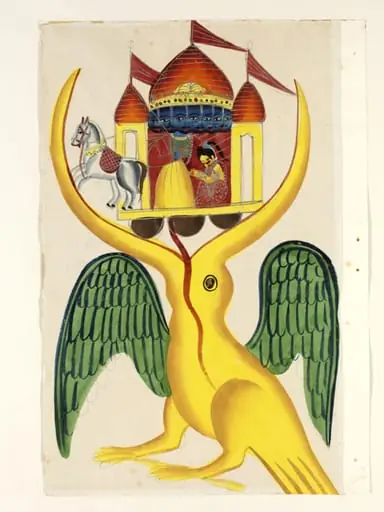 Jatayu, Sita and Ravana
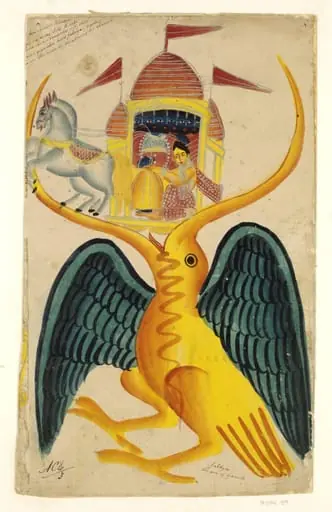 Ravana, Sita and Jatayu
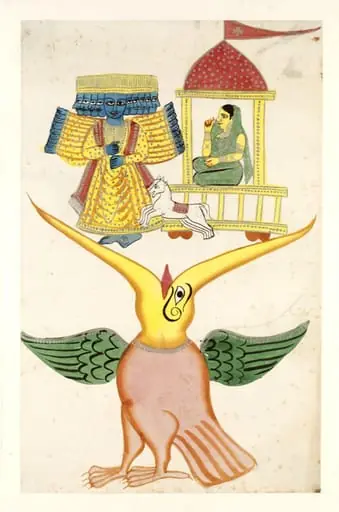 Jatayu, Ravana and Sita
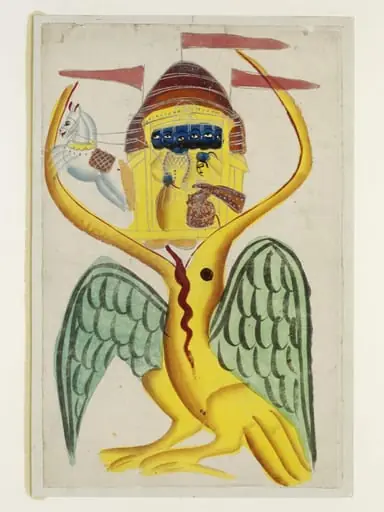 Ravana, Sita and Jatayu
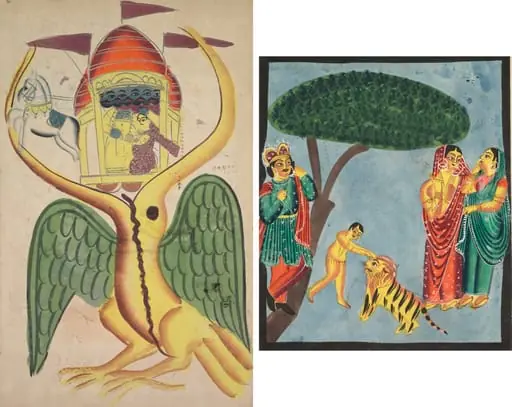 Leaf from a Kalighat album: Jatayu hinders Ravana’s chariot, trying to prevent the abduction of Sita (recto); Dushyanta watching his son Bharat playing with the tiger at the end of the Abhijnanashakuntalam (verso)
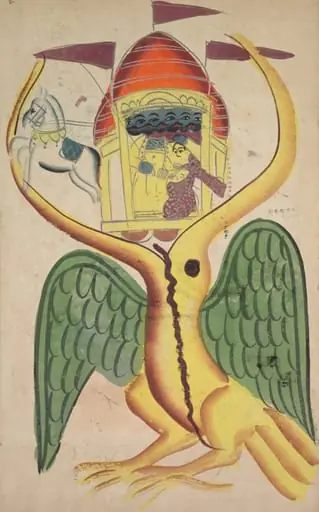 Jatayu hinders Ravana’s chariot, trying to prevent the abduction of Sita (recto), from a Kalighat album
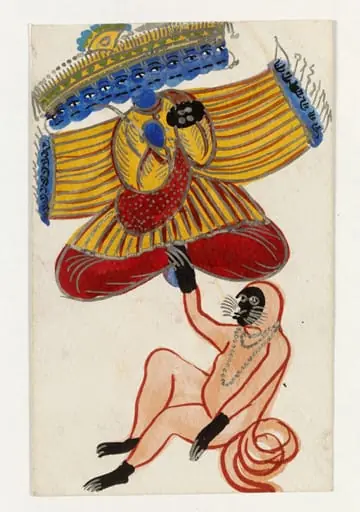 Hanuman and Ravana
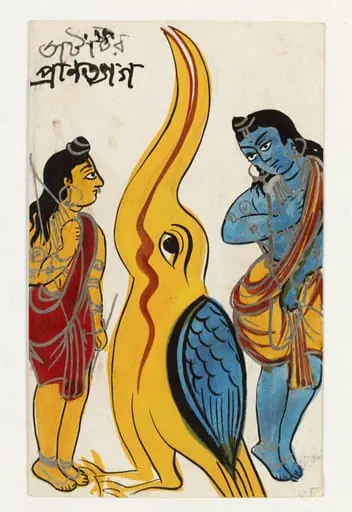 Rama, Lakshmana and Jatayu
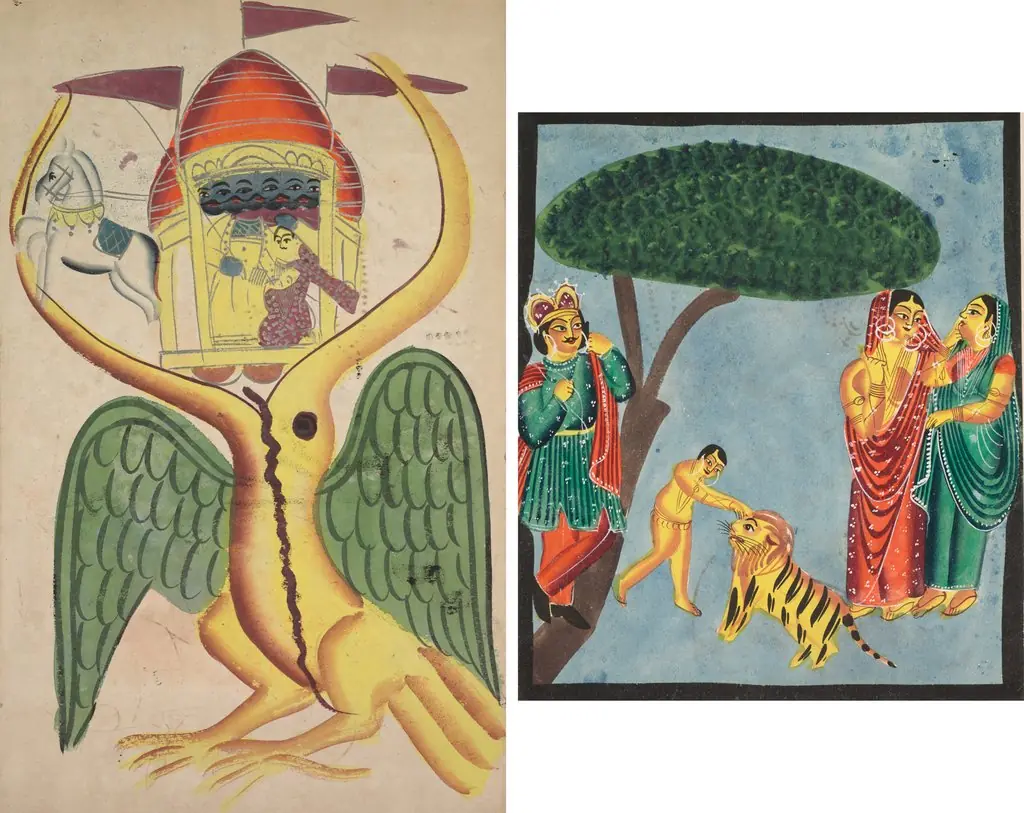 Leaf from a Kalighat album: Jatayu hinders Ravana’s chariot, trying to prevent the abduction of Sita (recto); Dushyanta watching his son Bharat playing with the tiger at the end of the Abhijnanashakuntalam (verso)
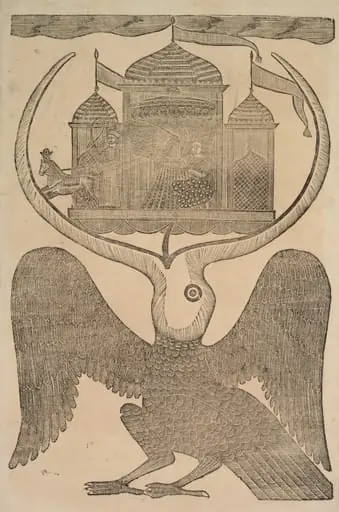 Jatayu hinders Ravana’s chariot trying to prevent Sita’s abduction (recto), from a Kalighat album
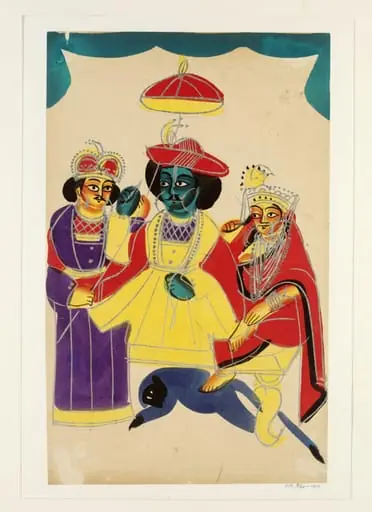 Rama, Sita, Lakshmana and Hanuman