Artwork
Leaf from the Late Shah Jahan Album: Harem Night-Bathing Scene (recto); Calligraphy Framed by an Ornamental Border of Flowers and Birds (verso)
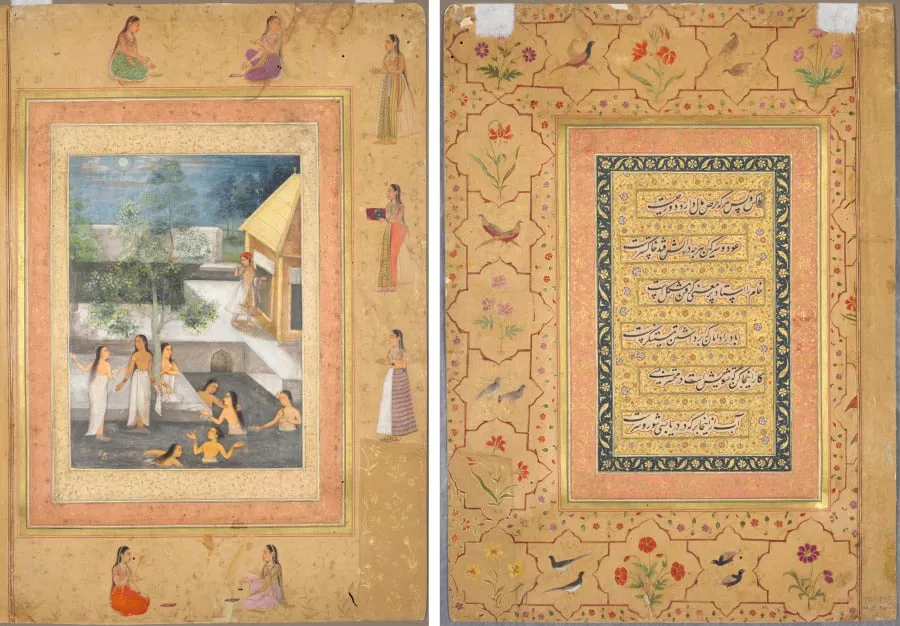
Leaf from the Late Shah Jahan Album: Harem Night-Bathing Scene (recto); Calligraphy Framed by an Ornamental Border of Flowers and Birds (verso) is an unspecified painting by the Baroque artist Unknown. It dates from 1650 and is held in the collection of the Cleveland Museum of Art. This painting is a leaf from the Late Shah Jahan Album, featuring a harem night-bathing scene on one side and calligraphy on the other.
About this work
You see women bathing on a white marble terrace at night, lit by moonlight, while an attendant watches.
You see women bathing on a white marble terrace at night, lit by moonlight, while an attendant watches.
This painting comes from an album made for Shah Jahan, the Mughal emperor who built the Taj Mahal. The scene feels quiet and real—no grand myths, just a private moment. The artist paid close attention to the way light glows on wet skin and stone.
To see more art like this, look up *mughal india, court of shah jahan (reigned 1628–58)*.
Overview
This painting is a leaf from the Late Shah Jahan Album, featuring a harem night-bathing scene on one side and calligraphy on the other. It is a work from the Mughal imperial atelier, created during the reign of Shah Jahan, who commissioned the Taj Mahal.
Subject & Meaning
The scene depicts women bathing on a moonlit white marble terrace, observed by an attendant, likely a eunuch, given the setting within the women's quarters of a Mughal palace. The image captures a private, serene moment, focusing on the beauty of the scene rather than a mythological or fantastical narrative.
Technique & Style
The painting showcases the artist's attention to the effects of light on wet skin and stone, characteristic of the formal and subdued style favored by Shah Jahan. The work is a single painting mounted in an album, reflecting the emperor's taste for more restrained and realistic representations.
History & Provenance
The painting was created for Shah Jahan, who ruled from 1628 to 1658 and was known for his support of the arts. It is part of an album compiled during his reign, indicating the continued tradition of artistic production in the Mughal court.
Artist & collection

 Domestic Scene
 Giacomo and Cardinal Marco, investing Andrea, Abbot of San Zeno, with his Benefice
 The Nymph of Fontainebleau
 Portrait of a Woman
 Madonna and Child with Saints in the Enclosed Garden
 Venus and Minerva
 Family Group of Four on Sofa
 Wall painting from Room H of the Villa of P. Fannius Synistor at Boscoreale
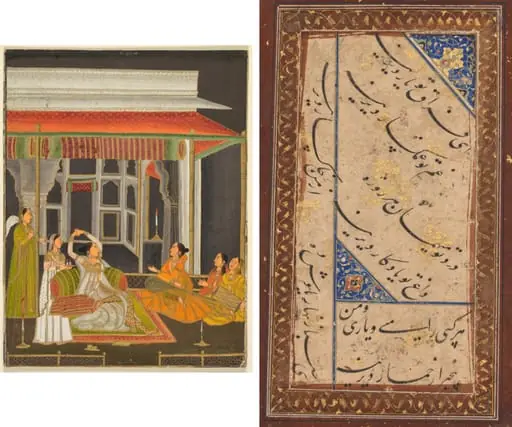 A princess on a terrace with attendants at night (recto); Calligraphy (verso)
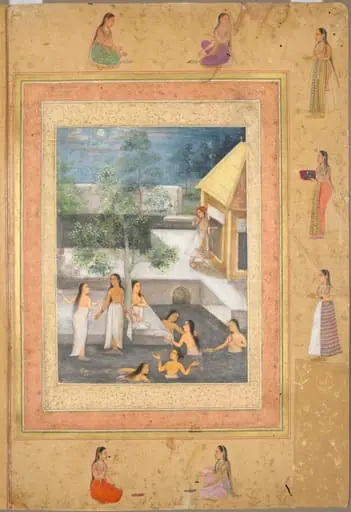 Harem night-bathing scene, from the Late Shah Jahan Album (recto)
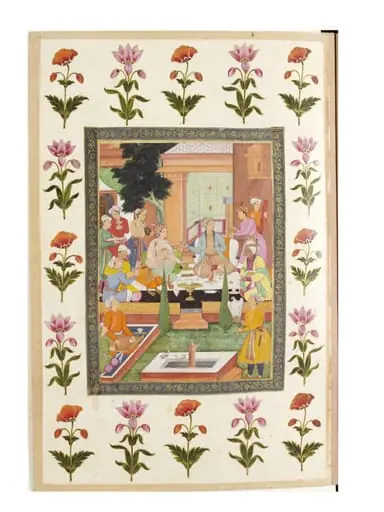 Untitled
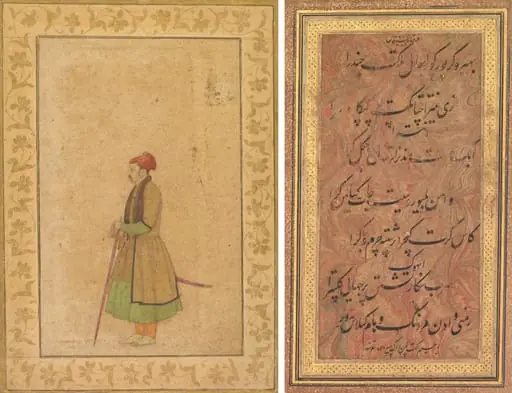 Portrait of Raja Ram Singh of Amber (r. 1667-1688) with a Deccan Sword (recto); Calligraphy (verso)
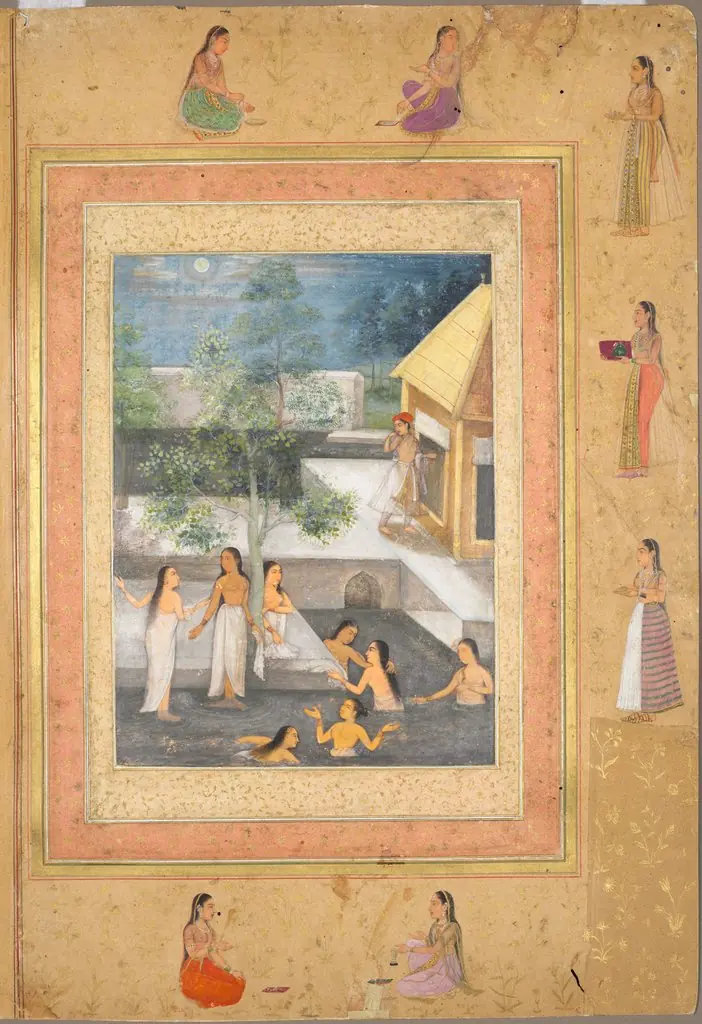 Page from the Late Shah Jahan Album: Harem Night-Bathing Scene (recto)
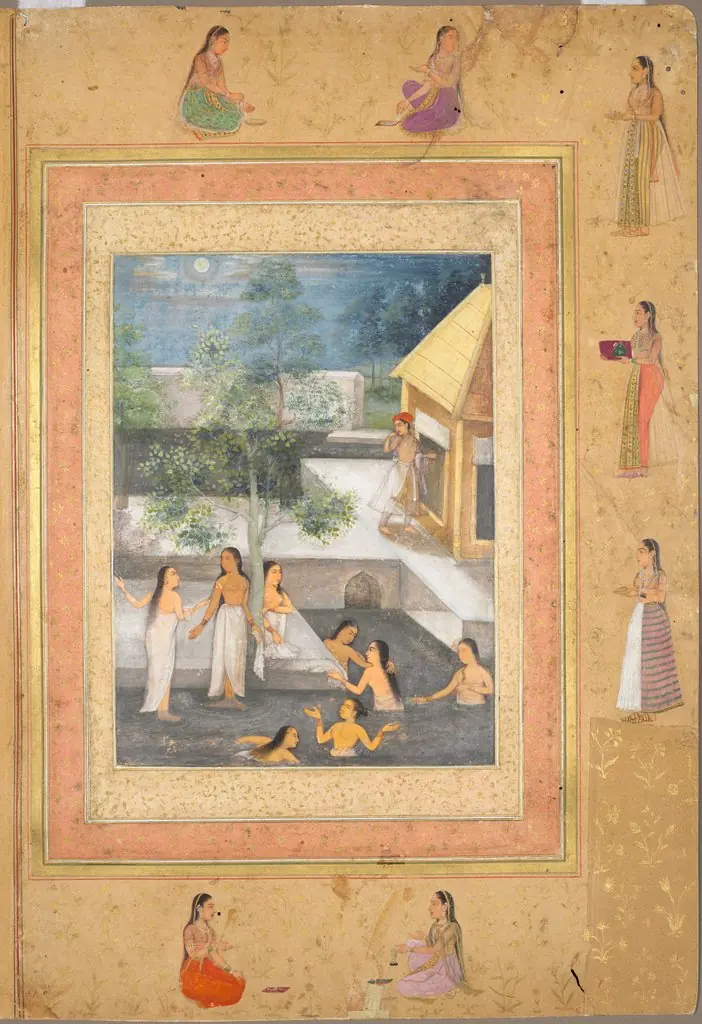 Leaf from the Late Shah Jahan Album: Harem Night-Bathing Scene (recto); Calligraphy Framed by an Ornamental Border of Flowers and Birds (verso)
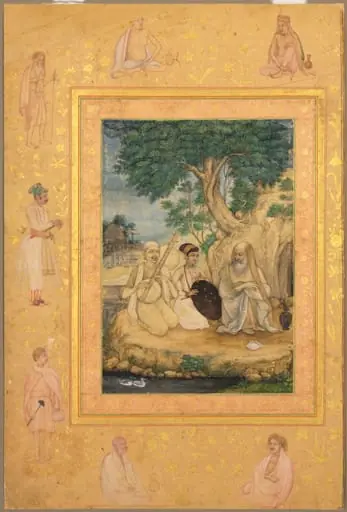 Prince and ascetics, from the Late Shah Jahan Album