Artwork
Madonna and Child with Three Members of the St. Augustine Order: Saints Augustine, Nicholas and Clara
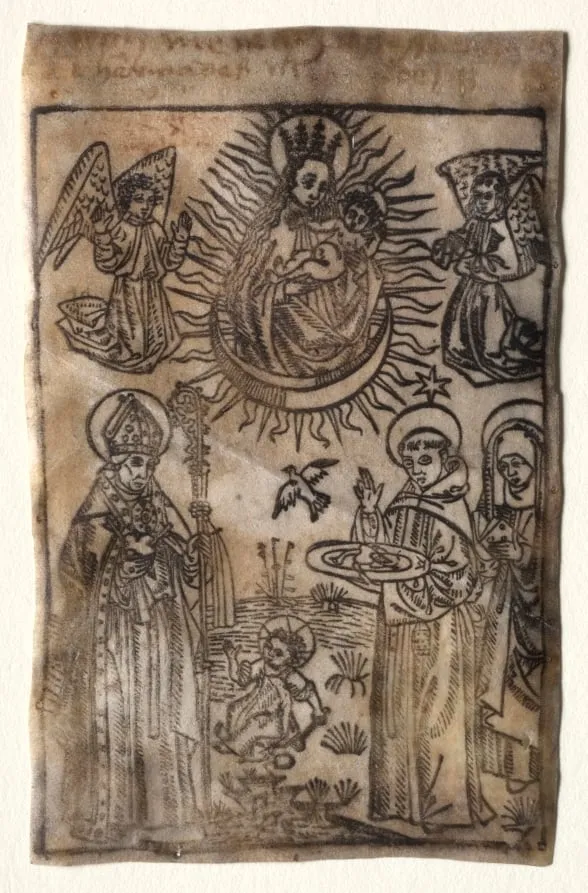
Madonna and Child with Three Members of the St. Augustine Order: Saints Augustine, Nicholas and Clara is a print by the Renaissance artist Unknown. It dates from 1404 and is held in the collection of the Cleveland Museum of Art.
About this work
Overview
This print depicts the Virgin Mary with the infant Christ, surrounded by three saints of the Augustinian Order: Augustine, Nicholas, and Clara.
This print depicts the Virgin Mary with the infant Christ, surrounded by three saints of the Augustinian Order: Augustine, Nicholas, and Clara. A radiant, haloed face at the top represents the divine presence, while angels hover above. The composition is linear and stylized, with minimal modeling and flat planes, characteristic of late medieval devotional imagery. The scene is designed for contemplative prayer rather than naturalistic representation.
Subject & Meaning
The Virgin and Child occupy the central spiritual focus, symbolizing divine grace. Saints Augustine and Nicholas stand beside them, their attributes—a staff and a plate—signifying their roles as theologian and patron of the poor. Saint Clara kneels in devotion, embodying humility. The flying bird, likely a dove, suggests the Holy Spirit. Together, the figures form a devotional hierarchy, reinforcing Augustinian ideals of faith, charity, and contemplation.
Technique & Style
Rendered with clear, unmodulated lines and limited tonal variation, the print reflects a pre-Renaissance aesthetic rooted in symbolic form. Figures are arranged in a shallow space, with halos and robes defined by outline rather than volume. The sun-like radiance around the Virgin’s head is rendered as concentric circles, a conventional motif for divine light. The flatness and lack of perspective align with medieval woodcut traditions used for mass-produced religious imagery.
History & Provenance
Produced likely in the late 15th or early 16th century, this print was probably made for use by Augustinian communities or devout laypersons. Its faded condition suggests repeated handling and devotional use over time. While the exact origin and printer are unknown, similar prints circulated widely in Central Europe, often distributed by monasteries to promote spiritual devotion and reinforce religious identity.
Context
This image emerged during a period when printed devotional images became increasingly accessible, replacing hand-painted altarpieces for private worship. The Augustinian Order, emphasizing study and piety, encouraged such imagery to aid meditation. The inclusion of Clara, a relatively recent canonized saint, reflects the Order’s growing veneration of female ascetics. The print’s simplicity suited both literacy limitations and the devotional needs of a broad audience.
Legacy
Though not attributed to a major artist, this print exemplifies the role of inexpensive religious imagery in shaping popular piety before the Reformation. Its stylistic conservatism contrasts with the emerging naturalism of Renaissance painting, highlighting the persistence of medieval visual language in devotional contexts. Surviving examples like this one offer insight into the everyday spiritual practices of non-elite communities in late medieval Europe.
Artist & collection

 Domestic Scene
 Giacomo and Cardinal Marco, investing Andrea, Abbot of San Zeno, with his Benefice
 The Nymph of Fontainebleau
 Portrait of a Woman
 Madonna and Child with Saints in the Enclosed Garden
 Venus and Minerva
 Family Group of Four on Sofa
 Wall painting from Room H of the Villa of P. Fannius Synistor at Boscoreale
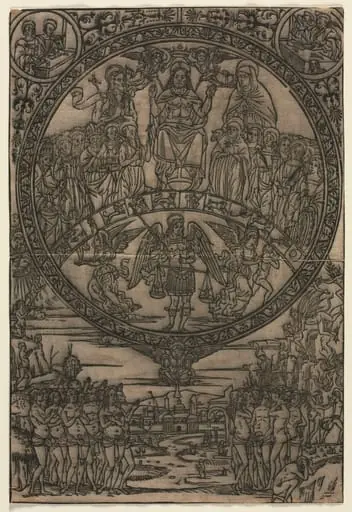 The Last Judgment in the Presence of the Saints and the Archangel Michael
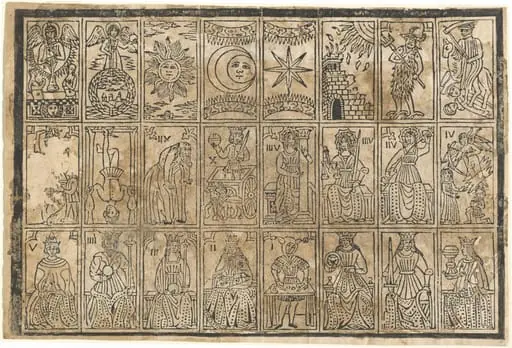 Playing Cards
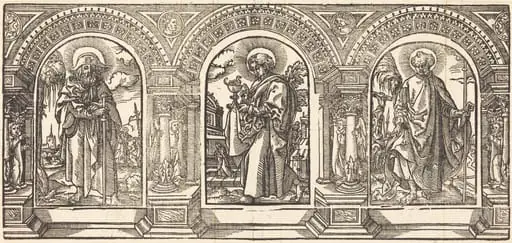 Christ and His Disciples III
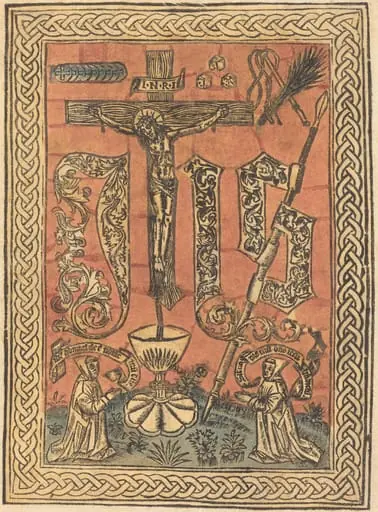 The Sacred Monogram
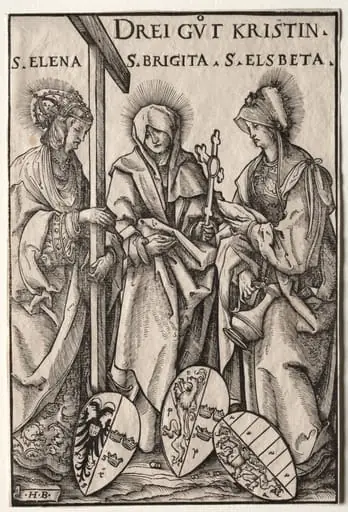 The Three Christian Heroines: Saints Helen, Bridget and Elizabeth
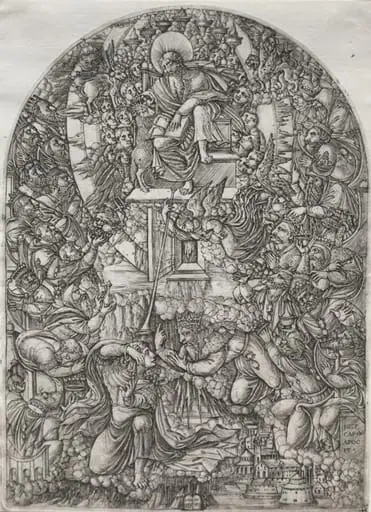 The Apocalpse: St. John Summoned to Heaven
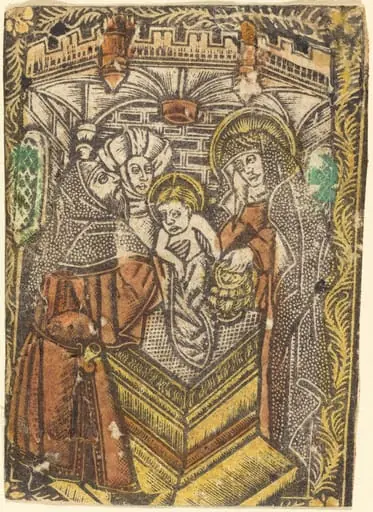 The Presentation in the Temple
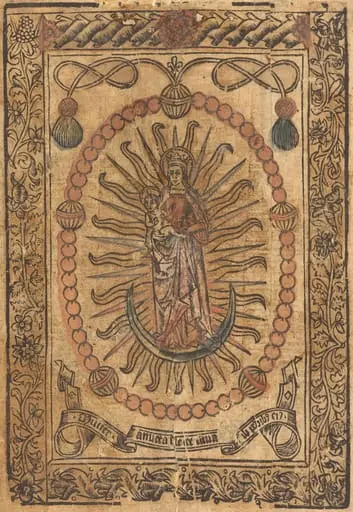 The Madonna and Child in a Rosary
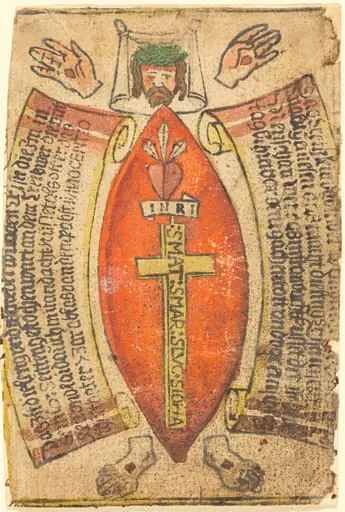 The Measure of the Side Wound and the Body of Christ
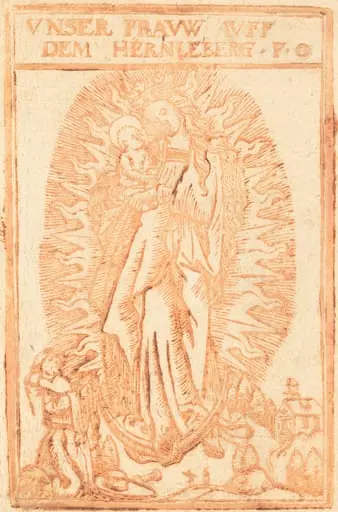 Madonna of the Hernleberg
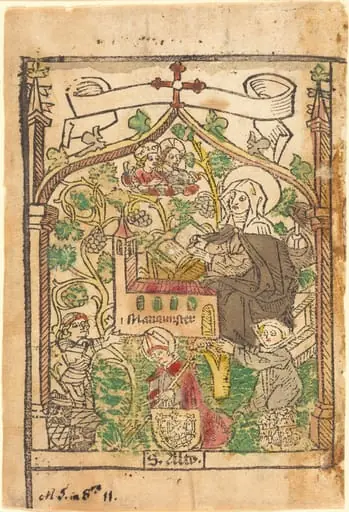 Saint Alto, Saint Bridget and the Founders of the Mariamunster
 The Apocalypse: The Woman Clothed with the Sun