Artwork
Saint Alto, Saint Bridget and the Founders of the Mariamunster
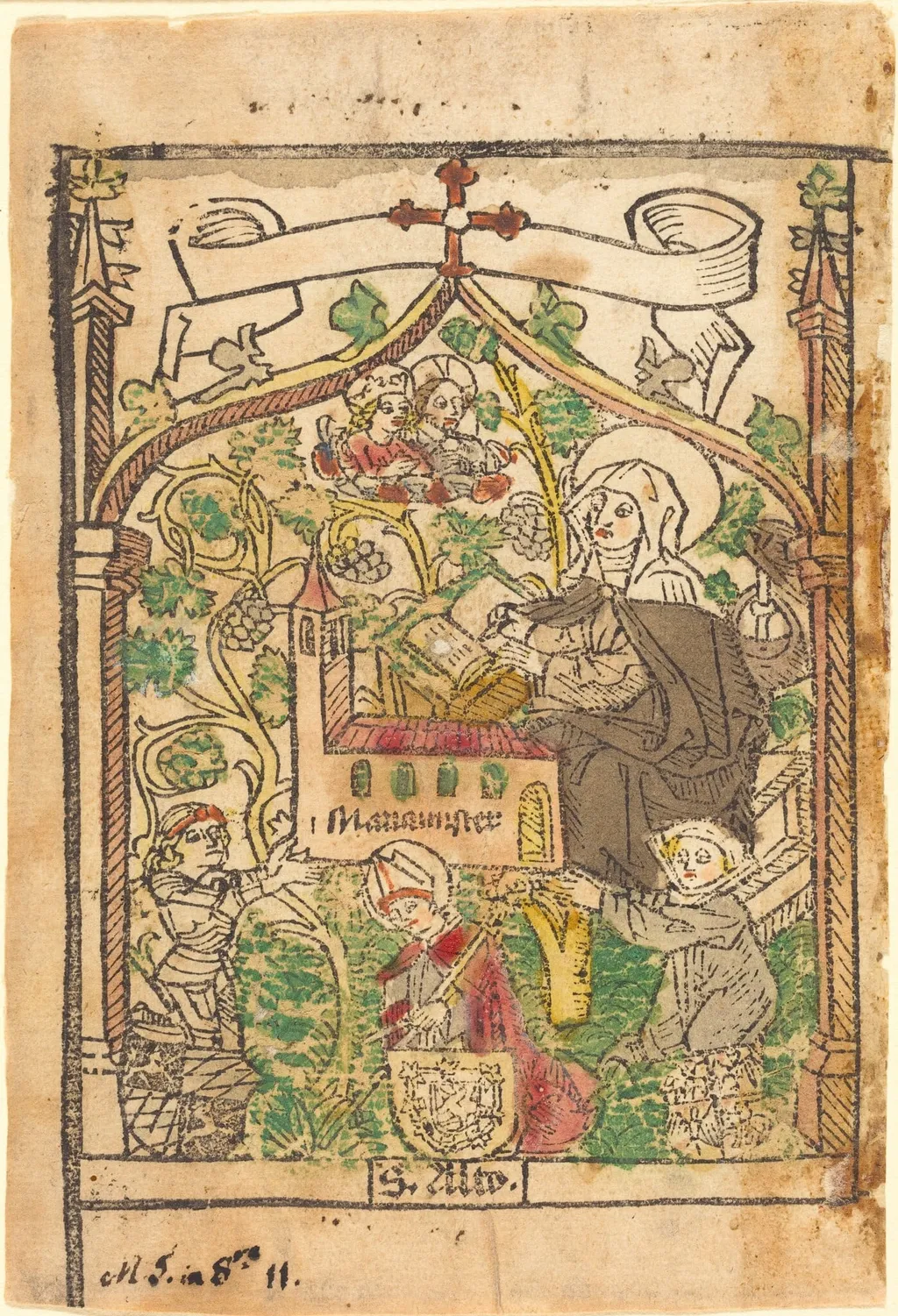
Saint Alto, Saint Bridget and the Founders of the Mariamunster is an ink print by the Renaissance artist German 15th Century. It dates from 1500 and is held in the collection of the National Gallery of Art.
About this work
Overview
The composition centers on a figure holding a book, surrounded by attendants in period dress, with a church rising behind them in simplified form.
This woodcut print, hand-colored with green, red lake, brown, gray, and yellow, depicts Saint Alto, Saint Bridget, and the founders of the Mariamunster monastery. Created in the Renaissance tradition, it combines linear clarity with vivid, flat hues typical of early printed devotional imagery. The composition centers on a figure holding a book, surrounded by attendants in period dress, with a church rising behind them in simplified form.
Subject & Meaning
The scene portrays religious founders and saints in a contemplative gathering, likely symbolizing the spiritual foundation of the Mariamunster monastery. Saint Bridget, known for her visions and piety, is shown with a book, emphasizing scriptural authority. The presence of other saints and founders reinforces communal devotion and the legitimacy of the monastic order through sacred lineage.
Technique & Style
The image was produced using woodcut printing, a method involving carved wooden blocks inked and pressed onto paper. Bold outlines and limited tonal variation reflect the constraints and strengths of the medium. Hand-coloring with mineral and organic pigments added decorative richness, aligning with Northern European practices where printed images were often enhanced manually for devotional use.
History & Provenance
The print likely originated in the late 15th or early 16th century, associated with a monastic center in the German-speaking regions. Its survival suggests it was produced in limited numbers for internal monastic use or as a devotional gift. No documented provenance exists beyond its connection to the Mariamunster tradition, indicating a localized, non-commercial circulation.
Context
Created during a period when religious institutions used printed images to reinforce doctrine and identity, this work reflects the fusion of textual piety and visual representation. Woodcuts like this were accessible alternatives to painted altarpieces, especially in smaller monasteries. The emphasis on founding figures aligns with broader trends of venerating local saints and institutional origins in late medieval piety.
Legacy
Though not widely known outside regional monastic circles, the print exemplifies how devotional imagery functioned in pre-Reformation religious life. Its survival offers insight into the material culture of lesser-known religious communities and the role of print in sustaining local spiritual traditions before the dominance of mass-produced religious texts.
Artist & collection

Artist
This 15th-century German artist carved vivid religious scenes into metal and wood, then hand-painted them in bright, symbolic colors.

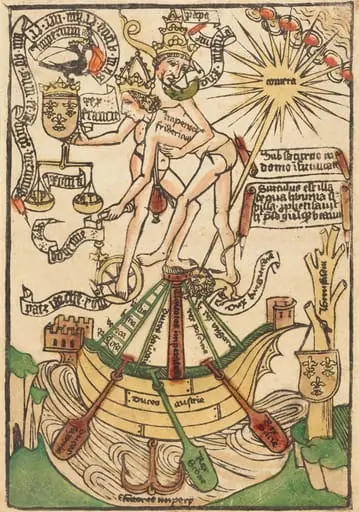 Allegory of the Meeting of Pope Paul II and Emperor Frederick III
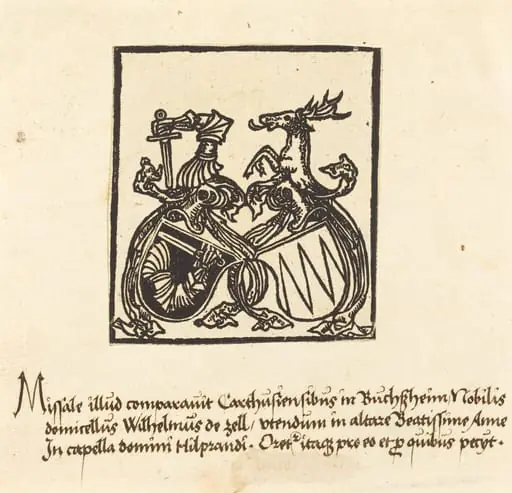 Bookplate of Wilhelm von Zell
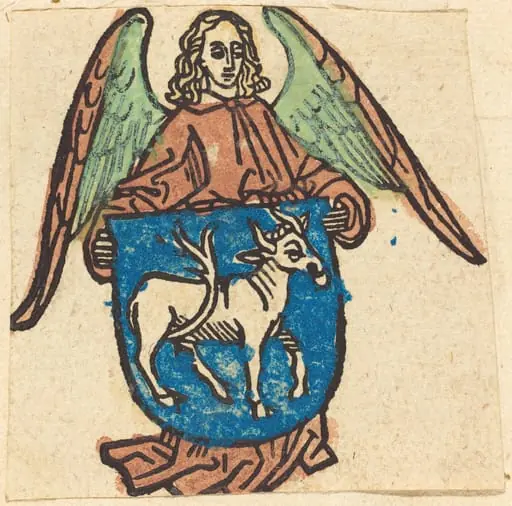 Bookplate of Hilprand Brandenburg of Bibrach
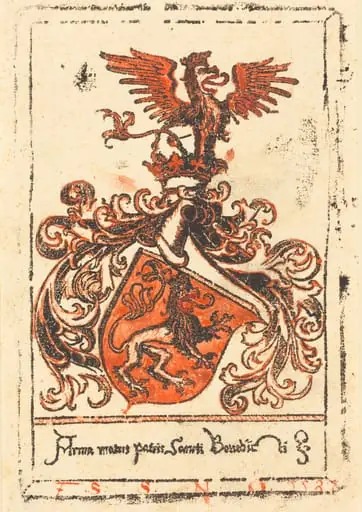 Bookplate of the Abbey of Ottobeuren
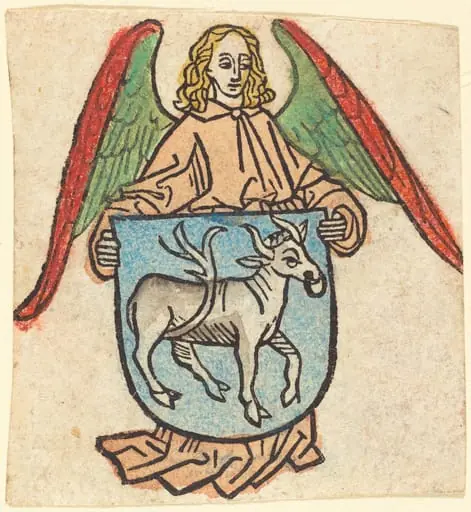 Bookplate of Hilprand Brandenburg of Bibrach
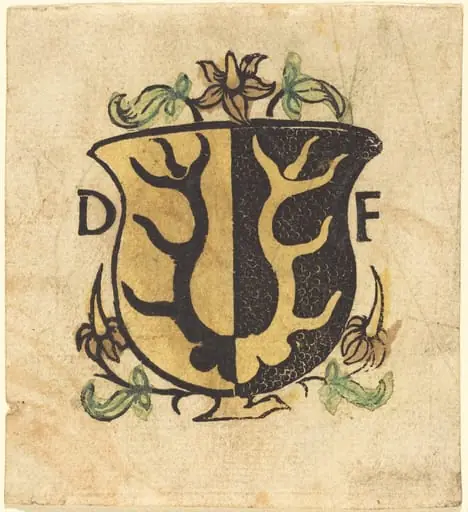 Bookplate of Dominicus Frauenfelder
![Studies for Six Figures (sheet from a model book) [recto], by German 15th Century](https://artifactworldgallery.com/img/german-15th-century--studies-for-six-figures-sheet-from-a-model-book-recto--4837429e0755bc3f-w320.webp) Studies for Six Figures (sheet from a model book) [recto]
Studies for Six Figures (sheet from a model book) [recto]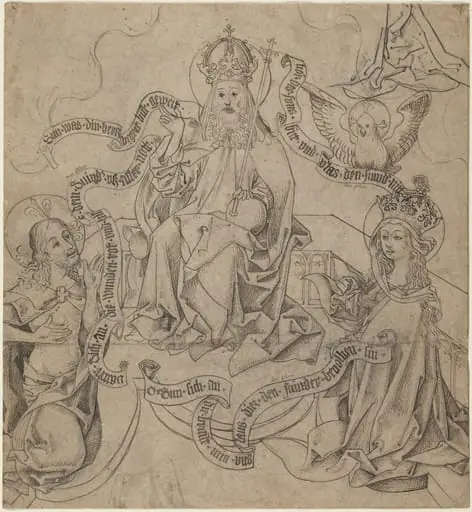 Christ and Mary Interceding with God the Father
![The Sacred Monograph with the Crucifixion and Passion Symbols [recto], by German 15th Century](https://artifactworldgallery.com/img/german-15th-century--the-sacred-monograph-with-the-crucifixion-and-passion-symbol--0037ce706250b56f-w320.webp)