Artwork
The Apocalypse: The Woman Clothed with the Sun
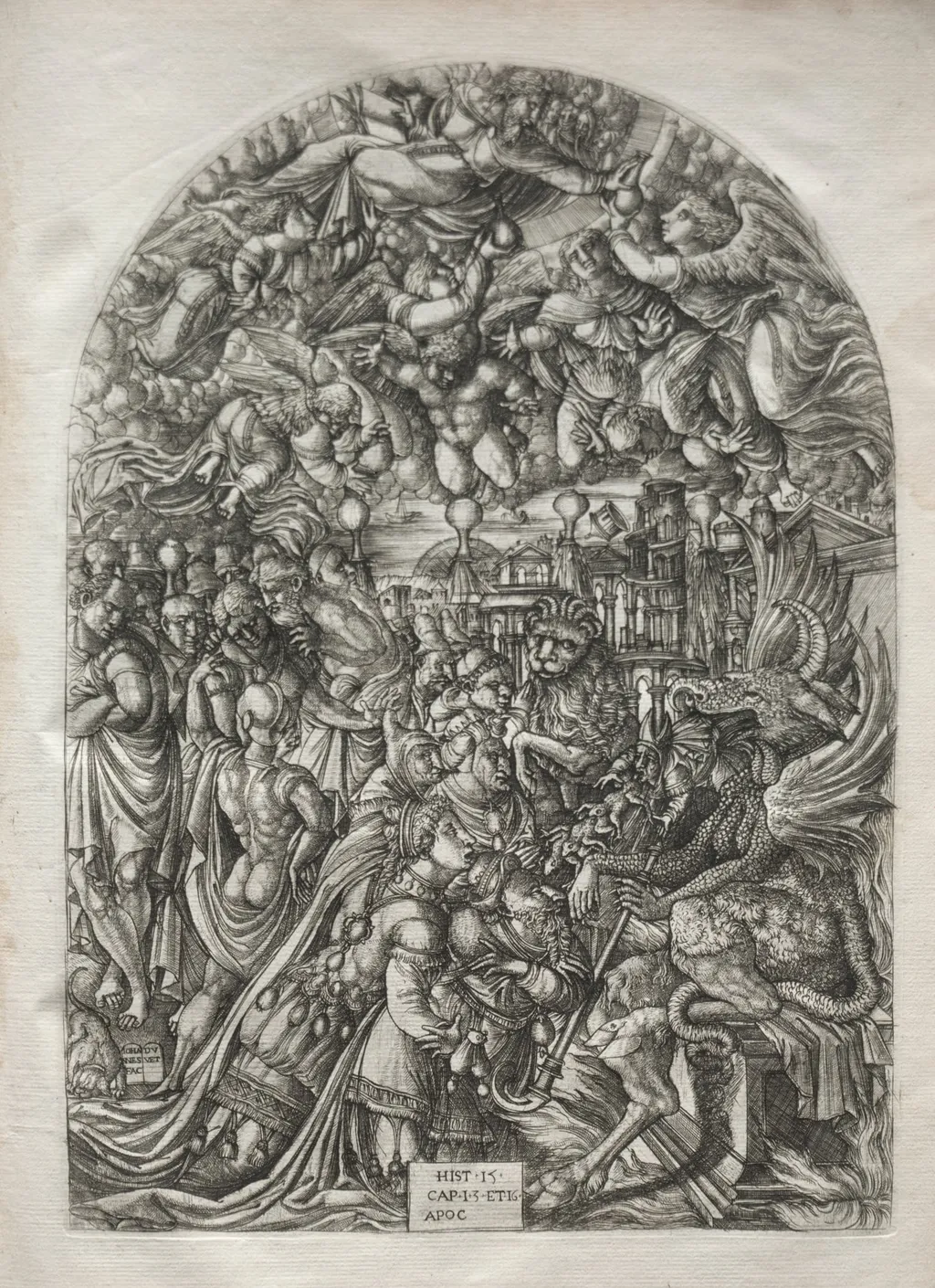
The Apocalypse: The Woman Clothed with the Sun is a print by the Renaissance artist Jean Duvet. It dates from 1551 and is held in the collection of the Cleveland Museum of Art.
About this work
Overview
Only seven complete sets of the original prints are known to survive, making this object a rare artifact of early French printmaking and religious imagery.
This engraving is one of twenty-three plates in a complete series illustrating the Book of Revelation, created by Jean Duvet over many years in the mid-16th century. The series, bound as a single volume, represents Duvet’s most sustained and ambitious project. Only seven complete sets of the original prints are known to survive, making this object a rare artifact of early French printmaking and religious imagery.
Subject & Meaning
The image depicts the Woman of the Apocalypse from Revelation 12, standing upon a crescent moon, her head surrounded by a halo of stars. She cradles a child while a fearsome dragon, poised below, threatens to devour the infant. The scene symbolizes divine protection and cosmic struggle, drawing from biblical prophecy to convey spiritual conflict between good and evil, a common theme in Reformation-era religious art.
Technique & Style
Duvet employed fine-line engraving to render intricate details across a densely packed composition. His figures are robust and sculptural, echoing Italian Renaissance models, yet his spatial logic is deliberately disordered. Surfaces are layered with ornamental patterns, and perspective is subordinated to symbolic intensity, resulting in a visual language that is both meticulous and dreamlike, distinct from contemporary Northern or Italian conventions.
History & Provenance
Jean Duvet, based in the provincial town of Langres, produced this series without direct access to Italian art centers, relying instead on circulated prints—particularly those by Marcantonio Raimondi—for inspiration. The complete volume held by the museum is among the seven surviving original sets, suggesting limited circulation and high value even in its own time. Its preservation reflects its significance as a rare example of French printmaking from the period.
Context
Created during a time of religious upheaval in Europe, Duvet’s Apocalypse series responded to widespread anxiety over divine judgment and the end times. Though isolated geographically, Duvet engaged with broader artistic currents through printed images, adapting Italianate forms to express distinctly French devotional concerns. His work stands apart from mainstream Northern Mannerism, offering a personal, almost hermetic vision of sacred narrative.
Legacy
Duvet’s Apocalypse series is recognized as a singular achievement in 16th-century French printmaking, notable for its intensity and originality. Though he remained outside major artistic centers, his work influenced later generations of engravers drawn to his expressive distortions and symbolic density. The survival of only seven complete sets underscores its rarity and the enduring fascination with its visionary imagery.
Artist & collection

Artist
Jean Duvet (1485 – after 1562) was a French Renaissance goldsmith and engraver, now best known for his engravings.

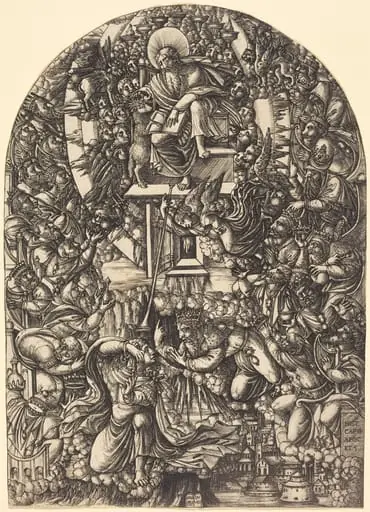
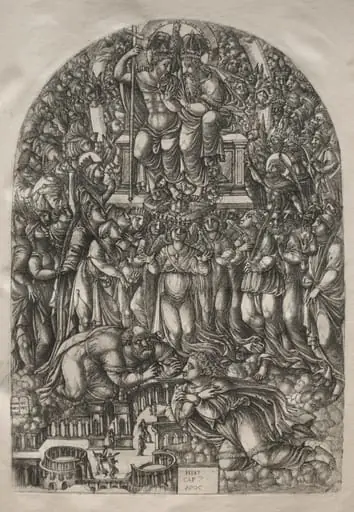 The Apocalypse: An Innumerable Multitude Which Stand before the Throne
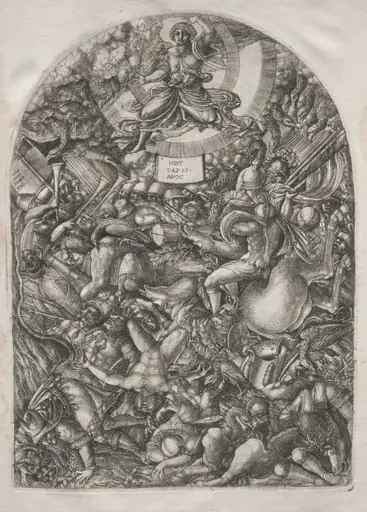 The Apocalypse: The Angel in the Sun Calling the Birds of Prey
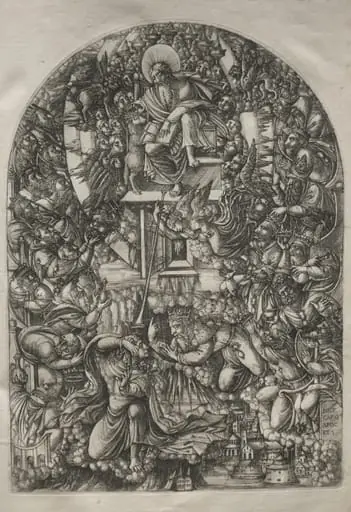 The Apocalypse: St. John Summoned to Heaven
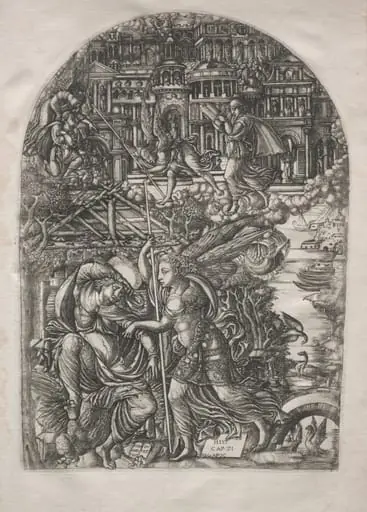 The Apocalypse: The Angel Shows St. John the New Jerusalem
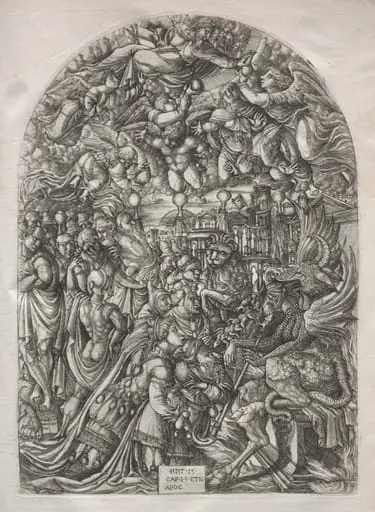 The Apocalypse: The Dragon with Two Horns and the Beast with Seven
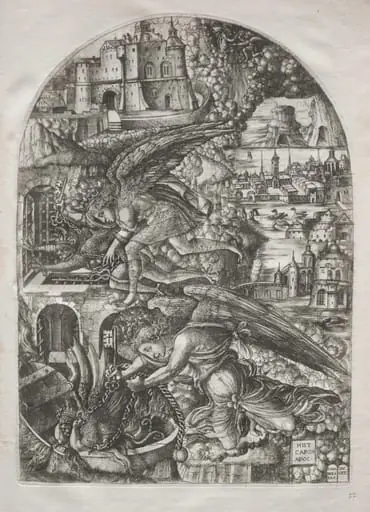 The Apocalypse: Satan Bound for a Thousand Years
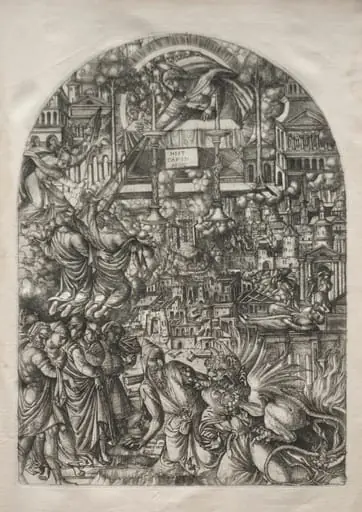 The Apocalypse: The Measurement of the Temple
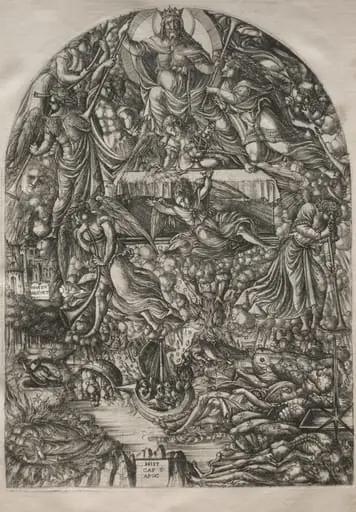 The Apocalypse: The Opening of the Seventh Seal
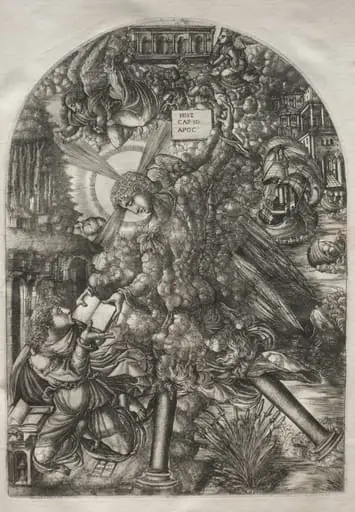 The Apocalypse: The Angel Gives St. John the Book to Eat
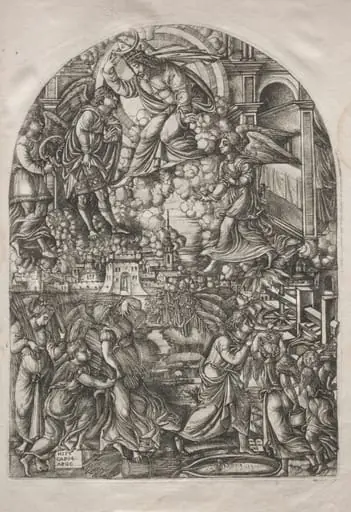 The Apocalypse: The Winepress of the Wrath of God
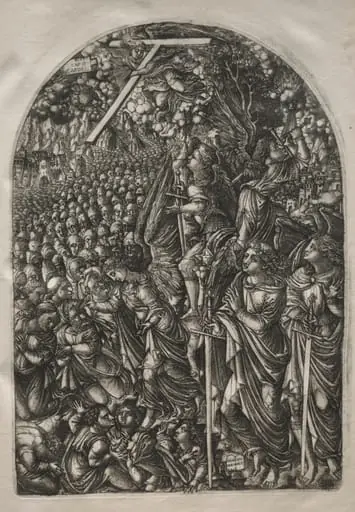 The Apocalypse: Four Angels Holding Back the Winds