Artwork
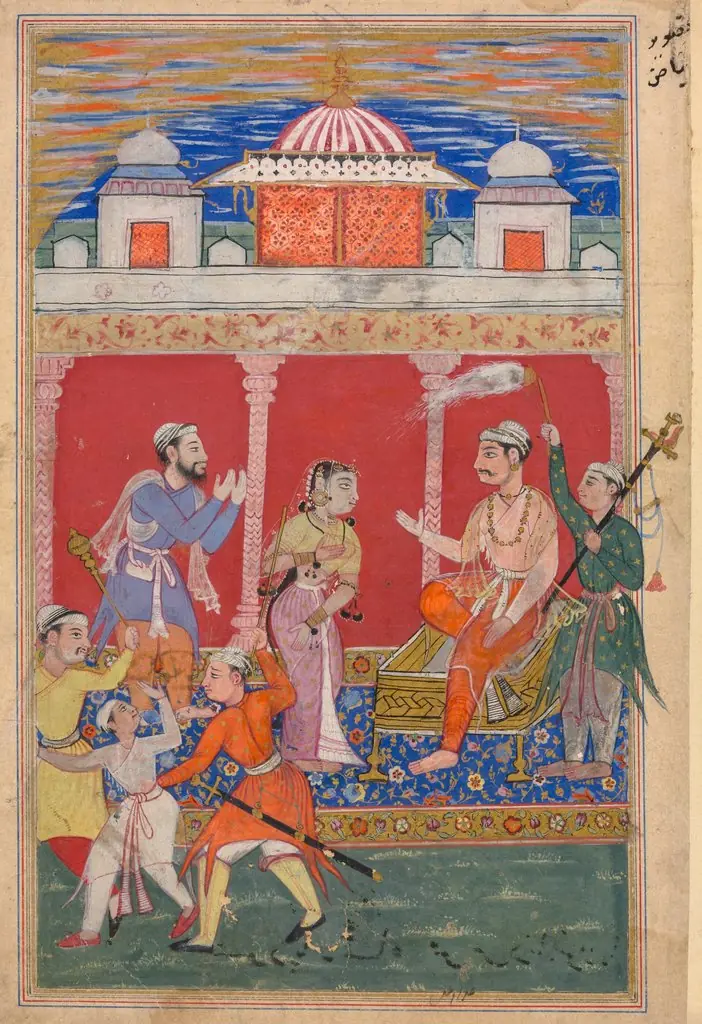
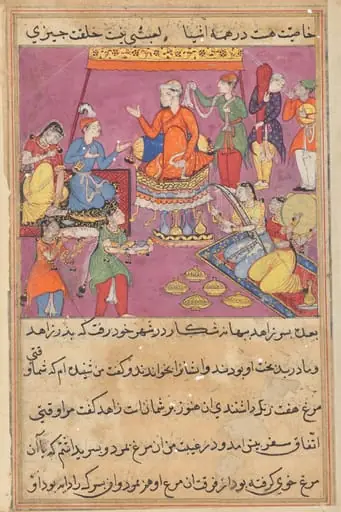
The prince’s ordeal continues, he is ordered away to be executed for the fifth time, from a Tuti-nama (Tales of a Parrot): Eighth Night
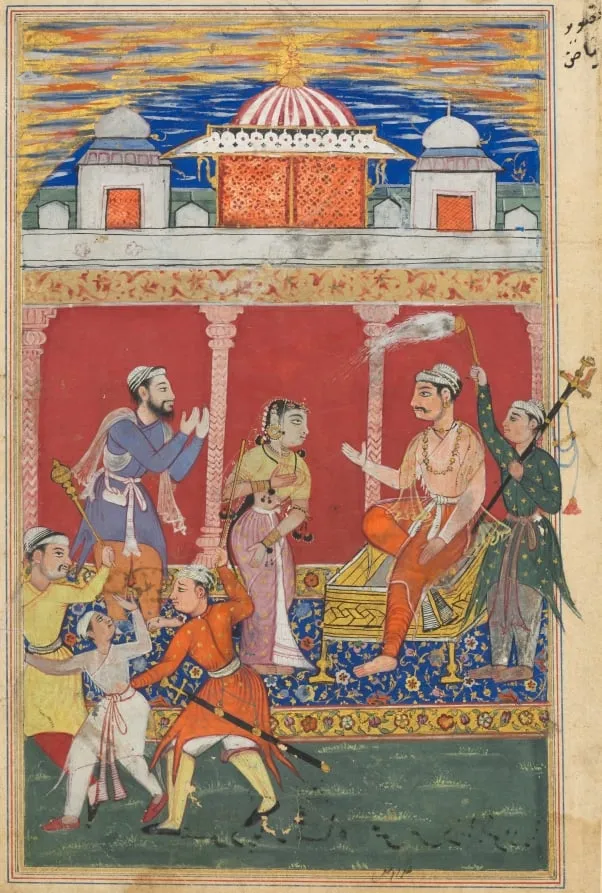
The prince’s ordeal continues, he is ordered away to be executed for the fifth time, from a Tuti-nama (Tales of a Parrot): Eighth Night is an unspecified painting by the Mughal Painting artist Ghulam 'Ali. It dates from 1560 and is held in the collection of the Cleveland Museum of Art.
About this work
The prince is being punished unfairly, and this is the fifth time he’s been sentenced to die.
A king sits on a golden throne while a woman in red pleads her case. Two guards drag a young prince in white toward the edge of the scene. Bright colors fill the page—deep reds, blues, and greens.
This painting comes from a book of parrot tales told over fifty-two nights. The prince is being punished unfairly, and this is the fifth time he’s been sentenced to die. The artist worked for Emperor Akbar, who loved stories and art.
To see more paintings like this, look up Mughal India, court of Akbar (reigned 1556–1605).
Overview
This painting is one of fifty-two illustrations from the Tuti-nama, a Persian-inspired collection of moral fables told by a parrot over fifty-two nights to deter a queen from adultery. Created under Mughal patronage, it depicts the fifth of the prince’s unjust death sentences. The scene captures a moment of judicial deception, rendered with vivid pigments and precise detail characteristic of Akbar’s imperial atelier.
Subject & Meaning
A woman in red, falsely accusing the prince of assault, pleads before a seated king on a golden throne. The prince, dressed in white, is being led away by two guards toward the picture’s edge, symbolizing his impending execution. The narrative underscores themes of injustice and resilience, as the prince survives each false condemnation—a recurring motif meant to illustrate the power of truth and endurance.
Technique & Style
The composition uses intense, saturated colors—crimson, lapis blue, and emerald green—to heighten emotional tension. Figures are rendered with fine brushwork, their gestures clearly defined against a flat, decorative background. Spatial depth is minimal, emphasizing narrative clarity over realism. The style reflects the synthesis of Persian miniature traditions with emerging Mughal naturalism under imperial sponsorship.
History & Provenance
Commissioned during the reign of Emperor Akbar (1556–1605), the Tuti-nama was produced in the imperial atelier by teams of artists and calligraphers. This particular folio likely dates to the 1560s–70s, when Akbar encouraged illustrated manuscripts as tools of moral instruction and courtly prestige. The work remained in royal collections until dispersed in later centuries.
Context
The Tuti-nama was adapted from a 12th-century Arabic text and reimagined for Mughal audiences as a didactic cycle. Each night’s tale, framed by the parrot’s storytelling, offered lessons on loyalty, wit, and survival. Akbar’s interest in diverse religious and literary traditions made such projects central to his cultural policy, blending Persian, Indian, and Islamic motifs into a new imperial aesthetic.
Legacy
The Tuti-nama set a precedent for illustrated manuscripts in Mughal India, influencing later works like the Akbarnama. Its narrative structure and visual language became models for court painting. Though the original manuscript is now fragmented, surviving folios remain key to understanding early Mughal artistic patronage and the role of storytelling in political culture.
Artist & collection

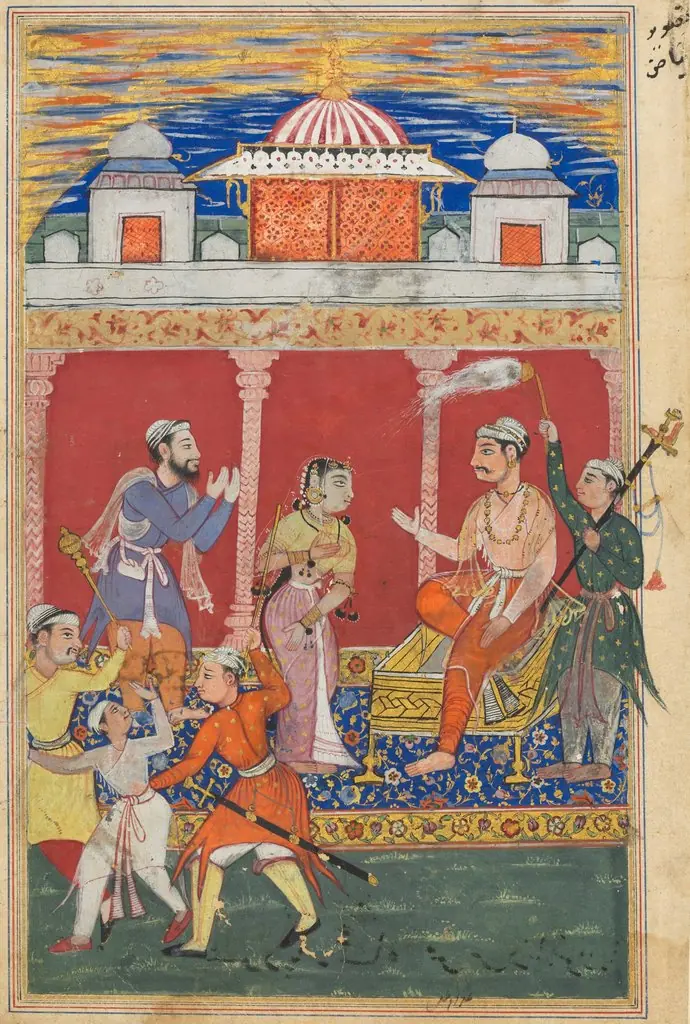 The prince’s ordeal continues, he is ordered away to be executed for the fifth time, from a Tuti-nama (Tales of a Parrot): Eighth Night
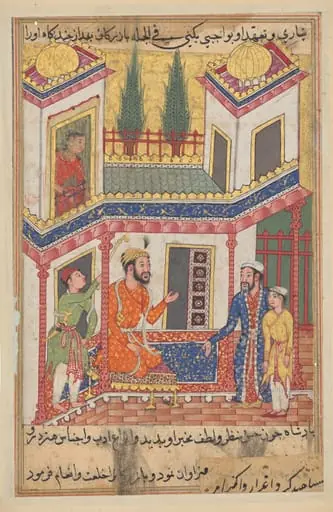 The merchant returns bringing a young slave who is really the son of the princess of Rum, now married to the king, from a Tuti-nama (Tales of a Parrot): Fiftieth Night
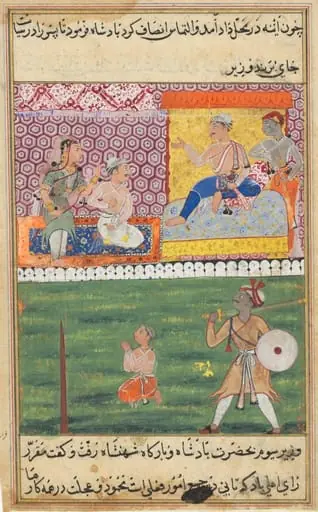 The handmaiden again appeals for justice and the prince is led to the place of execution for the third time, from a Tuti-nama (Tales of a Parrot): Eighth Night
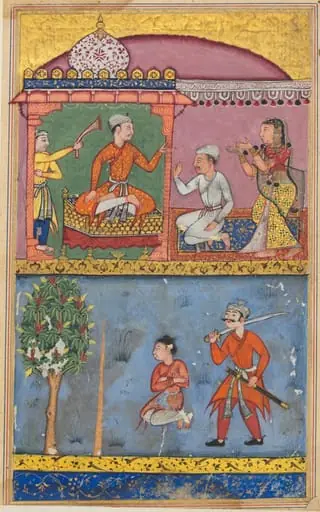 The handmaiden appeals for justice and the prince is taken to the execution site for the fourth time, from a Tuti-nama (Tales of a Parrot): Eighth Night
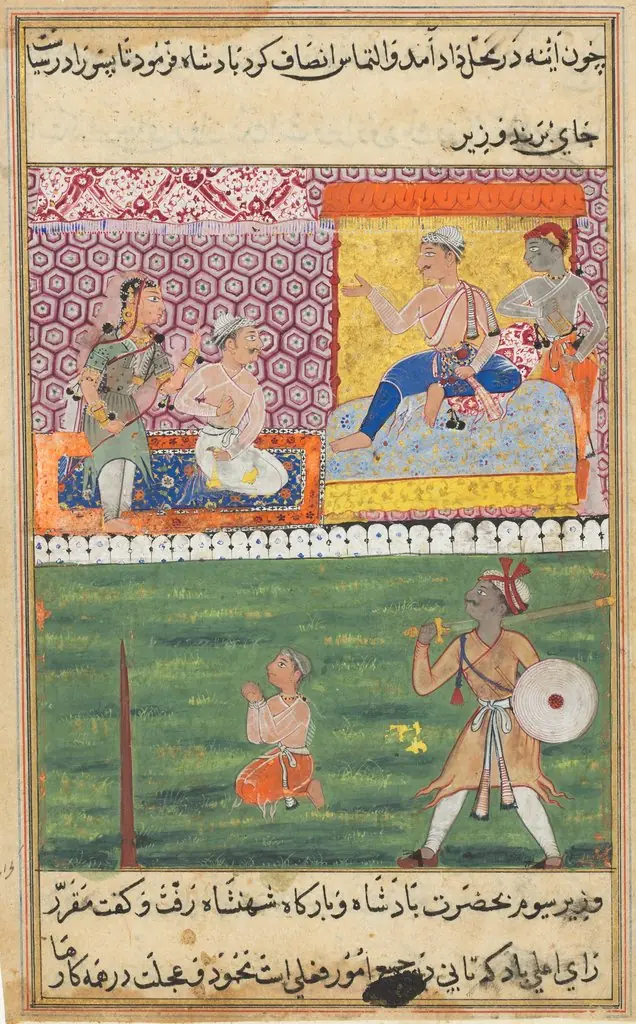 The handmaiden again appeals for justice and the prince is led to the place of execution for the third time, from a Tuti-nama (Tales of a Parrot): Eighth Night
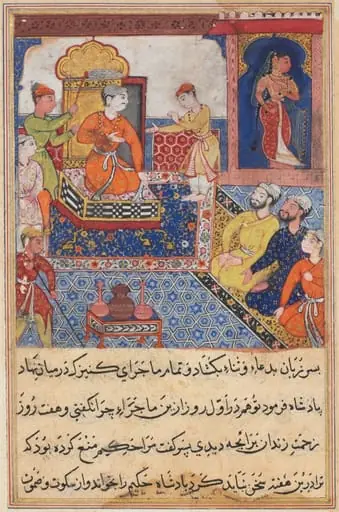 The young prince recounts his experiences to his father, the king, from a Tuti-nama (Tales of a Parrot): Eighth Night
 The king gives his daughter in marriage to the pious man’s son, from a Tuti-nama (Tales of a Parrot): Fifty-second Night