Artwork
Maica Domnului
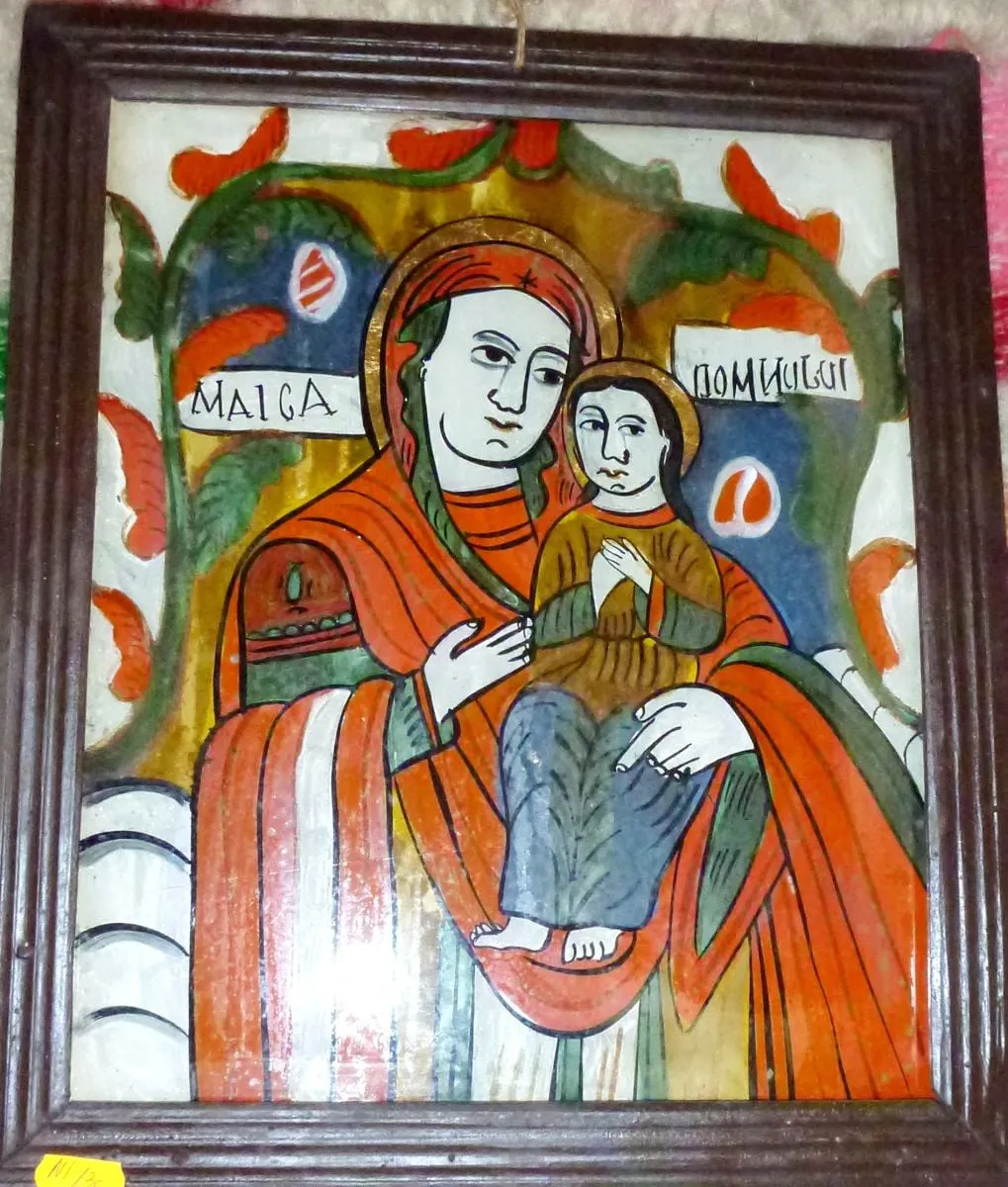
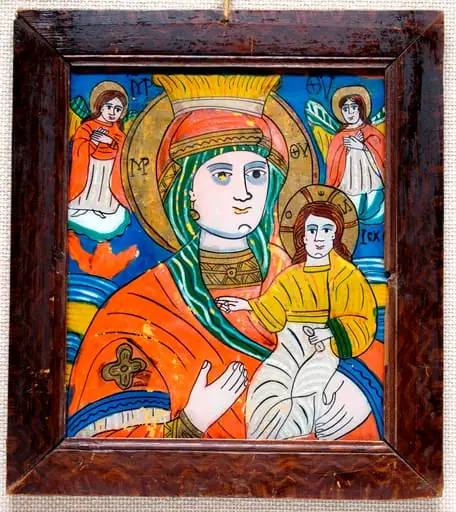
Maica Domnului is a drawing by Unknown. It dates from 1910 and is held in the collection of the Bistrita-Năsăud Museum Complex. The work presents a mother and child rendered in a vivid folk‑art idiom.
About this work
Overview
The work presents a mother and child rendered in a vivid folk‑art idiom. The figure of the woman, clad in an orange robe trimmed with green, cradles a boy dressed in a brown shirt and blue trousers. Above each figure a white banner bears the words “MAICA” and “DOMNULUI,” respectively, linking the scene to a devotional title.
Subject & Meaning
The composition evokes the traditional image of the Virgin and Child, a theme common in Eastern European religious folk painting. The textual banners function as a literal identification, reinforcing the sacred association while the domestic pose suggests tenderness and protection.
Technique & Style
Bold outlines and saturated pigments dominate the surface, characteristic of vernacular decorative painting. The background combines blocks of blue, yellow and orange, punctuated by stylized green foliage and red blossoms, creating a lively, patterned setting that emphasizes flatness over illusionistic depth.
History & Provenance
The piece is attributed to an unknown creator, a circumstance typical of many community‑produced folk artworks that were not signed or documented. Its origins likely lie in a regional tradition where religious motifs were reproduced for local churches or household altars.
Context
Folk representations of holy figures often served both devotional and decorative purposes, bridging liturgical iconography with everyday visual culture. The use of bright colors and narrative banners reflects a didactic intent, making the sacred narrative accessible to a largely illiterate audience.
Artist & collection
 Domestic Scene
 Giacomo and Cardinal Marco, investing Andrea, Abbot of San Zeno, with his Benefice
 The Nymph of Fontainebleau
 Portrait of a Woman
 Madonna and Child with Saints in the Enclosed Garden
 Venus and Minerva
 Family Group of Four on Sofa
 Wall painting from Room H of the Villa of P. Fannius Synistor at Boscoreale
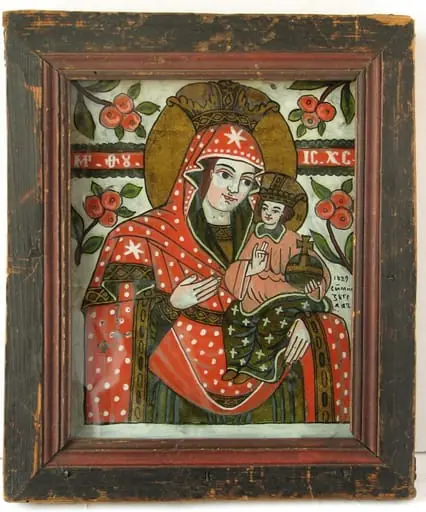 Maica Domnului cu Pruncul Iisus Hristos în brațe
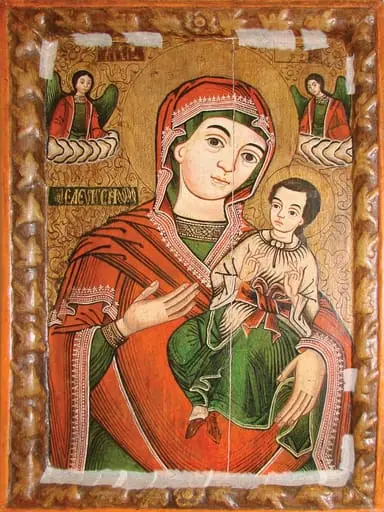 Maica Domnului cu Pruncul
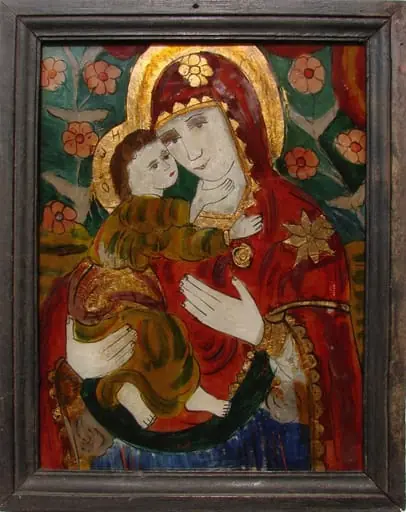 Maica Domnului cu Pruncul
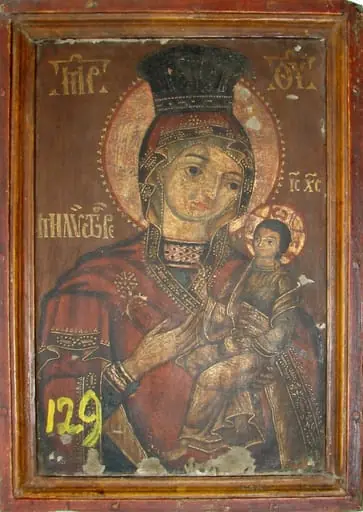 Maica Domnului cu Pruncul
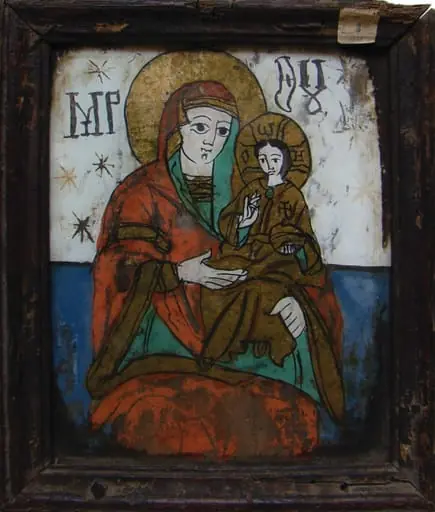 Maica Domnului cu Pruncul
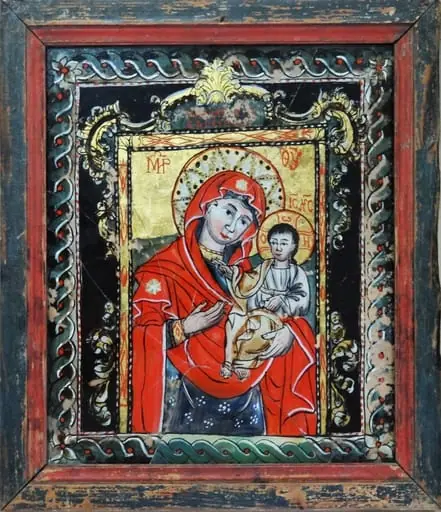 Maica Domnului cu Pruncul
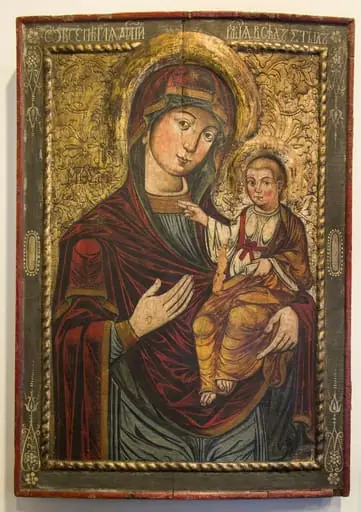 Maica Domnului cu pruncul; Icoană de catapeteasmă; Icoană împărătească
 Repr
Repr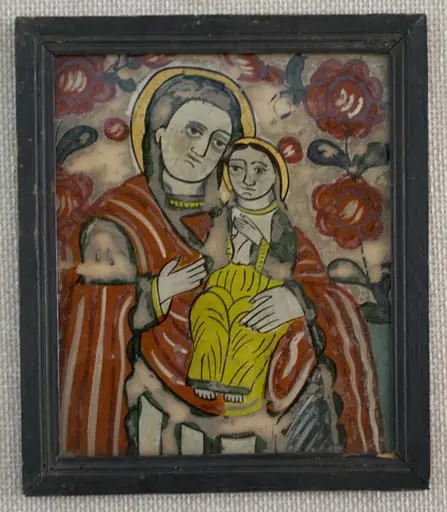 Icoana o reprezintă pe Maica Domnului cu Pruncul, tipul Hodighitria(Arătătoarea Căii). Cu mâna stângă susține Pruncul, cu dreapta arată către El. Maica are părul acoperit cu un văl verde.Veșmintele multicolore,(specific fazei de decadență a picturii de icoane pe sticlă)-roșu-mantia, cămașă, albă vrâstată cu verde, mâneci verzi, borduri diverse. Chipul cu umbre gri deschis, bărbia groasă, buze subțiri. Pruncul, cu amândouă mâinile la piept, are părul lung, castaniu și fața feminină. Aureolele sunt diforme, umplute cu bronz auriu. Câmp alb murdar decorat cu două ramuri cu flori roșii și boboci(ruje) care se unesc deasupra capului Maicii - 3/4 superior, bleu(1/4 inferior).Cromatica este dominată de roșu culorile stridente :alb, bleu, roșu, verde închis, ocru galben, brun, negru. Icoana are trăsăturile specifice picturii târzii din zona Nicula -Gherla: supraabundența detaliului, a decorului vegetal, apariția bronzului în locul foiței de aur, câmpul bicolor, sticla de proveniență industrială. Rama profilată este vopsită cu negru și încheiată oblic;dosul este din lemn subțire de brad;