Artwork
Maica Domnului cu Pruncul Hodighitria (Călăuzitoarea), Sfinții Nicolae și Haralambie, Sfinții mucenici Gheorghe și Dimitrie și Arhanghelii Mihail și Gavril
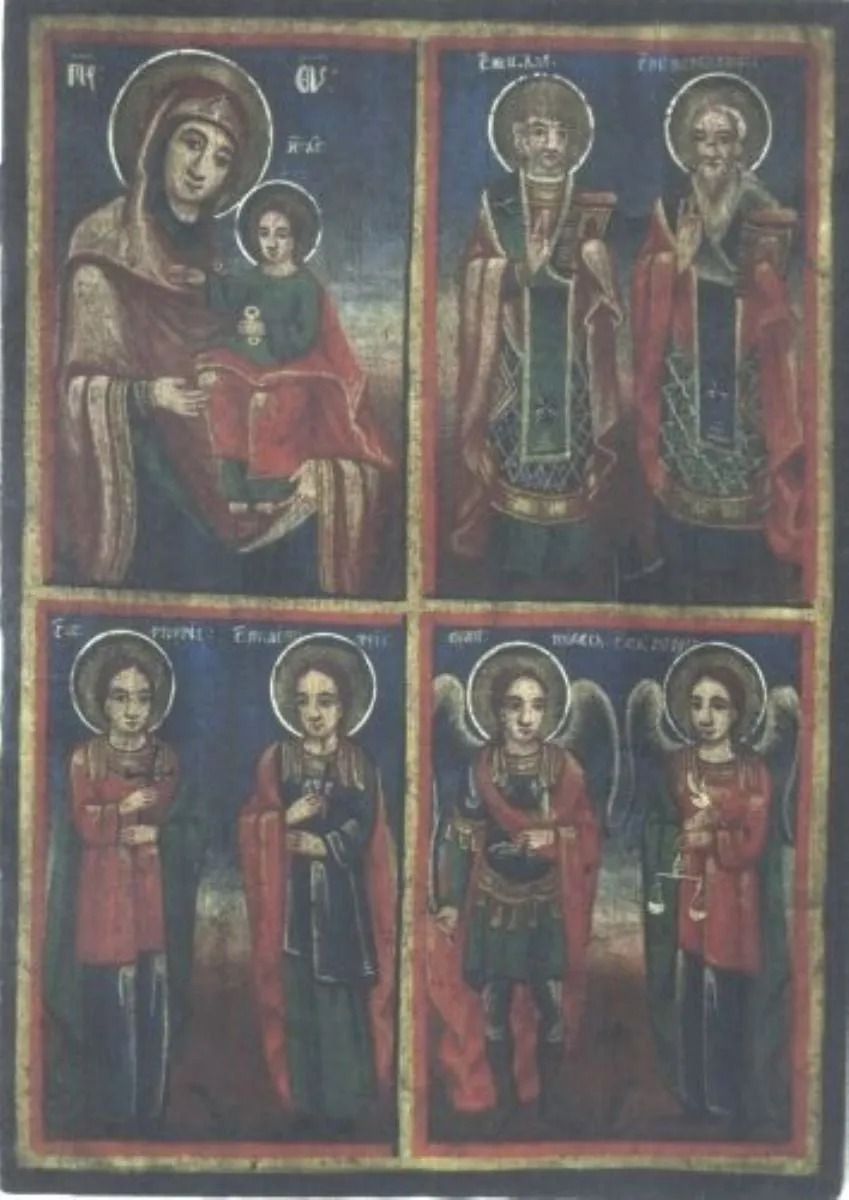
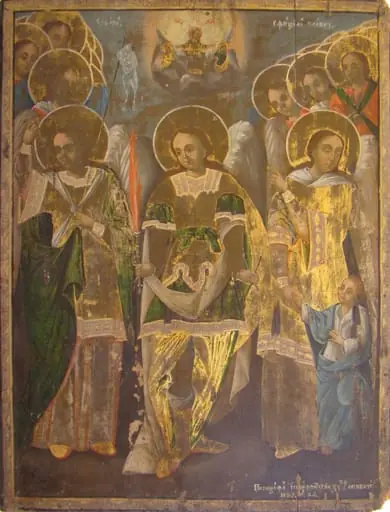
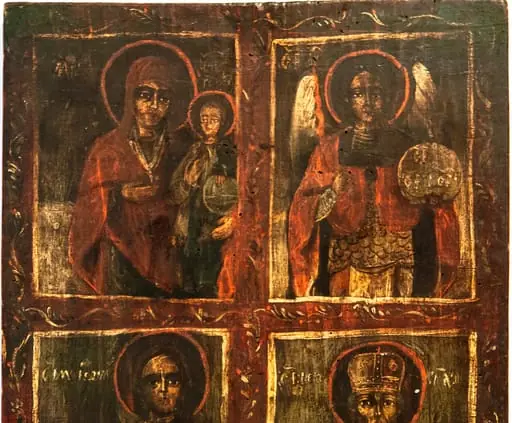
Maica Domnului cu Pruncul Hodighitria (Călăuzitoarea), Sfinții Nicolae și Haralambie, Sfinții mucenici Gheorghe și Dimitrie și Arhanghelii Mihail și Gavril is a drawing by the Impressionist artist Unknown. It dates from 1860 and is held in the collection of the Romanian Peasant Museum. This icon depicts eight holy figures arranged across four vertical panels.
About this work
Overview
Rich reds, blues, and golds dominate the palette, while the dark background emphasizes the luminous halos and garments.
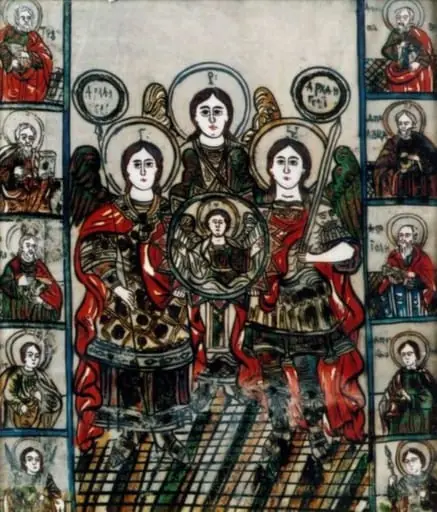
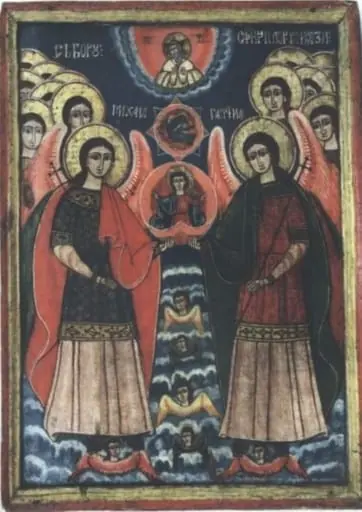
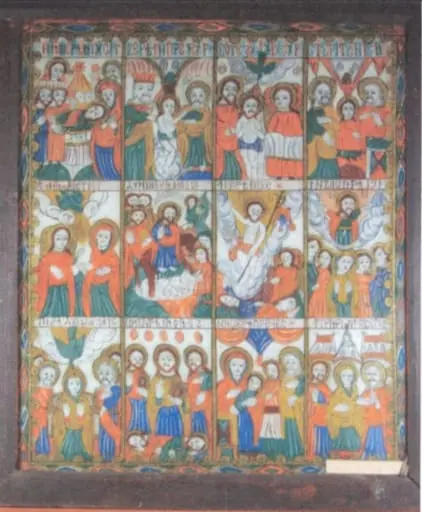
This icon depicts eight holy figures arranged across four vertical panels. The central upper panel shows the Virgin Mary with the Christ Child, flanked by saints and archangels below. All figures are rendered in a rigid, frontal composition typical of Byzantine tradition. Rich reds, blues, and golds dominate the palette, while the dark background emphasizes the luminous halos and garments. The border features ornamental red and gold patterning, common in liturgical icons of the period.
Subject & Meaning
The Virgin and Child, titled Hodighitria or 'She Who Shows the Way,' symbolize divine guidance. Flanking them are Saint Nicholas and Saint Haralambie, known for protection and pastoral care. Saints George and Demetrius, warrior martyrs, hold swords, signifying spiritual combat. Archangels Michael and Gabriel, with wings and scrolls, represent divine messengers. The scale held by Michael alludes to judgment, while the book with a cross signifies divine law. Together, the figures form a celestial hierarchy guiding the faithful.
Technique & Style
The painting employs flat, unmodulated colors without shading or perspective, adhering to the conventions of Eastern Orthodox iconography. Forms are outlined clearly, with gold halos defining sanctity. Robes are rendered in symbolic hues—blue for divinity, red for martyrdom, gold for heavenly light. Facial expressions are serene or solemn, avoiding individualized emotion. The lack of cross-hatching or depth reinforces the spiritual, otherworldly nature of the scene, prioritizing theological meaning over naturalism.
History & Provenance
This icon originates from the Romanian Orthodox tradition, likely created in the 17th or 18th century. It was probably commissioned for a church or private chapel, serving as a focus for prayer and veneration. Its preservation suggests continuous use in liturgical settings. The style reflects influences from Byzantine models transmitted through monastic centers in Moldavia or Wallachia, where icon painting remained a living tradition despite political changes.
Context
During the early modern period in Eastern Europe, icons like this were central to religious life, functioning as both devotional aids and theological statements. The selection of saints reflects local veneration patterns—warrior martyrs for protection, bishops for intercession, archangels as divine intermediaries. The icon’s structure follows the typology of the Deesis, adapted to include additional protectors, illustrating the fusion of universal Christian imagery with regional spiritual priorities.
Legacy
This icon exemplifies the enduring continuity of Byzantine artistic principles in Eastern Orthodox communities. Its formal consistency with earlier models highlights how iconography preserved doctrinal clarity across centuries. Though stylistically unchanged, such works remain active in worship today, bridging medieval theology with contemporary faith practices. Their survival underscores the resilience of religious art as a vessel of communal memory and spiritual identity.
Artist & collection

 Domestic Scene
 Giacomo and Cardinal Marco, investing Andrea, Abbot of San Zeno, with his Benefice
 The Nymph of Fontainebleau
 Portrait of a Woman
 Madonna and Child with Saints in the Enclosed Garden
 Venus and Minerva
 Family Group of Four on Sofa
 Wall painting from Room H of the Villa of P. Fannius Synistor at Boscoreale