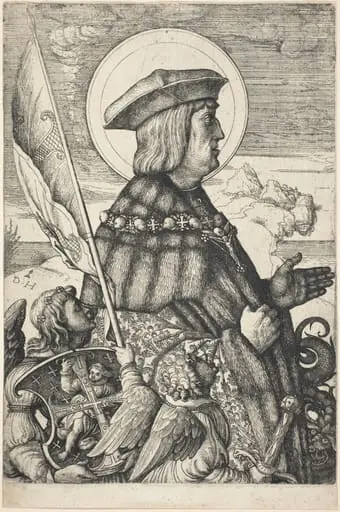
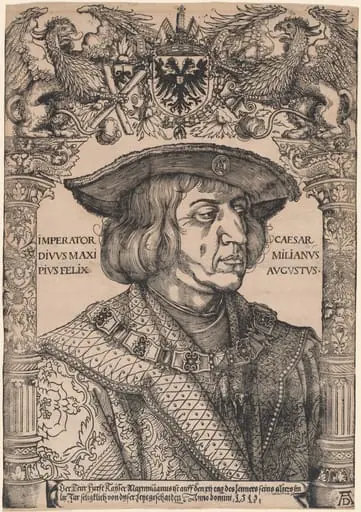
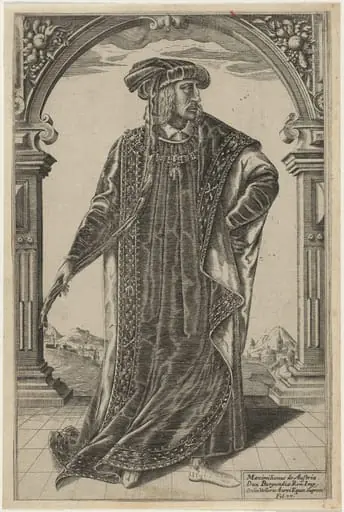
Artwork
Maximilian I
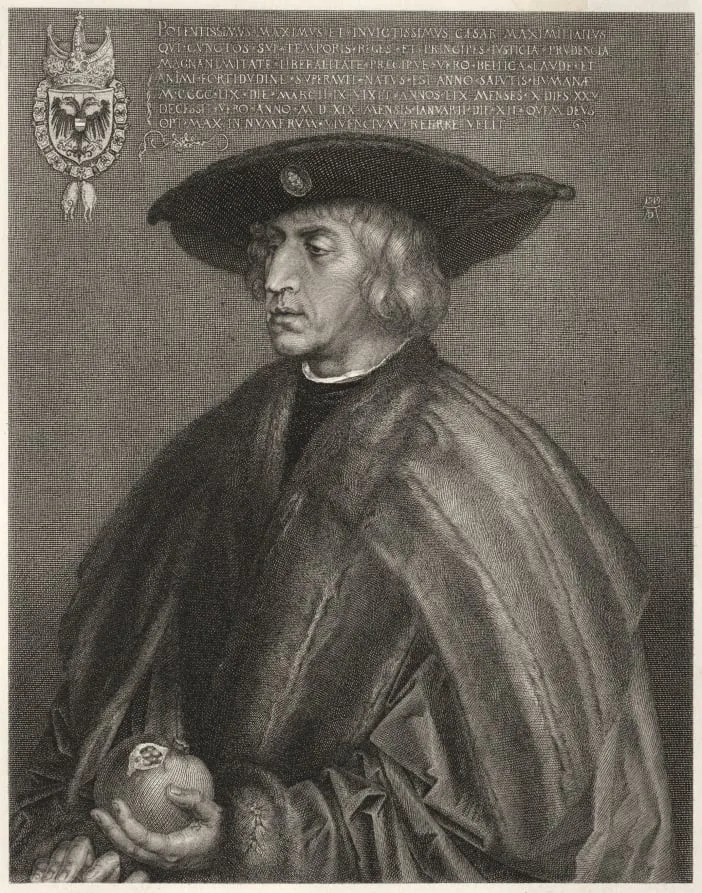
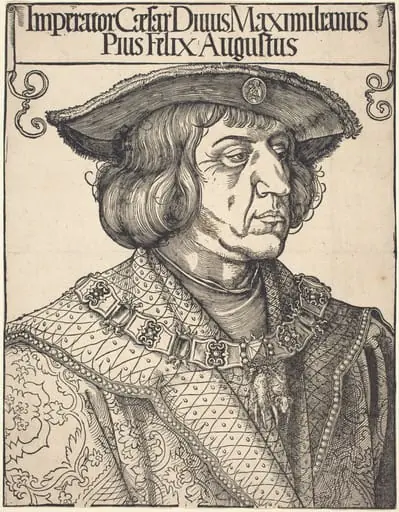
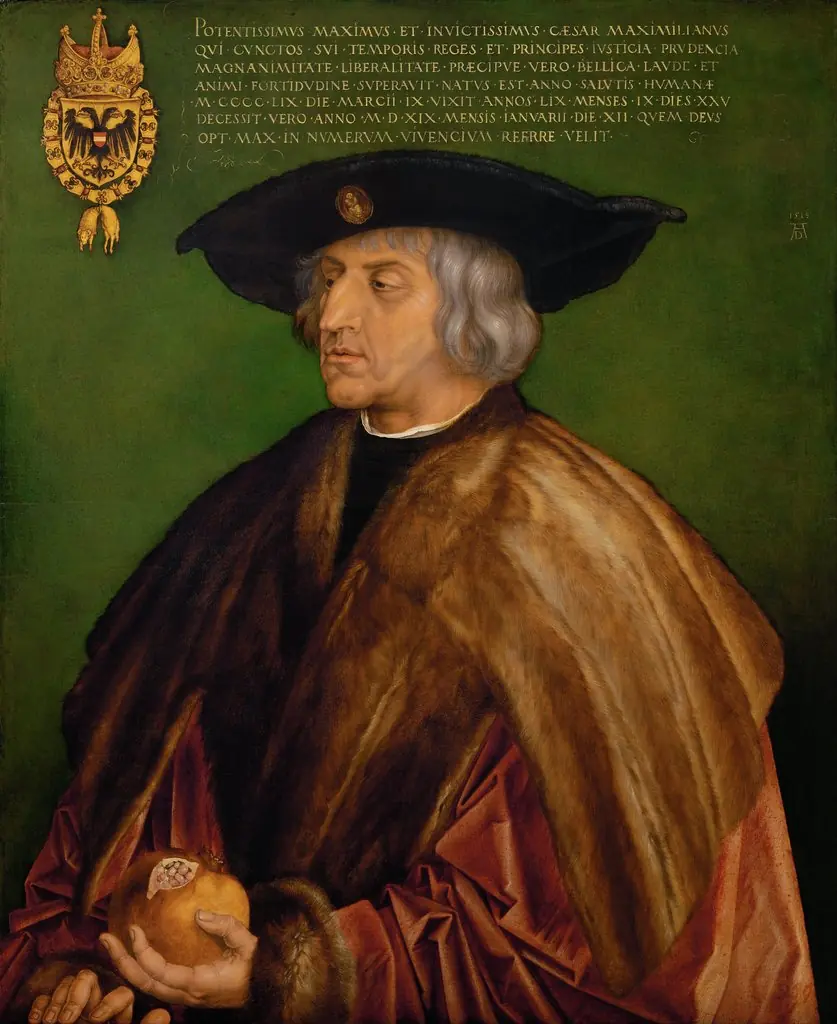
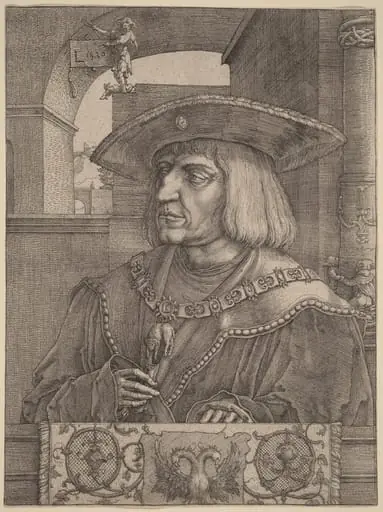
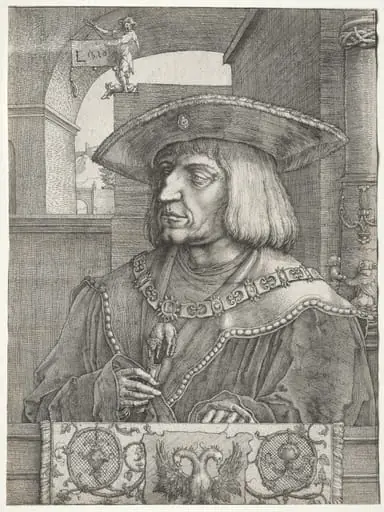
Maximilian I is a print by the Romanticist artist Unknown. It dates from 1804 and is held in the collection of the Cleveland Museum of Art.
About this work
This painting shows Maximilian I, the first king of Bavaria, but it was made after his death.
A man in a dark military coat sits stiffly against a plain background. His face is pale, his expression serious. Gold braid and medals decorate his chest.
This painting shows Maximilian I, the first king of Bavaria, but it was made after his death. The artist never met him—just copied an older portrait. The plain background makes the details of his uniform stand out more.
To see how other artists painted German rulers of the 1800s, look up *germany, 19th century*.
Overview
This print depicts Maximilian I, the first king of Bavaria, rendered in a formal, static pose. Though created after his death, it faithfully reproduces an earlier portrait, as the artist never met the subject. The plain background isolates the figure, emphasizing the precision of his military attire and the restrained dignity of his bearing.
Subject & Meaning
Maximilian I is portrayed in his official military uniform, adorned with gold braid and medals that signify his rank and service. His pale, composed face and solemn expression convey authority and gravitas, aligning with the expected image of a monarch in the early 19th century. The image functions as a posthumous tribute, reinforcing his legacy through visual tradition rather than personal observation.
Technique & Style
The print employs sharp linear detail to render the textures of fabric, metal, and skin. The absence of a background directs focus entirely to the figure, enhancing the clarity of the uniform’s embellishments. The tonal contrast between the dark coat and the pale complexion creates a stark, almost sculptural effect, typical of portraiture intended for official reproduction.
History & Provenance
Created after Maximilian I’s death, this print relies on an earlier portrait as its source, reflecting a common practice in the 19th century for disseminating royal likenesses. The artist worked from existing imagery rather than direct observation, indicating the institutional need to maintain consistent visual records of rulers regardless of temporal distance.
Context
In early 19th-century Germany, portraiture of monarchs served political and ceremonial functions, reinforcing legitimacy through standardized imagery. This print aligns with broader trends in German states, where rulers were depicted with uniform formality to project stability and continuity amid shifting political landscapes.
Legacy
As a posthumous reproduction, this print contributes to the visual archive of Bavarian royalty, preserving Maximilian I’s image for public and institutional use. Its reliance on prior models highlights how royal iconography was maintained through repetition, shaping historical perception long after the subject’s lifetime.
Artist & collection

 Domestic Scene
 Giacomo and Cardinal Marco, investing Andrea, Abbot of San Zeno, with his Benefice
 The Nymph of Fontainebleau
 Portrait of a Woman
 Madonna and Child with Saints in the Enclosed Garden
 Venus and Minerva
 Family Group of Four on Sofa
 Wall painting from Room H of the Villa of P. Fannius Synistor at Boscoreale