Artwork
Învierea lui Iisus
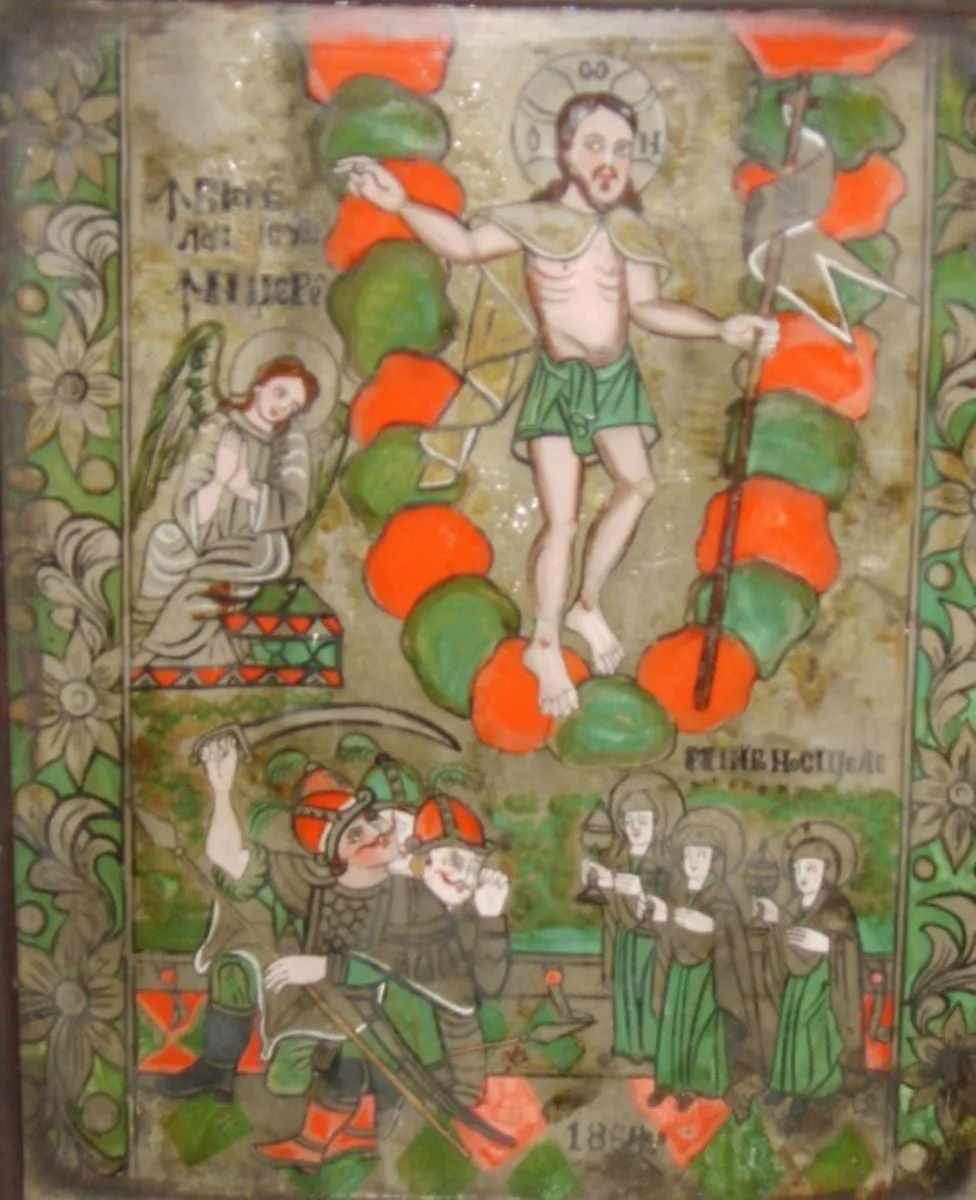
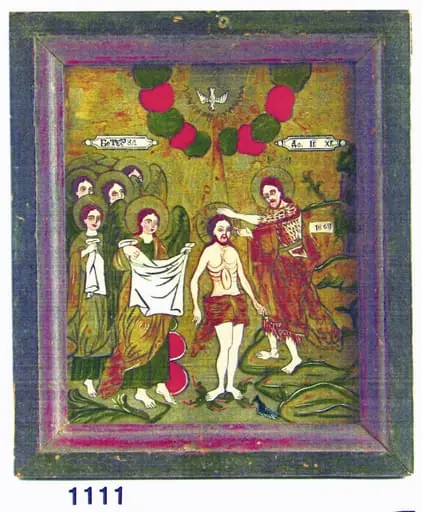
Învierea lui Iisus is a drawing by the Impressionist artist Unknown. It dates from 1864 and is held in the collection of the "Dimitrie Gusti" National Village Museum. This artwork depicts the resurrection of Jesus in a folk-art style characterized by simplified forms and vivid, unmodulated colors.
About this work
Overview
The figure of Christ rises centrally, marked by a halo and clad in a green loincloth, standing atop alternating red and green circular shapes.
This artwork depicts the resurrection of Jesus in a folk-art style characterized by simplified forms and vivid, unmodulated colors. The figure of Christ rises centrally, marked by a halo and clad in a green loincloth, standing atop alternating red and green circular shapes. A kneeling angel on the left and a group of observers below frame the scene, all rendered with bold outlines and minimal detail, evoking a devotional, handcrafted aesthetic.
Subject & Meaning
The scene illustrates the Christian narrative of Christ’s resurrection, emphasizing triumph over death. His upright posture and raised staff suggest authority and divine power, while the angel’s kneeling gesture conveys reverence. The onlookers below, though stylized, imply awe and witness, reinforcing the moment’s spiritual significance within a tradition of religious iconography adapted for local devotional use.
Technique & Style
The painting employs flat planes of bright color, sharp outlines, and a lack of perspective or shading, typical of folk or naïve traditions. Backgrounds are muted beige, allowing the red and green elements to stand out. Figures are simplified, with no attempt at anatomical realism, prioritizing symbolic clarity over naturalism. The composition is balanced yet deliberately primitive, aligning with regional artistic practices rather than academic conventions.
History & Provenance
The origin of this piece is not documented in major collections, suggesting it may have been produced by an anonymous artisan for private or local ecclesiastical use. Its style points to a 19th- or early 20th-century Eastern European or Balkan context, where religious imagery was commonly created outside formal academies. No known exhibition or ownership history has been recorded.
Context
While the subject is rooted in Orthodox Christian tradition, the visual language diverges from Byzantine or Western ecclesiastical norms. The use of bright, non-symbolic colors and folk motifs reflects a vernacular approach to sacred imagery, common in rural communities where artists drew from oral traditions and local aesthetics rather than canonical models.
Legacy
This work exemplifies how religious themes were interpreted beyond institutional art systems. Though not part of the Realism movement, its unidealized forms and direct expression resonate with broader folk traditions that preserved sacred stories through accessible, handmade visuals. Its value lies in its cultural specificity, offering insight into devotional practices outside elite artistic circles.
Artist & collection
Museum
"Dimitrie Gusti" National Village Museum
Continue through works from the same source collection.
 Domestic Scene
 Giacomo and Cardinal Marco, investing Andrea, Abbot of San Zeno, with his Benefice
 The Nymph of Fontainebleau
 Portrait of a Woman
 Madonna and Child with Saints in the Enclosed Garden
 Venus and Minerva
 Family Group of Four on Sofa
 Wall painting from Room H of the Villa of P. Fannius Synistor at Boscoreale
 Scene din viața lui Iisus
 Răstignirea lui Iisus Hristos
 Învierea lui Lazăr
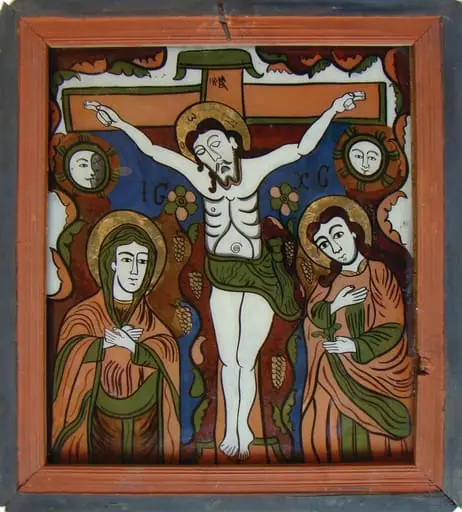 Răstignirea lui Iisus
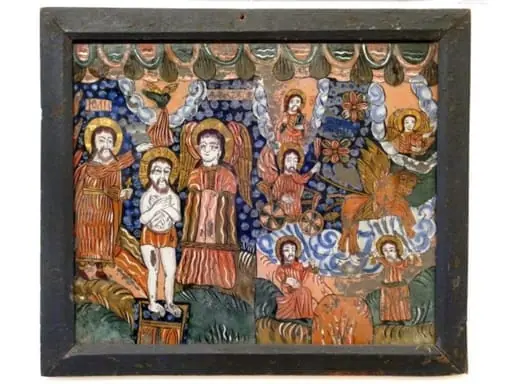 Botezul lui Iisus Hristos; Sfântul Proroc Ilie
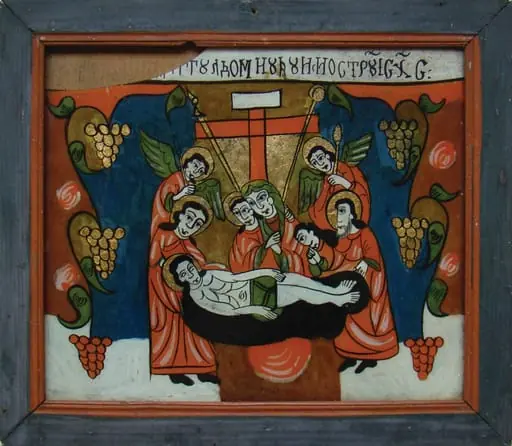 Prohodul lui Iisus
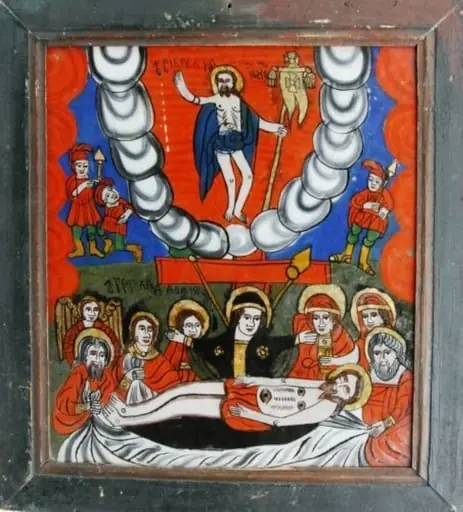 Îngroparea lui Iisus Hristos; Înălțarea lui Iisus Hristos la ceruri (Plângerea, Prohodul)
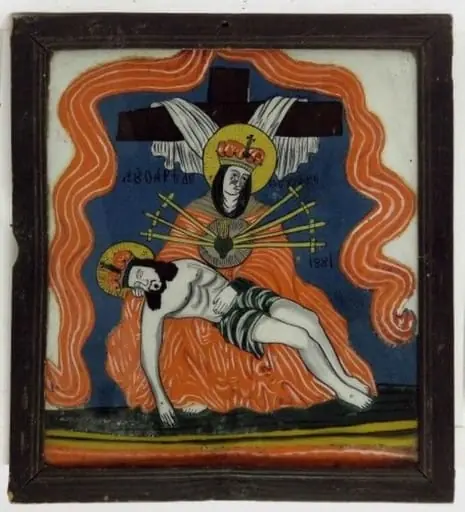 Coborârea de pe cruce
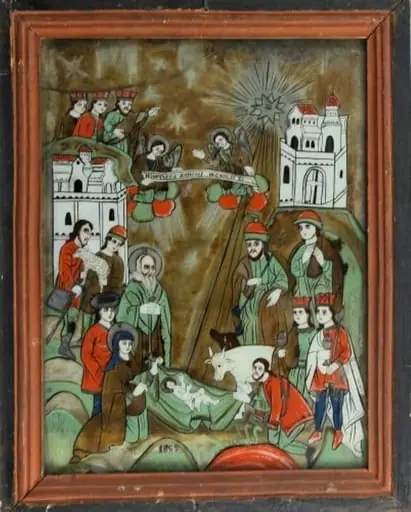 Nașterea lui Iisus Hristos
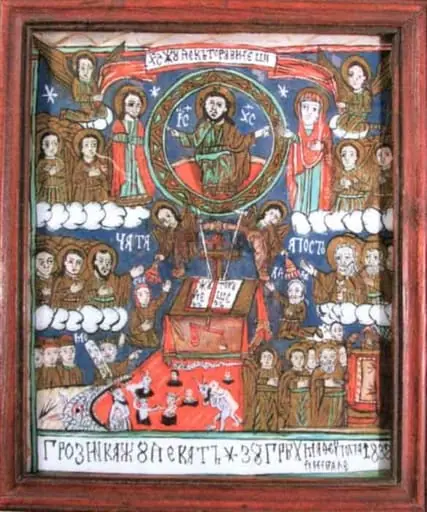 Judecata de Apoi
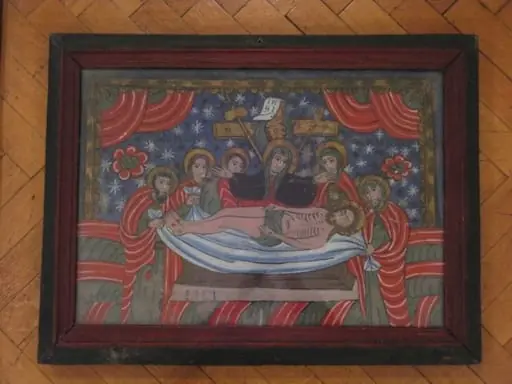 Plângerea lui Iisus Hristos (Prohodul)
 Botezul Mântuitorului Iisus Hristos