Artwork
Oală cu formă bombată, lucrată la roata rapidă, fiind prevăzută cu două toarte dispuse alteral unindu-se cu corpul vasului în zona diametrului maxim. Forma toartelor este aplatizată. Vasul este smălțuit în interior și exterior. Buza este evazată iar pe exteriorul vasului în zona exterioară a gâtului se identifică un registru cu motive decorative geometrice: linia vălurită și cercuri concentrice. În zona diametrului maxim prezintă motive florale și vegetale dispuse pe ambele părți ale zonei mediane a vasului. Cromatică: fundal cărămiziu; verde; alb; maro
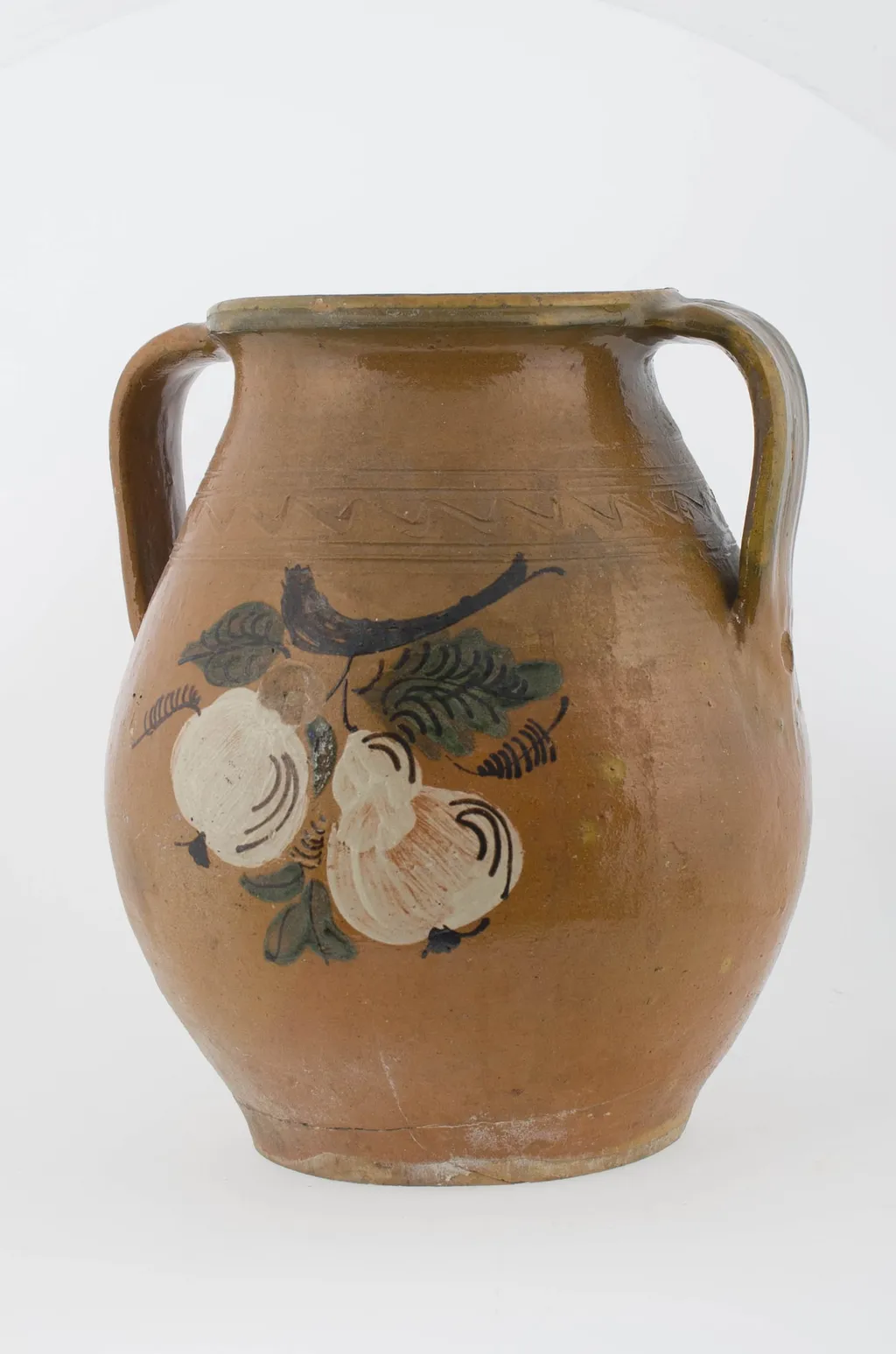
Oală cu formă bombată, lucrată la roata rapidă, fiind prevăzută cu două toarte dispuse alteral unindu-se cu corpul vasului în zona diametrului maxim. Forma toartelor este aplatizată. Vasul este smălțuit în interior și exterior. Buza este evazată iar pe exteriorul vasului în zona exterioară a gâtului se identifică un registru cu motive decorative geometrice: linia vălurită și cercuri concentrice. În zona diametrului maxim prezintă motive florale și vegetale dispuse pe ambele părți ale zonei mediane a vasului. Cromatică: fundal cărămiziu; verde; alb; maro is a photography by Unknown. It dates from 1850 and is held in the collection of the ASTRA National Museum Complex.
About this work
Overview
This clay vessel features a rounded, bulbous body formed on a fast wheel, with two flattened, thick handles extending from the upper rim to the widest point.
This clay vessel features a rounded, bulbous body formed on a fast wheel, with two flattened, thick handles extending from the upper rim to the widest point. Both interior and exterior surfaces are coated with a slip, creating a smooth, sealed finish. The lip flares outward, and decorative bands encircle the neck and midsection, organized in distinct horizontal registers that guide the viewer’s eye along the form.
Subject & Meaning
Decorative motifs include concentric circles and wavy lines near the neck, while the central band displays stylized floral and vegetal elements—two white, leafy forms resembling fruit, paired with simple vine patterns. These symbols likely reflect natural observation, possibly signifying abundance or seasonal cycles, though no ritual or textual context confirms specific symbolic meaning.
Technique & Style
The vessel was painted with flat, unblended pigments in reddish-brown, white, green, and brown tones. Lines are crisp and minimal, avoiding shading or perspective. Motifs are arranged symmetrically along the vessel’s midline, emphasizing balance over realism. The painting technique suggests functional craftsmanship rather than fine art, prioritizing clarity and durability.
History & Provenance
The vessel originates from a tradition of utilitarian ceramics, likely produced in a regional workshop using locally sourced clay and natural pigments. Its form and decoration align with Neolithic or early Bronze Age pottery from Eastern Europe, though exact provenance remains unconfirmed. Similar examples are held in the Museum of Ethnography, indicating shared regional practices.
Context
This pot was designed for storage or transport of food or liquids, its sealed surface and sturdy handles supporting practical use. The decorative bands follow a common regional pattern seen in contemporaneous vessels, suggesting standardized aesthetic conventions. The absence of complex iconography implies a focus on everyday utility, with ornament serving as cultural marker rather than narrative.
Legacy
The vessel exemplifies a widespread ceramic tradition in which form and decoration were shaped by function and available materials. Its simplicity and repetition of motifs reflect a broader cultural preference for geometric and naturalistic patterns in early pottery. Such objects remain key to understanding prehistoric domestic life and regional craft continuity.
Artist & collection

 Domestic Scene
 Giacomo and Cardinal Marco, investing Andrea, Abbot of San Zeno, with his Benefice
 The Nymph of Fontainebleau
 Portrait of a Woman
 Madonna and Child with Saints in the Enclosed Garden
 Venus and Minerva
 Family Group of Four on Sofa
 Wall painting from Room H of the Villa of P. Fannius Synistor at Boscoreale
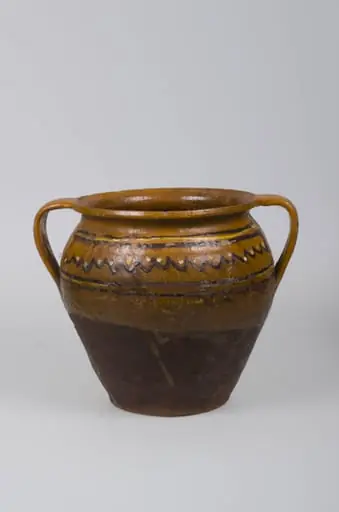 Vasul are formă bitronconică, prevăzut cu două toarte dispuse vertical în opoziție una față de cealalltă. Gâtul foarte profilat și buza evazată. Toartele pornesc din buza vasului și se unesc cu corpul în zona diametrului vasului, fiind aplatizate. Oala are urme de ardere secundară; este smălțuită în interior și în exterior (doar jumătatea superioară). Este folosită atât la pregătirea hranei cât și pentru păstrarea alimentelor și pentru transportul hranei la câmp. Oala este decorată pe umăr cu motive geometrice: linii drepte, linie în val, puncte. Cromatică cărămiziu; galben; maro închis.
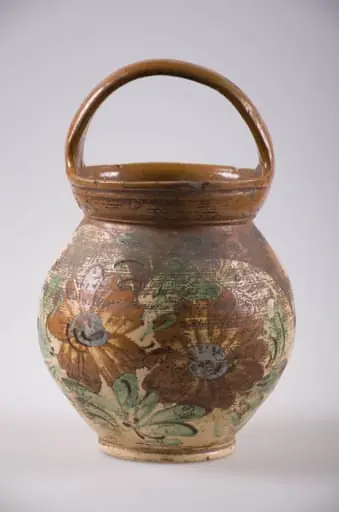 Oală de formă bitronconică cu buza largă din care se ridică o toartă ce fixează diametrul buzei (mănușar). Corpul vasului este bitronconic, toarta și buza vasului au un smalț de culoare cărămizie. În partea din față a corpului vasului, pe un fond alb-gălbui (culoarea untului) sunt pictate două flori (albastru, galben, maron, verde) restul corpului având desenate vrejuri ornamentale. Pe buza vasului, la exterior, prezintă caneluri închise la culoare. Cromatică: fond: maro; motive: albastru; galben; maron; verde.
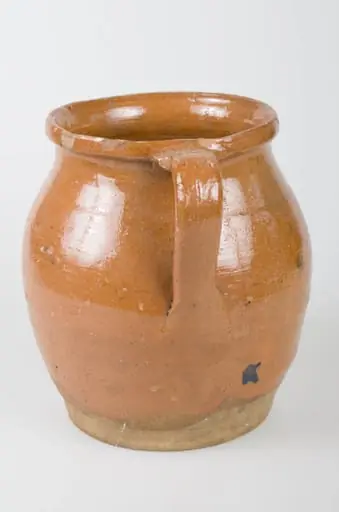 Vas bombat în partea mediană și cu buza răsfrântă spre exterior, gât scurt, smălțuit. Prezintă o toartă ce leagă marginea vasului cu partea de diametru maxim. Pe cea mai mare parte a vasului decor având în plan central o floare cu petale maron și punct albastru în mijloc, peste care se sprapun motive palmate în alb, întreg registrul fiind încadrat de alte linii palamte în albastru ce radiază din floare, și câte o linie ondulată albă și albastră dispuse în partea superioară, respectiv inferioară. Prezintă urme de uzură funcțională. Cromatică: fond: cărămiziu; motive: albastru; maro; alb.
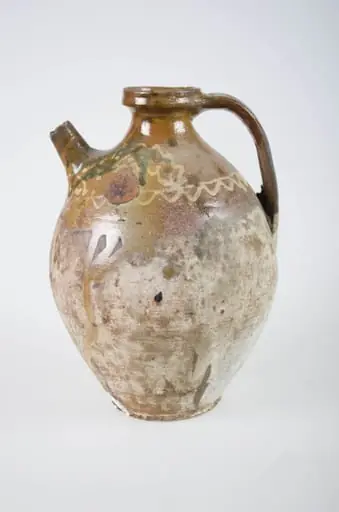 Vas de formă ovoidală cu gât lung, cu gura largă și buza înălțată. Prezintă o toartă care pleacă din gura vasului și se unește cu corpul în zona diametrului maxim. Din umăr, în partea opusă torții pleacă o țâță scurtă (burciuc). Vasul este smălțuit pe exterior în partea superioară unde prezintă și un decor format din motive geometrice: linie și linie în val deasupra cărora se regăsesc motive florale. Cromatica: fond: cărămiziu; motiver: alb-gălbui, verde. Prezintă uzură funcțională.
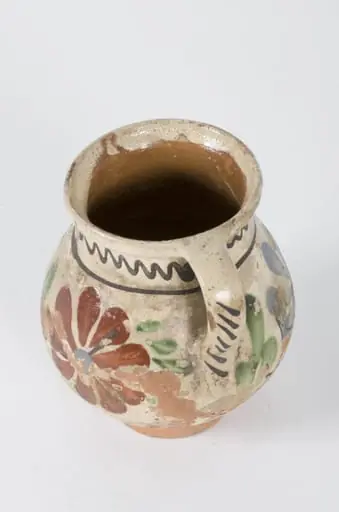 Vas de lut cu baza înaltă, bombat în partea mediană, cu gâtul scurt și buza evazată. Smălțuit pe întreaga suprafață, Prezintă o toartă care pleacă din buza vasului și se unește cu corpul deasupra diametrului maxim, decorată cu linii oblice. Sub buza vasului este decorat cu o linie vălurită dispusă circular și una dreaptă. Pe suprafața exterioară a vasului sunt pictate două flori, una cu petale albastre și cealaltă cu petale maro. Între cele două flori există frunze de culoare verde și o linie în diagonală încadrată de două șiruri de ondulații. Cromatică: fond: alb; cărămiziu; motive: negru; albastru; verde; maro.
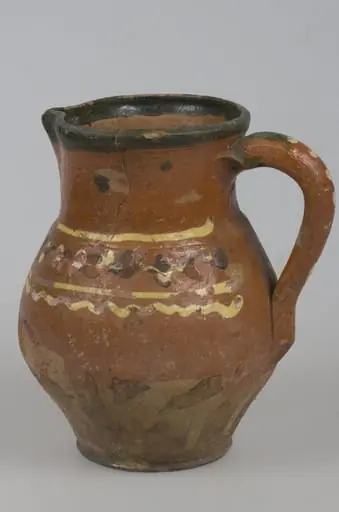 Vas de lut de mici dimensiuni, bombat, cu gât lung și puțin evazat, cu gură largă și cioc de scurgere. Toarta pornește de sub gură și coboară până în zona diametrului maxim al vasului. Este smălțuit în interior și exterior. Decorul dispus pe umărul vasului este format din: motive florale: o cunună din frunze încadrată de motive geometrice: o linie circulară în partea superioară și o linie circulară și una în val în partea inferioară. Buza vasului este vopsită în interior și exterior. Toarta este decorată cu puncte de culoare albă. Cromatică: fond: cărămiziu; motive: alb; verde; negru.
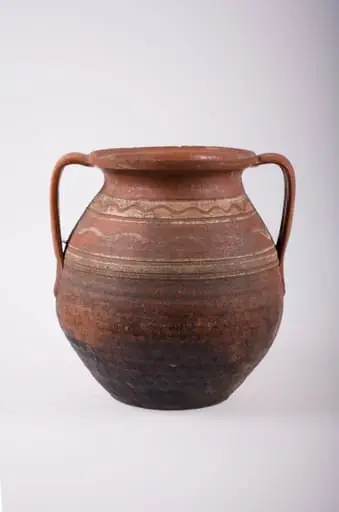 Oala bombată cu două toarte late, aplatizate, dispuse de o parte și de alta a gurii vasului; buză evazată; decorată în exterior cu motive geometrice: linii, linii vălurite pe un registru de cromatică albă. Cromatică: fond: maro; motive: alb-gălbui. Smălțuită pe gura vasului, interior și pe mânerul vasului.
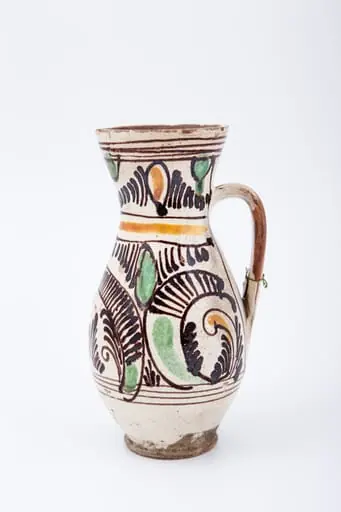 Cănceu piriform prevăzut cu o toartă, gât scurt și evazat, toarta dispusă de la gât la diametrul maxim al vasului. Suprafața decorativă a vasului este împărțită în două registre dispuse vertical, separate printr-o bandă lată verde așezată pe gâtul vasului. Primul registru prezintă motive geometrice stilizate: linii subțiri verticale și frunze stilizate, conturul fiind trasat cu cornul, pictate în interior cu galben și verde. Al doilea registru prezintă motive geometrice stilizate, linii, benzi interesectate decorate jumătate cu linii subțiri orizontale maro, jumătate pictate cu verde sau galben, cercuri hașurate care simbolizează motive florale și linii verticale subțiri maro. Decorul central este încadrat în partea inferioară și superioară de linii subțiri, paralele maro. Cromatică: alb; verde; maro; galben.
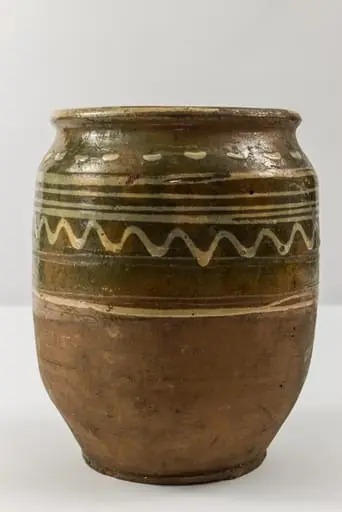 Piesă din lut modelat la roată, smălțuită în interior și parțial în exterior, de formă aproape cilindrică, cu pereții ușor îngustați spre bază, cu gură ușor răsfrântă. Decorul vasului este dispus pe suprafața exterioară, de la mijloc în sus, astfel: o dungă albă, un registru cu motivul valul, un grup de cinci cercuri concentrice, un registru cu motive liniare și punctiforme. Cromatică: maro, ocru, verde, alb.
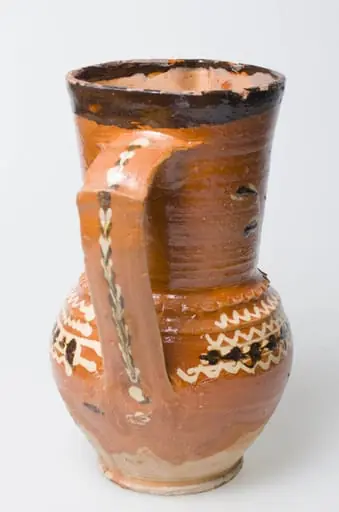 Vasul este confecționat din lut, având forma bitronconică, cu gura largă. Acesta este prevăzut cu o toartă pentru prindere fixată, în partea superioară de margine, iar în partea inferioară de zona bombată a vasului. Obiectul este decorat cu linii vălurite și motive florale. Cromatică: fond: maro; decor: alb; negru.