Artwork
Vas bombat în partea mediană și cu buza răsfrântă spre exterior, gât scurt, smălțuit. Prezintă o toartă ce leagă marginea vasului cu partea de diametru maxim. Pe cea mai mare parte a vasului decor având în plan central o floare cu petale maron și punct albastru în mijloc, peste care se sprapun motive palmate în alb, întreg registrul fiind încadrat de alte linii palamte în albastru ce radiază din floare, și câte o linie ondulată albă și albastră dispuse în partea superioară, respectiv inferioară. Prezintă urme de uzură funcțională. Cromatică: fond: cărămiziu; motive: albastru; maro; alb.
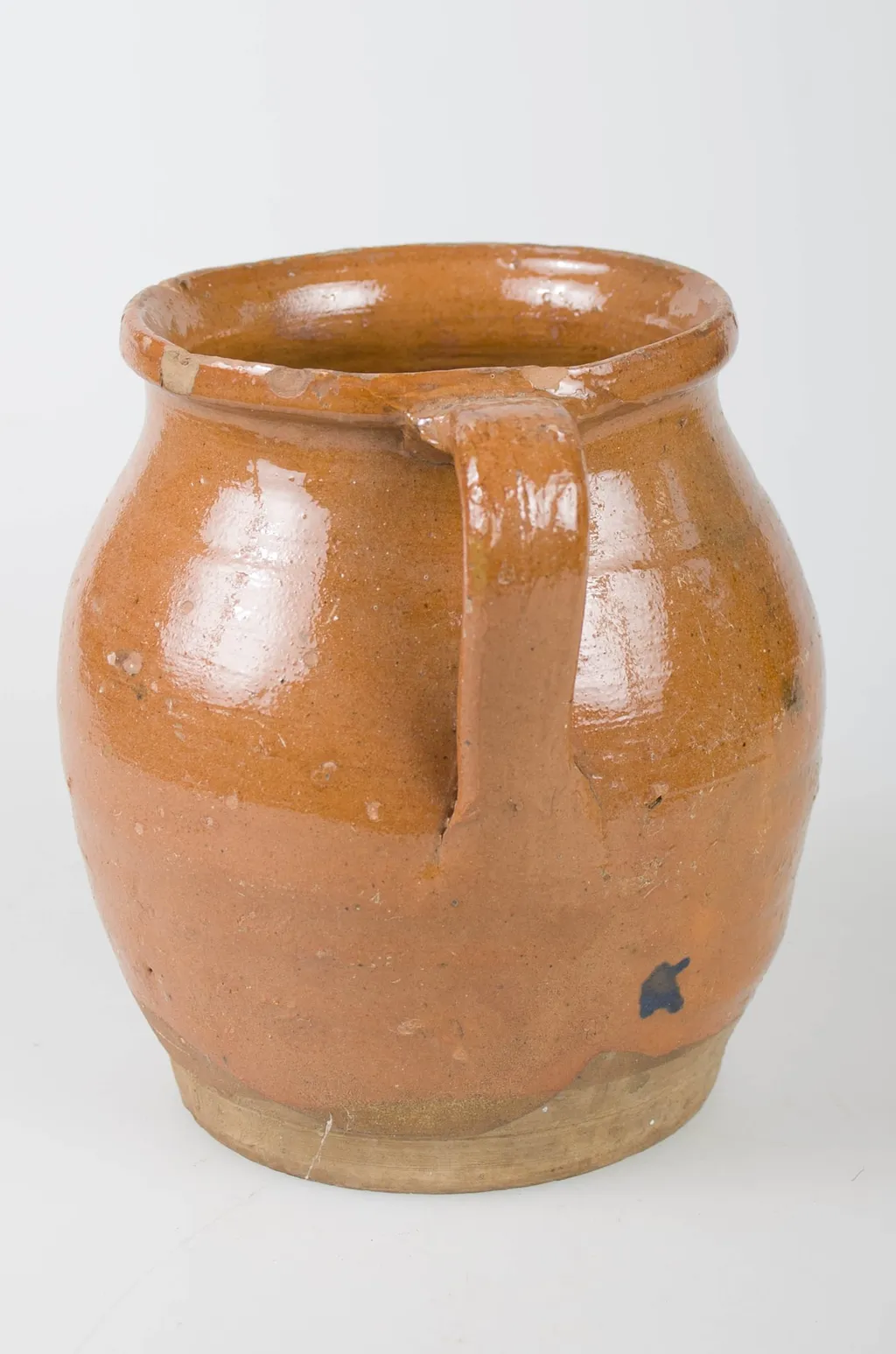
Vas bombat în partea mediană și cu buza răsfrântă spre exterior, gât scurt, smălțuit. Prezintă o toartă ce leagă marginea vasului cu partea de diametru maxim. Pe cea mai mare parte a vasului decor având în plan central o floare cu petale maron și punct albastru în mijloc, peste care se sprapun motive palmate în alb, întreg registrul fiind încadrat de alte linii palamte în albastru ce radiază din floare, și câte o linie ondulată albă și albastră dispuse în partea superioară, respectiv inferioară. Prezintă urme de uzură funcțională. Cromatică: fond: cărămiziu; motive: albastru; maro; alb. is a photography by Unknown. It dates from 1850 and is held in the collection of the ASTRA National Museum Complex. This ceramic vessel features a broad, rounded body with a short neck and outward-flaring rim.
About this work
Overview
This ceramic vessel features a broad, rounded body with a short neck and outward-flaring rim. Its surface is coated with a thin, glossy slip, partially worn from use, revealing the underlying clay. Two small handles are present, and a faint crack runs vertically along one side. The overall form suggests practical use, likely for storage or transport of liquids or dry goods in a domestic setting.
Subject & Meaning
The central decoration depicts a stylized flower with brown petals and a blue central dot, surrounded by radiating palmate motifs in white.
The central decoration depicts a stylized flower with brown petals and a blue central dot, surrounded by radiating palmate motifs in white. Additional blue palmate lines frame the design, while alternating white and blue wavy bands border the top and bottom. The imagery may reflect natural forms familiar to its makers, possibly symbolizing growth or seasonal cycles, though no explicit ritual or symbolic meaning is confirmed by surviving evidence.
Technique & Style
The vessel was hand-formed from coarse clay and fired to achieve a reddish-brown hue. A slip was applied for surface sheen, with pigments in white, blue, and brown painted freehand. Decorative elements are arranged in horizontal registers, emphasizing symmetry and radial balance. The brushwork is direct and unrefined, indicating production by skilled artisans rather than specialized decorators.
History & Provenance
The pot shows clear signs of prolonged use, including surface abrasion and a repaired crack. Its form and decoration align with regional ceramic traditions from the late Neolithic or early Bronze Age in the Carpathian Basin. No documented excavation context exists, but comparable examples are held in collections such as the Museum of Ethnography, suggesting a local, non-elite origin.
Context
This vessel belongs to a broader tradition of utilitarian pottery found across Eastern Europe, where simple, durable forms dominated daily life. Decorative motifs were often geometric or botanical, applied without strict iconographic rules. Its presence in domestic contexts, rather than burial or ceremonial sites, underscores its role in routine household activities.
Legacy
Though not produced by a known center of ceramic innovation, this pot exemplifies the widespread, low-tech pottery practices of prehistoric communities. Its survival offers insight into material culture beyond elite artifacts. Similar vessels in museum collections help trace the diffusion of decorative styles and functional forms across early agrarian societies.
Artist & collection

 Domestic Scene
 Giacomo and Cardinal Marco, investing Andrea, Abbot of San Zeno, with his Benefice
 The Nymph of Fontainebleau
 Portrait of a Woman
 Madonna and Child with Saints in the Enclosed Garden
 Venus and Minerva
 Family Group of Four on Sofa
 Wall painting from Room H of the Villa of P. Fannius Synistor at Boscoreale
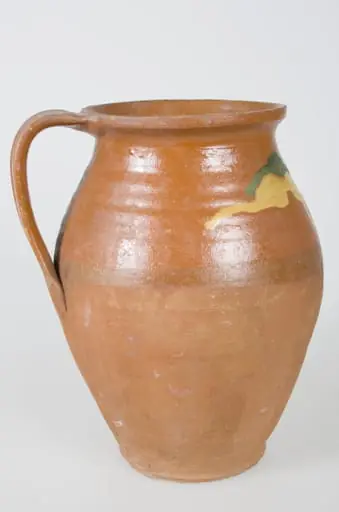 Vas bombat în partea mediană și cu buza evazată, smălțuit în jumătatea superioară. Prezintă o toartă ce leagă buza vasului de partea mediană. Decorații frontale realizate prin stropire, sub forma a două linii suprapuse și neregulate dispuse orizontal. Cromatică: fond cărămiziu; motive: verde; galben.
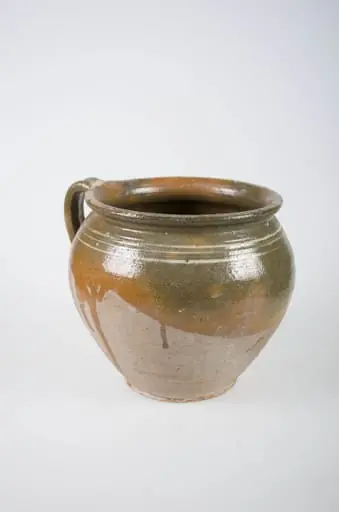 Vas cu corpul foarte bombat în partea superioară, cu un gât scurt și profilat, cu gura foarte lată, buza evazată și rotunjită. Din buză pornește o toartă care se unește cu corpul sub diametrul maxim. Vasul este smălțuit în interior și exterior (doar partea superioară). Este decorat cu motive geometrice: trei linii concentrice pe umăr și o linie scurtă orizontală pe toartă. Cromatica: fond: cărămiziu; motive: alb,.
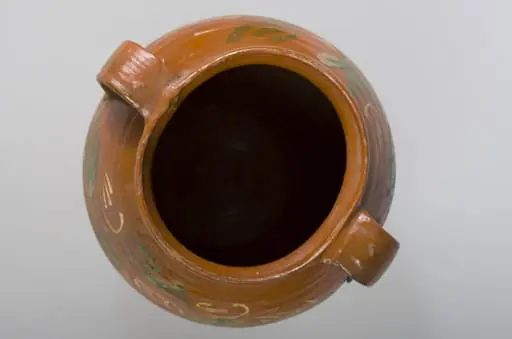 Vas de formă bitronconică, cu gât scurt cu buză rotunjită și evazată. Oala este smălțuită interior și pe 2/3 din exterior. Prezintă două toarte late ce unesc buza vasului de zona diametrului maxim. Decorații în registru floral-vegetal, dispuse concentric, în partea superioară a vasului, compuse din linii ondulate și palmate. Cromatică: fond: cărămiziu; motive: alb, verde.
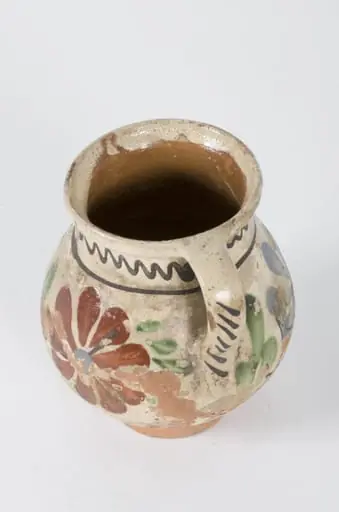 Vas de lut cu baza înaltă, bombat în partea mediană, cu gâtul scurt și buza evazată. Smălțuit pe întreaga suprafață, Prezintă o toartă care pleacă din buza vasului și se unește cu corpul deasupra diametrului maxim, decorată cu linii oblice. Sub buza vasului este decorat cu o linie vălurită dispusă circular și una dreaptă. Pe suprafața exterioară a vasului sunt pictate două flori, una cu petale albastre și cealaltă cu petale maro. Între cele două flori există frunze de culoare verde și o linie în diagonală încadrată de două șiruri de ondulații. Cromatică: fond: alb; cărămiziu; motive: negru; albastru; verde; maro.
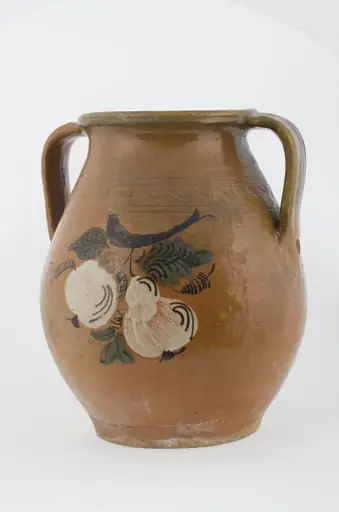 Oală cu formă bombată, lucrată la roata rapidă, fiind prevăzută cu două toarte dispuse alteral unindu-se cu corpul vasului în zona diametrului maxim. Forma toartelor este aplatizată. Vasul este smălțuit în interior și exterior. Buza este evazată iar pe exteriorul vasului în zona exterioară a gâtului se identifică un registru cu motive decorative geometrice: linia vălurită și cercuri concentrice. În zona diametrului maxim prezintă motive florale și vegetale dispuse pe ambele părți ale zonei mediane a vasului. Cromatică: fundal cărămiziu; verde; alb; maro
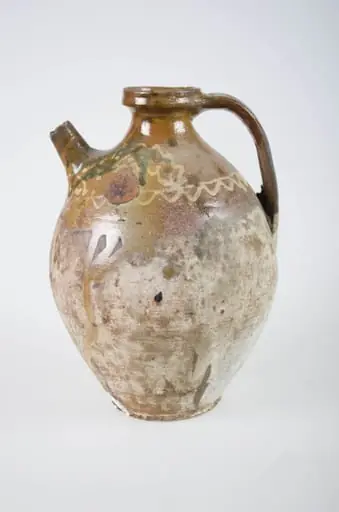 Vas de formă ovoidală cu gât lung, cu gura largă și buza înălțată. Prezintă o toartă care pleacă din gura vasului și se unește cu corpul în zona diametrului maxim. Din umăr, în partea opusă torții pleacă o țâță scurtă (burciuc). Vasul este smălțuit pe exterior în partea superioară unde prezintă și un decor format din motive geometrice: linie și linie în val deasupra cărora se regăsesc motive florale. Cromatica: fond: cărămiziu; motiver: alb-gălbui, verde. Prezintă uzură funcțională.
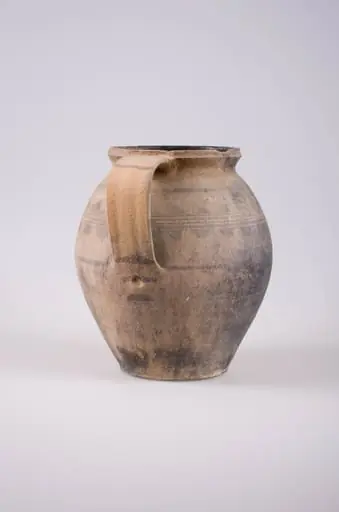 Oală borcan cu corp pântecos bombat cu gât profilat, cu buza evazată tăiată drept și toartă lată. Decorat în partea superioară cu cinci linii ușor adâncite realizate cu piaptănul care secționează un val pictat realizat cu degetul încadrate de două linii maro-roșcat. Toarta prezintă două caneluri este decorată cu o linie în partea superioară și trei linii în partea inferioară. Cromatică: fond: cărămiziu; motive: maro-roșcat. Prezintă urme de ardere secundară.
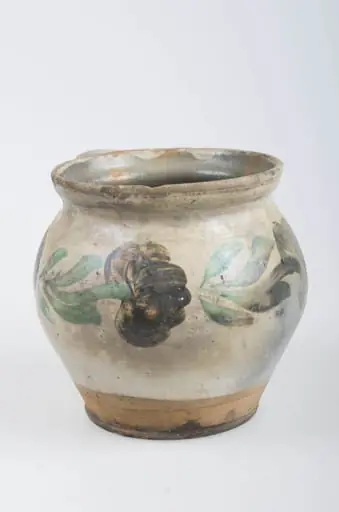 Vas bombat în partea mediană cu buza răsfrântă spre exterior. Toartă pe centrul vasului ce unește gura cu partea mediană. Pe toată suprafața vasului prezintă decorații realizate prin pictare, ilustrând flori albastre, în alternanță cu frunze verzi, împreună cu dungi dispuse orizontal. Cromatică: fond: alb; motive: verde, albastru, maro.
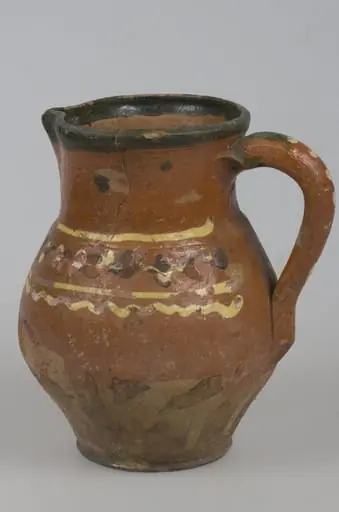 Vas de lut de mici dimensiuni, bombat, cu gât lung și puțin evazat, cu gură largă și cioc de scurgere. Toarta pornește de sub gură și coboară până în zona diametrului maxim al vasului. Este smălțuit în interior și exterior. Decorul dispus pe umărul vasului este format din: motive florale: o cunună din frunze încadrată de motive geometrice: o linie circulară în partea superioară și o linie circulară și una în val în partea inferioară. Buza vasului este vopsită în interior și exterior. Toarta este decorată cu puncte de culoare albă. Cromatică: fond: cărămiziu; motive: alb; verde; negru.
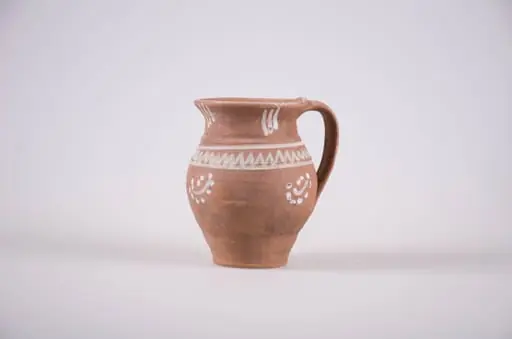 Recipient bitronconic cu gura largă. Prezintă toartă laterală care pleacă din buză până la diametrul maxim al vasului. Decor geometrizant pe partea superioară a vasului și pe toartă; linii paralele, cercuri, linie ondulată, puncte. Cromatică: fond: cărămiziu; motive trasate cu angobă albă. Vasul este nesmălțuit.