Artwork
Orpheus panel from the Diwan-i Am, Delhi Fort
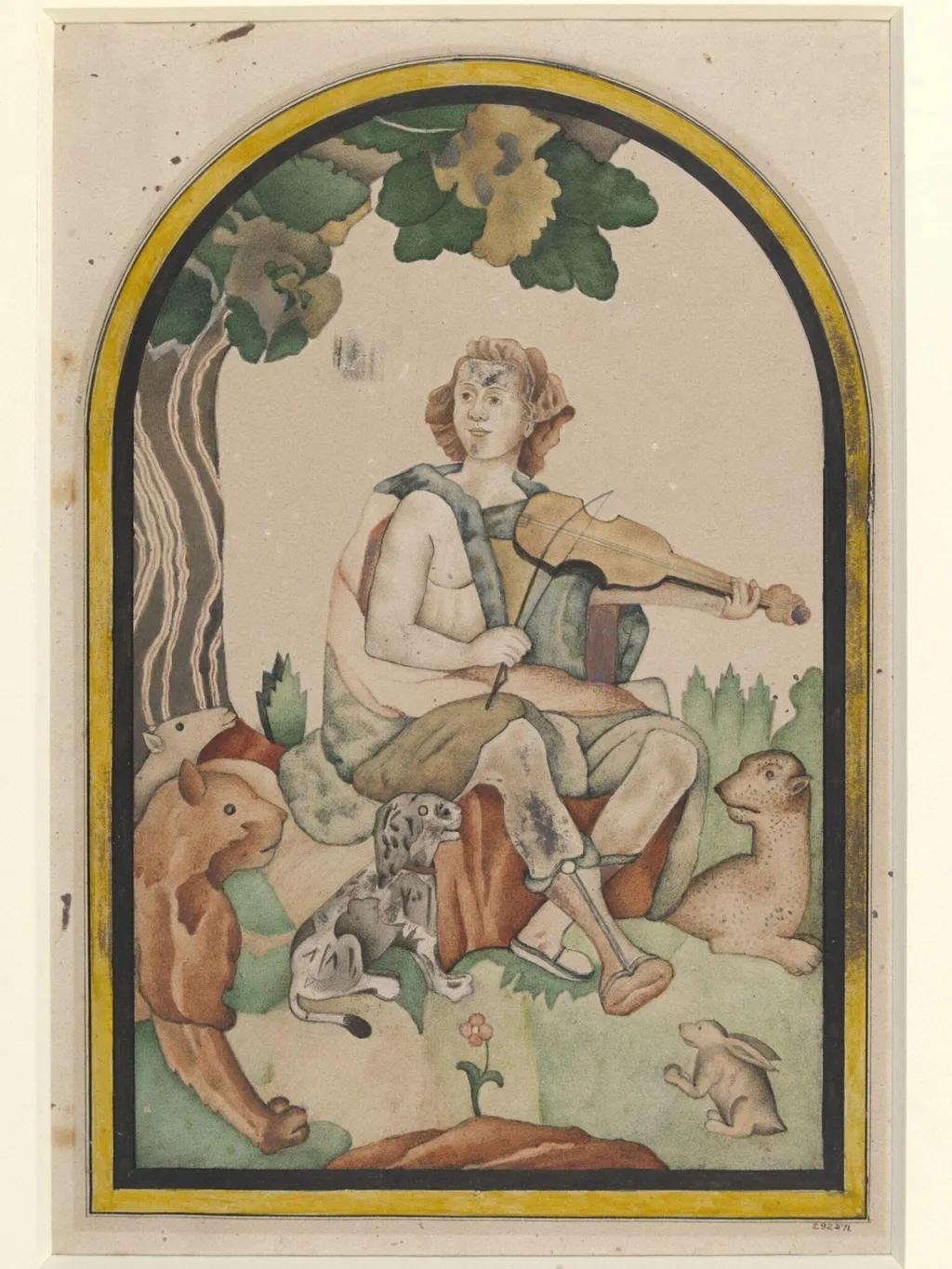
Orpheus panel from the Diwan-i Am, Delhi Fort is a paint painting by the Mughal Painting artist Unknown. It dates from 1845 and is held in the collection of the Victoria and Albert Museum. This painting is one of five in a series documenting the pietra dura inlays of the Diwan-i Am in Delhi’s Red Fort, created around 1845.
About this work
Overview
The panel preserves visual records of marble ornamentation now lost to time, serving as an archival record rather than a mythological illustration.
This painting is one of five in a series documenting the pietra dura inlays of the Diwan-i Am in Delhi’s Red Fort, created around 1845. Executed by an Indian artist for a European patron, it belongs to the Company painting tradition—a hybrid style blending Mughal miniature techniques with Western naturalism. The panel preserves visual records of marble ornamentation now lost to time, serving as an archival record rather than a mythological illustration.
Subject & Meaning
The figure of Orpheus, drawn from Greek myth, is depicted not as a literal narrative but as a symbolic stand-in for the harmony and order associated with imperial architecture. His presence, accompanied by tranquil animals—lion, deer, and bird—evokes a classical ideal of nature subdued by beauty. The substitution of a violin for a lyre reflects the artist’s adaptation of Western motifs to familiar visual languages, rather than strict mythological accuracy.
Technique & Style
The work displays fine brushwork characteristic of Mughal miniatures, with delicate linework and subtle color gradations. The marble floor is rendered with precision, mimicking the inlaid stone patterns of the actual palace. The use of perspective and shading, uncommon in traditional Indian painting, reveals the influence of European artistic conventions, likely introduced through prints or direct observation by artists working for British patrons.
History & Provenance
Commissioned during the waning years of Mughal power, the series was likely created for a British official associated with the East India Company. These works were often produced in Delhi or Agra for export or personal collection. The panel entered the Victoria and Albert Museum’s holdings through colonial-era acquisitions, where it now functions as both artistic artifact and historical document of a fading architectural heritage.
Context
Company paintings emerged as a commercial response to European demand for Indian subjects rendered in familiar styles. While many depicted flora, fauna, or daily life, this series focused on architectural detail—a rare emphasis on heritage preservation. The choice of Orpheus, a figure unfamiliar in Indian traditions, suggests the patron’s classical education and desire to frame Indian craftsmanship within a European intellectual framework.
Legacy
The panel endures as a critical record of the Red Fort’s original decoration, much of which has since deteriorated or been altered. Its synthesis of Indian technique and Western iconography exemplifies the cultural negotiations of colonial-era art. Today, it offers scholars insight into how local artists navigated cross-cultural expectations, preserving lost art through the very medium that documented its decline.
Artist & collection

 Domestic Scene
 Giacomo and Cardinal Marco, investing Andrea, Abbot of San Zeno, with his Benefice
 The Nymph of Fontainebleau
 Portrait of a Woman
 Madonna and Child with Saints in the Enclosed Garden
 Venus and Minerva
 Family Group of Four on Sofa
 Wall painting from Room H of the Villa of P. Fannius Synistor at Boscoreale
 Mercury (from the Tarocchi, series A: Firmaments of the Universe, #42)
 Thalia (comedy, pastoral poetry) (from the Tarocchi series D: Apollo and the Muses, #16)
 Saint John the Baptist Pray for Us
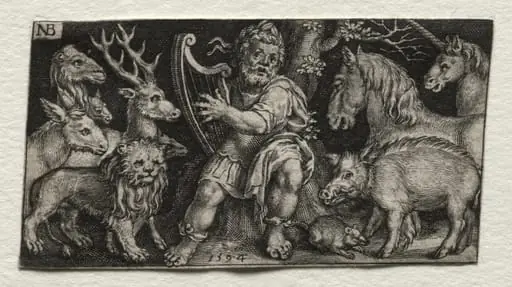 Orpheus Charming the Animals
 Decoration on the front of a drawer
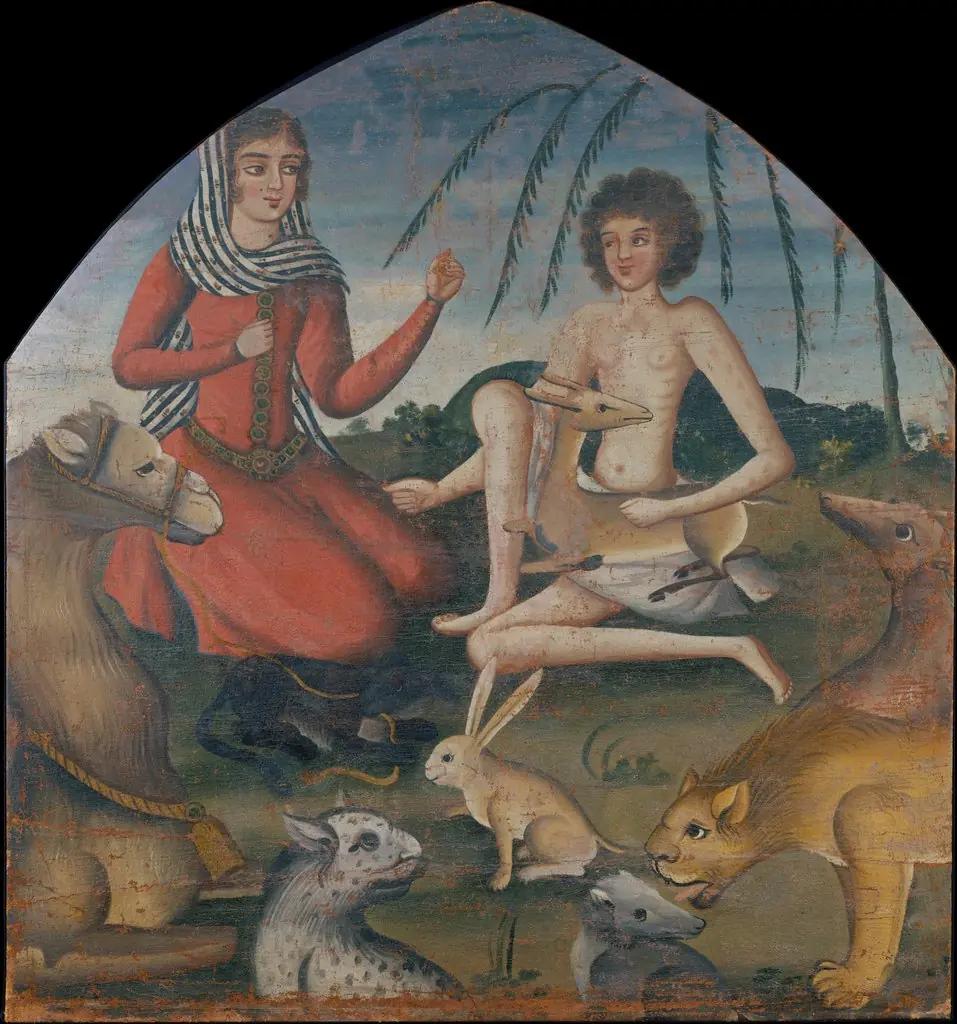 Laila and Majnun
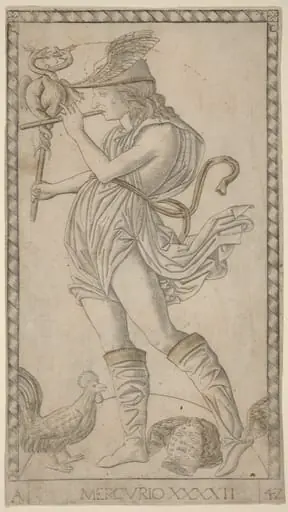 Mercurio (Mercury)
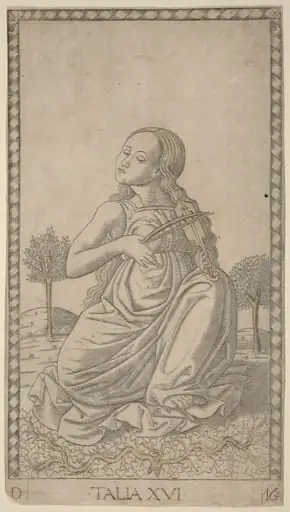 Talia (Thalia)
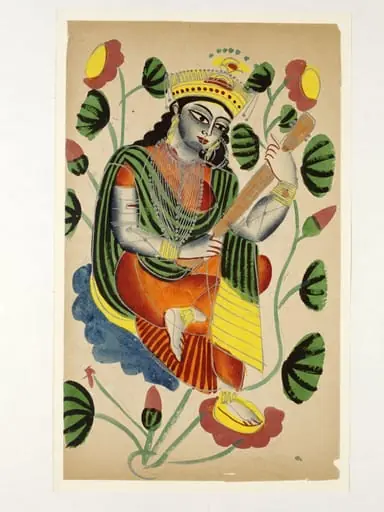 Saraswati
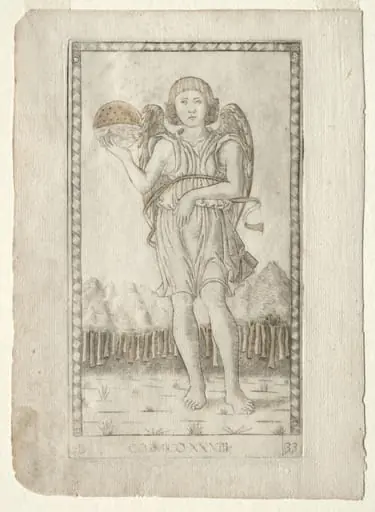 Genius of the World (from the Tarocchi, series B: Cosmic Principles & Virtues, #33)