Artwork
Genius of the World (from the Tarocchi, series B: Cosmic Principles & Virtues, #33)
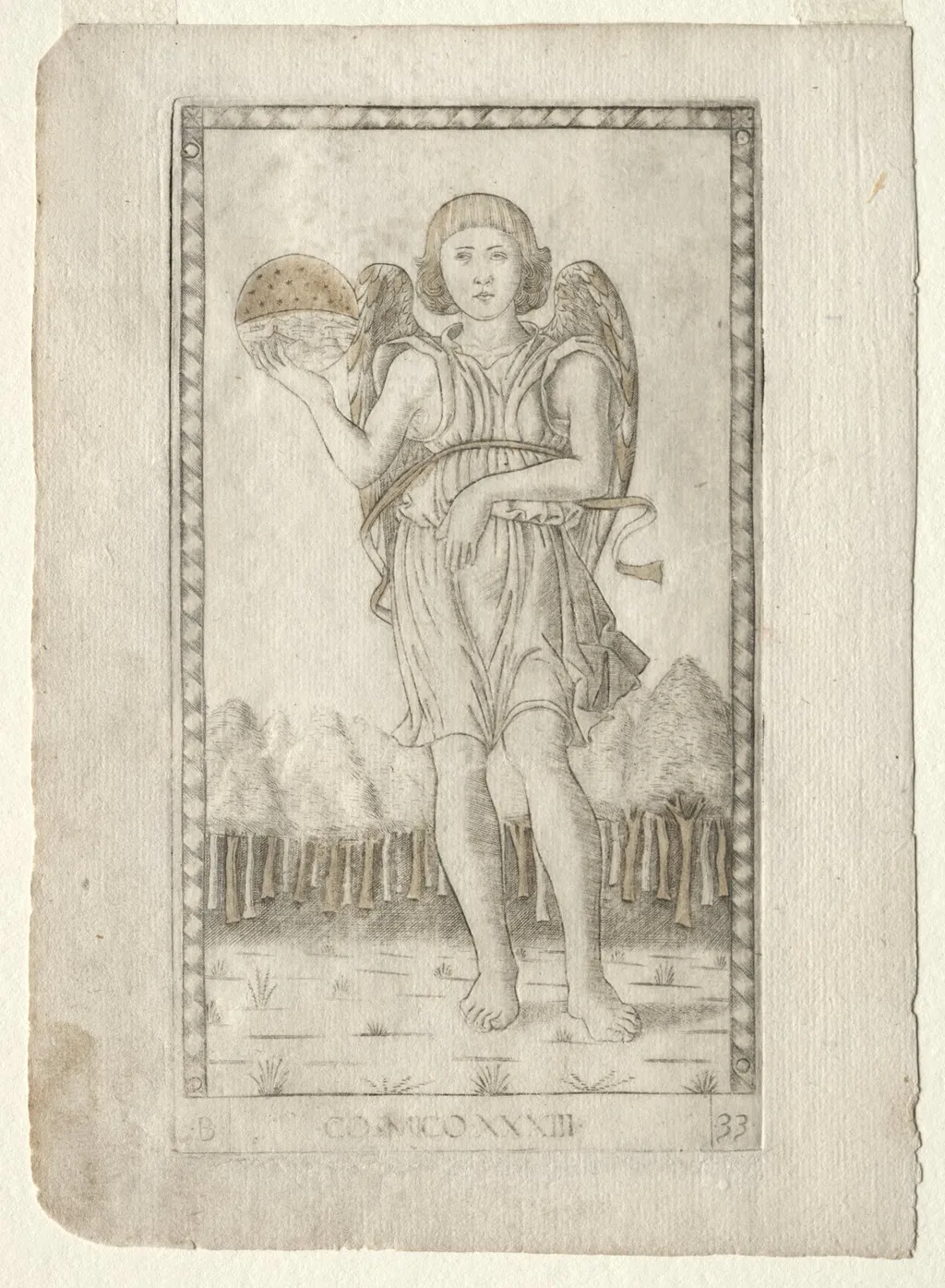
Genius of the World (from the Tarocchi, series B: Cosmic Principles & Virtues, #33) is a print by the Renaissance artist Master of the E-Series Tarocchi. It dates from 1467 and is held in the collection of the Cleveland Museum of Art. This engraving belongs to a rare 15th-century series known as the Tarocchi, specifically Group B: Cosmic Principles & Virtues.
About this work
Overview
This engraving belongs to a rare 15th-century series known as the Tarocchi, specifically Group B: Cosmic Principles & Virtues.
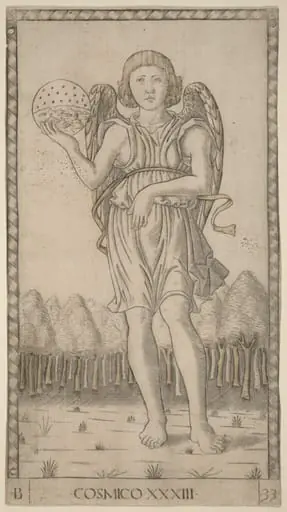
This engraving belongs to a rare 15th-century series known as the Tarocchi, specifically Group B: Cosmic Principles & Virtues. Unlike standard playing cards, this set presents allegorical figures representing abstract cosmic and moral forces. The image is the third in the sequence, depicting Cosmico—the Genius of the World—as a central figure. It is one of three invented Genii that open the group, each embodying a fundamental principle of existence.
Subject & Meaning
Cosmico, the Genius of the World, is portrayed as a robed female figure, not male as sometimes described, floating above a cloud-lit sky. She holds a luminous orb, symbolizing the cosmos or celestial order. The sunburst behind her suggests divine illumination, while her serene posture and flowing robes evoke both spiritual authority and cosmic harmony. The figure merges religious iconography with cosmological symbolism, representing the universe as an ordered, sacred whole.
Technique & Style
Executed as a fine engraving, the image employs delicate linework to define the figure’s drapery and the texture of the clouds. The glowing orb is rendered with subtle tonal contrasts, suggesting inner radiance without color. The background is minimal yet evocative, using atmospheric perspective to separate the figure from the earthly realm. The composition is symmetrical and frontal, emphasizing the figure’s symbolic rather than narrative role.
History & Provenance
The Tarocchi series was produced in northern Italy during the mid-1400s, likely for a learned or aristocratic audience interested in humanist philosophy. Only fragments of the original set survive, making this print a rare artifact. The Cleveland Museum of Art holds one of the few known impressions, acquired as part of a broader collection of early Renaissance prints. Its origin remains anonymous, though stylistic links suggest a connection to Ferrara or Bologna.
Context
The Tarocchi series reflects the Renaissance revival of Neoplatonic thought, blending classical cosmology with Christian virtue ethics. The three Genii—Light, Time, and Space—precede the cardinal and theological virtues, structuring the universe as a hierarchy of divine order. This image, positioned at the start of the moral sequence, frames human virtue as emerging from cosmic harmony, aligning with contemporary intellectual currents that sought unity between science, philosophy, and faith.
Legacy
Though the Tarocchi series was not widely circulated, its iconography influenced later allegorical prints and emblem books. The fusion of celestial symbolism with moral personification became a template for Enlightenment-era imagery. Today, the engraving is studied as a visual artifact of early humanist cosmology, offering insight into how Renaissance thinkers visualized abstract principles before the rise of modern scientific models.
Artist & collection
Artist
Master of the E-Series Tarocchi
Master of the E-Series Tarocchi (b. 1400) was an Italian artist.

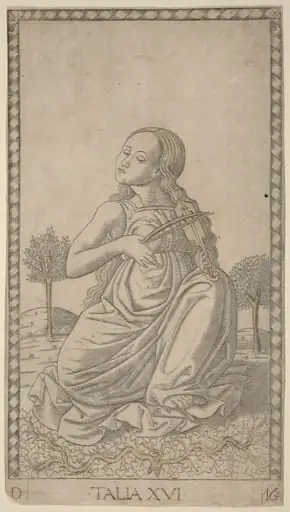
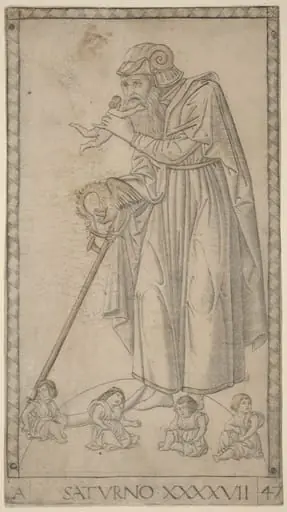
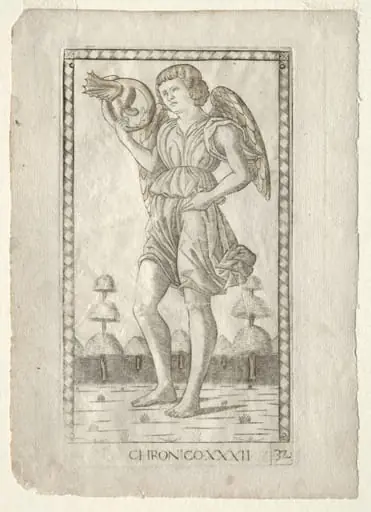 Genius of Time (from the Tarocchi, series B: Cosmic Principles & Virtues, #32)
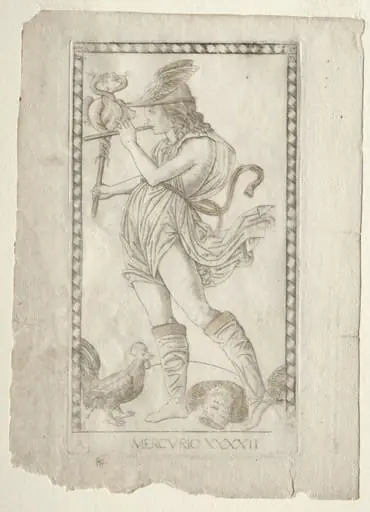 Mercury (from the Tarocchi, series A: Firmaments of the Universe, #42)
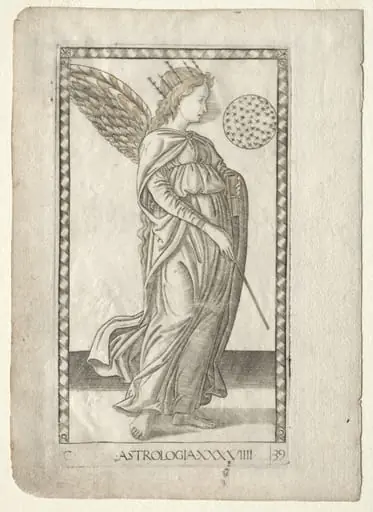 Astrology (from the Tarocchi, series C: Liberal Arts, #29)
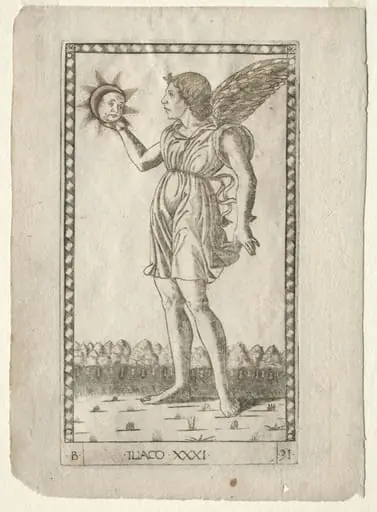 Genius of the Sun (from the Tarocchi, series B: Cosmic Principles & Virtues, #31)
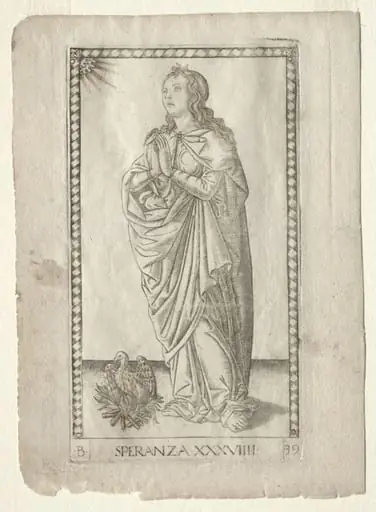 Hope (from the Tarocchi, series B: Cosmic Principles & Virtues, #39)
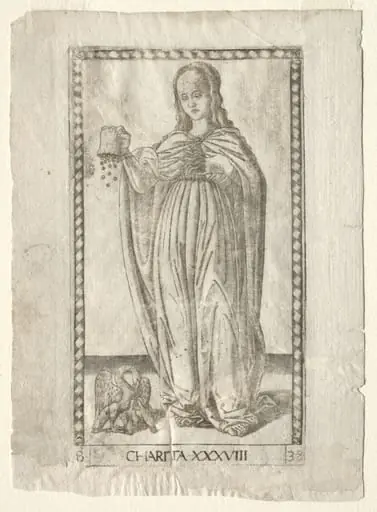 Charity (from the Tarocchi, series B: Cosmic Principles & Virtues, #38)
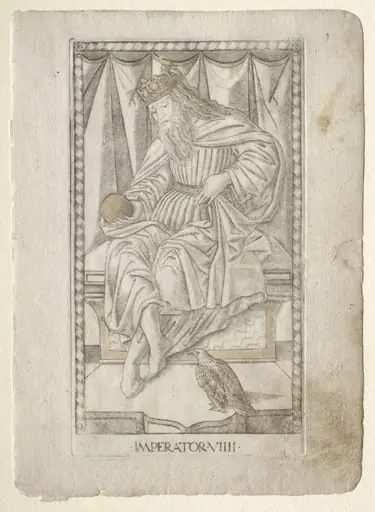 The Emperor (from the Tarocchi, series E: Conditions of Man, #9)