Artwork
Parvati and Ganesha
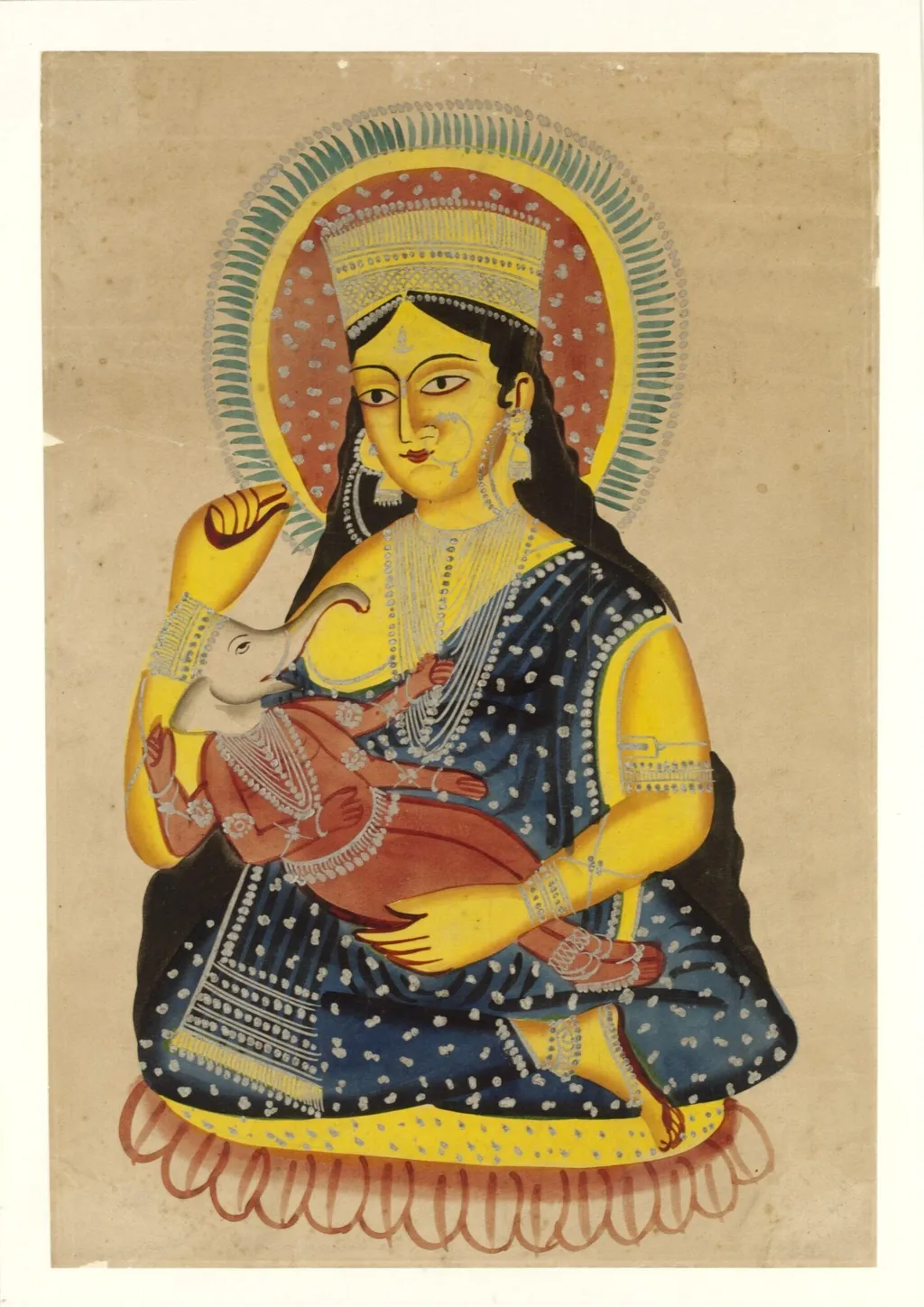
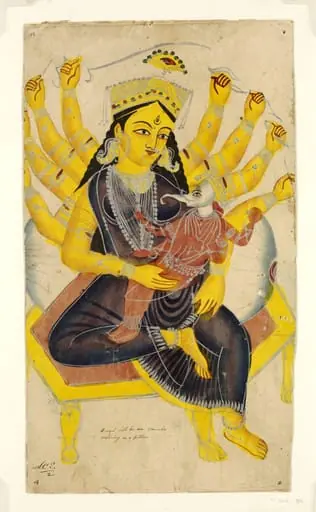
Parvati and Ganesha is a paint painting by the Romanticist artist Unknown. It dates from 1830 and is held in the collection of the Victoria and Albert Museum.
About this work
Overview
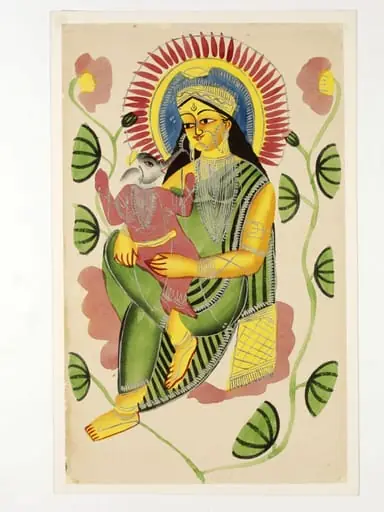
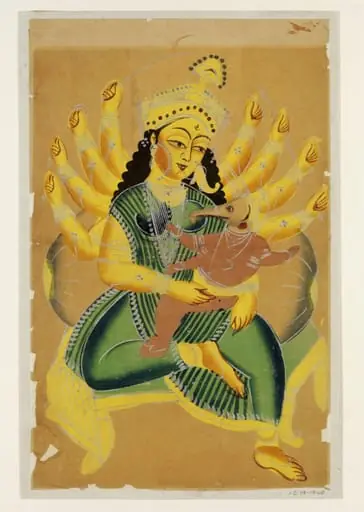
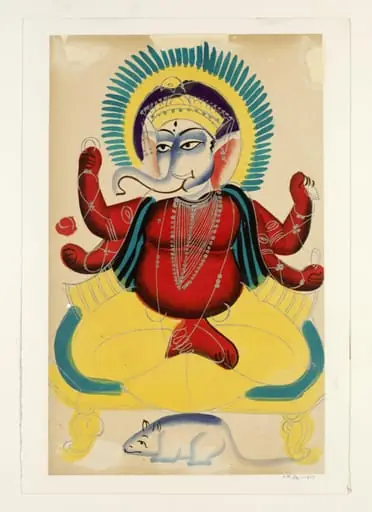
This 1830 painting portrays the Hindu deities Parvati and Ganesha in an intimate domestic moment. Executed in opaque watercolour with tin alloy accents on paper, it originates from the Kalighat region near Calcutta. The work reflects a local artistic tradition that developed amid British colonial presence, blending devotional themes with accessible visual language for pilgrims and urban patrons.
Subject & Meaning
Parvati, mother of the elephant-headed Ganesha, is depicted nursing him, emphasizing maternal care as a divine attribute. The golden halo around her head signifies spiritual presence, while Ganesha’s form alludes to his role as remover of obstacles. Their quiet interaction conveys tenderness within Hindu cosmology, where familial bonds mirror cosmic order and devotion.
Technique & Style
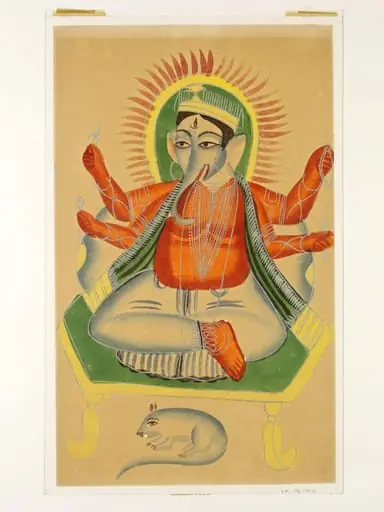
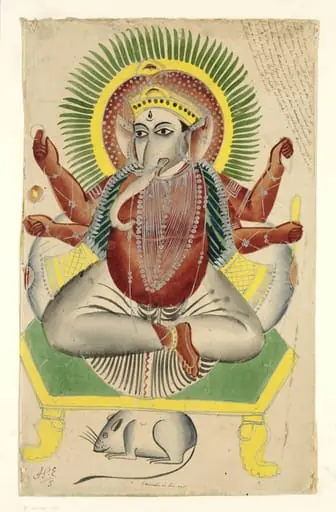
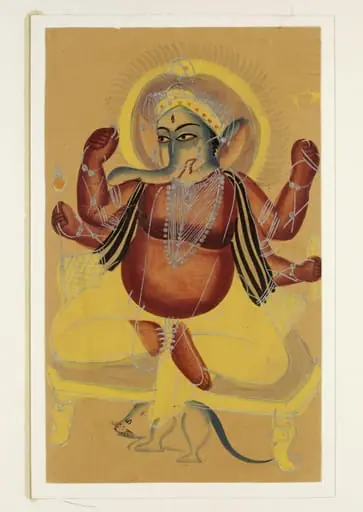
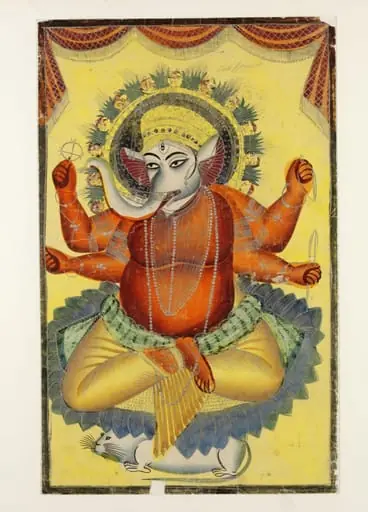
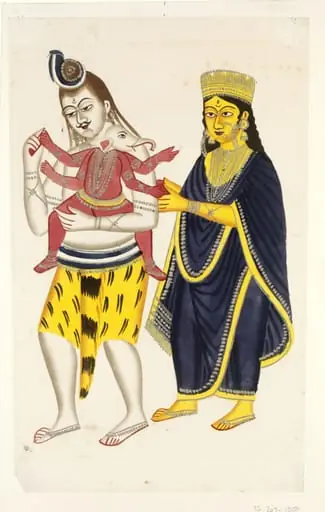
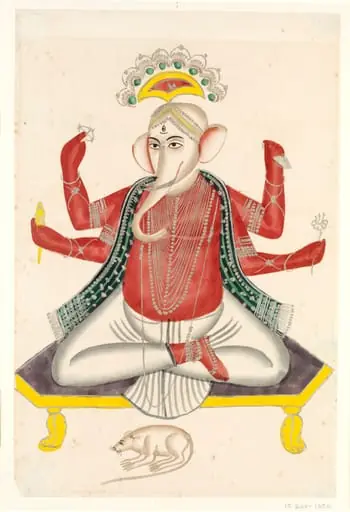
The painting uses bold, fluid outlines and flat planes of vivid colour—yellow, red, and blue—to define forms. Silver and tin alloy highlight jewellery and ornaments, adding subtle luminosity. Backgrounds are left unadorned, focusing attention on the figures. This simplified, expressive style characterizes Kalighat art, which prioritized clarity and emotional immediacy over detailed realism.
History & Provenance
Created around 1830 in Kalighat, near the famous Kali temple in Calcutta, the painting likely served as a devotional object or souvenir for pilgrims. Artisans in the area adapted traditional iconography to meet demand from both local worshippers and colonial-era visitors. Its survival offers insight into the commercialization of religious imagery during 19th-century Bengal.
Context
Emerging in the early 19th century, Kalighat painting responded to urbanization and colonial influence in Calcutta. Artists shifted from temple murals to portable works on paper, often depicting deities alongside contemporary social scenes. This piece reflects a moment when religious imagery became both a spiritual tool and a commodity, shaped by new audiences and economic pressures.
Legacy
Kalighat paintings like this one influenced later Indian modernist movements by demonstrating how traditional themes could be reinterpreted with bold, simplified forms. Though produced for a transient market, these works preserved devotional narratives in a rapidly changing society. Today, they are studied as vital records of cultural adaptation and vernacular artistry under colonial rule.
Artist & collection

 Domestic Scene
 Giacomo and Cardinal Marco, investing Andrea, Abbot of San Zeno, with his Benefice
 The Nymph of Fontainebleau
 Portrait of a Woman
 Madonna and Child with Saints in the Enclosed Garden
 Venus and Minerva
 Family Group of Four on Sofa
 Wall painting from Room H of the Villa of P. Fannius Synistor at Boscoreale