Artwork
Prayers at the mosque
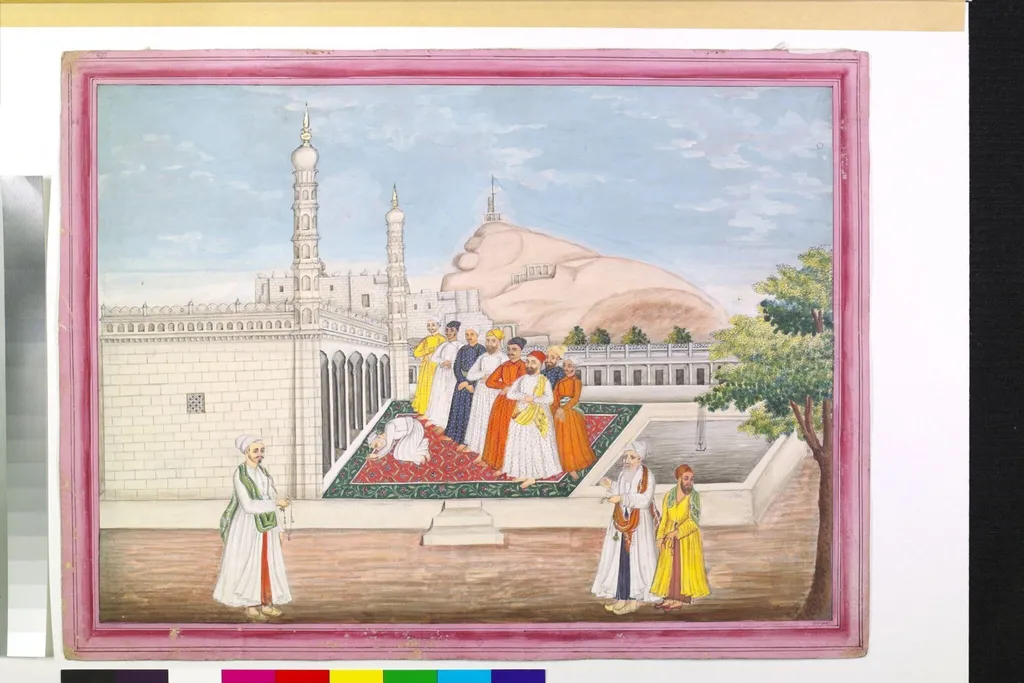
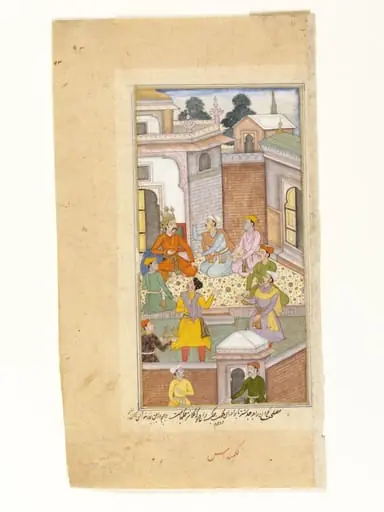
Prayers at the mosque is a paint painting by the Romanticist artist Unknown. It dates from 1800 and is held in the collection of the Victoria and Albert Museum. The canvas presents a gathering of men engaged in communal prayer before a prominent mosque.
About this work
Overview
The canvas presents a gathering of men engaged in communal prayer before a prominent mosque. The architecture features soaring minarets and a central dome, while a vivid red carpet stretches across the foreground. A distant hill and the distinctive Rock of Trichinopoly rise behind the scene, anchoring the composition in a specific landscape.
Subject & Meaning
The work captures a moment of religious devotion, emphasizing collective worship and the ritual of prayer. Figures are shown in various postures—kneeling, standing, and moving—reflecting the dynamics of a communal gathering. The inclusion of books and papers suggests scholarly or scriptural activity accompanying the prayer.
Technique & Style
The artist employs a bold palette, rendering the garments in bright, saturated hues with intricate patterning. Careful attention to texture is evident in the richly detailed carpet and the architectural surfaces. Soft, light‑blue skies dotted with gentle clouds provide a tranquil backdrop that balances the vivid foreground.
History & Provenance
The painting’s title, "Prayers at the Mosque," identifies its subject but offers no recorded date or creator. Its association with the Rock of Trichinopoly situates the scene in a South Indian context, linking the work to a region known for colonial-era artistic documentation.
Context
The depiction reflects a period when European artists frequently recorded religious and everyday life in colonial territories. By foregrounding both the mosque and a recognizable geological landmark, the composition merges spiritual practice with a sense of place, illustrating cross‑cultural observation.
Legacy
While specific influence on later works is not documented, the painting serves as a visual record of communal Islamic worship in a South Indian setting, contributing to broader understandings of cultural exchange and representation in colonial art.
Artist & collection

 Domestic Scene
 Giacomo and Cardinal Marco, investing Andrea, Abbot of San Zeno, with his Benefice
 The Nymph of Fontainebleau
 Portrait of a Woman
 Madonna and Child with Saints in the Enclosed Garden
 Venus and Minerva
 Family Group of Four on Sofa
 Wall painting from Room H of the Villa of P. Fannius Synistor at Boscoreale
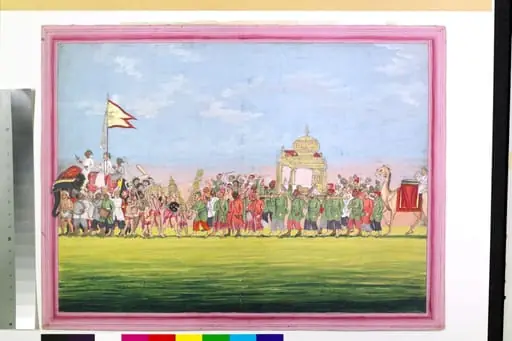 Muslim festival scene
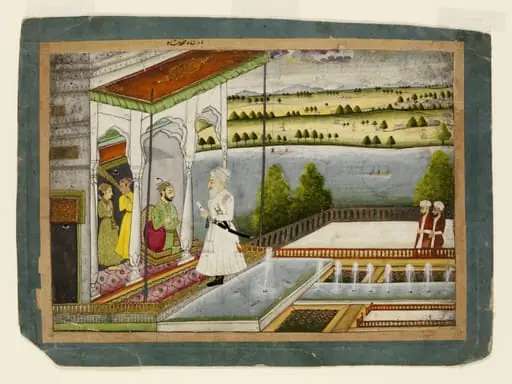 Emperor Muhammed Shah
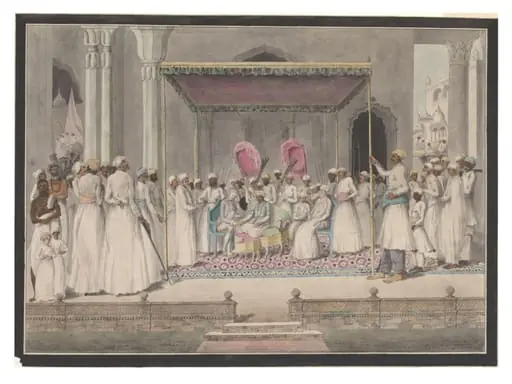 Mubarak ud-Daula, Nawab of Murshidabad, in durbar with the British Resident, Sir John Hadley D'Oyly
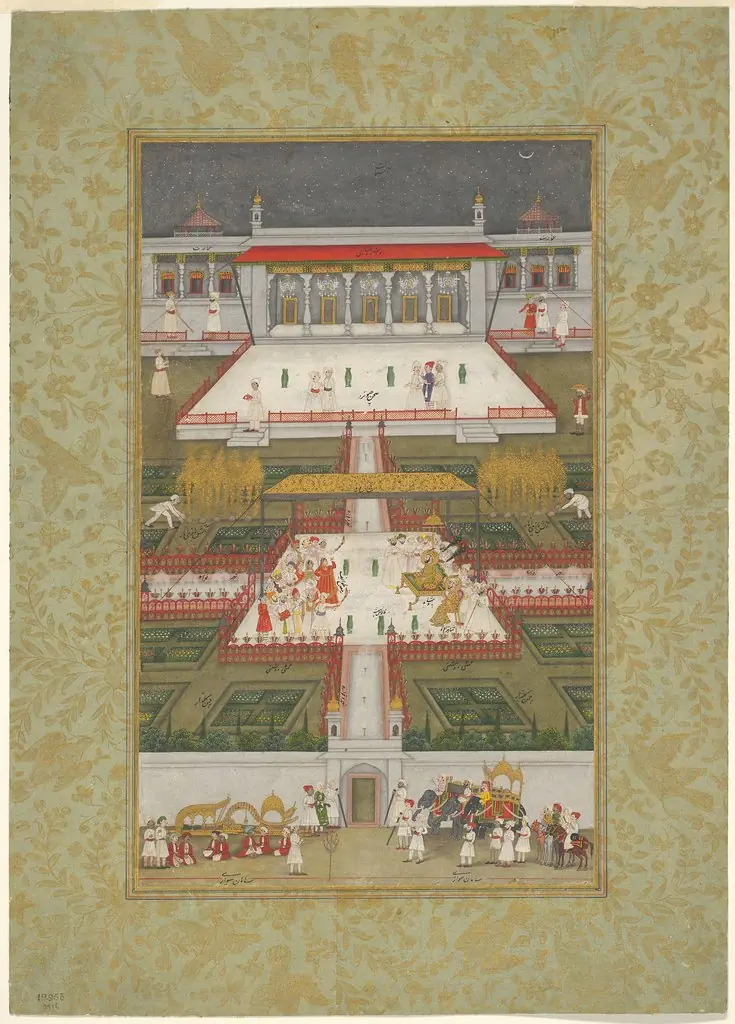 Ruler Entertained by Dancers in a Paradise Garden
 Untitled
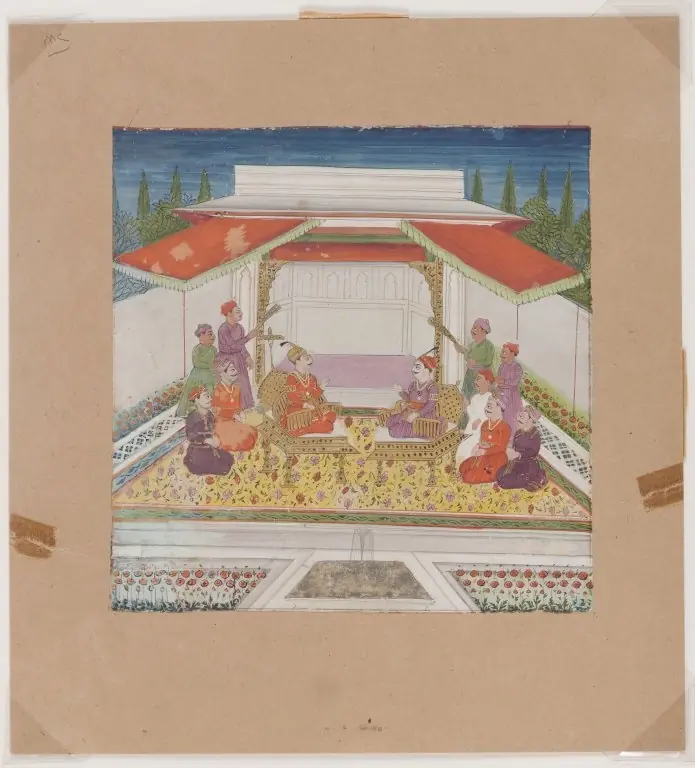 Seated Figures and Attendants Before a Fountain
 Untitled
 Ala-ud-din
 Court Scene
 Untitled
 Maharaja Gulab Singh
 Yudhisthira