Artwork
Prince Azam Shah
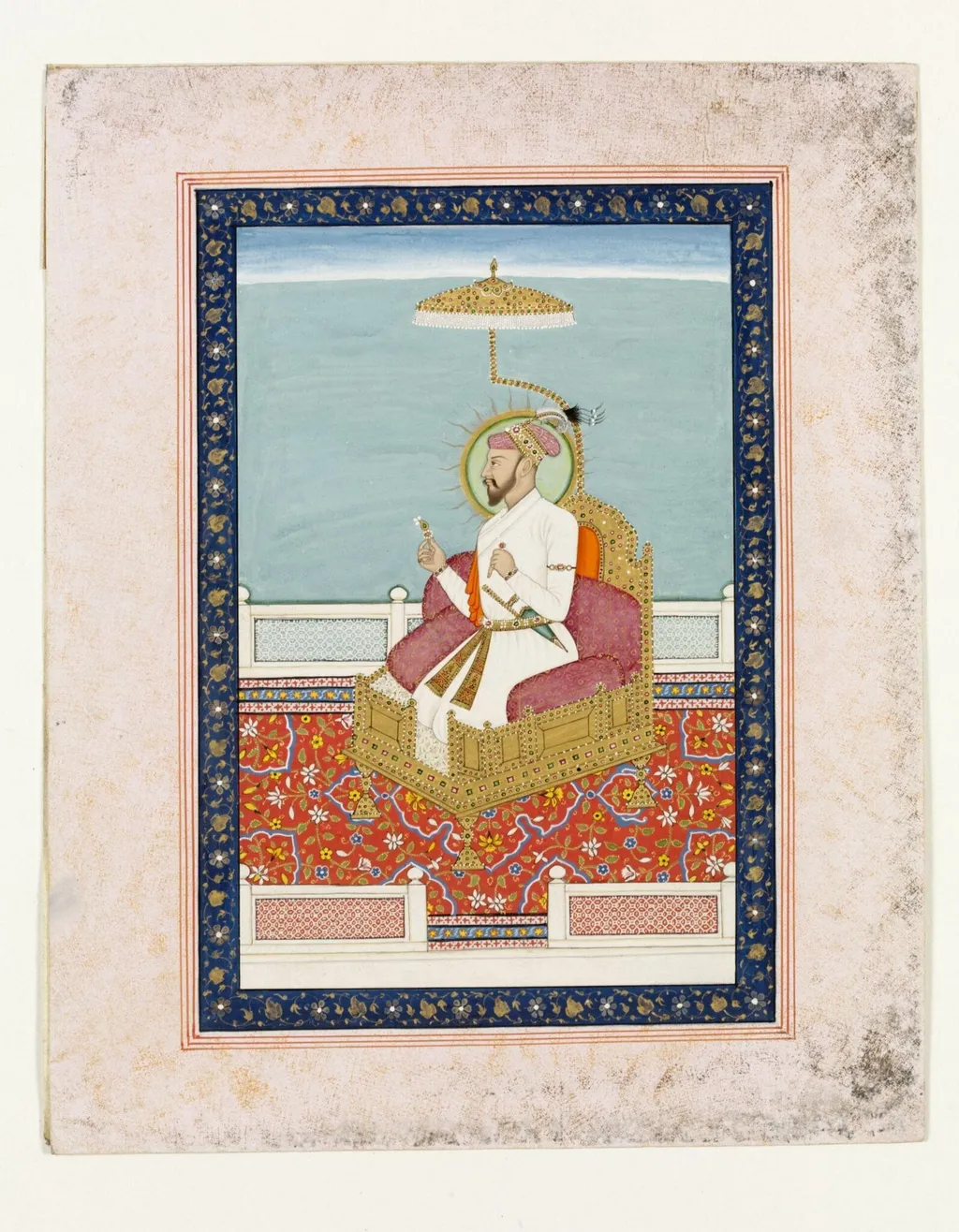
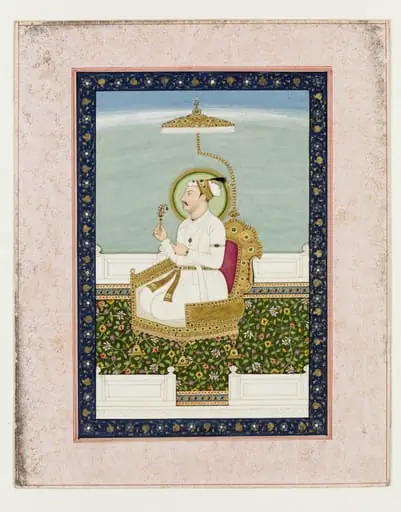
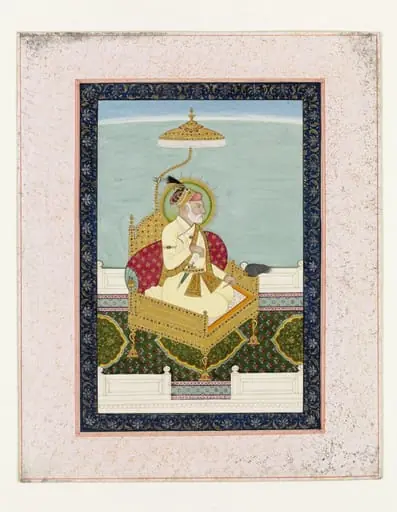
Prince Azam Shah is a paint painting by the Romanticist artist Unknown. It dates from 1840 and is held in the collection of the Victoria and Albert Museum.
About this work
Overview
Created in 1840, this work combines opaque watercolour with gold leaf on paper to present a portrait of Prince Azam Shah, the third son of Mughal emperor Aurangzeb. The figure occupies a central, elevated position on an elaborately decorated golden throne, surrounded by a richly colored setting that emphasizes his status.
Subject & Meaning
The painting depicts the prince in a simple white robe, a pink turban set with jewels, and jeweled bracelets and armlet. He holds a scepter and is encircled by a golden halo, symbols that convey authority and divine favor. The composition underscores his royal lineage and the ceremonial dignity associated with Mughal princes.
Technique & Style
Opaque watercolour provides a smooth, luminous surface, while applied gold adds a reflective sheen to the throne and halo. Strong chiaroscuro contrasts illuminate the figure against a blue sky background, creating depth. Intricate patterns on the throne and rug demonstrate meticulous brushwork and an attention to ornamental detail.
History & Provenance
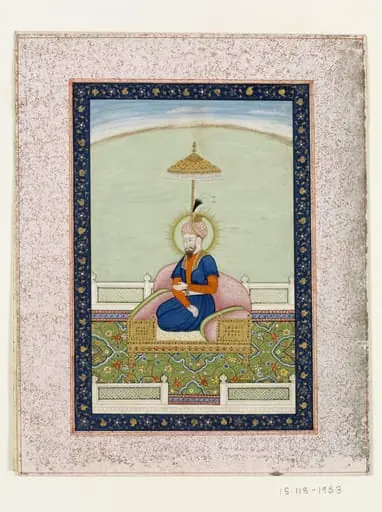
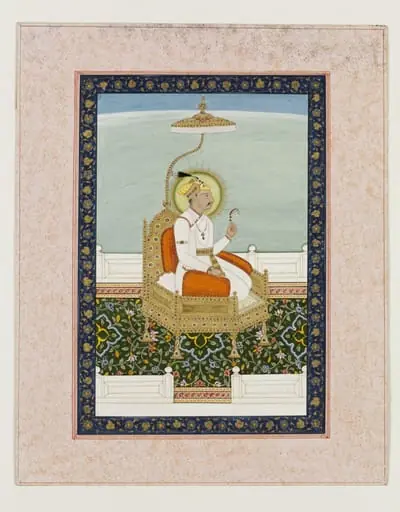
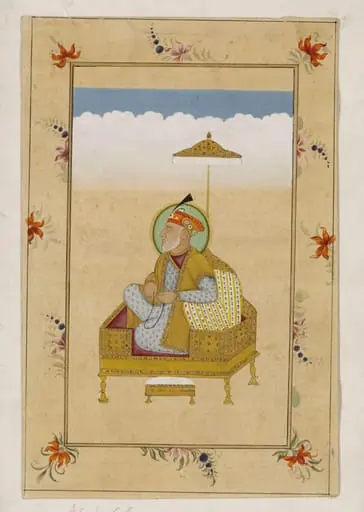
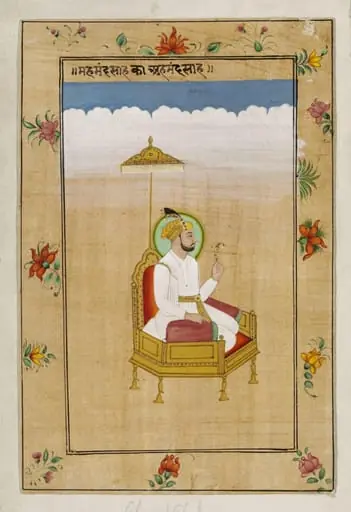
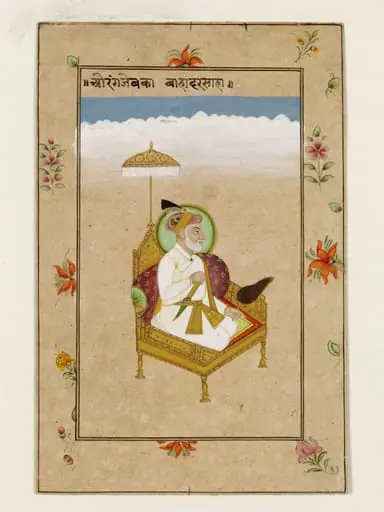
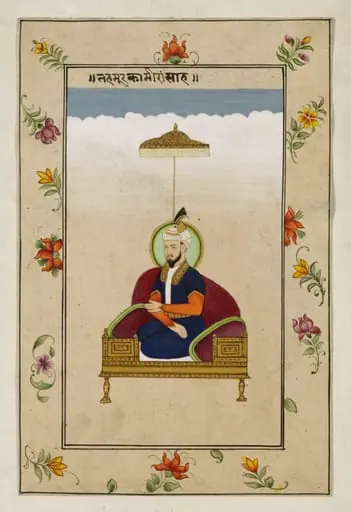
The portrait forms part of a series of depictions of Muslim rulers. It entered the collection of the Earl of Auckland, who served as Governor‑General of India from 1836 to 1842, before being transferred to its present institutional holdings.
Context
Produced during a period when British officials commissioned images of Indian royalty, the work reflects a colonial interest in documenting and displaying the visual culture of the Mughal court. It also illustrates the continued use of traditional Mughal artistic conventions, such as gold embellishment and regal iconography, in early‑19th‑century portraiture.
Artist & collection

 Domestic Scene
 Giacomo and Cardinal Marco, investing Andrea, Abbot of San Zeno, with his Benefice
 The Nymph of Fontainebleau
 Portrait of a Woman
 Madonna and Child with Saints in the Enclosed Garden
 Venus and Minerva
 Family Group of Four on Sofa
 Wall painting from Room H of the Villa of P. Fannius Synistor at Boscoreale