Artwork
Emperor Muhammed Shah
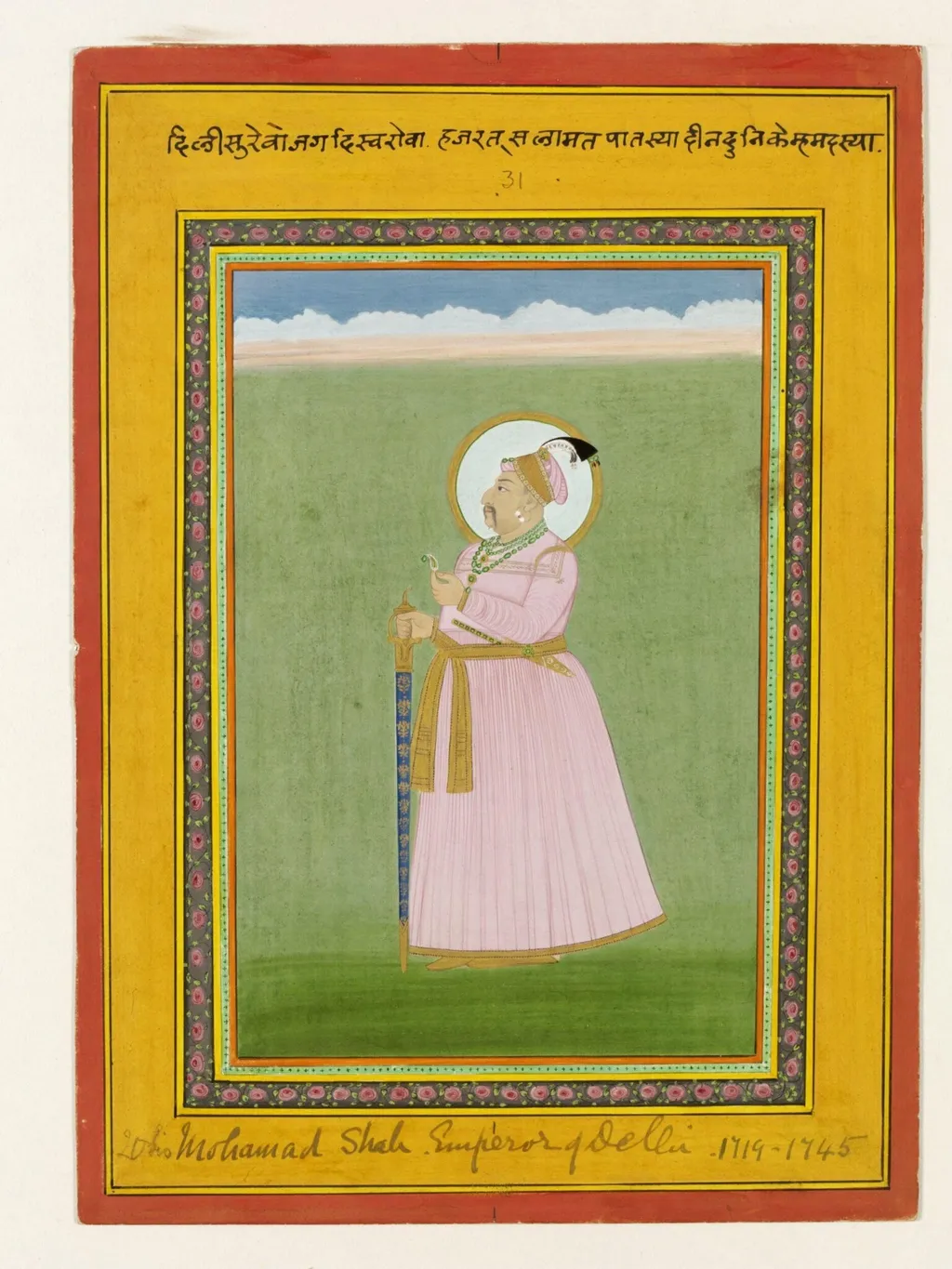
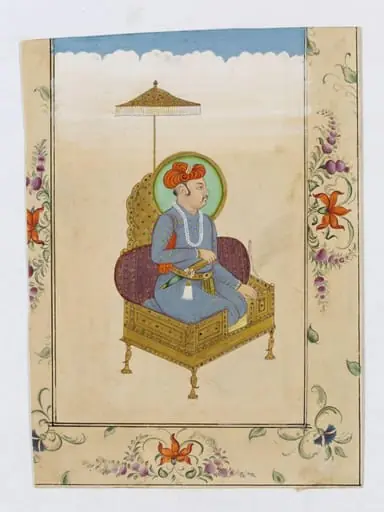
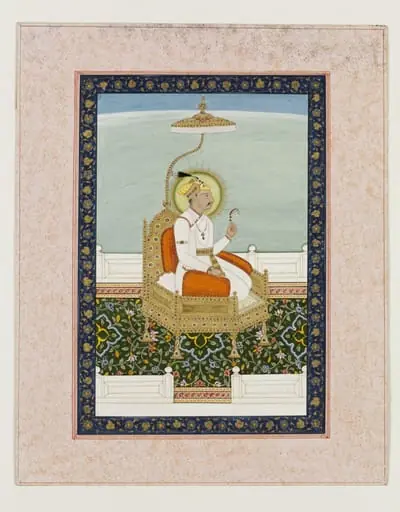
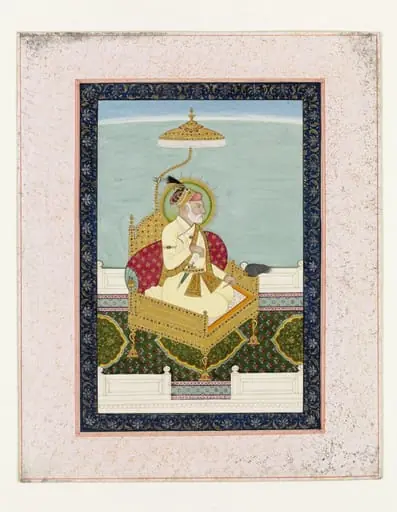
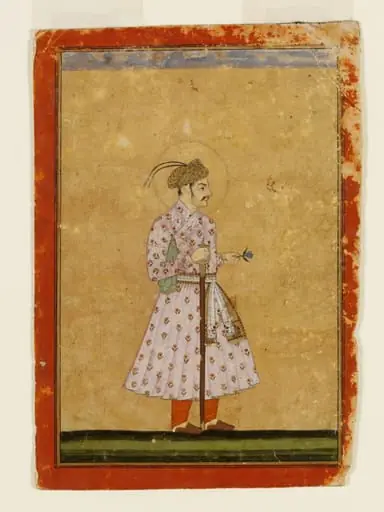
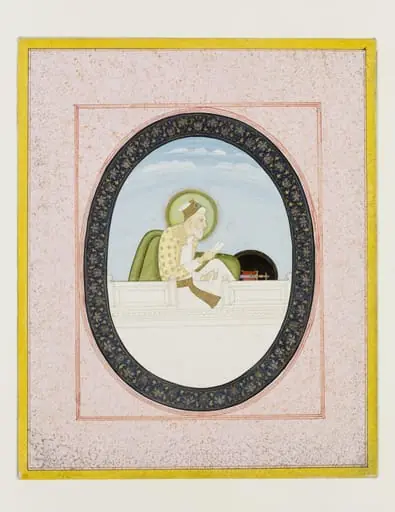
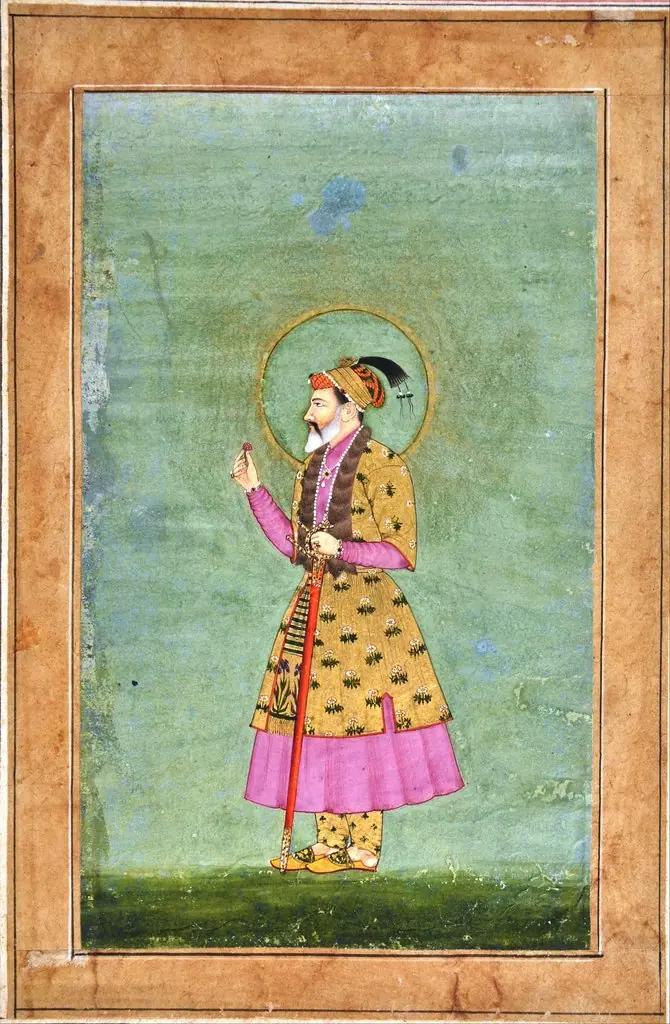
Emperor Muhammed Shah is a paint painting by the Impressionist artist Chhajju Lal. It dates from 1893 and is held in the collection of the Victoria and Albert Museum.
About this work
Overview
The work belongs to a late phase of Mughal court painting, produced during a period when imperial patronage had diminished but traditional styles persisted.
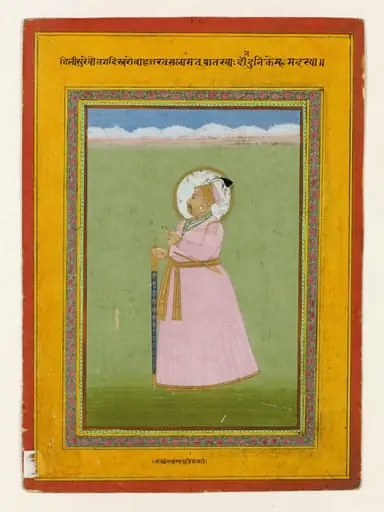
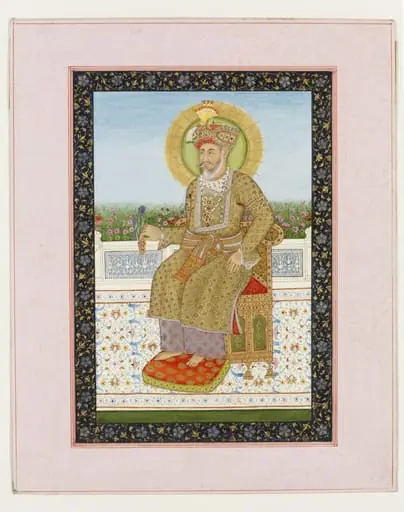
This portrait depicts Emperor Muhammad Shah, a Mughal ruler, painted in opaque watercolour and gold on paper by the artist Chhajju Lal in 1893. The work belongs to a late phase of Mughal court painting, produced during a period when imperial patronage had diminished but traditional styles persisted. The composition emphasizes regal presence through symbolic elements and ornamental detail, reflecting enduring conventions of Mughal portraiture.
Subject & Meaning
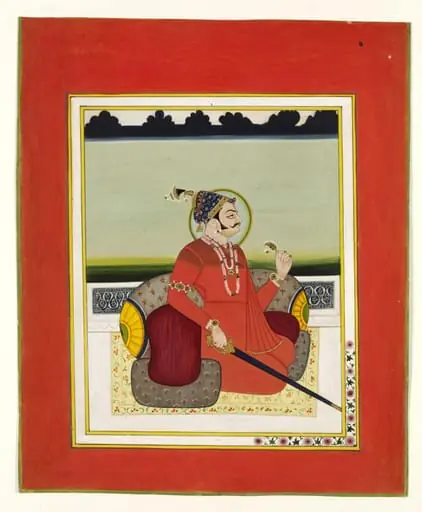
The emperor is shown standing formally, dressed in vivid pink robes adorned with gold embroidery, holding a curved sword and a small object—possibly a jewel or incense box—in his right hand. A tall feathered hat and a golden halo-like circle around his face signify his status. The plain green ground and blue sky with clouds frame him as a solitary figure of authority, reinforcing his role as sovereign despite the waning power of the Mughal dynasty at the time.
Technique & Style
Chhajju Lal employed fine brushwork in opaque watercolour, layered with gold leaf to highlight fabric patterns, jewelry, and the emperor’s facial features. The background is minimal, contrasting with the intricate borders featuring red, yellow, and floral motifs typical of Mughal manuscript decoration. The stylized rendering of form and emphasis on surface decoration reflect a continuation of earlier Mughal aesthetics, even as European influences subtly entered the tradition.
History & Provenance
Created in 1893, this portrait was made long after the Mughal Empire’s political decline, likely commissioned by a descendant or court official preserving ceremonial traditions. It reflects the persistence of imperial iconography among residual elite circles in Delhi. The painting entered the Victoria and Albert Museum’s collection as part of its broader effort to document South Asian artistic heritage from the 18th to 19th centuries.
Context
By the late 19th century, the Mughal court no longer held political power, but visual symbols of sovereignty remained culturally significant. Artists like Chhajju Lal continued producing portraits for patrons seeking to affirm lineage and tradition. This work sits at the intersection of fading imperial identity and the growing interest of British colonial collectors in preserving what they perceived as a vanishing artistic legacy.
Legacy
The painting exemplifies the endurance of Mughal visual language into the colonial era, serving as a bridge between imperial past and colonial documentation. It informs contemporary understanding of how artistic conventions were maintained even amid political obsolescence. Today, it contributes to scholarly discourse on identity, memory, and the persistence of tradition in South Asian art under colonial rule.
Artist & collection
Artist
Chhajju Lal was the go-to painter for royal portraits in late-1800s India, always dressed in a spotless white kurta even when mixing paints.