Artwork
Prohodul Domnului/Iisus și Sfantul Ioan copii
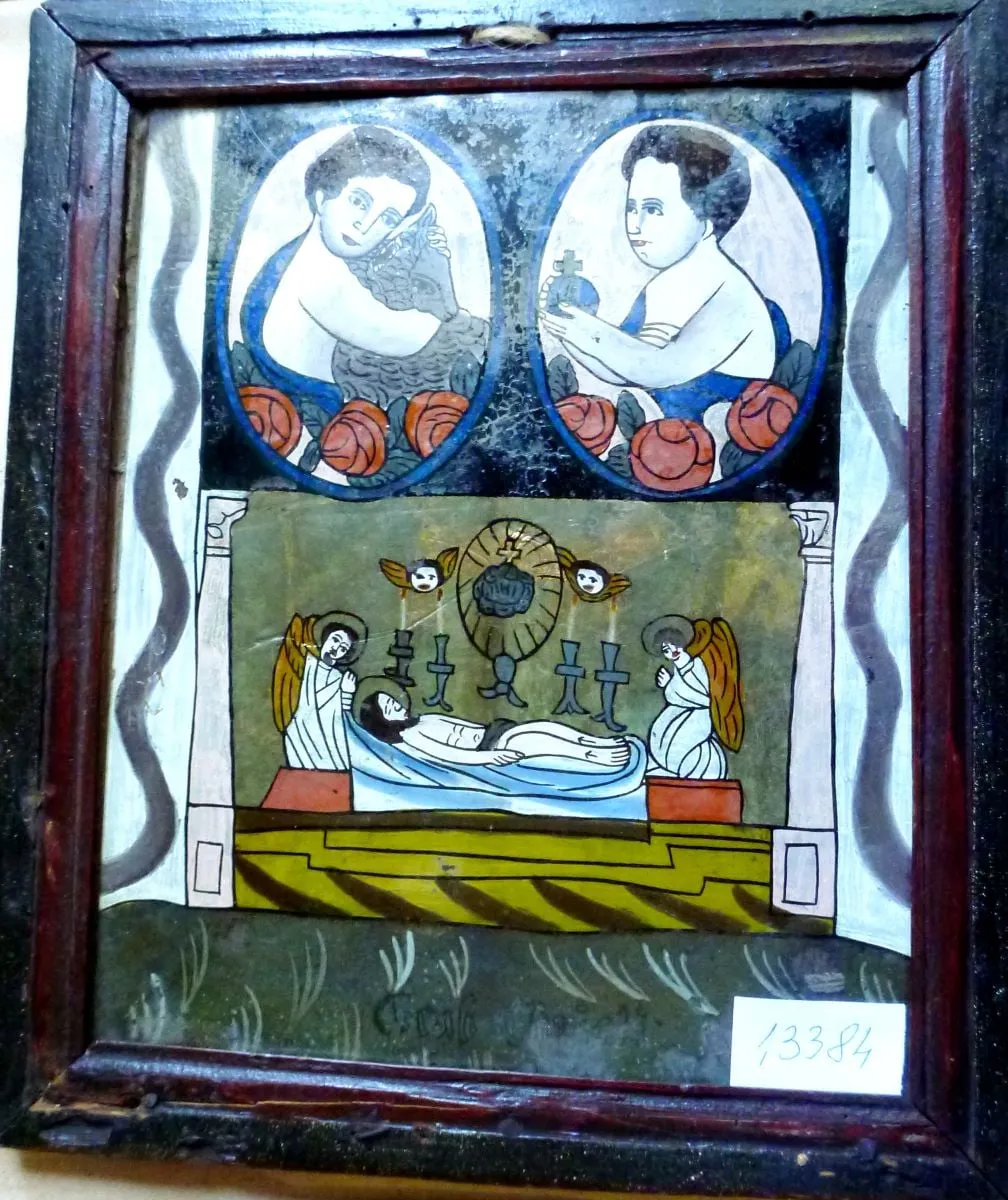
Prohodul Domnului/Iisus și Sfantul Ioan copii is a drawing by Unknown. It dates from 1850 and is held in the collection of the Bistrita-Năsăud Museum Complex. The work presents a tripartite composition framed by a dark wooden border with a white edge.
About this work
Overview
The work presents a tripartite composition framed by a dark wooden border with a white edge. At the upper level sit two oval portrait heads; the left figure clutches a small animal, the right figure holds a blue object. Beneath them, a domestic interior scene unfolds, showing two angels tending a reclining figure surrounded by candles and assorted items, all set against a muted green backdrop.
Subject & Meaning
The upper portraits likely represent significant individuals, perhaps saints or patrons, indicated by their distinctive attributes—a creature and a blue object that may symbolize specific virtues or narratives. The lower tableau suggests a sacred or funerary moment, with angels providing care to a lying figure, evoking themes of divine assistance and the transition between life and death.
Technique & Style
Executed with bold outlines and flat, vivid coloration, the painting reflects a naïve aesthetic that favors simplicity over illusionistic depth. The use of solid color fields, minimal shading, and a limited palette of greens, blues, and reds contributes to a straightforward visual language that emphasizes symbolic content.
History & Provenance
The piece is part of the collection of the Museum of Ethnography, where it is displayed among other works of folk and popular art. Specific details about its creation date, artist, or original ownership have not been documented in the available records.
Context
Works of this type often emerge from regional artistic traditions that blend religious iconography with everyday domestic scenes. The combination of portraiture, saintly symbols, and a bedside miracle reflects a cultural milieu where devotional imagery was integrated into household settings.
Legacy
As an example of vernacular religious painting, the work offers insight into the visual conventions and spiritual concerns of its community. Its preservation within an ethnographic museum underscores the value placed on everyday artistic expressions as cultural heritage.
Artist & collection

 Domestic Scene
 Giacomo and Cardinal Marco, investing Andrea, Abbot of San Zeno, with his Benefice
 The Nymph of Fontainebleau
 Portrait of a Woman
 Madonna and Child with Saints in the Enclosed Garden
 Venus and Minerva
 Family Group of Four on Sofa
 Wall painting from Room H of the Villa of P. Fannius Synistor at Boscoreale
 Prohodul Domnului
 Iisus și Ioan copii; Punerea în mormânt
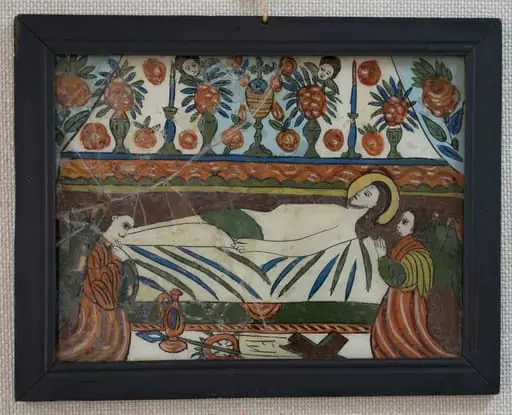 Icoana este pictată după un model central european, influența apuseană fiind evidentă. În prim plan, Isus redat din profil, întins pe un catafalc acoperit cu un giulgiu alb. Părul lung castaniu, ochii închiși, barba scurtă, redarea anatomiei diferită de specificul transilvan. Nimb simplu, umplut cu bronz auriu. Mijlocul este înfășurat cu un veșmânt verde, mâinile întinse pe lângă corp. În prim plan, la capetele catafalcului, câte un înger îngenuncheat, redat din profil. Îngerii au fețele diforme, veșminte roșii, aripi verzi. În spațiul dintre ei, în fața catafalcului se află o amforă, o lance, cununa de spini și o cruce cu inscriția INRI(probabil). În partea superioară a compoziției- planul doi, pe un postament decorat cu unda apei(iconarul a introdus motive familiare în redarea glacială apuseană), un potir cu o cruce, două lumânări în sfeșnice, intercalate cu vase cu flori, decor floral pe fond bleu/ alb; doi heruvimi hilari printre flori. În colțurile superioare- trandafiri roșii pe fond bleu. Compoziția echilibrată, naivă dar atent executată, desenul îngrijit, redarea chipurilor forțată, stângace, paleta cromatică bogată, culorile vii, intense, în dezacord cu tema. Rama, baghetată, profilată, realizată din patru șipci de brad îmbinate oblic la colțuri, de culoare neagră. Stratul pictural prezintă spart, pelicula de culoare în stare bună.
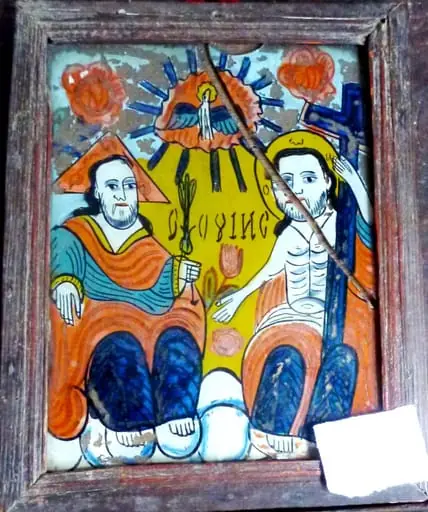 Sfanta Treime
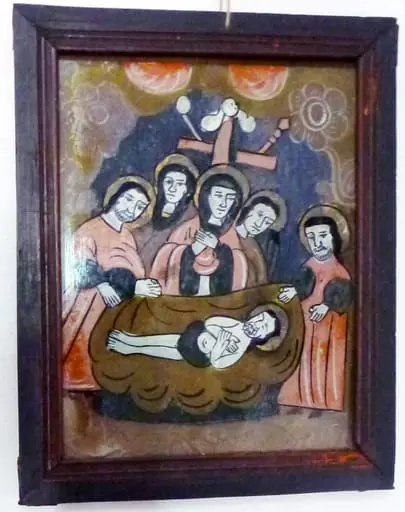
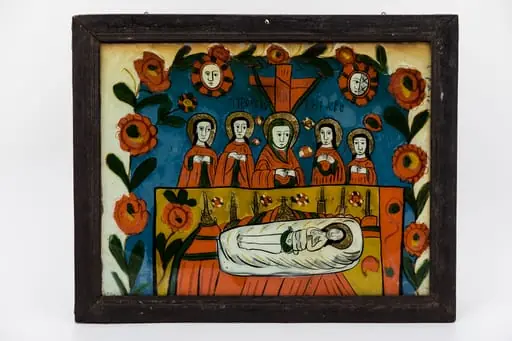 Icoana reprezintă Punerea în mormânt a Mântuitorului Iisus Hristos. Prohodul Domnului. Trupul Mântuitorului Iisus Hristos, fiind coborât de pe cruce, este învelit în țesătura giulgiului alb-gri, cu fire diafane galbene de lumină, amintind de Lumina Învierii. Maica Domnului împreună cu Sfinții Iosif din Arimateea, Nicodim și două femei mironosițe aducătoare de mir țin în brațe trupul Mântuitorului. Compozițional se creează astfel o imagine concentrică de corabie, cu Crucea Răstignirii ca și catarg, corabia prefigurând Biserica. Giulgiul și îmbrățișarea celor apropiați, uniți întru dragoste și suferință, reprezintă axa orizontală perpendiculară pe Cruce. Compoziția este echilibrată, simetrică și circulară. Maica Domnului este îmbrăcată în veșmânt cu maforiom roșu vermillon, cu sacos roșu vermillon și interiorul căptușit cu verde văratic. Fondul icoanei este cerul albastru ceruleum-cobalt, în registrul superior și de mijloc și un spațiu de galben-chihlmbar, în registrul inferior, în jurul mormântului Mântuitorului Iisus Hristos. Întreaga compoziție iconografică este încadrată de un chenar decorativ geometrizant alb, dublat de un chenar fitomorf, format dintr-o ghirlandă de 10-12 ruje roșii vermillon, cu interiorul galben-verde. În ghirlanda de ruje, sunt intercalate cele două elemente astrale martore: Soarele și Luna. Simetric și armonios, sunt 6 sfeșnice cu lumânări arzânde, lângă Trupul Mântuitorului Iisus Hristos, învăluit în giulgiu. Cromatica este armonioasă și luminos-pastelată: roșu vermillon, albastru cobalt, ceruleum, verde văratic-forest, galben chihlimbar, alb și negru. Inscripția din româno-chirilică se traduce Îngroparea Lui IC XC Iisus Hristos. Icoana este din Țara Oltului, Șcheii Brașovului.
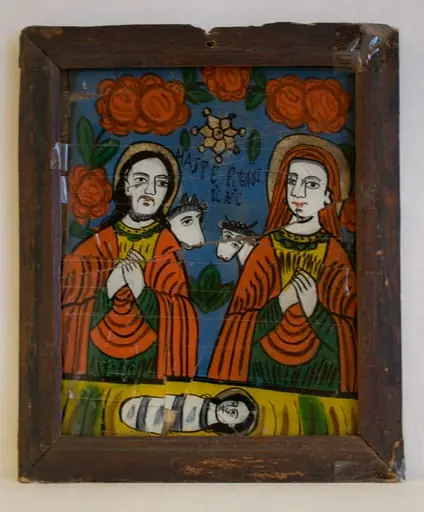 Naștiu s
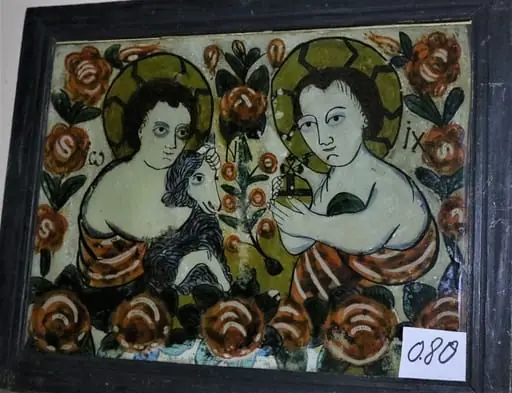 Iisus și Ioan copii
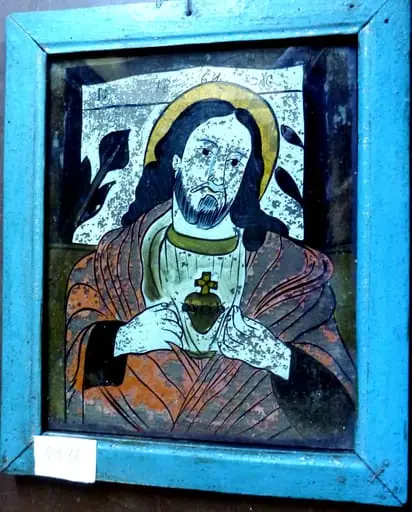 Inima lui Iisus
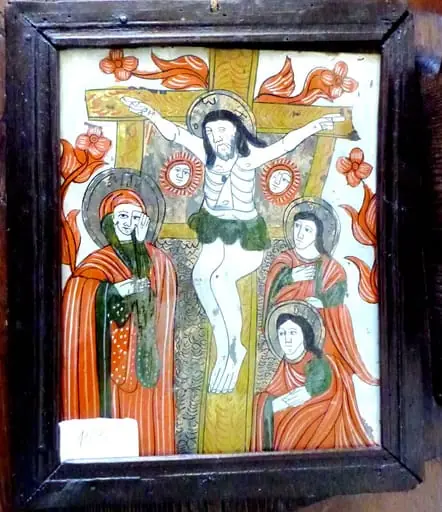 Răstigmirea