Artwork
Răstigmirea
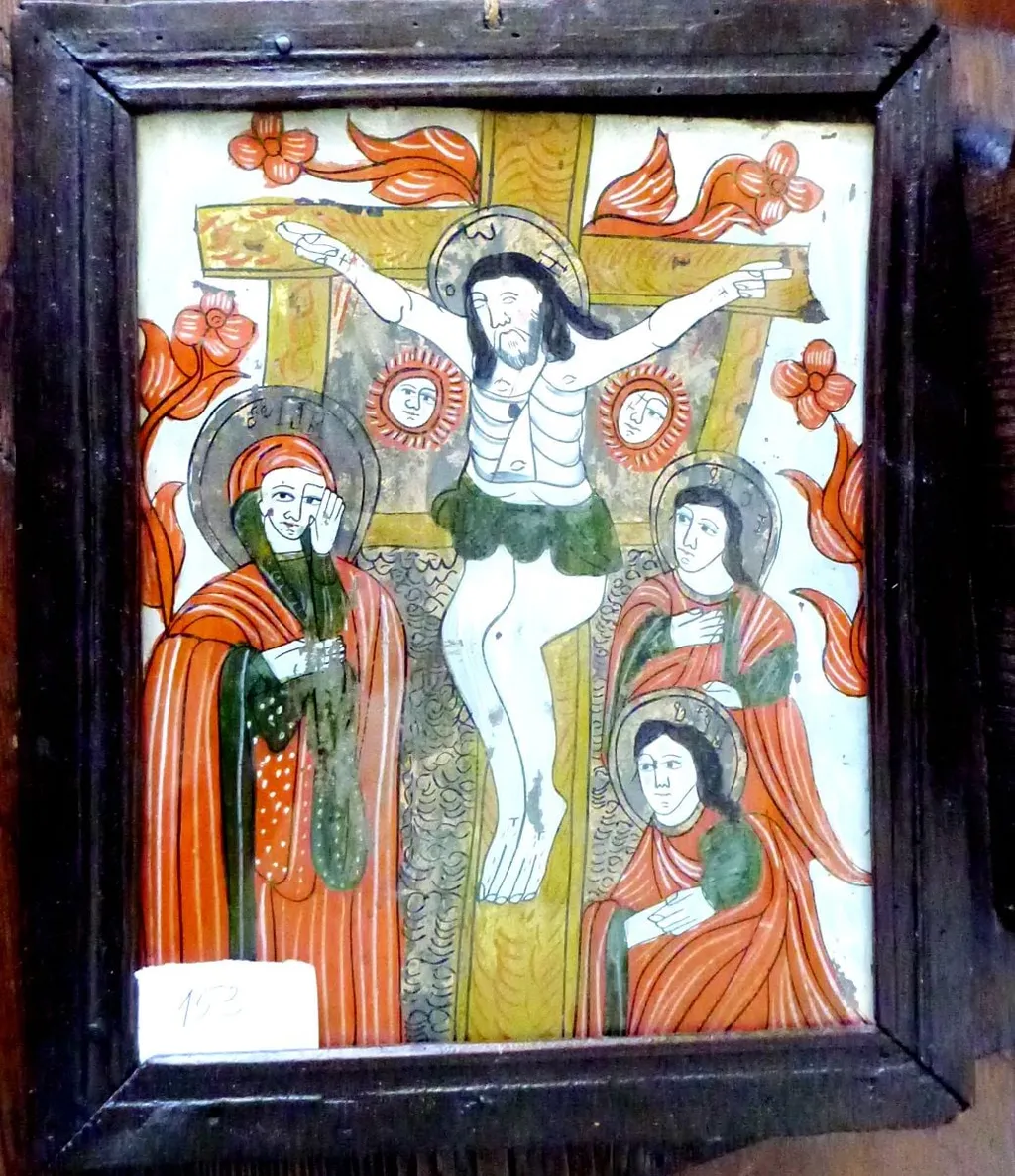
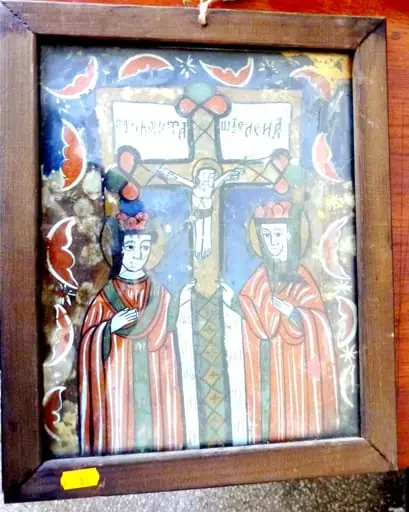
Răstigmirea is a drawing by Unknown. It dates from 1850 and is held in the collection of the Bistrita-Năsăud Museum Complex. This artwork presents a crucifixion scene centered on a yellow cross, with Christ depicted with outstretched arms and bent knees.
About this work
Overview
This artwork presents a crucifixion scene centered on a yellow cross, with Christ depicted with outstretched arms and bent knees.
This artwork presents a crucifixion scene centered on a yellow cross, with Christ depicted with outstretched arms and bent knees. Surrounding the cross are red floral elements, integrating natural motifs into a sacred narrative. Four figures in robes flank the central figure—two in orange on the left, two in green on the right—each wearing head coverings. The composition is enclosed within a dark wooden frame, suggesting a devotional object rather than a monumental altarpiece.
Subject & Meaning
The scene illustrates the crucifixion, a core event in Christian theology, but the inclusion of red flowers and leaves introduces a symbolic layer. Flowers may reference resurrection, divine beauty, or the transient nature of life, common in Eastern Orthodox iconography. The figures flanking Christ likely represent mourners or witnesses, their distinct robe colors possibly indicating roles or spiritual states, though their identities remain unconfirmed.
Technique & Style
The painting employs flat, stylized forms typical of folk or regional religious art, with minimal shading and clear outlines. The use of saturated colors—yellow for the cross, red for flora, orange and green for garments—creates symbolic contrast rather than naturalism. The lack of perspective and decorative floral borders suggest influences from liturgical textiles or illuminated manuscripts, prioritizing spiritual symbolism over spatial realism.
History & Provenance
The work’s origin is not documented, but its visual language aligns with late 19th- to early 20th-century religious art from Eastern Europe, particularly regions with strong Orthodox traditions. The wooden frame and floral motifs hint at local craftsmanship, possibly produced for domestic or small parish use. Its survival suggests it was valued within a community, though its specific provenance remains unknown.
Context
Floral symbolism in Christian art, especially in Eastern traditions, often connects Christ’s sacrifice with renewal and paradise. This piece reflects a regional adaptation where nature and faith intertwine, differing from Western Renaissance realism. Similar imagery appears in Romanian, Ukrainian, or Bulgarian devotional objects, where embroidery, icons, and painted panels blend sacred narrative with indigenous decorative patterns.
Legacy
Though not widely known outside local contexts, this work exemplifies how religious themes were interpreted through vernacular aesthetics. Its persistence in private or ecclesiastical collections speaks to enduring cultural practices that preserved spiritual imagery through modest, handcrafted means. It stands as a quiet testament to the role of art in everyday devotion beyond major artistic centers.
Artist & collection
 Domestic Scene
 Giacomo and Cardinal Marco, investing Andrea, Abbot of San Zeno, with his Benefice
 The Nymph of Fontainebleau
 Portrait of a Woman
 Madonna and Child with Saints in the Enclosed Garden
 Venus and Minerva
 Family Group of Four on Sofa
 Wall painting from Room H of the Villa of P. Fannius Synistor at Boscoreale
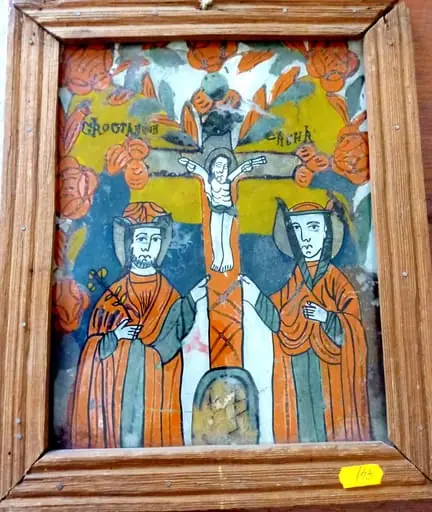 Constantin și Elena
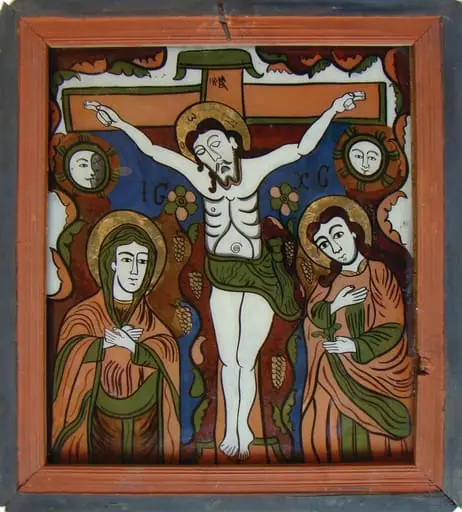 Răstignirea lui Iisus
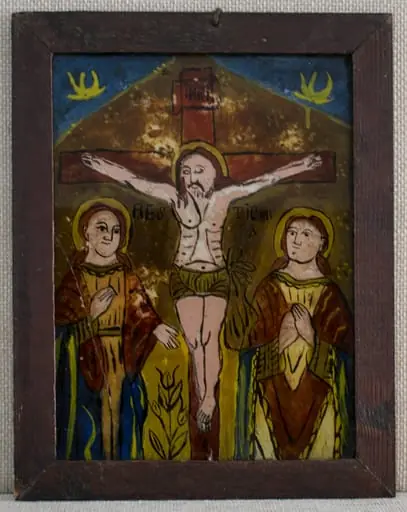 Icoana este pictată "în oglindă", pe un suport de sticlă de formă dreptunghiulară în ax vertical. Scena Răstignirii este redată într-o manieră specifică zonei Nicula - Gherla,(faza târzie, de decadență a acestei arte),după stil(în special desenul ochilor) putând fi atribuită lui Gheorghe Feur sau fiice sale Mariana. Crucea simplă, dreaptă, este axul de simetrie al compoziței, Isus răstignit are corpul destul de bine proporționat, anatomia studiată, ochii închiși, capul ușor aplecat pe umărul stâng, părul lung,castaniu roșcat, redat ca o meșă stângace, înconjurat de nimbul simplu, trasat cu mai mare atenție decât în icoanele vechi. În jurul mijlocului are un veșmânt bogat. De o parte și de alta a crucii, în prim plan, Fecioara Maria și Ioan Evanghelistul, 3/4, din ușor semiprofil, amândoi cu expresii nedefinite, fețele rotunde, diforme, bărbiile exagerat de mari. Vestimentația aproape identică, predomină roșul stins accentuat de alb și verdele amestecat cu albastru. Inscripția cu majuscule negre, dezordonat, sub brațele crucii se pierde pe fond. Câmpul în nuanțe de brun roșcat, voit sau din neglijență în degrade, se completează cu pământul galben violent(1/3 inferior) cu un contur de floare la baza crucii. Brațele crucii sunt delimitate într-un triunghi de culoare, făcând loc în colțurile superioare la două zone de albastru decorate cu o floare stilizată galbenă. Desenul nesigur este ușor estompat de cromatica ce încearcă o imitație(studiată sau nu) a realizărilor vechilor iconari de la Nicula. Rama, realizată din patru șipci de brad, culoare brun, îmbinate oblic la colțuri. Pe spate are bătut un dos din placaj. Colțul stâng este crăpat. Izvodul este identic cu cel utilizat la nr 27199.
 lada de haine
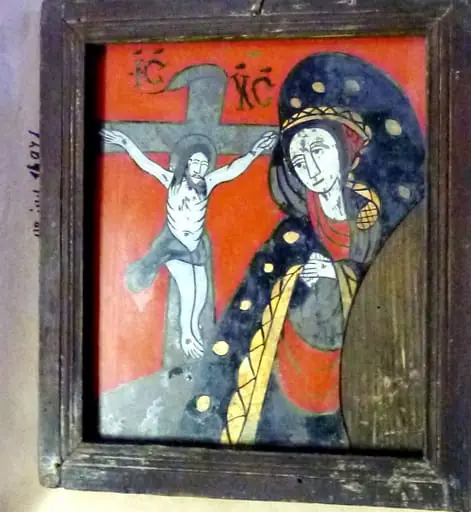 Maica Domnului Indurearata
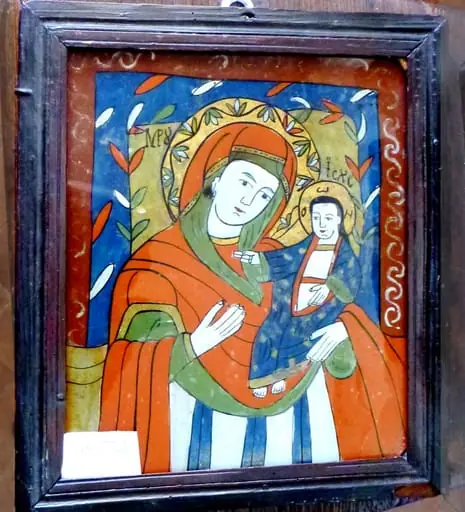 Maria cu Pruncul
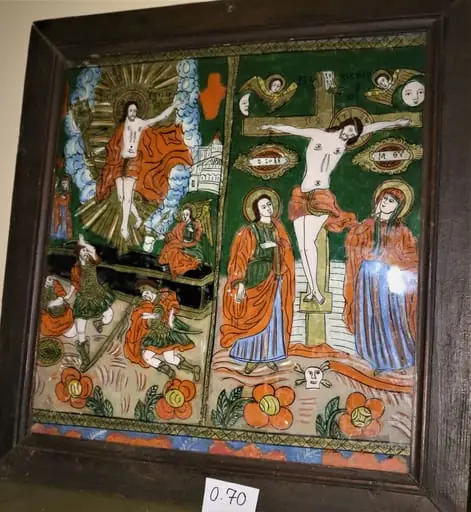 Răstignirea și Învierea
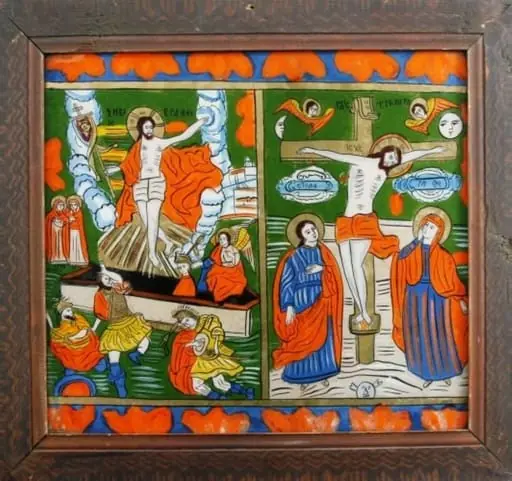 Înălțarea lui Iisus Hristos la ceruri; Răstignirea lui Iisus Hristos