Artwork
明代帝后半身像册(二)-世宗肃皇帝
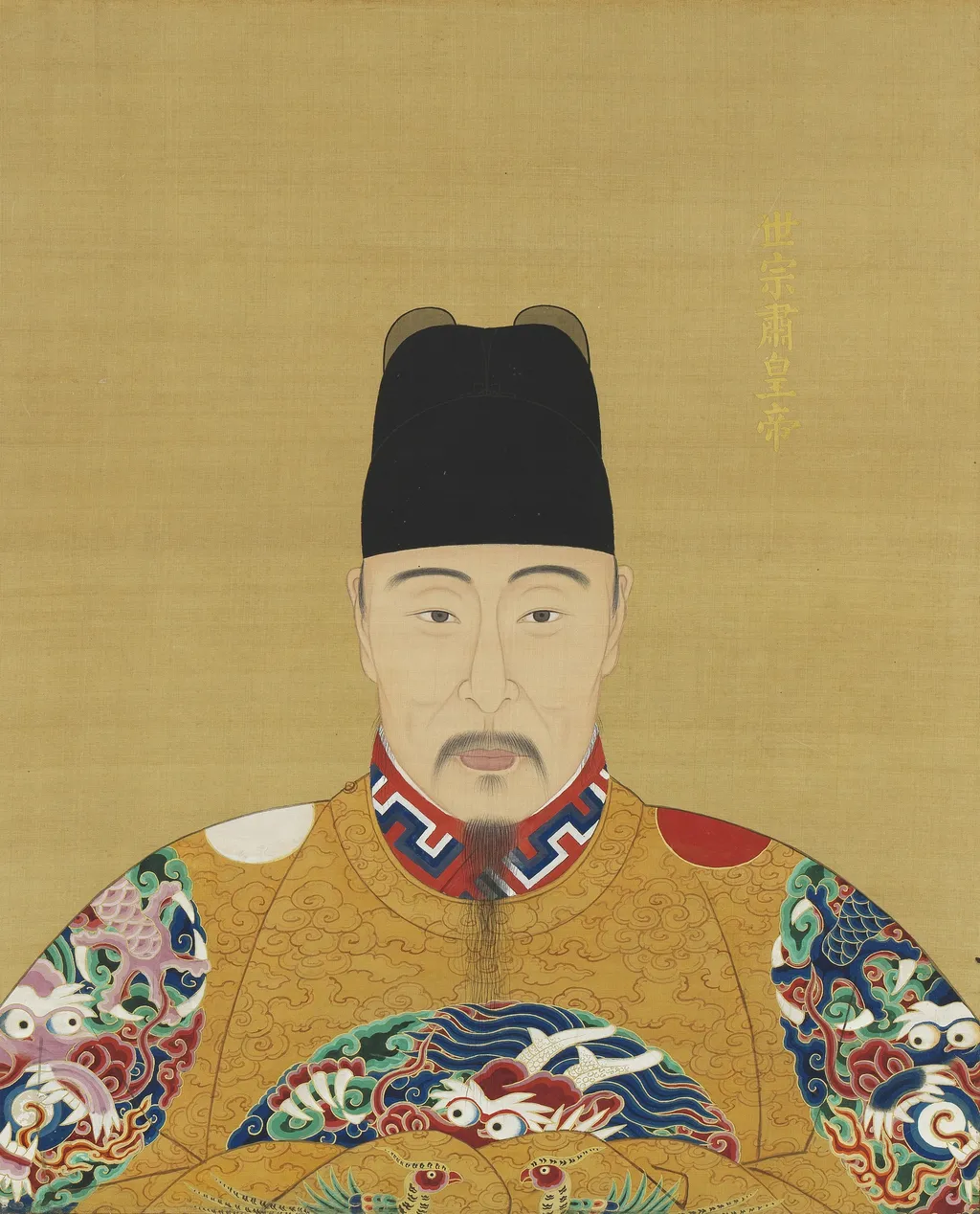
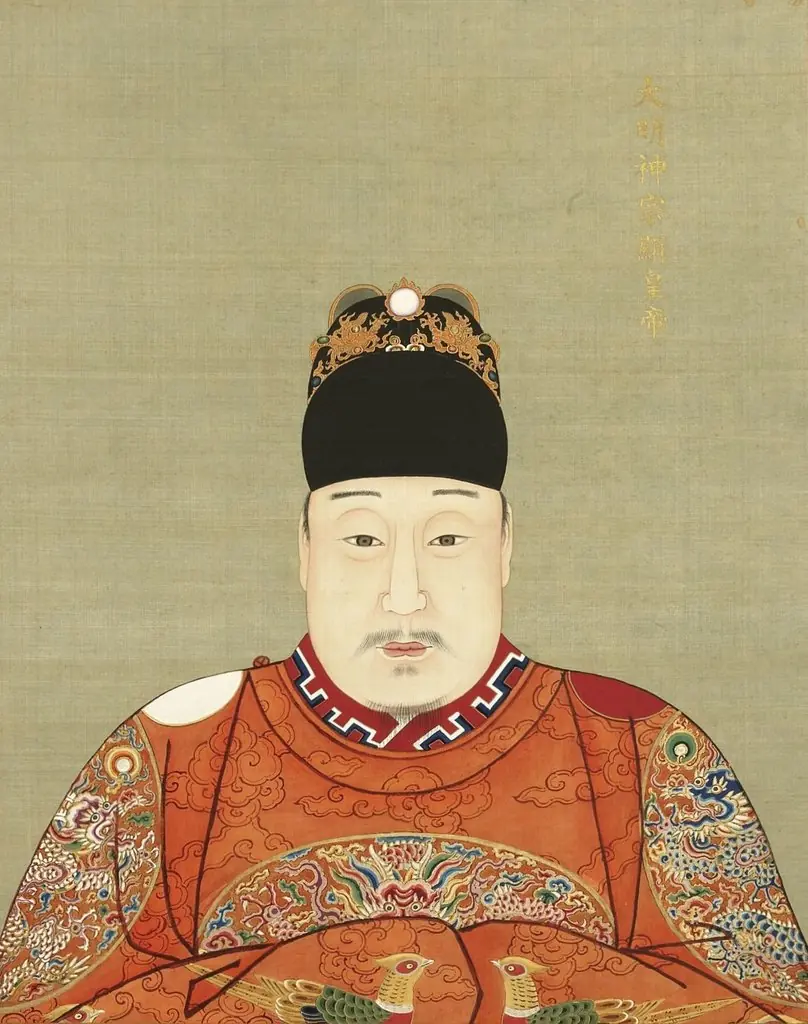
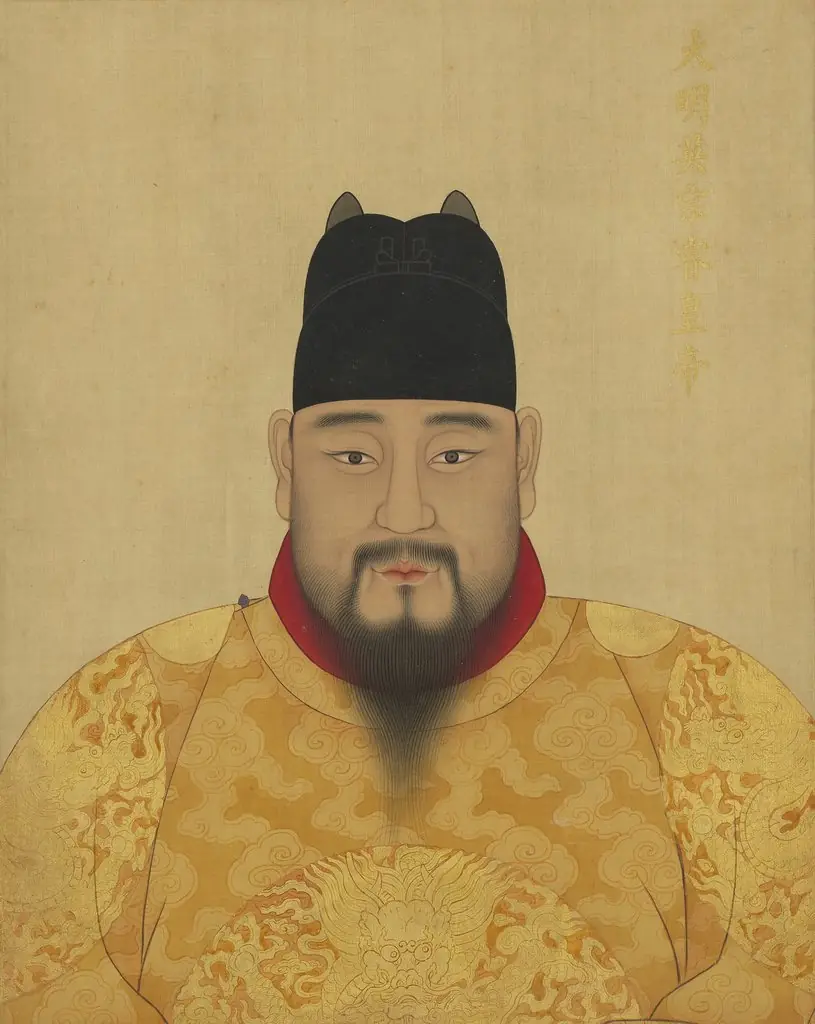
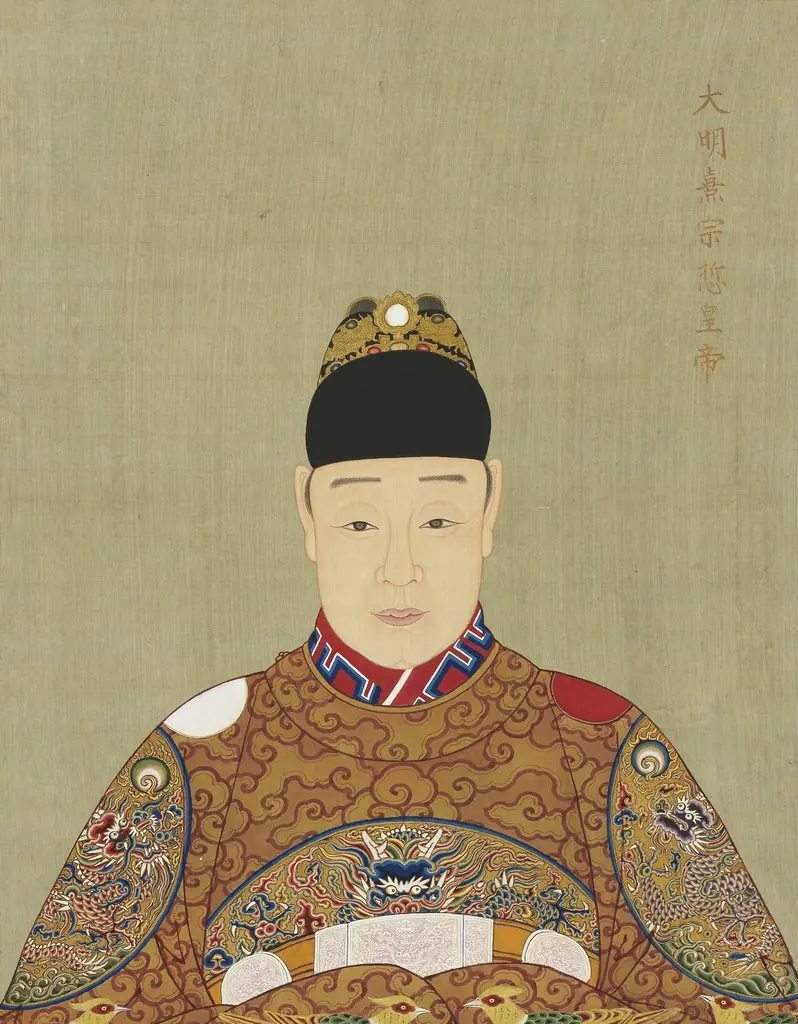
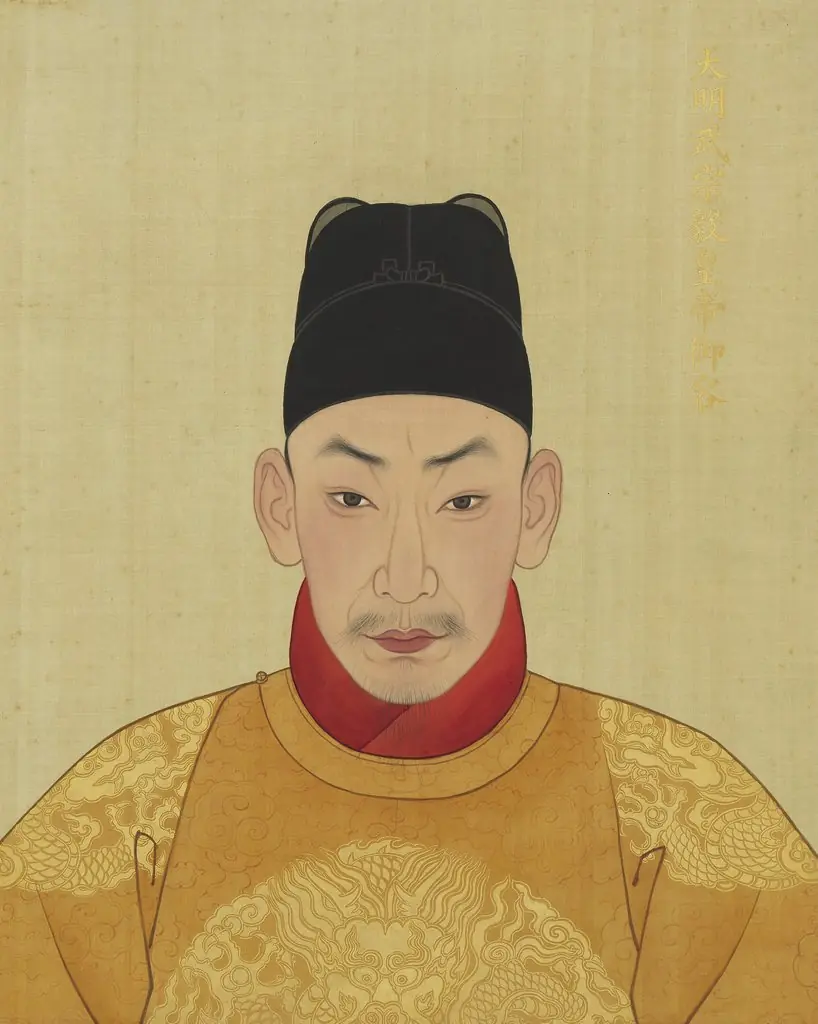
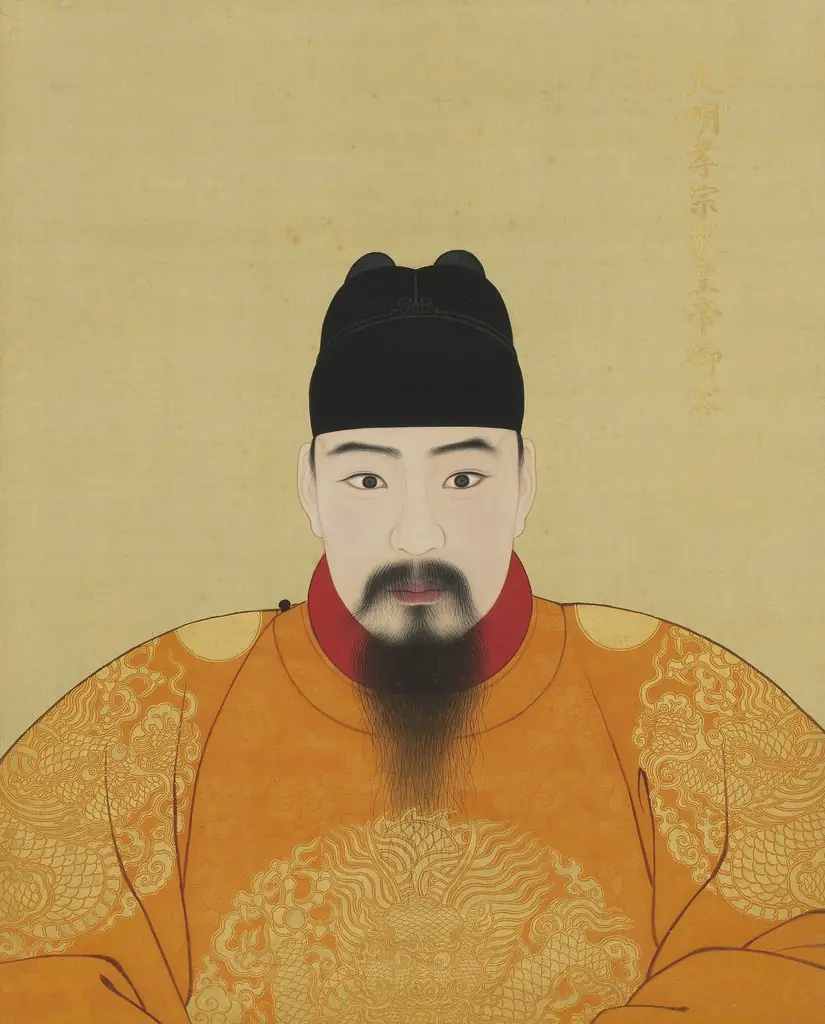
明代帝后半身像册(二)-世宗肃皇帝 is an unspecified painting by Unknown. It dates from 1850 and is held in the collection of the National Palace Museum. This portrait is one of a pair from a明代 imperial album depicting emperors and empresses in half-length format.
About this work
Overview
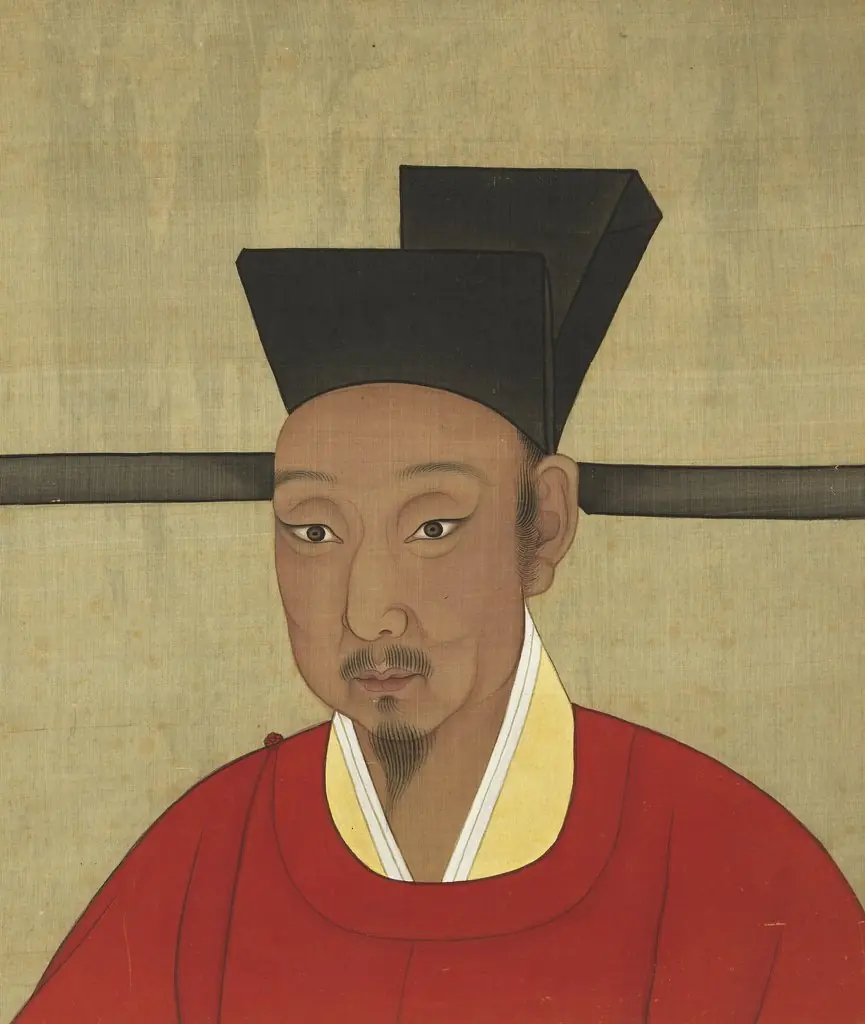
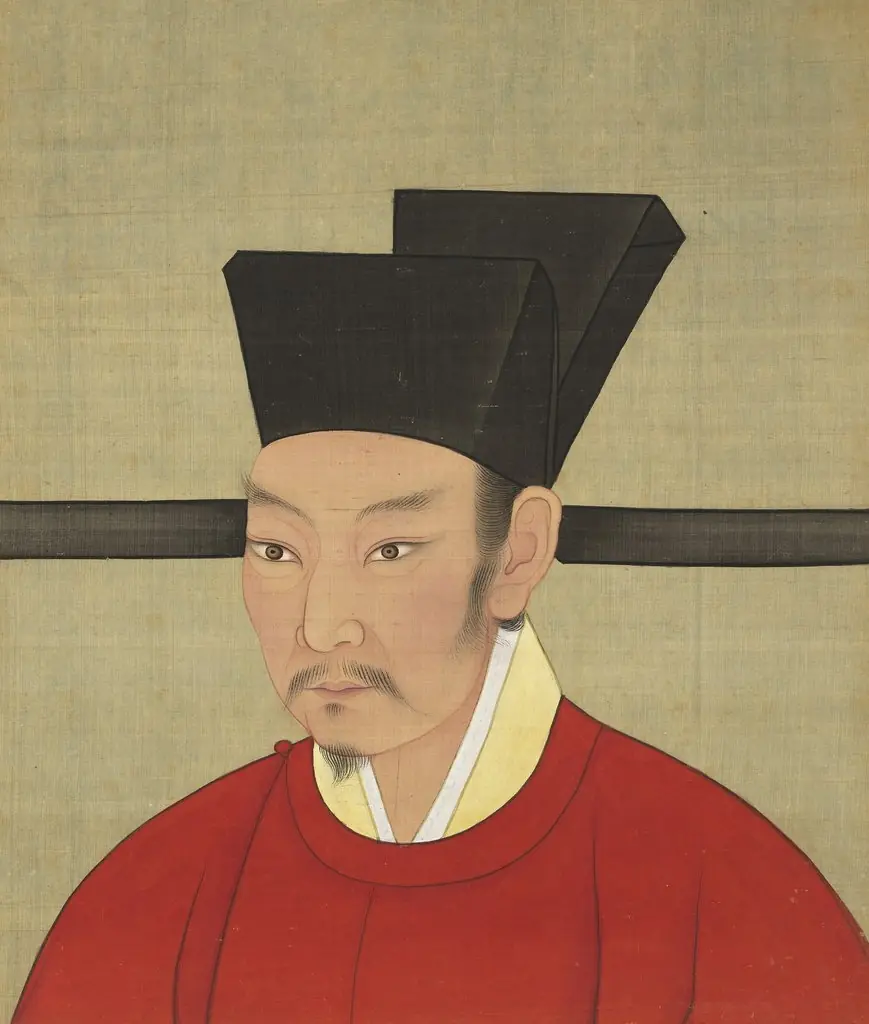
This portrait is one of a pair from a明代 imperial album depicting emperors and empresses in half-length format.
This portrait is one of a pair from a明代 imperial album depicting emperors and empresses in half-length format. It portrays Emperor Shizong of the Ming dynasty, identified by his regalia and official title. Rendered against a plain brown background, the composition emphasizes the sitter’s presence through formal posture and detailed costume, reflecting court conventions of imperial representation in 16th-century China.
Subject & Meaning
The subject is Emperor Jiajing, the 12th ruler of the Ming dynasty, portrayed in ceremonial attire to affirm his authority. His solemn expression and upright posture convey Confucian ideals of rulership—dignity, restraint, and moral gravity. The dragon motifs and aquatic patterns on his robe symbolize imperial power and cosmic order, reinforcing his role as the Son of Heaven and mediator between heaven and earth.
Technique & Style
The painting employs precise, controlled brushwork to render fabric textures and facial features. Bold strokes define the embroidery on the robe, while subtle gradations model the emperor’s face with quiet realism. The use of gold and colored pigments on silk enhances the richness of the garments, yet the background remains deliberately plain to isolate the figure and focus attention on his imperial bearing.
History & Provenance
Created during the mid-16th century, this portrait was likely commissioned for the imperial ancestral shrine or palace archives. It entered the collection of the National Palace Museum in Taipei following the relocation of Qing imperial artifacts after 1949. Its survival as part of a paired set suggests it was preserved as an official record of Ming lineage, not merely as decorative art.
Context
Imperial portrait albums like this were produced under strict protocols, often by court artists trained in standardized styles. During Jiajing’s reign, ritual correctness and visual symbolism were prioritized over individual expression. Such portraits served political and spiritual functions, reinforcing dynastic continuity and legitimizing rule through visual tradition rooted in earlier Song and Yuan practices.
Legacy
This work exemplifies the Ming court’s commitment to formal portraiture as an instrument of state ideology. Though later dynasties adopted more naturalistic styles, this portrait preserves the aesthetic and symbolic language of imperial authority in late medieval China. Its preservation allows modern scholars to study how power was visually encoded in official imagery across centuries.
Artist & collection

 Domestic Scene
 Giacomo and Cardinal Marco, investing Andrea, Abbot of San Zeno, with his Benefice
 The Nymph of Fontainebleau
 Portrait of a Woman
 Madonna and Child with Saints in the Enclosed Garden
 Venus and Minerva
 Family Group of Four on Sofa
 Wall painting from Room H of the Villa of P. Fannius Synistor at Boscoreale