Artwork
明代帝后半身像册(一)-孝宗敬皇帝
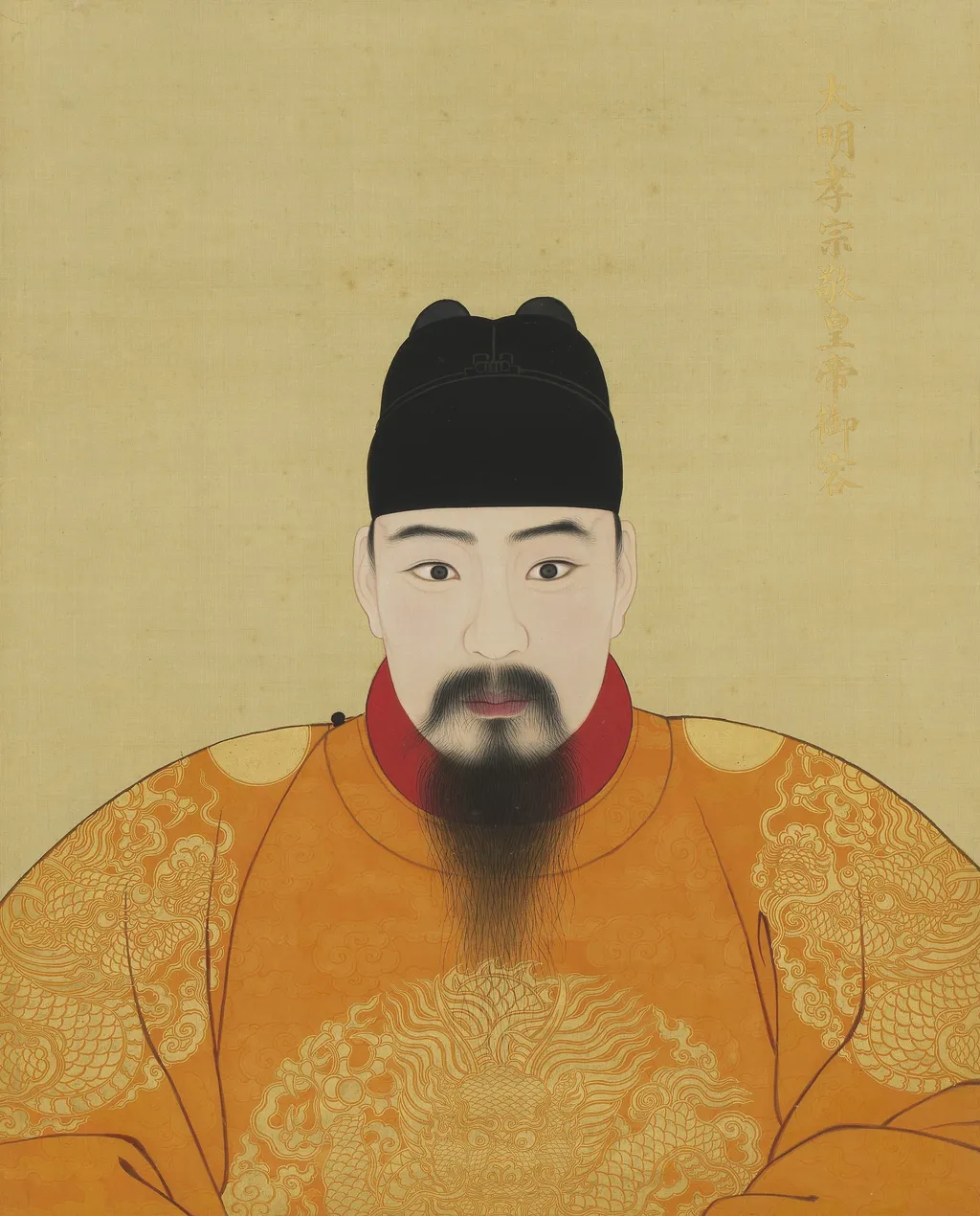
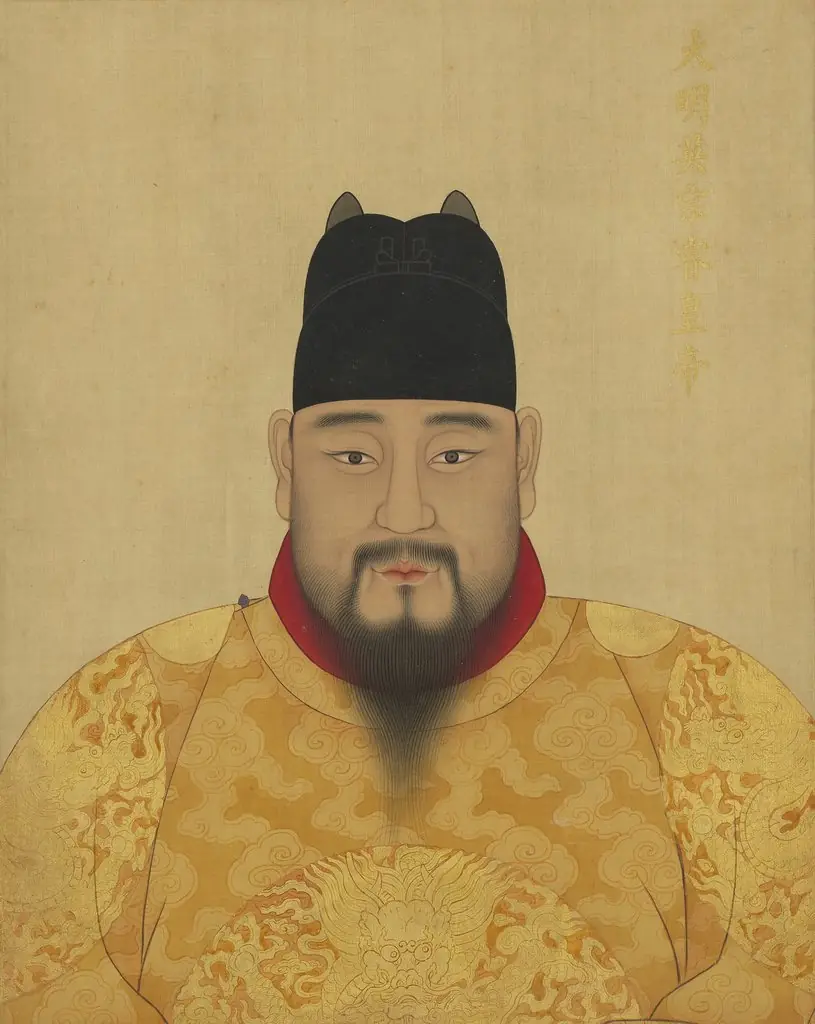
明代帝后半身像册(一)-孝宗敬皇帝 is an unspecified painting by Unknown. It dates from 1850 and is held in the collection of the National Palace Museum. The work is a half‑length portrait from a Ming‑dynasty series depicting an imperial figure, identified as Emperor Xiaozong.
About this work
Overview
The work is a half‑length portrait from a Ming‑dynasty series depicting an imperial figure, identified as Emperor Xiaozong. Rendered on silk, the figure is shown against a muted yellow ground, wearing a bright orange robe with elaborate white motifs and a prominent dragon emblem on the chest, topped by a distinctive black hat and a long, dark beard.
Subject & Meaning
The portrait presents the emperor in formal regalia, emphasizing his authority through the dragon motif, a symbol of imperial power. The composition’s focus on the head and upper torso, combined with the sober background, directs attention to the ruler’s dignified presence and the ceremonial aspects of his office.
Technique & Style
Executed with fine brushwork, the painting displays meticulous detailing of textile patterns and facial features. The use of contrasting orange and white pigments creates a subtle chiaroscuro effect that models the folds of the robe and the contours of the beard, while the light yellow backdrop provides a neutral field that enhances the figure’s prominence.
History & Provenance
Part of a larger album of imperial half‑body portraits compiled during the Ming period, the piece was likely produced for court use or as a record of the reigning sovereign. It has survived in a collection of Chinese paintings, where it remains an example of official portraiture from the late 12th‑century reign of Xiaozong.
Context
In Ming China, portraiture of emperors served both documentary and propagandistic purposes, reinforcing dynastic legitimacy. The inclusion of specific regalia, such as the dragon‑embellished robe, aligns with contemporary conventions that visually encoded the emperor’s supreme status within the hierarchical order of the court.
Artist & collection

 Domestic Scene
 Giacomo and Cardinal Marco, investing Andrea, Abbot of San Zeno, with his Benefice
 The Nymph of Fontainebleau
 Portrait of a Woman
 Madonna and Child with Saints in the Enclosed Garden
 Venus and Minerva
 Family Group of Four on Sofa
 Wall painting from Room H of the Villa of P. Fannius Synistor at Boscoreale