Artwork
明代帝后半身像册(一)-仁宗昭皇帝
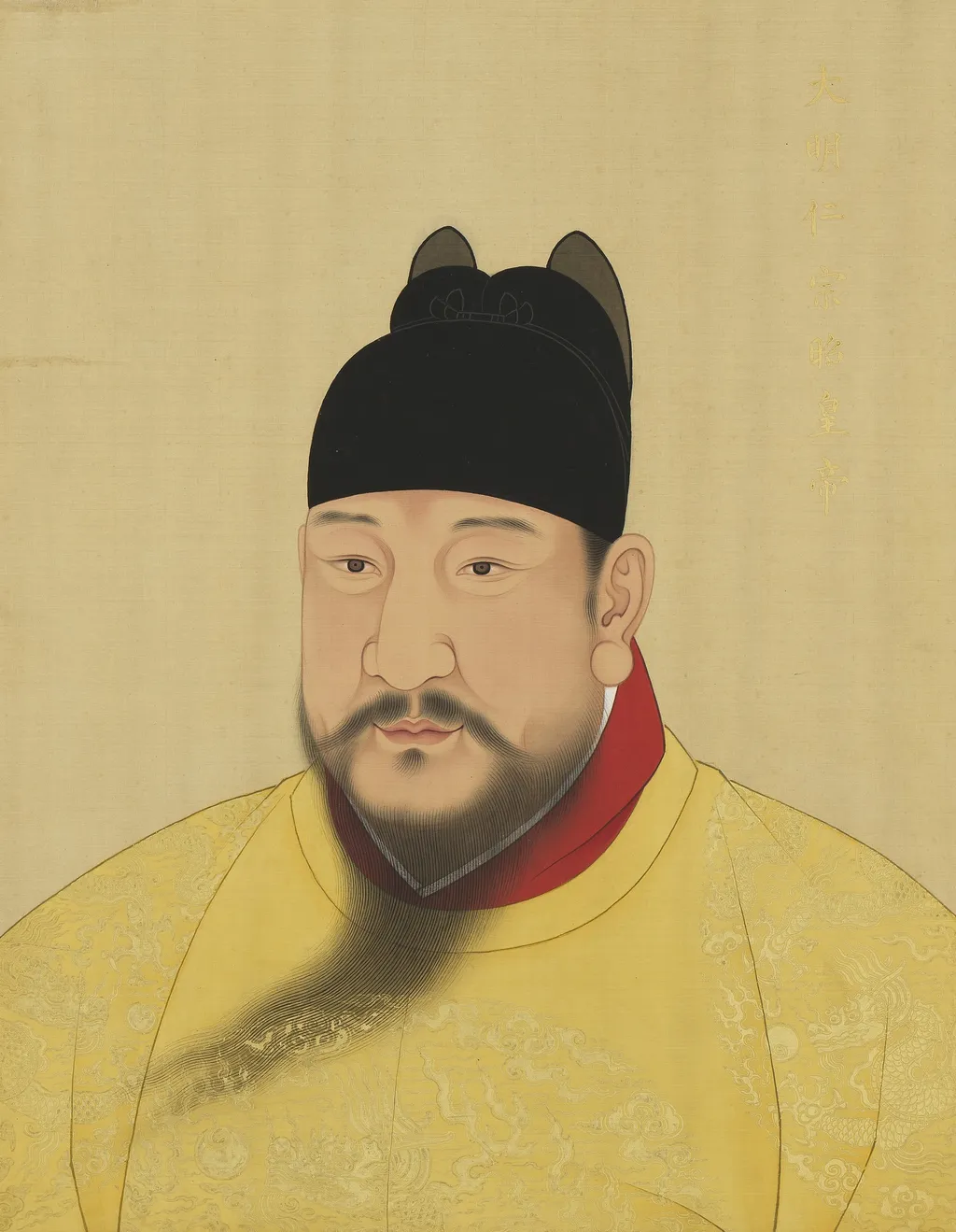
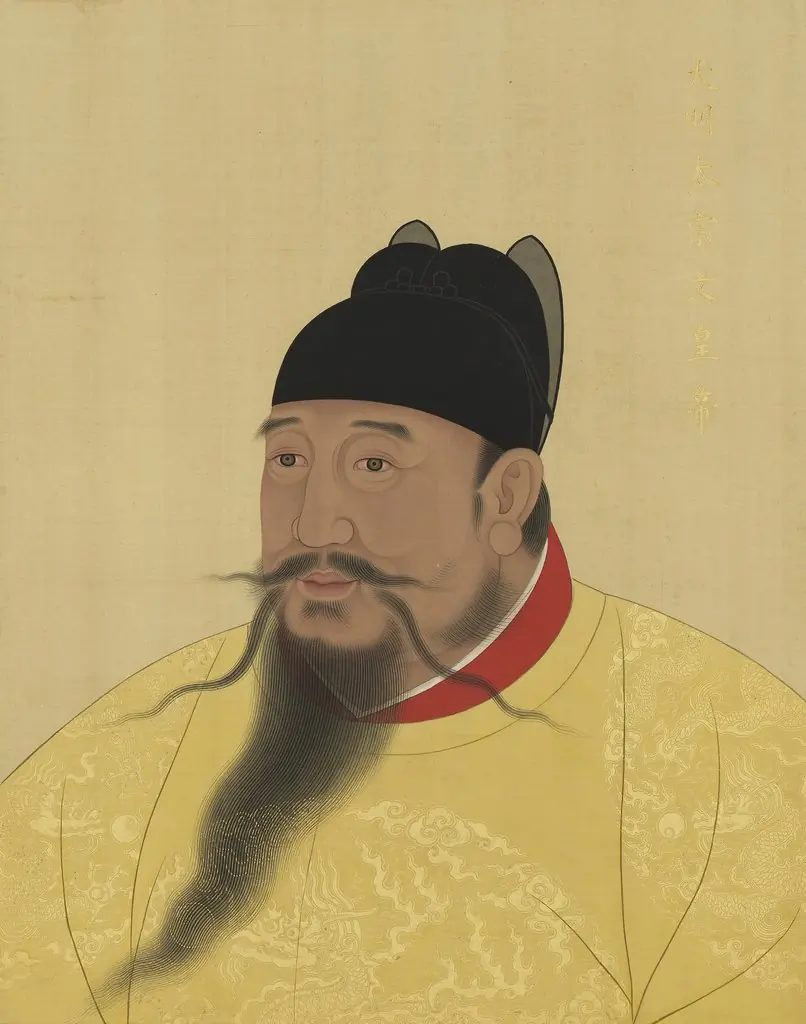
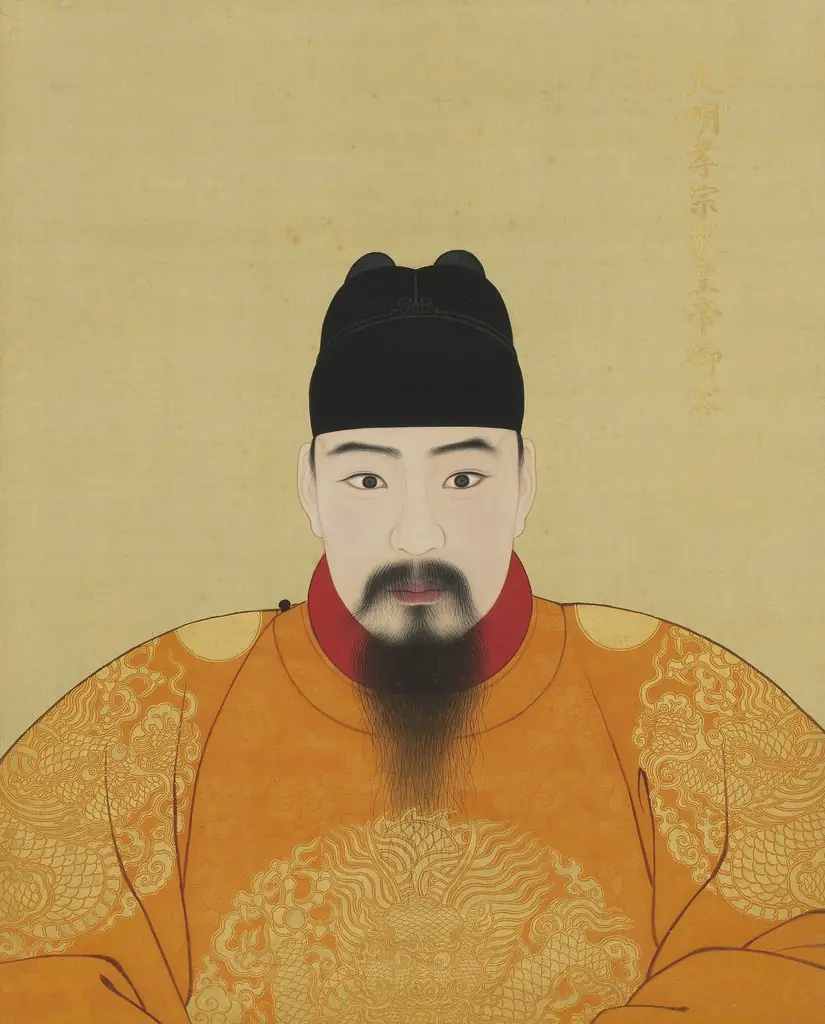
明代帝后半身像册(一)-仁宗昭皇帝 is an unspecified painting by Unknown. It dates from 1850 and is held in the collection of the National Palace Museum. This portrait is one of a series from the Ming dynasty depicting imperial figures in half-length format.
About this work
Overview
The composition isolates the figure against a neutral beige field, emphasizing his regal presence through costume and posture rather than environmental context.
This portrait is one of a series from the Ming dynasty depicting imperial figures in half-length format. It portrays Emperor Renzong of Ming, the fourth emperor of the dynasty, rendered with formal precision. The composition isolates the figure against a neutral beige field, emphasizing his regal presence through costume and posture rather than environmental context. The work reflects courtly conventions of imperial representation during the early 15th century.
Subject & Meaning
The subject is Emperor Renzong, who reigned briefly from 1424 to 1425. His black ceremonial hat and yellow dragon robe signify imperial authority, while the white embroidered patterns denote rank and cosmic order according to Ming sumptuary codes. The long black beard, a symbol of wisdom and maturity in Confucian ideals, reinforces his image as a virtuous ruler. The portrait functions as an official likeness, intended for ancestral veneration rather than personal expression.
Technique & Style
The painting employs fine brushwork to render textile patterns with meticulous detail, using thin lines and controlled washes to suggest texture. Subtle tonal gradations on the face convey volume without overt chiaroscuro; shadows are soft and localized, avoiding dramatic contrast. The palette is restrained, dominated by yellow, black, and white, consistent with Ming court portraiture. The flat background and frontal pose align with traditional Chinese imperial iconography, prioritizing symbolic presence over naturalism.
History & Provenance
The portrait originates from the Ming imperial collection, likely created shortly after Renzong’s death in 1425 for use in ancestral rites at the Temple of Imperial Ancestors. It was preserved within the palace archives, possibly as part of a standardized series of imperial portraits commissioned by his successor. Its survival into modern times reflects its ceremonial importance and careful storage within imperial institutions.
Context
During the early Ming period, imperial portraiture was tightly regulated to reinforce dynastic legitimacy. Portraits like this one were not private commissions but state instruments, produced by court artists under strict guidelines. They were displayed in ancestral halls during rituals, serving as conduits between the living emperor and his predecessors. The style contrasts with later Western portraiture, emphasizing ritual role over individual psychology.
Legacy
This portrait exemplifies the Ming court’s commitment to visual continuity in imperial representation. It influenced later dynastic portraiture in China and remains a key reference for understanding how authority was encoded in clothing, posture, and composition. Today, it is studied as part of a broader corpus of official Ming imagery, offering insight into the intersection of governance, ritual, and artistic practice in early 15th-century China.
Artist & collection

 Domestic Scene
 Giacomo and Cardinal Marco, investing Andrea, Abbot of San Zeno, with his Benefice
 The Nymph of Fontainebleau
 Portrait of a Woman
 Madonna and Child with Saints in the Enclosed Garden
 Venus and Minerva
 Family Group of Four on Sofa
 Wall painting from Room H of the Villa of P. Fannius Synistor at Boscoreale