Artwork
Raja Ugar Singh
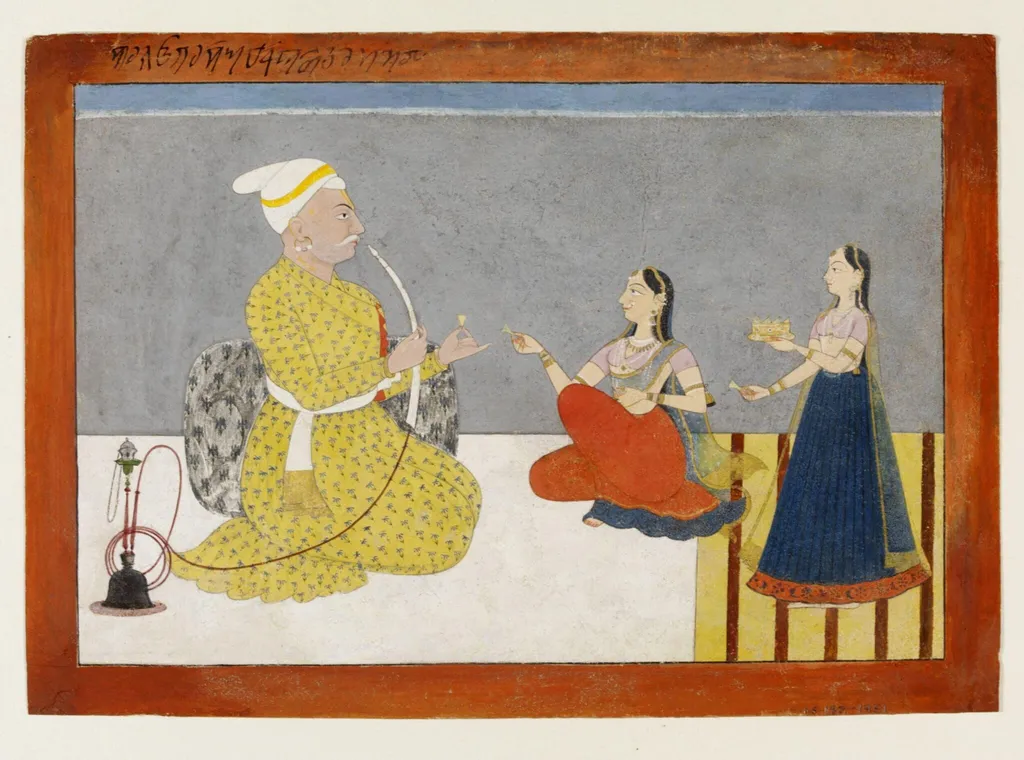
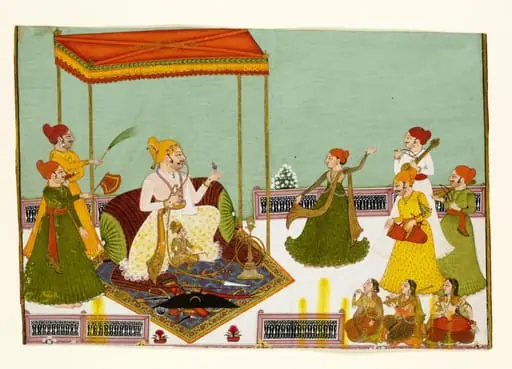
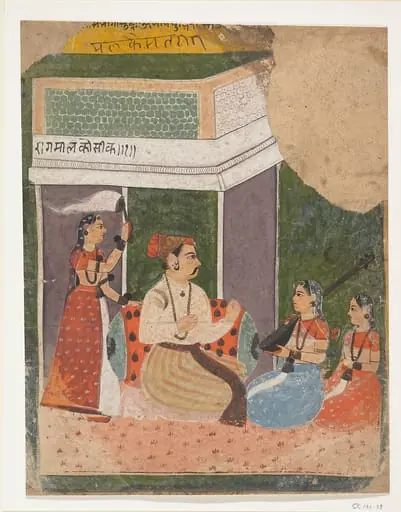
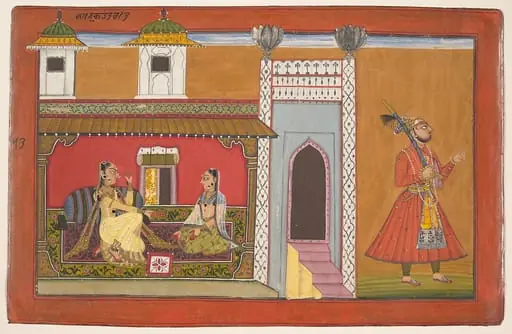
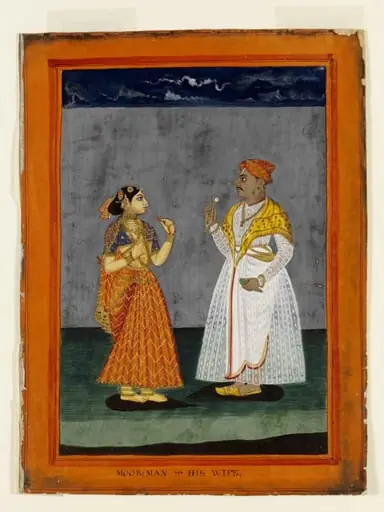
Raja Ugar Singh is a paint painting by the Baroque artist Unknown. It dates from 1730 and is held in the collection of the Victoria and Albert Museum.
About this work
Overview
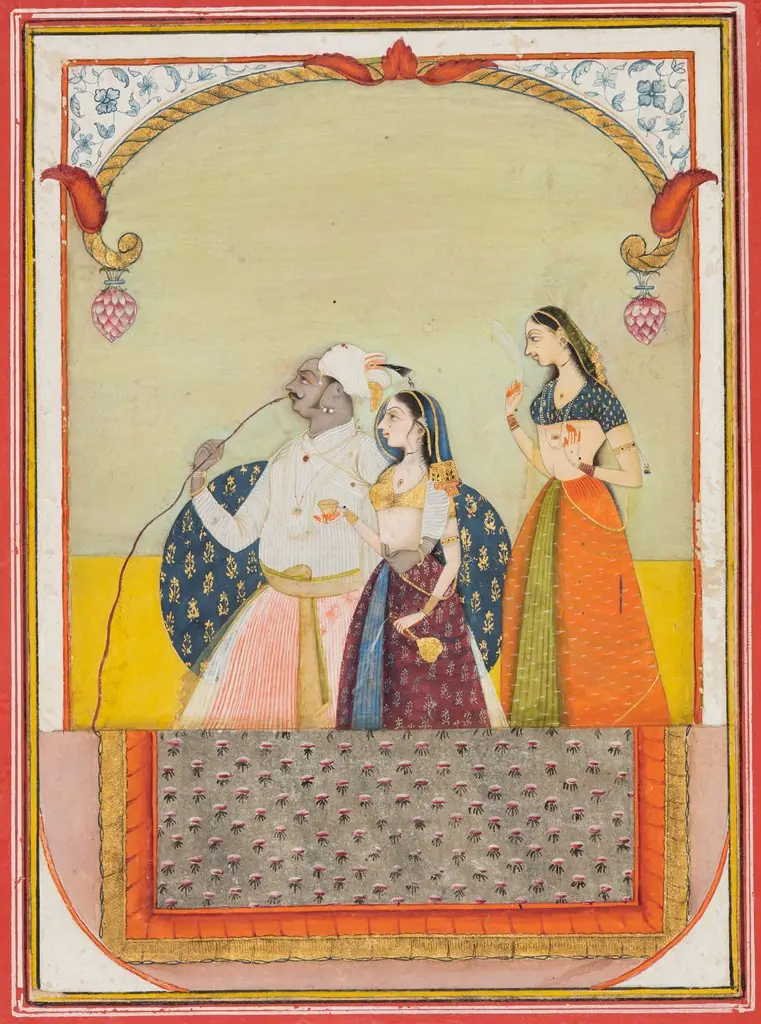
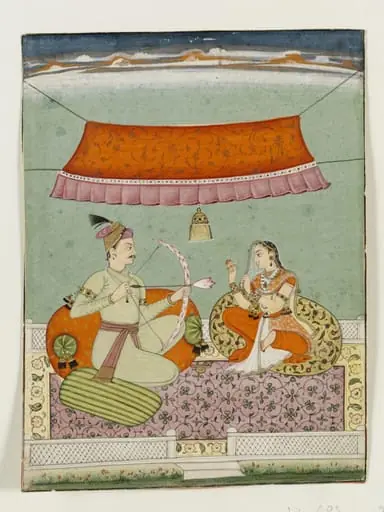
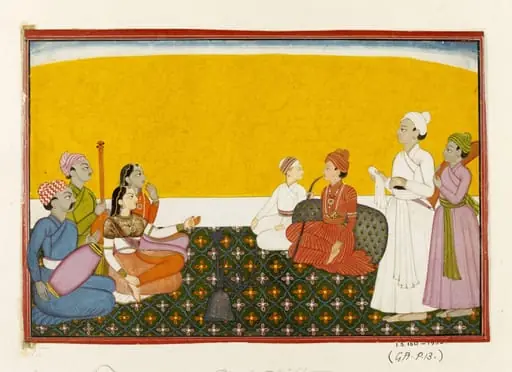
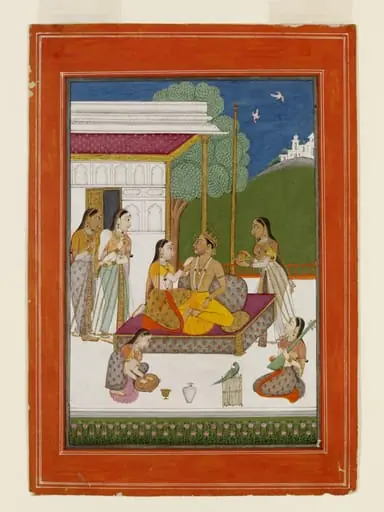
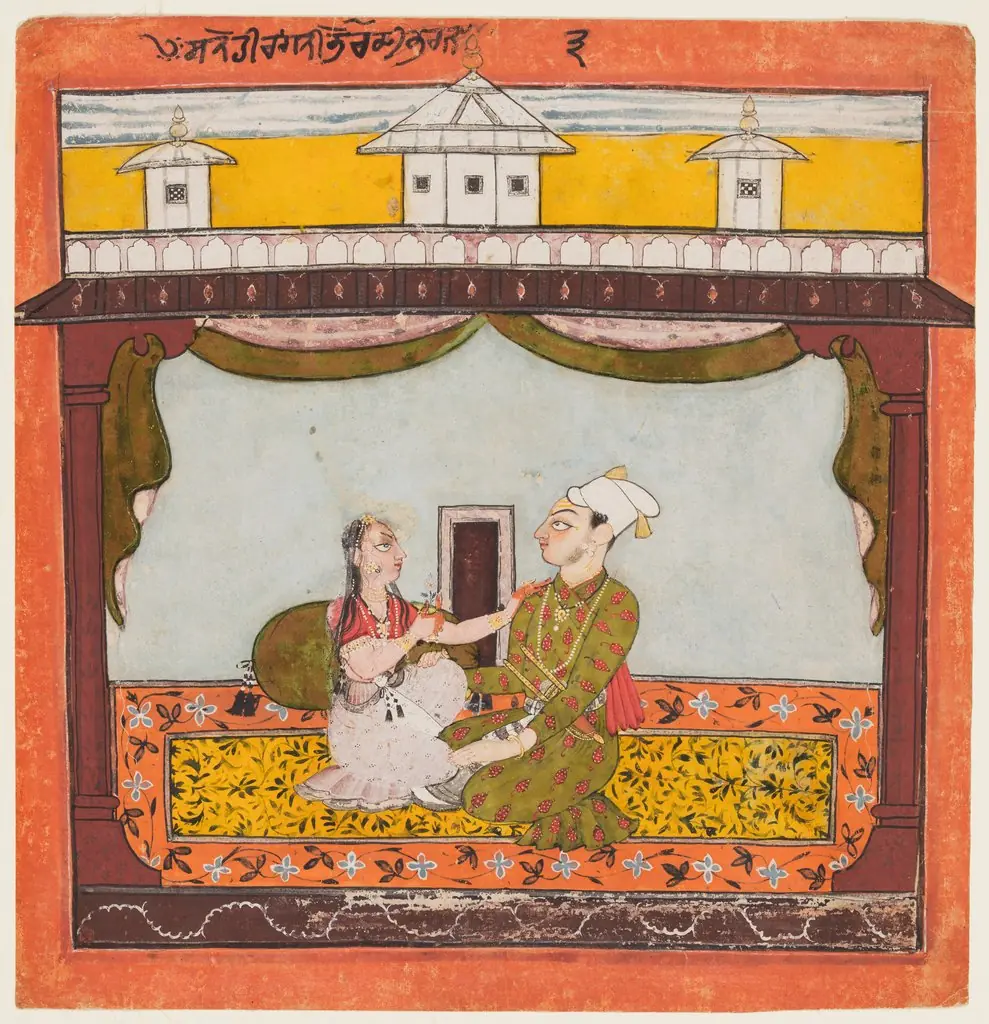
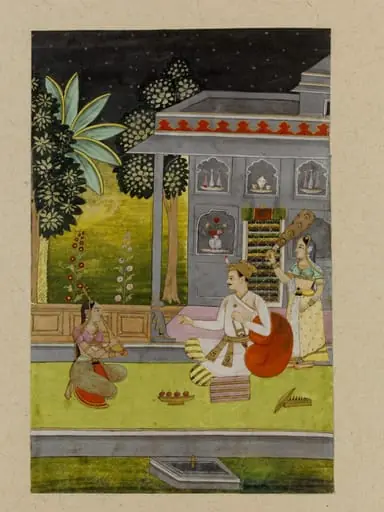
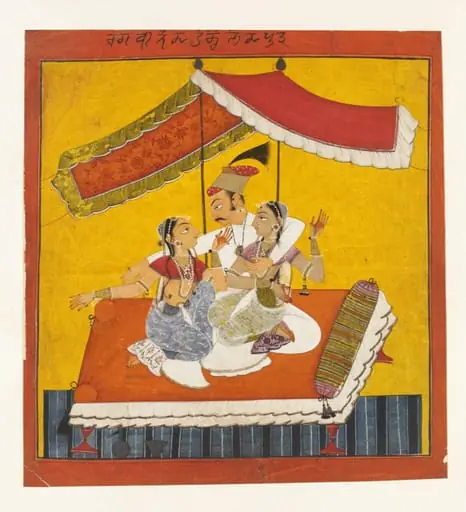
This work is an opaque watercolor on paper, dated to 1730, portraying Raja Ugar Singh of Chamba seated on a stool while smoking a hookah. He is accompanied by two women who are positioned on the floor, attending to him. The composition is set against a plain gray wall topped with a thin blue band, creating a simple interior backdrop.
Subject & Meaning
The central figure, the Raja, is dressed in a yellow robe and white turban, suggesting regal status, while the two female attendants wear colorful garments. Their gestures—one holding a small object and the other appearing to offer something—imply a scene of leisure and hospitality within a royal household.
Technique & Style
Executed in opaque watercolor, the painting employs a limited palette that emphasizes the figures against the muted background. The handling of the medium yields a smooth, flat surface typical of early 18th‑century court portraiture, with careful attention to costume detail and the reflective qualities of the hookah.
History & Provenance
Created in 1730, the work originates from the Indian princely state of Chamba. It documents Raja Ugar Singh’s personal image, likely commissioned for a court setting or as a record of his reign, though specific ownership history beyond the original patron remains undocumented.
Context
The painting reflects the cultural exchange between Indian courts and broader artistic trends of the period, incorporating elements of Baroque composition such as a staged interior and a focus on opulent attire, while retaining local motifs like the hookah and traditional dress.
Artist & collection

 Domestic Scene
 Giacomo and Cardinal Marco, investing Andrea, Abbot of San Zeno, with his Benefice
 The Nymph of Fontainebleau
 Portrait of a Woman
 Madonna and Child with Saints in the Enclosed Garden
 Venus and Minerva
 Family Group of Four on Sofa
 Wall painting from Room H of the Villa of P. Fannius Synistor at Boscoreale