Artwork
Shakyamuni Triad: Buddha Attended by Manjushri and Samantabhadra
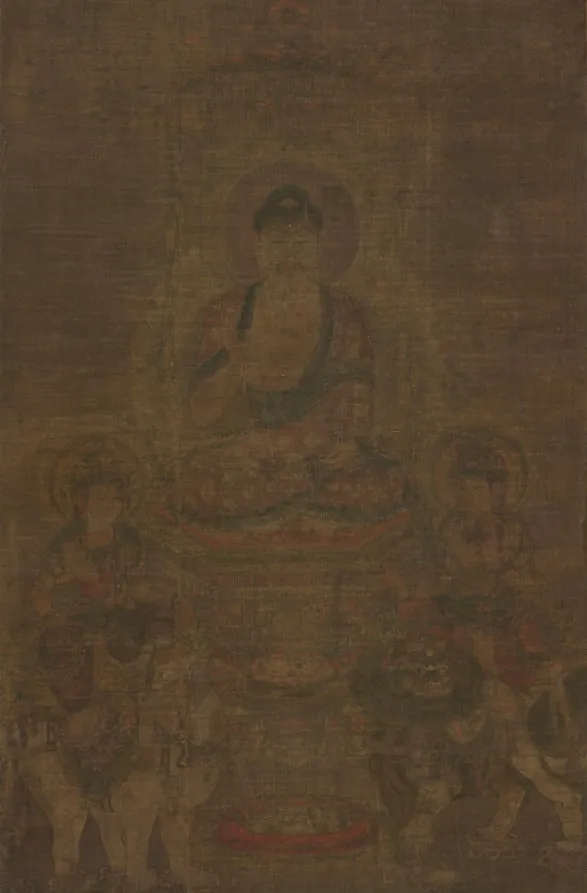
Shakyamuni Triad: Buddha Attended by Manjushri and Samantabhadra is an unspecified painting by the Byzantine icon painting artist Unknown. It dates from 900 and is held in the collection of the Cleveland Museum of Art. The work presents a central seated figure of Shakyamuni Buddha flanked by two attendant bodhisattvas, Manjushri and Samantabhadra.
About this work
Overview
The work presents a central seated figure of Shakyamuni Buddha flanked by two attendant bodhisattvas, Manjushri and Samantabhadra. The Buddha occupies a raised platform, his expression serene, while the companions stand on either side, each holding symbolic objects. A dark, unadorned background isolates the figures, emphasizing their forms.
Subject & Meaning
The composition reflects a common Buddhist iconographic scheme in which Shakyamuni, the historical Buddha, is accompanied by Manjushri, the embodiment of wisdom, and Samantabhadra, representing practice and virtue. Their arrangement underscores the doctrinal triad of enlightenment, insight, and compassionate activity.
Technique & Style
Executed in flat, unmodulated pigments, the painting relies on bold outlines rather than chiaroscuro to define volume. The Buddha’s facial features and hands receive the most intricate brushwork, while the surrounding figures are rendered with simpler strokes. The overall effect is one of restrained coloration and minimal shading, characteristic of certain devotional panels.
History & Provenance
The piece exhibits signs of age, including faded pigments and areas of wear, indicating it has been in use for an extended period. Specific details of its origin, workshop, or collection history are not recorded in the available documentation.
Context
Such triadic representations were common in East Asian Buddhist visual culture, serving both as objects of veneration and as pedagogical tools. The stark background and limited palette suggest the work may have been intended for a modest shrine or private devotional setting rather than a grand temple hall.
Artist & collection

 Domestic Scene
 Giacomo and Cardinal Marco, investing Andrea, Abbot of San Zeno, with his Benefice
 The Nymph of Fontainebleau
 Portrait of a Woman
 Madonna and Child with Saints in the Enclosed Garden
 Venus and Minerva
 Family Group of Four on Sofa
 Wall painting from Room H of the Villa of P. Fannius Synistor at Boscoreale
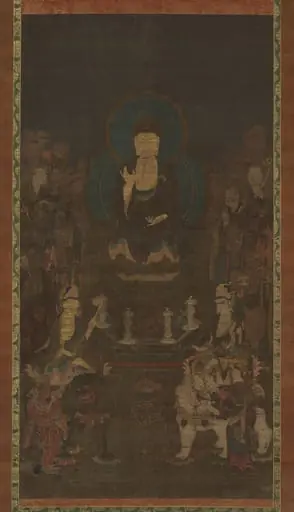 釈迦三尊十大弟子像|Shaka (Shakyamuni), the Historical Buddha, with Two Attendant Bodhisattvas and the Ten Great Disciples
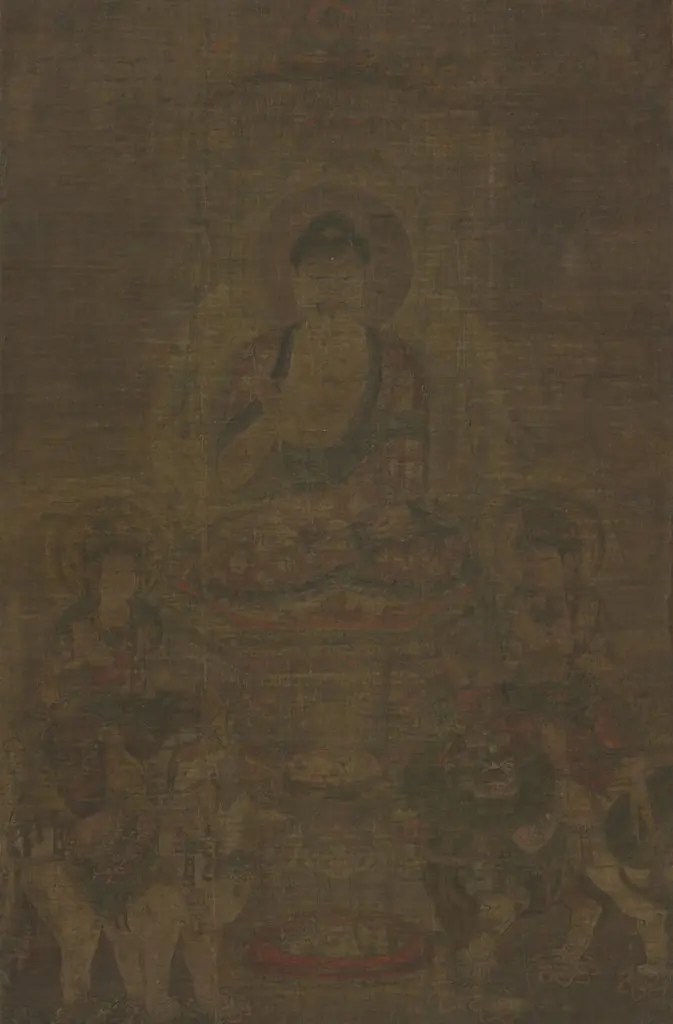 Shakyamuni Triad: Buddha Attended by Manjushri and Samantabhadra
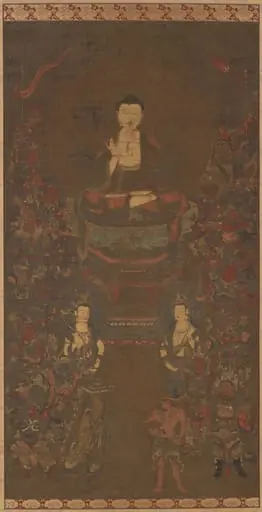 Shakyamuni with the Sixteen Benevolent Deities
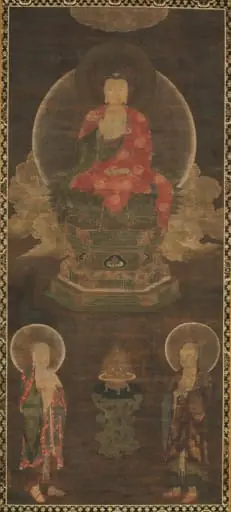 Shakyamuni Triad: Buddha Attended by Manjushri and Samantabhadra (Buddha)
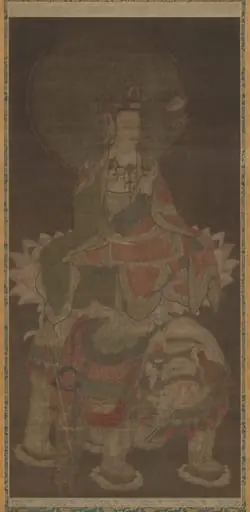 Samantabhadra
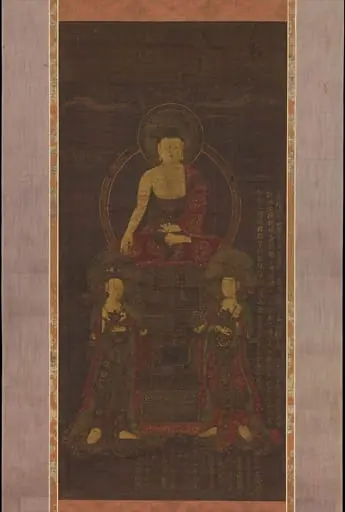 석가삼존도 조선|釋迦三尊圖 朝鮮|Shakyamuni triad
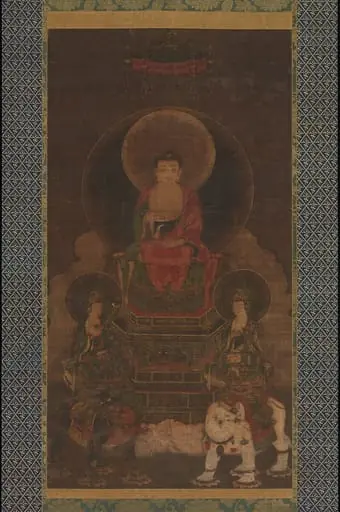 釈迦三尊像|Shaka (Shakyamuni) Triad
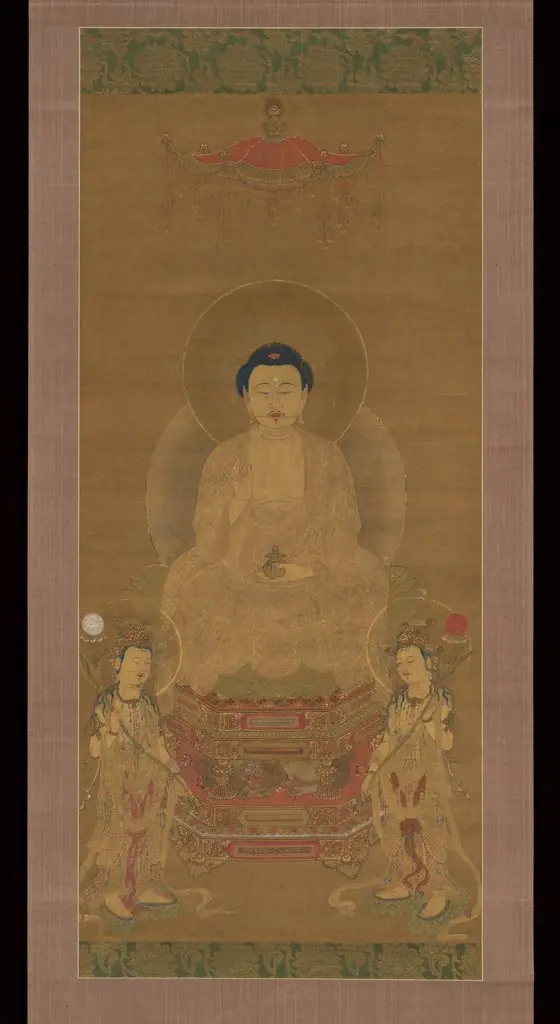 Triad of the Medicine Master Buddha Yakushi (Bhaisajya Buddha)
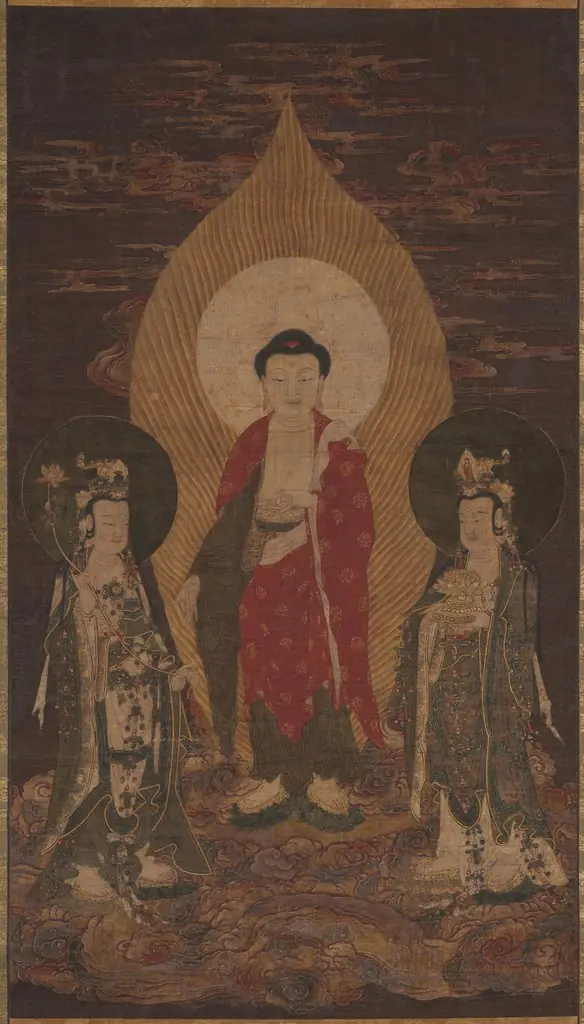 Amitābha Triad
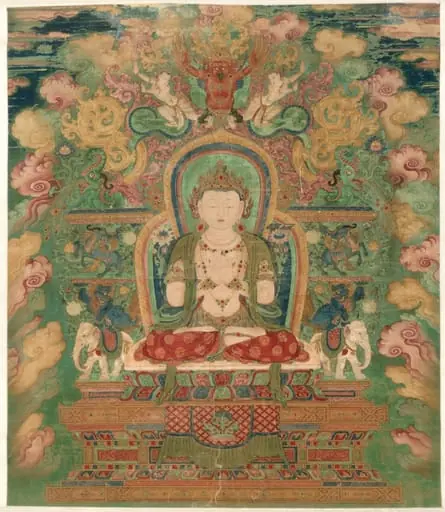 Manjushri
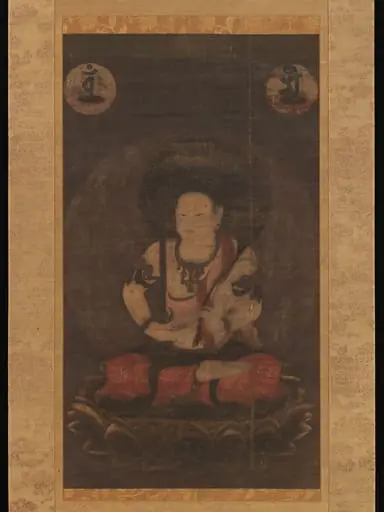 五髻文殊菩薩像|The Bodhisattva Monju (Manjushri) with Five Topknots