Artwork
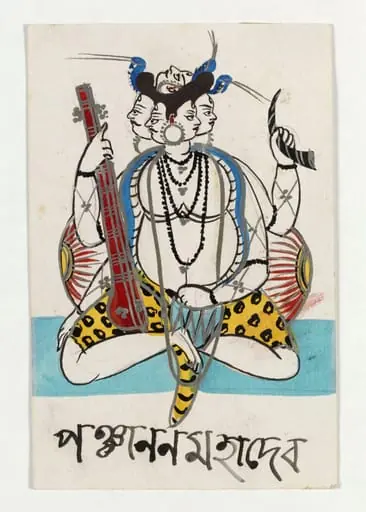
Shiva Panchanan
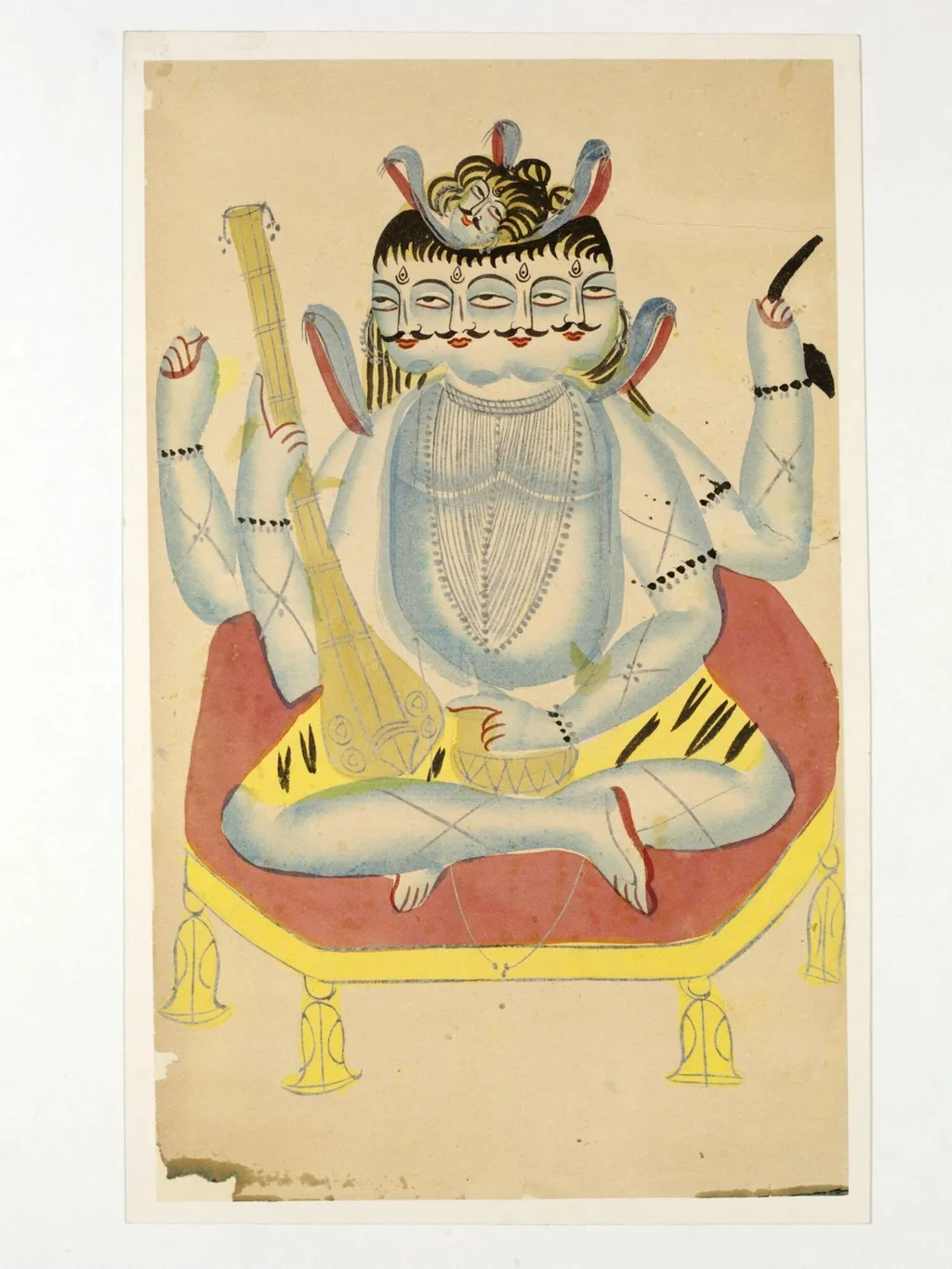
Shiva Panchanan is a paint painting by the Impressionist artist Unknown. It dates from 1890 and is held in the collection of the Victoria and Albert Museum.
About this work
Overview
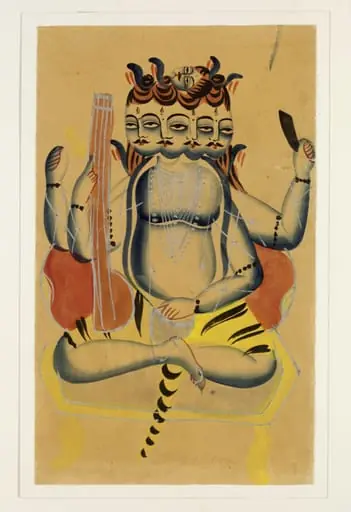
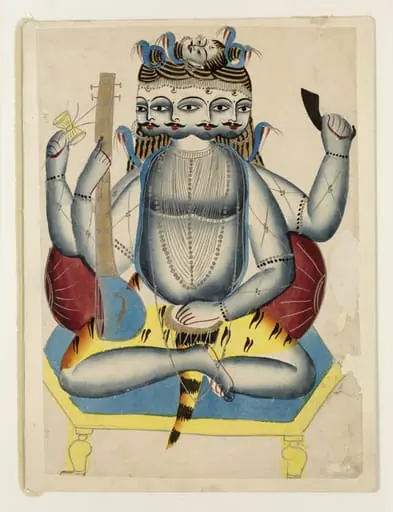
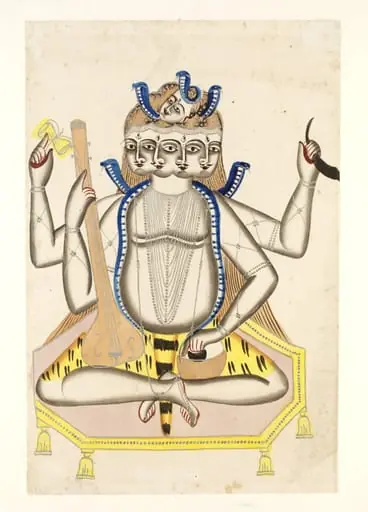
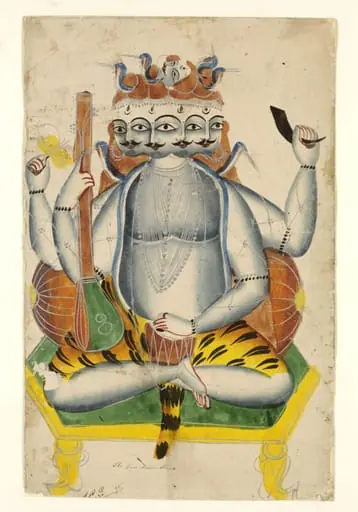
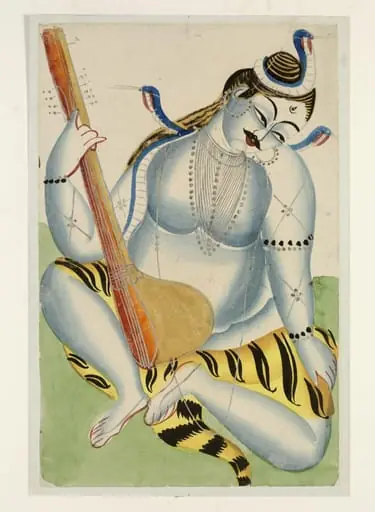
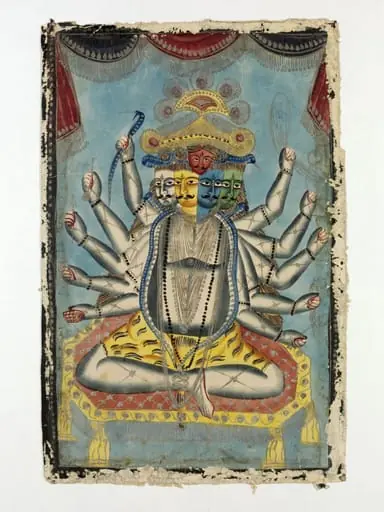
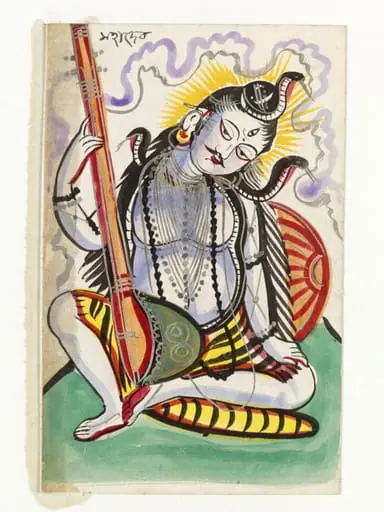
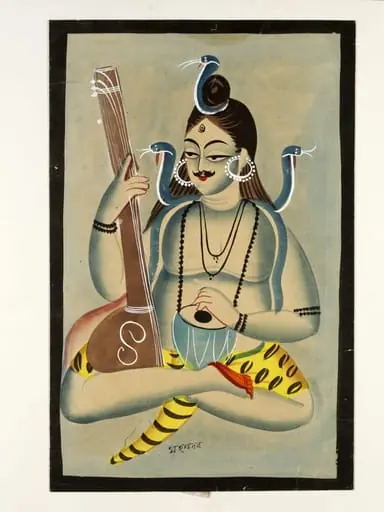
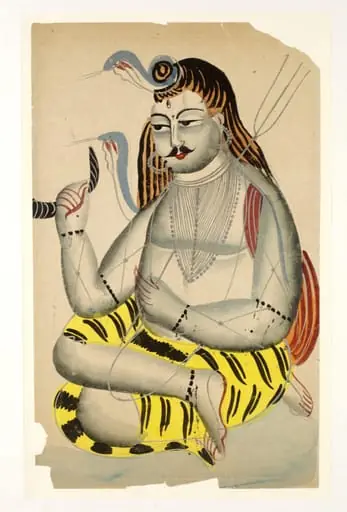
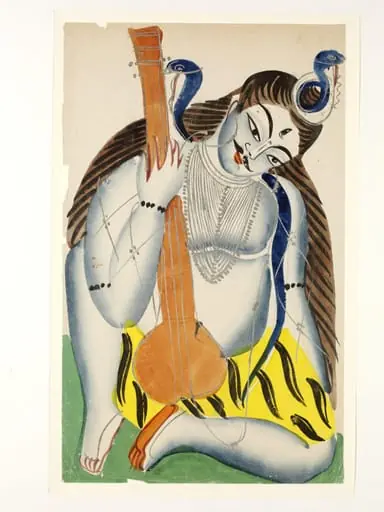
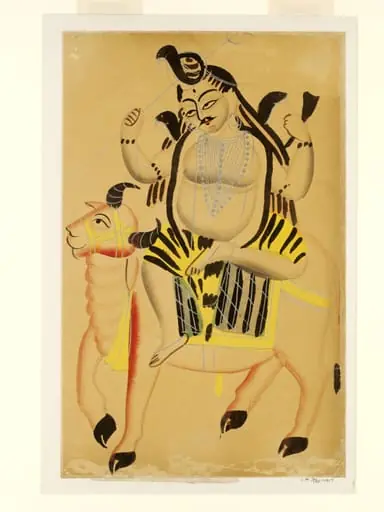
This 1890 watercolour on paper portrays Shiva Panchanan, a five-faced form of the Hindu god Shiva. Created in India, the painting was later donated to a collection by Ernest H. Hindley of Lightcliffe. Its presence in institutional records was confirmed through a 2023 provenance research initiative, which helped trace its journey from origin to current custody.
Subject & Meaning
Shiva Panchanan represents the deity’s five faces, each symbolizing a cosmic function: creation, preservation, destruction, concealment, and grace. The three eyes signify insight beyond physical sight, while the snake crown evokes control over death and rebirth. The drum in one hand alludes to the rhythm of time, and the upward-pointing gesture suggests divine authority or blessing.
Technique & Style
The lack of perspective and the decorative patterning on garments reflect regional conventions, prioritizing spiritual meaning over spatial realism.
Executed in watercolour with bold outlines and flat, unmodulated planes, the painting reflects a traditional Indian miniature aesthetic. Bright pigments—yellow, blue, red, and black—are applied with precision, emphasizing symbolic elements over naturalism. The lack of perspective and the decorative patterning on garments reflect regional conventions, prioritizing spiritual meaning over spatial realism.
History & Provenance
The painting was acquired in India during the late 19th century and remained in private hands until its donation by Ernest H. Hindley. Its documented history was clarified in 2023 through institutional research, which confirmed its origin and donor details. No earlier ownership records are publicly available, suggesting a modest, devotional context rather than royal patronage.
Context
This work likely served a devotional or pedagogical role, used in homes or temples to illustrate Shiva’s multifaceted nature. Its compact size and vivid imagery align with portable religious art common in 19th-century North India. The inclusion of small figures in the corners may represent devotees or celestial beings, reinforcing the painting’s function as a visual aid for worship or storytelling.
Legacy
The painting contributes to the understanding of regional Hindu iconography in colonial-era India. While not widely exhibited, its preservation allows for comparative study with other devotional artworks from the period. It stands as a quiet example of how traditional visual languages persisted alongside colonial influences, maintaining spiritual continuity through artistic form.
Artist & collection

 Domestic Scene
 Giacomo and Cardinal Marco, investing Andrea, Abbot of San Zeno, with his Benefice
 The Nymph of Fontainebleau
 Portrait of a Woman
 Madonna and Child with Saints in the Enclosed Garden
 Venus and Minerva
 Family Group of Four on Sofa
 Wall painting from Room H of the Villa of P. Fannius Synistor at Boscoreale