Artwork
Shiva
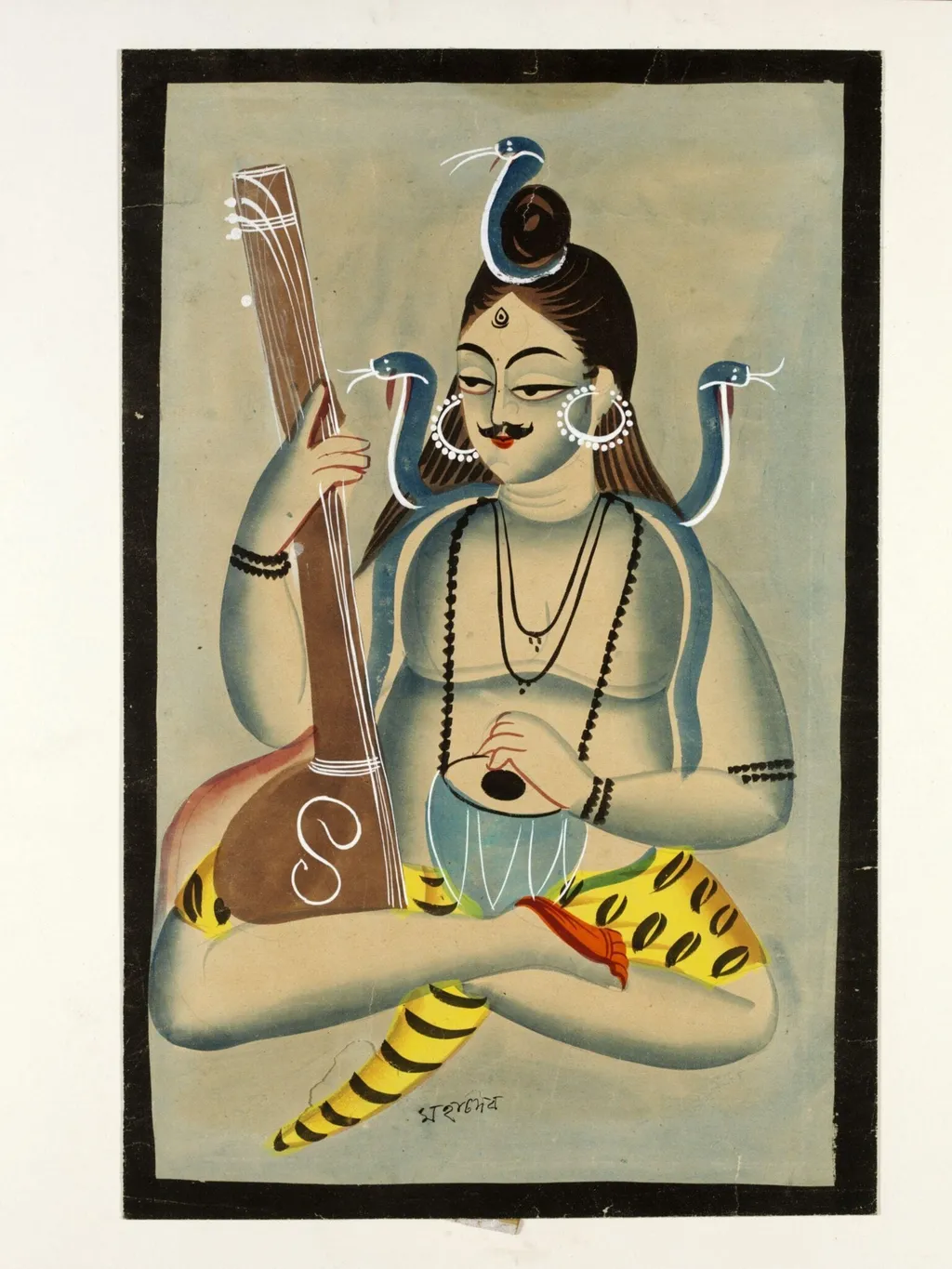
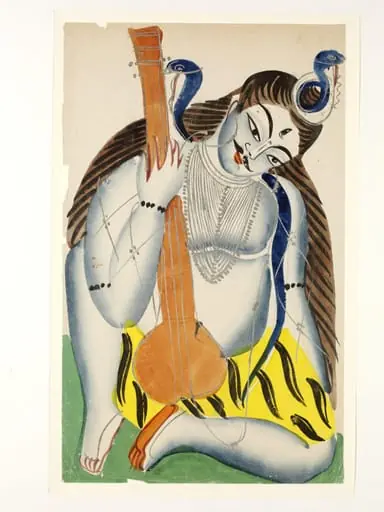
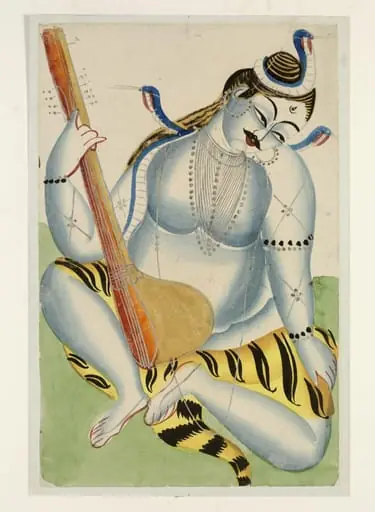
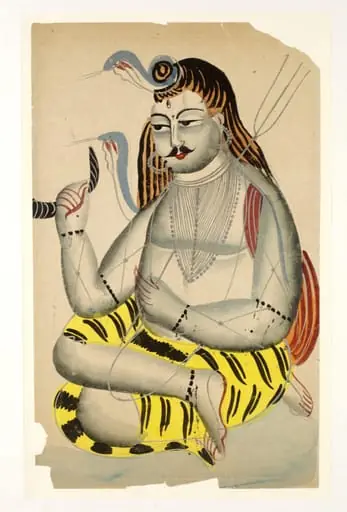
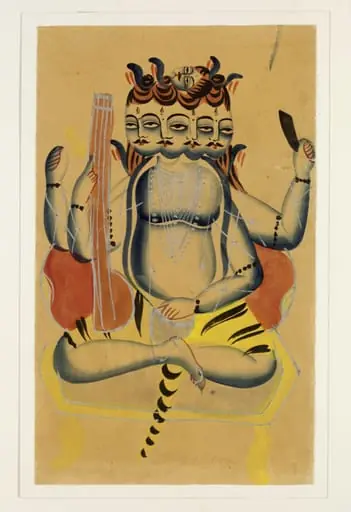
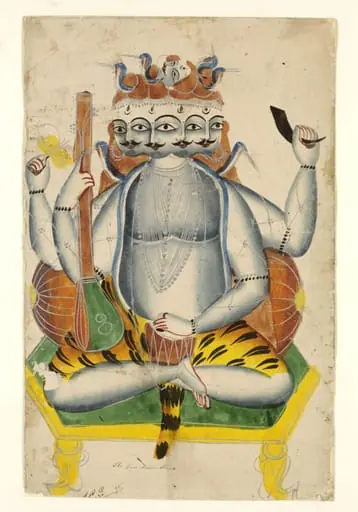
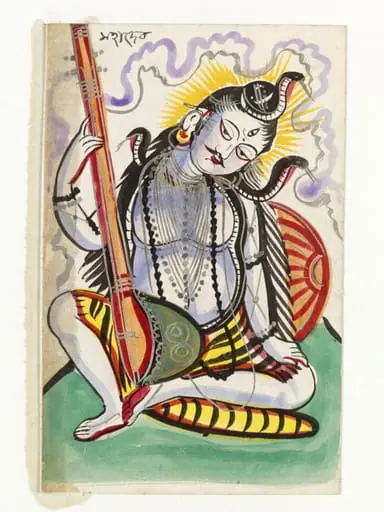
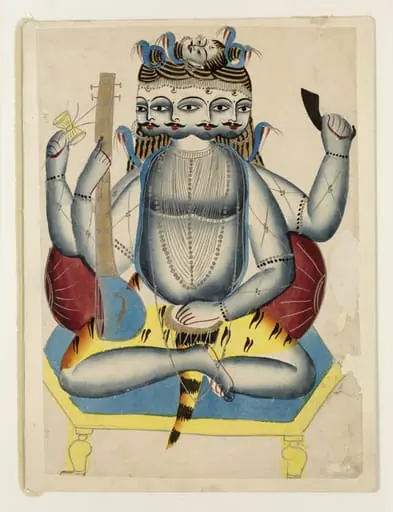
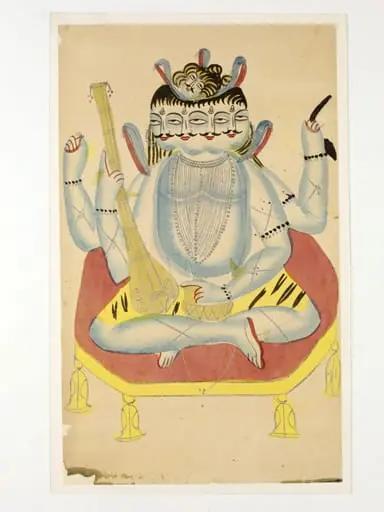
Shiva is a paint painting by the Impressionist artist Unknown. It dates from 1885 and is held in the collection of the Victoria and Albert Museum.
About this work
Overview
Created by an anonymous artist, the work belongs to a tradition of devotional Indian painting that prioritizes symbolic clarity over ornate detail.
This opaque watercolor on paper, dated 1885, portrays the Hindu deity Shiva as a meditative ascetic and musician. Created by an anonymous artist, the work belongs to a tradition of devotional Indian painting that prioritizes symbolic clarity over ornate detail. Its modest scale and restrained composition suggest it was intended for private contemplation rather than public display. The piece entered a British collection in 1894 through Miss M. Steele, whose family had connections to India and Sanskrit scholarship.
Subject & Meaning
Shiva is depicted with four arms, each conveying aspects of his divine nature: one holds a stringed instrument, another rests on a drum, while the remaining two make gestures of protection and blessing. His ascetic appearance—bare torso, minimal adornment, and calm gaze—emphasizes his role as both renunciant and cosmic performer. The bindi on his forehead and thick eyebrows align with traditional iconography, reinforcing his identity as the lord of yoga and sound. The scene captures a moment of inner stillness, reflecting the harmony of creation and dissolution.
Technique & Style
The painting employs opaque watercolor on paper, using flat, saturated hues to define form without shading or perspective. Outlines are crisp, and details are simplified—jewelry and fabric folds rendered with rhythmic lines rather than realism. The plain background isolates the figure, directing focus to symbolic elements. This stylistic approach is characteristic of late 19th-century Indian studio painting, where devotional clarity took precedence over naturalism, reflecting both regional aesthetics and colonial-era commercial demands.
History & Provenance
The painting was acquired in 1894 by Miss M. Steele, who inherited it from her mother, a Cambridge Sanskrit scholar. The collection likely originated with Steele’s grandmother, who lived in India during the British colonial period and may have assembled the works there. While the artist’s identity remains unknown, the piece reflects the movement of Indian art into European private collections during the late 19th century, often through familial or scholarly networks rather than formal acquisition.
Context
Created during British colonial rule in India, this work emerged amid growing European interest in Indian religious and artistic traditions. While Western collectors often sought elaborate courtly scenes, this painting’s simplicity suggests it appealed to those with scholarly or spiritual inclinations. It aligns with a broader trend of devotional imagery produced for both local worship and export, blending traditional iconography with the demands of a changing market and audience.
Legacy
The painting contributes to a corpus of 19th-century Indian devotional art preserved in Western institutions, offering insight into how Hindu iconography was interpreted and collected during colonial times. Its quiet composition and symbolic clarity continue to inform scholarly study of regional painting styles. Though not widely exhibited, it remains a representative example of the intersection between religious practice, artistic production, and cross-cultural collecting in the late Victorian era.
Artist & collection

 Domestic Scene
 Giacomo and Cardinal Marco, investing Andrea, Abbot of San Zeno, with his Benefice
 The Nymph of Fontainebleau
 Portrait of a Woman
 Madonna and Child with Saints in the Enclosed Garden
 Venus and Minerva
 Family Group of Four on Sofa
 Wall painting from Room H of the Villa of P. Fannius Synistor at Boscoreale