Artwork
Shiva Panchanana
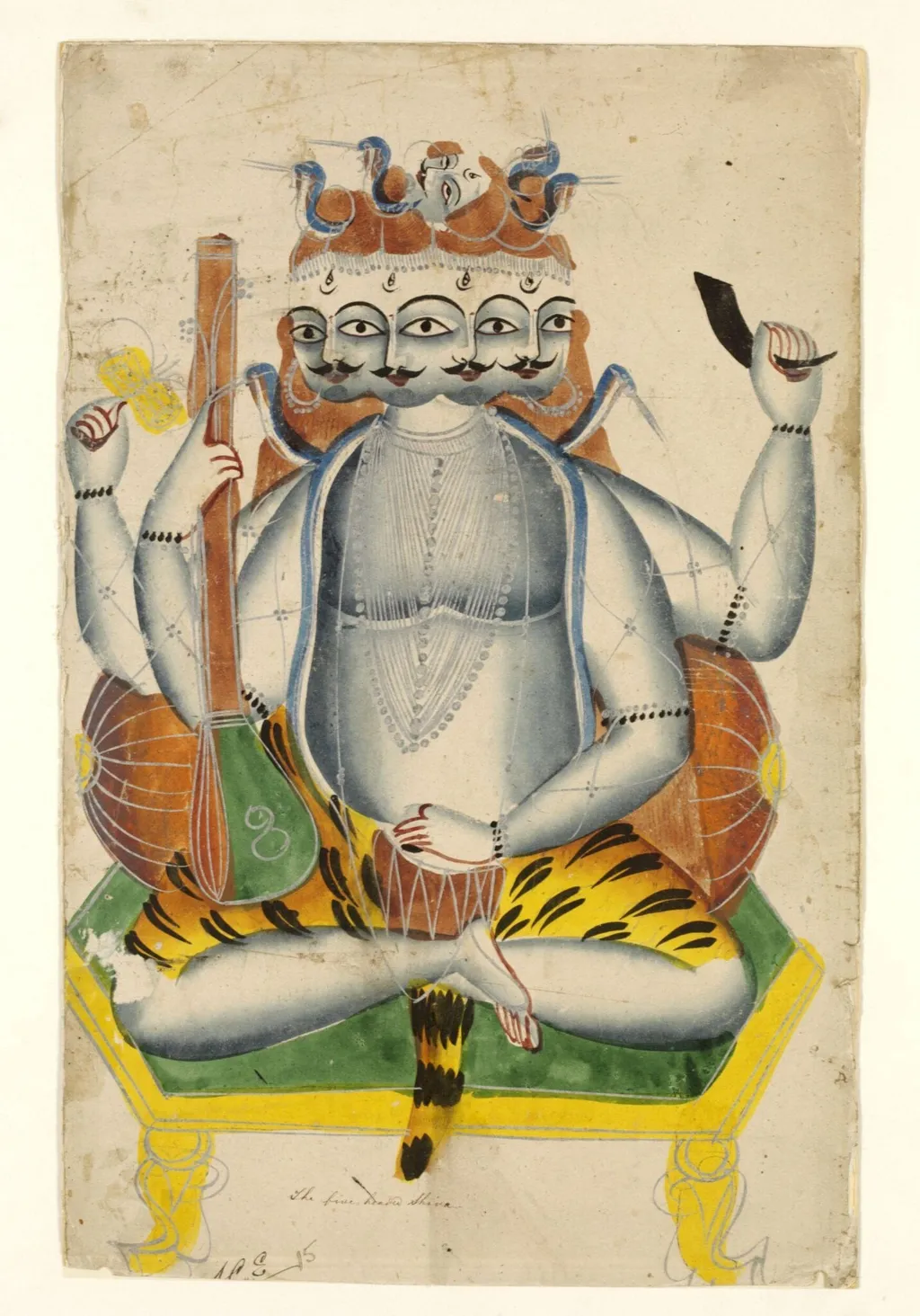
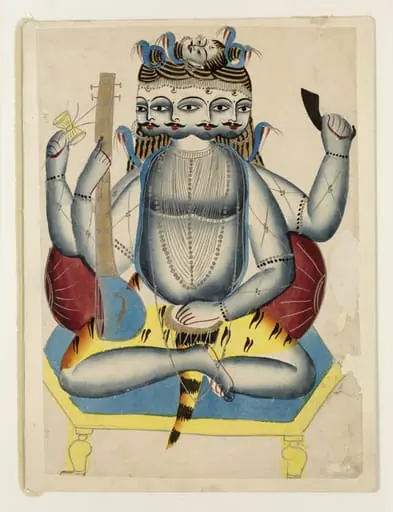
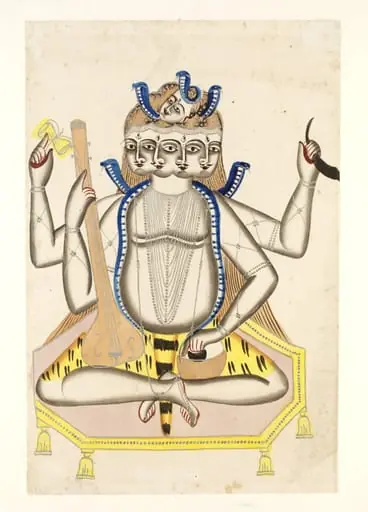
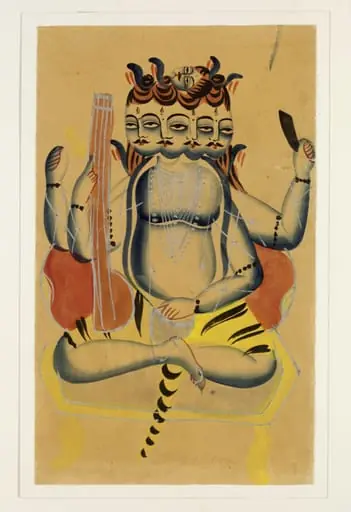
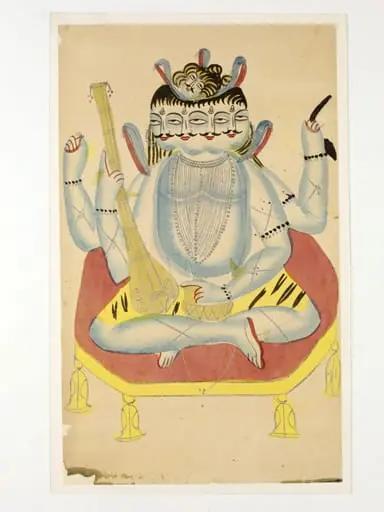
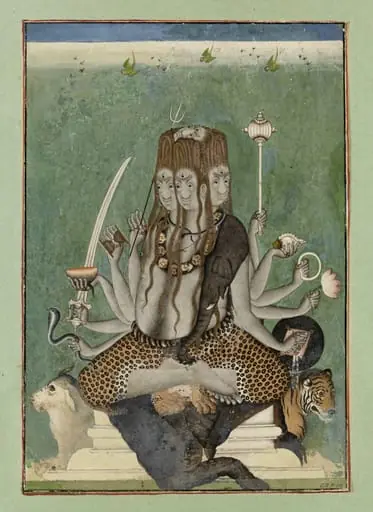
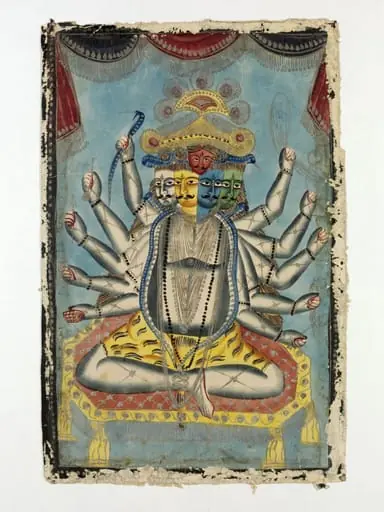
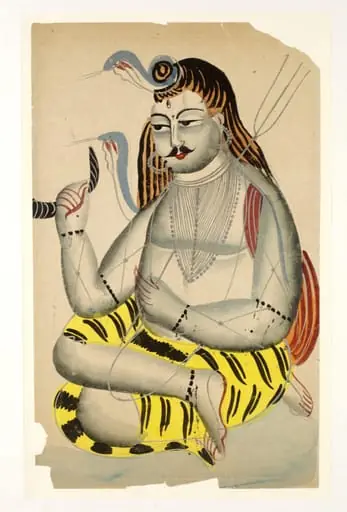
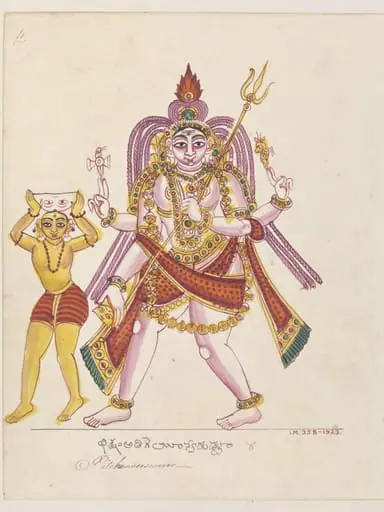
Shiva Panchanana is a paint painting by the Impressionist artist Unknown. It dates from 1850 and is held in the collection of the Victoria and Albert Museum. This watercolor painting on paper, enhanced with tin alloy accents, portrays Shiva in his Panchanana form—five-faced and four-armed.
About this work
Overview
Its composition centers on a serene, symmetrical figure, set against a muted beige background that emphasizes the vibrancy of the deity’s attire and adornments.
This watercolor painting on paper, enhanced with tin alloy accents, portrays Shiva in his Panchanana form—five-faced and four-armed. Acquired by the Department of Prints and Drawings in 1889 from G. Wild, the work exemplifies a devotional tradition blending pigment and metallic detail. Its composition centers on a serene, symmetrical figure, set against a muted beige background that emphasizes the vibrancy of the deity’s attire and adornments.
Subject & Meaning
Shiva Panchanana represents the five aspects of the divine: creation, preservation, destruction, concealment, and grace. Each face expresses a distinct emotion or cosmic function, reflecting Shiva’s multifaceted nature. The four arms hold symbolic objects—a sword for dissolution and a drum for rhythm and creation—while the tiger-skin lower garment signifies mastery over primal forces. The figure’s seated posture on a luminous platform suggests stability amid cosmic cycles.
Technique & Style
The artist employed delicate watercolor washes to render the deity’s garments and skin, with tin alloy applied sparingly to highlight ornaments and details, adding subtle luminosity. The background remains unobtrusively neutral, directing focus to the figure’s structured symmetry. Lines are precise yet fluid, and color contrasts are controlled, reinforcing a meditative stillness rather than dramatic tension.
History & Provenance
The painting entered the collection of the Department of Prints and Drawings in 1889 through acquisition from G. Wild, a known collector of South Asian artworks. Its origin likely traces to a regional atelier in North India, possibly linked to Pahari or Rajasthani traditions. The presence of tin alloy suggests a high-status commission, intended for private worship or courtly display rather than public temple use.
Context
Created during a period when devotional painting flourished under regional courts, this work reflects the synthesis of Hindu iconography with refined aesthetic practices. While influenced by earlier manuscript traditions, its emphasis on serene balance and material richness aligns with 18th- to 19th-century tastes in devotional art, where spiritual authority was conveyed through visual harmony rather than theatricality.
Legacy
As a preserved example of 19th-century Indian devotional painting, it contributes to scholarly understanding of how divine forms were visually codified outside temple sculpture. Its survival in a Western institutional collection underscores the cross-cultural interest in South Asian religious art during the colonial era, though its original ritual context remains distinct from its current archival role.
Artist & collection

 Domestic Scene
 Giacomo and Cardinal Marco, investing Andrea, Abbot of San Zeno, with his Benefice
 The Nymph of Fontainebleau
 Portrait of a Woman
 Madonna and Child with Saints in the Enclosed Garden
 Venus and Minerva
 Family Group of Four on Sofa
 Wall painting from Room H of the Villa of P. Fannius Synistor at Boscoreale