Artwork
Shiva Dakshinamurti
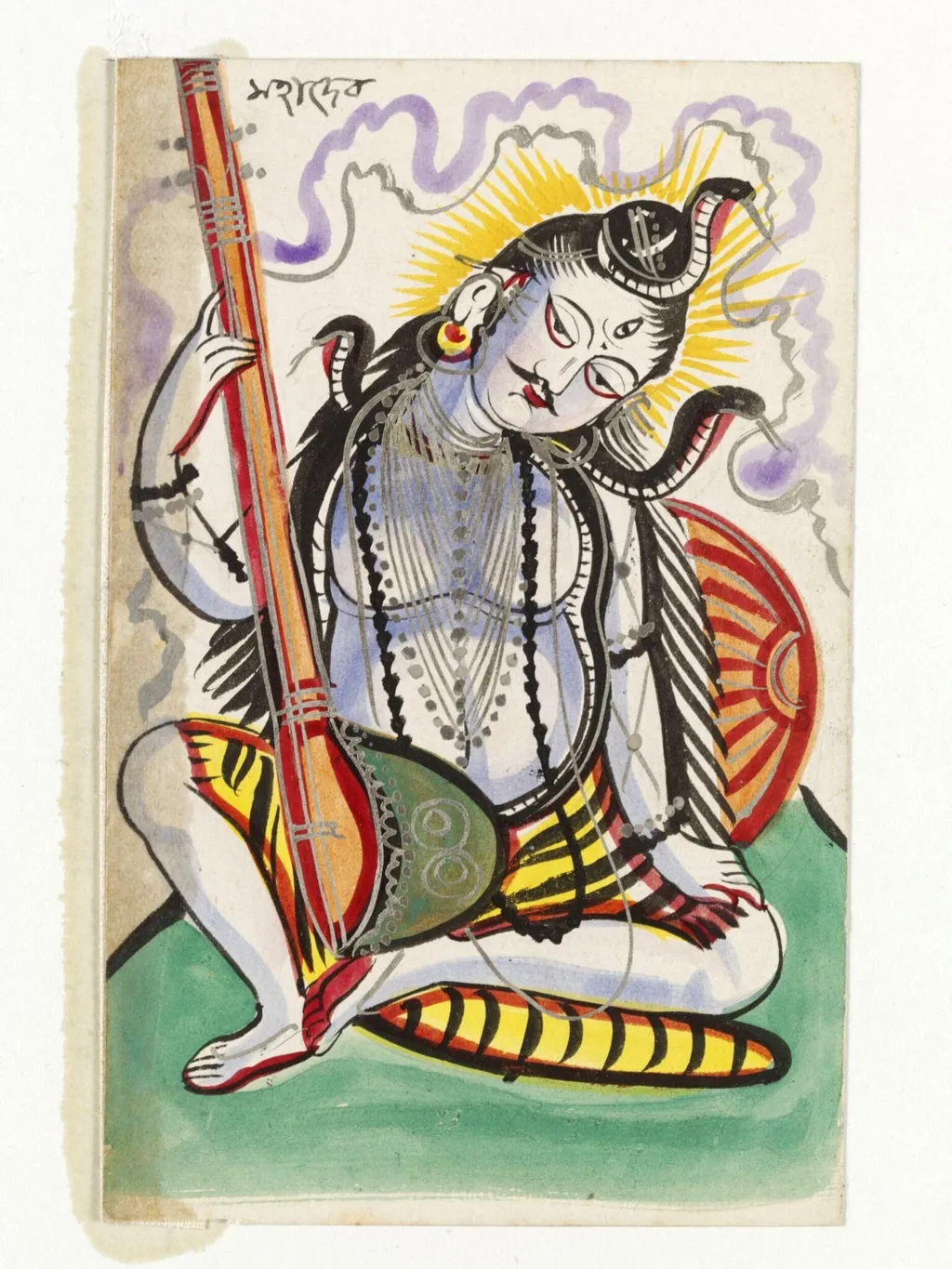
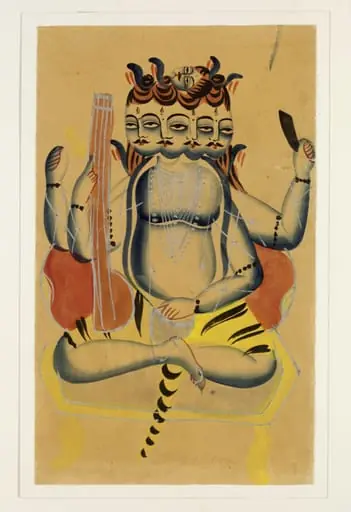
Shiva Dakshinamurti is a paint painting by the Impressionist artist Unknown. It dates from 1890 and is held in the collection of the Victoria and Albert Museum.
About this work
Overview
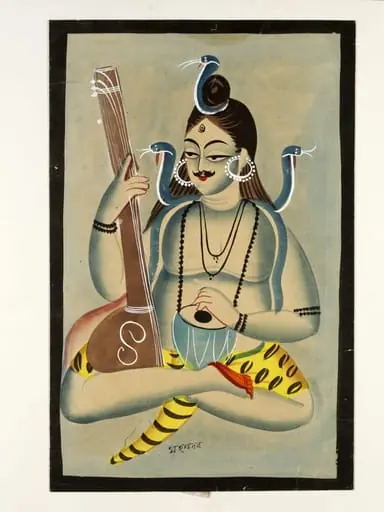
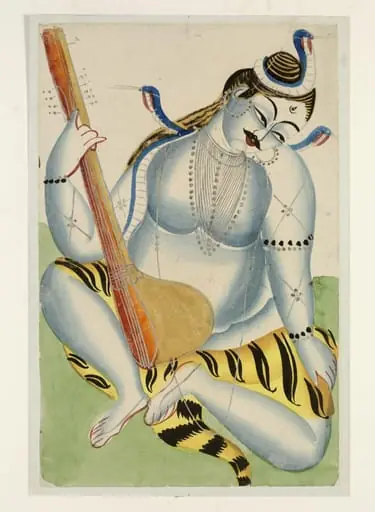
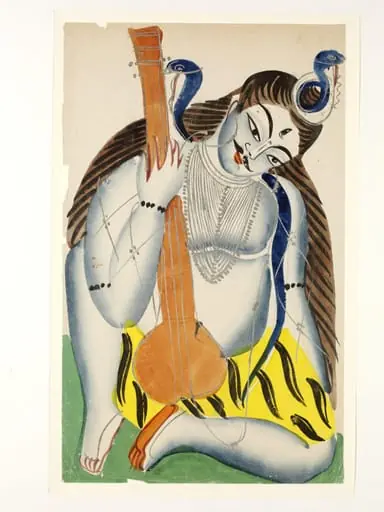
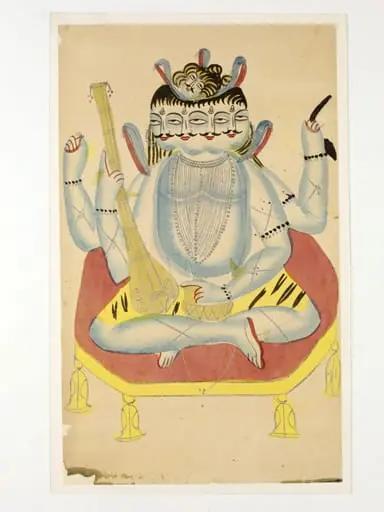
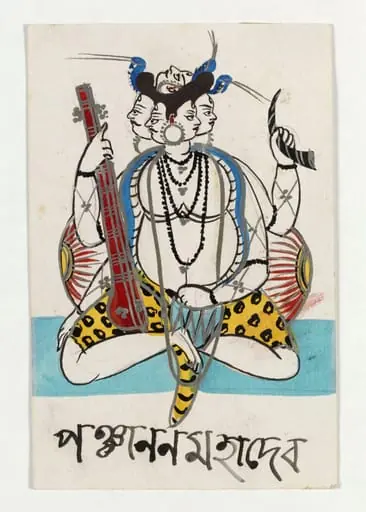
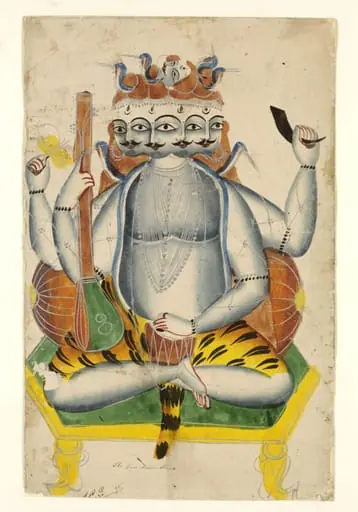
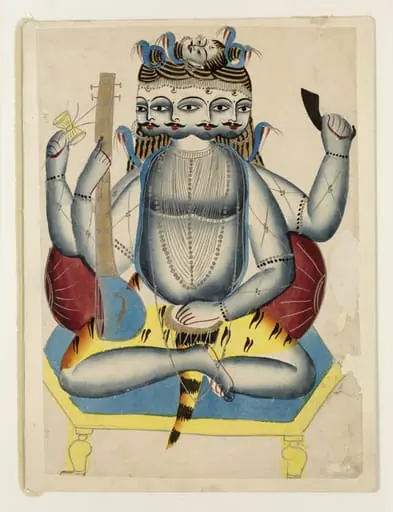
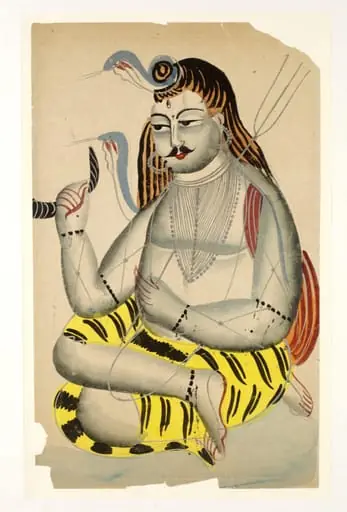
This 1890 painting on cardboard combines watercolor with a tin alloy to depict Shiva in his Dakshinamurti form, a manifestation revered as the divine teacher. Executed in vibrant pigments, the work reflects late nineteenth-century Indian devotional traditions, balancing symbolic detail with bold, flattened areas of color.
Subject & Meaning
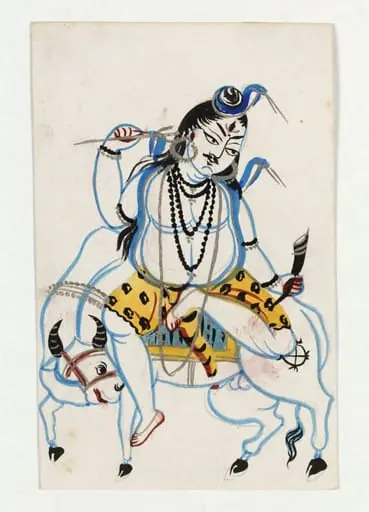
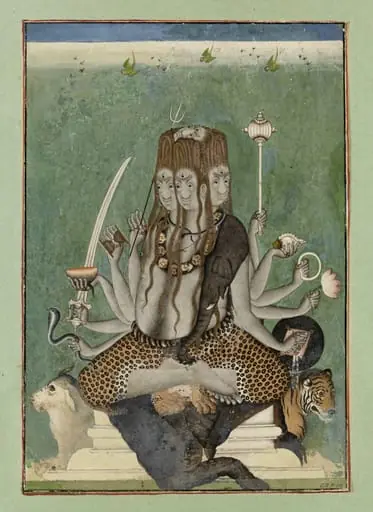
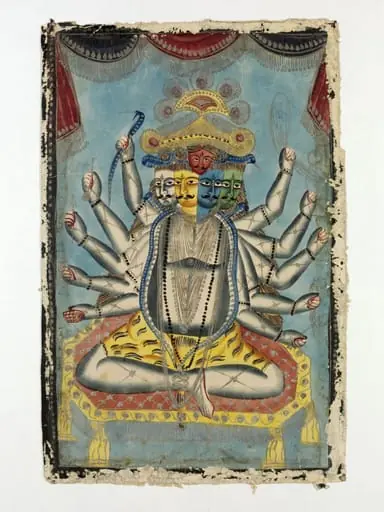
Shiva Dakshinamurti embodies the transmission of knowledge, often portrayed as the ultimate guru seated beneath a tree. Here, the four-armed figure holds a staff and drum—attributes linking him to both ascetic discipline and cosmic rhythm—while a sunburst halo signals enlightenment. The antlered crown and jewelry underscore his dual nature as both transcendent and immanent.
Technique & Style
Striped patterning on the legs and swirling clouds behind the figure demonstrate a preference for rhythmic repetition over naturalistic modeling.
The artist employed water-based pigments mixed with metallic alloy on a rigid support, yielding a luminous yet durable surface. Forms are delineated with crisp outlines and filled with saturated hues, a method characteristic of regional devotional painting. Striped patterning on the legs and swirling clouds behind the figure demonstrate a preference for rhythmic repetition over naturalistic modeling.
History & Provenance
Created in 1890, the painting entered Western institutional discourse when it appeared in the 1971 *Tantra* exhibition at London’s Hayward Gallery, organized by Philip S. Rawson under the auspices of the Arts Council of Great Britain. Documentation from that presentation remains a key record of its modern reception.
Context
During the late colonial period, Indian artists continued to produce devotional images for local patrons while also engaging with new materials and audiences. Works like this one preserved traditional iconographies even as they circulated beyond their original religious settings, reflecting broader patterns of cultural exchange and preservation.
Artist & collection

 Domestic Scene
 Giacomo and Cardinal Marco, investing Andrea, Abbot of San Zeno, with his Benefice
 The Nymph of Fontainebleau
 Portrait of a Woman
 Madonna and Child with Saints in the Enclosed Garden
 Venus and Minerva
 Family Group of Four on Sofa
 Wall painting from Room H of the Villa of P. Fannius Synistor at Boscoreale