Artwork
strachină
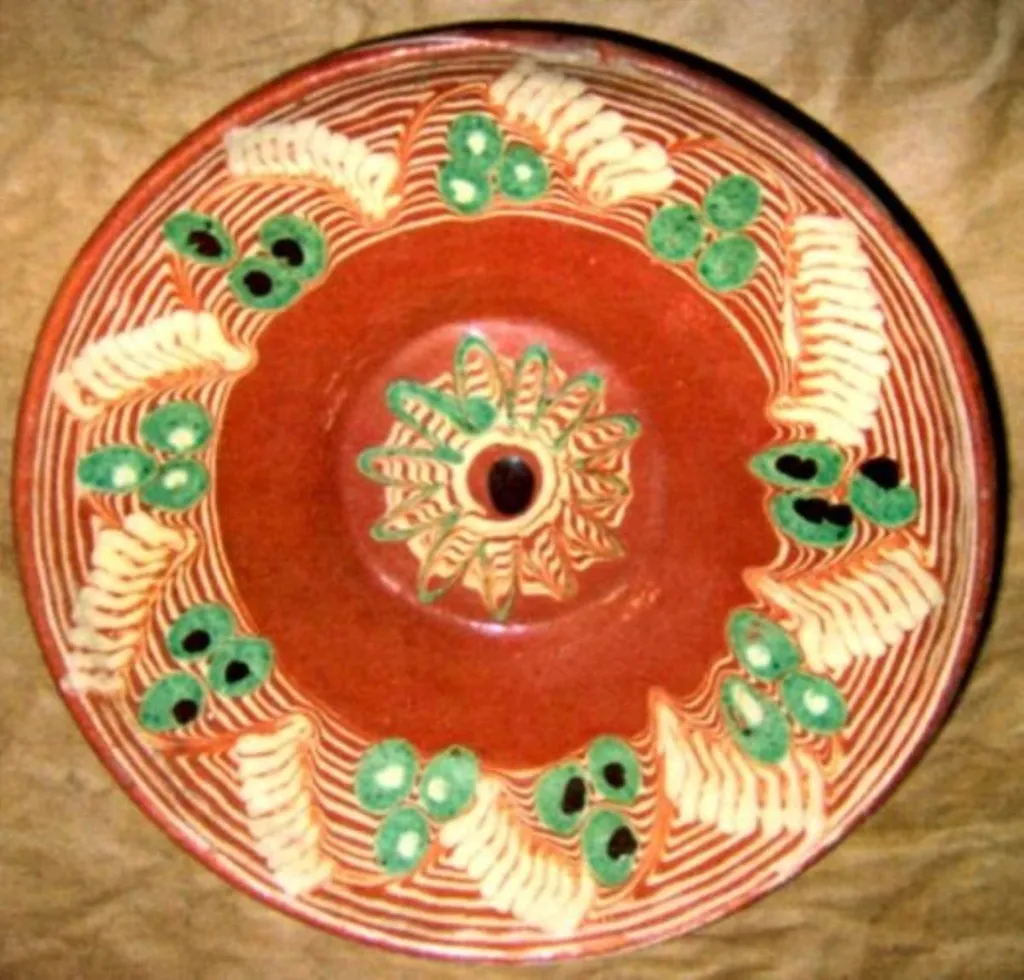
strachină is a photography by Unknown. It dates from 1968 and is held in the collection of the National Museum of Bukovina.
About this work
Overview
The surface is decorated with bold, flat areas of color and fluid outlines, suggesting artisanal craftsmanship rather than industrial production.
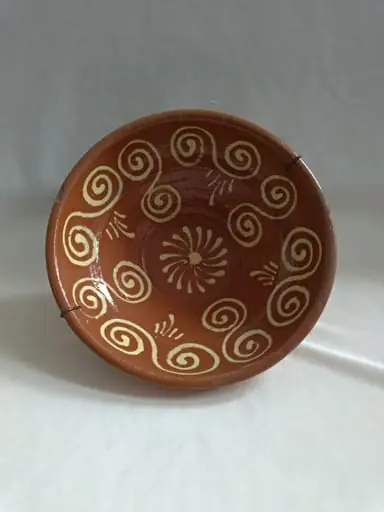
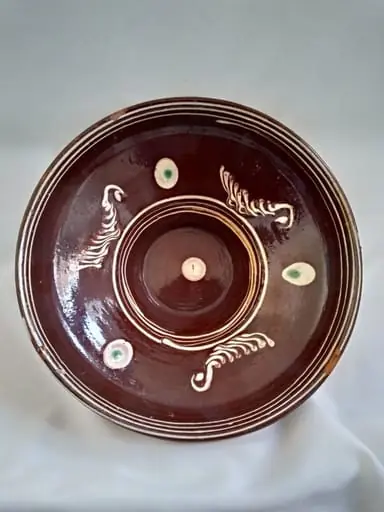
This circular ceramic plate, known as a strachină, features a hand-painted design in limited pigments: vivid red, white, green, and black. The surface is decorated with bold, flat areas of color and fluid outlines, suggesting artisanal craftsmanship rather than industrial production. Its decorative elements are arranged symmetrically around a central motif, creating a balanced yet dynamic composition typical of regional folk pottery traditions.
Subject & Meaning
The central motif resembles a stylized flower with a dark center, surrounded by clustered leaves and blossoms with dark eyes. These botanical forms likely draw from local floral imagery, possibly symbolizing growth, fertility, or seasonal cycles. The repetition of leaf and swirl patterns along the rim may reflect natural rhythms or protective motifs common in folk decorative arts.
Technique & Style
The plate was painted by hand using simple brushes and opaque pigments applied in unmodulated planes. Outlines are loose but deliberate, and the white wavy border contrasts sharply with the red ground. No shading or perspective is used; forms are simplified into essential shapes, emphasizing rhythm and pattern over realism. The technique prioritizes visual clarity and decorative impact.
History & Provenance
Strachină plates originate from rural Romanian communities, particularly in Moldavia and Transylvania, where they were produced for domestic use in the 19th and early 20th centuries. Made by local potters, they were often part of household tableware or ceremonial sets. Many surviving examples are now held in ethnographic collections, including the Museum of Ethnography in Bucharest.
Context
These plates were part of a broader tradition of folk ceramics in Eastern Europe, where household objects carried symbolic decoration. Similar motifs appear in embroidery, woodcarving, and wall paintings from the same regions. The use of red as a dominant color aligns with cultural associations of vitality and protection, while the geometric simplicity reflects accessible materials and tools available to rural artisans.
Legacy
Strachină plates remain important artifacts in understanding Romanian folk aesthetics and material culture. Their preservation in museums helps document regional craftsmanship before industrialization transformed domestic production. Contemporary artists and craftspeople sometimes reference their forms and color schemes, keeping the visual language alive in new contexts.
Artist & collection
 Domestic Scene
 Giacomo and Cardinal Marco, investing Andrea, Abbot of San Zeno, with his Benefice
 The Nymph of Fontainebleau
 Portrait of a Woman
 Madonna and Child with Saints in the Enclosed Garden
 Venus and Minerva
 Family Group of Four on Sofa
 Wall painting from Room H of the Villa of P. Fannius Synistor at Boscoreale
 strachină
 strachină
 strachină
 strachină
 strachină
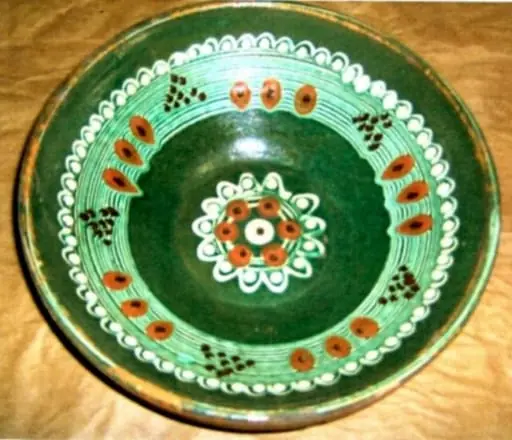
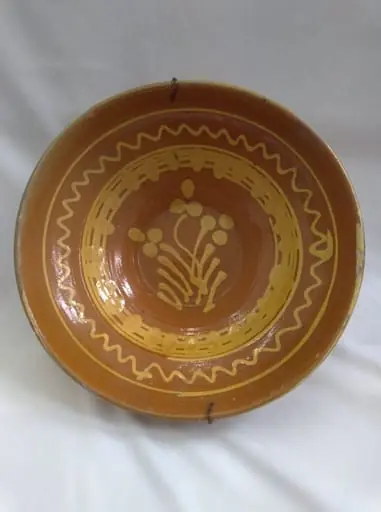
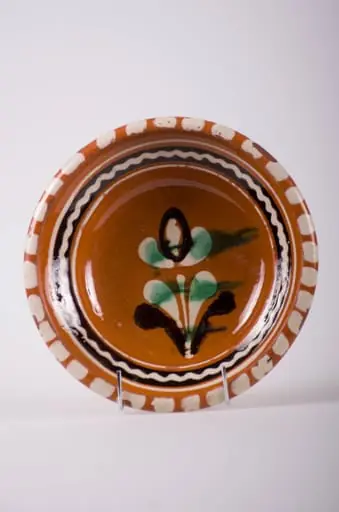 Vas de formă tronconică, adâncită. Pe fund are gaură pentru agățare; este smălțuit interior și exterior (doar buza); este decorat cu motive geometrice: linie, linie în val; în interior este decorat cu motive florale. Cromatică: fond: cărămiziu; motive: cărămiziu; maro; negru; verde.
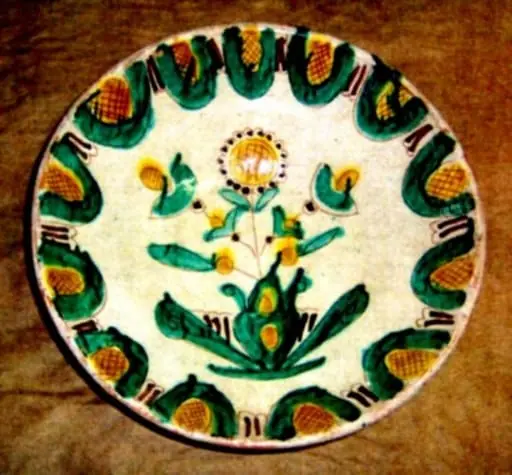
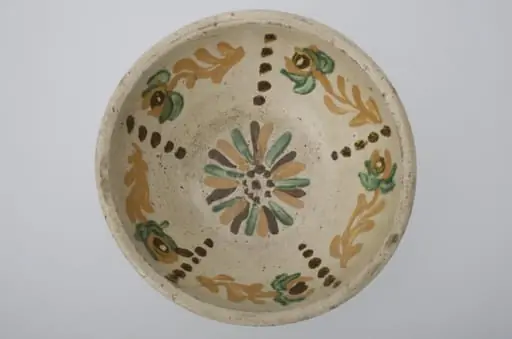 Strachină de formă tronconică, cu pereții oblici puțin curbați, smălțuită numai în interior. Decor central floarea soarelui, iar pe pereții laterali avem un chenar floral. Cromatică: fond: alb; motive: brun; galben; verde.