Artwork
strachină
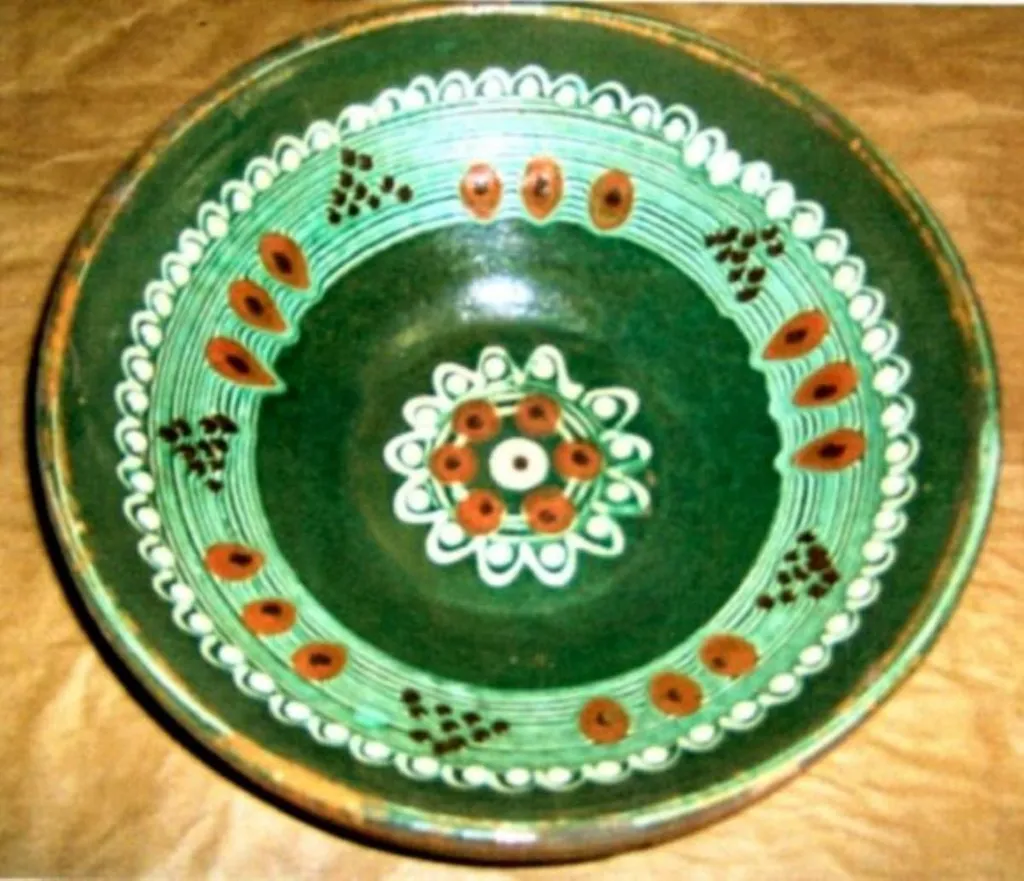
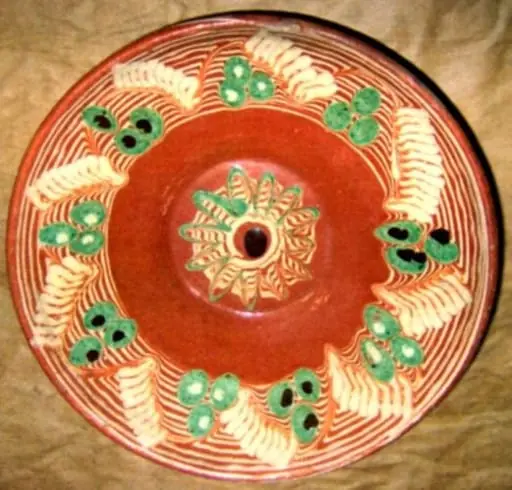
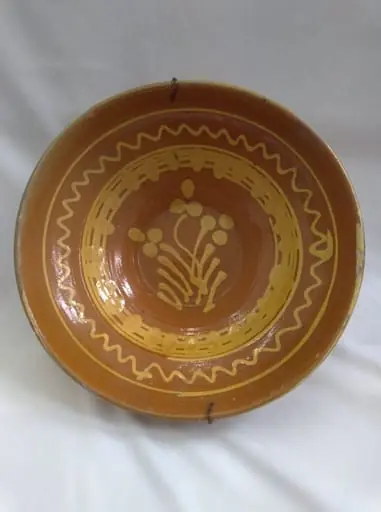
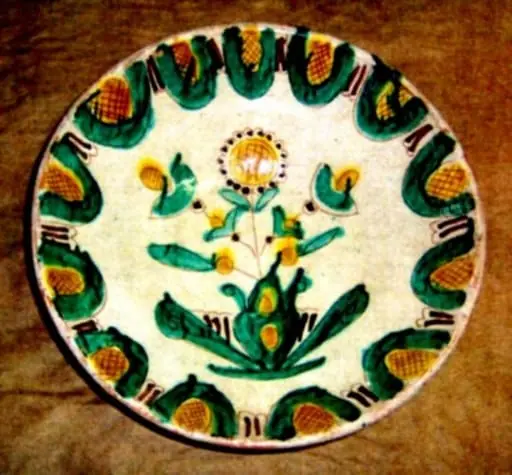
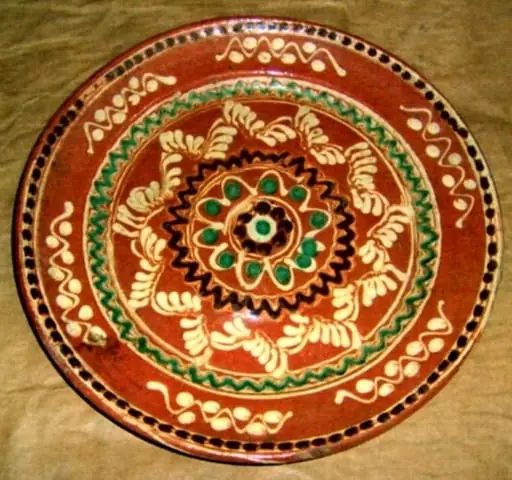
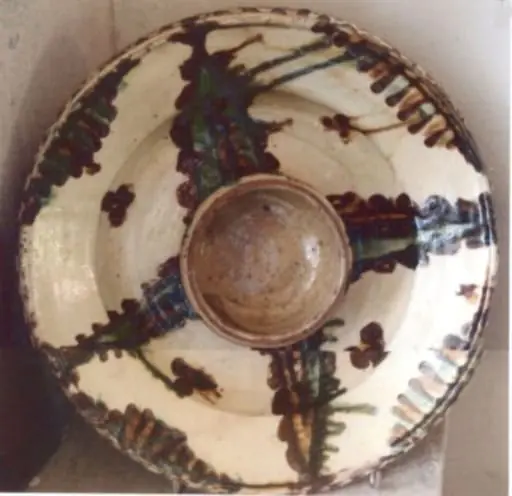
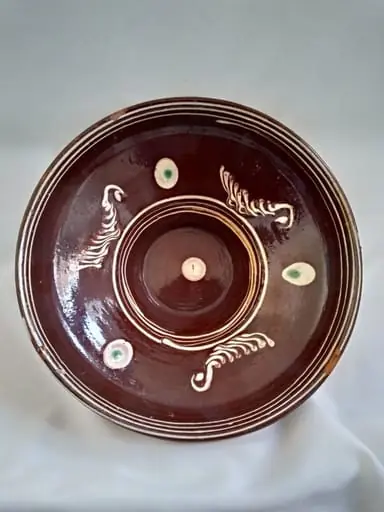
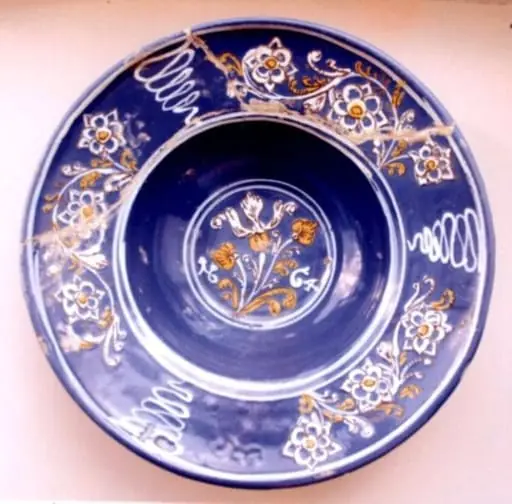
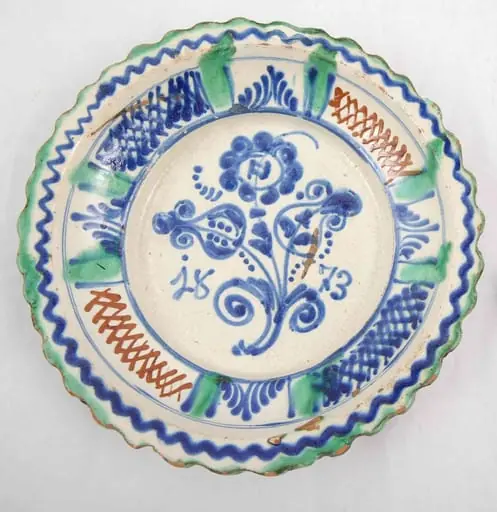
strachină is a photography by Unknown. It dates from 1974 and is held in the collection of the National Museum of Bukovina. This ceramic plate features a vibrant, hand-decorated surface dominated by swirling green grounds and intricate linear details.
About this work
Overview
This ceramic plate features a vibrant, hand-decorated surface dominated by swirling green grounds and intricate linear details.
This ceramic plate features a vibrant, hand-decorated surface dominated by swirling green grounds and intricate linear details. The composition centers on a large white bloom with orange petals, flanked by smaller orange forms resembling poppies. Black dots and curvilinear motifs fill negative spaces, creating rhythmic density without clutter. The design balances simplicity with meticulous ornamentation, suggesting deliberate craftsmanship and aesthetic intention.
Subject & Meaning
The central floral motif, rendered in white and orange, evokes natural forms common in folk decorative traditions. The repetition of poppy-like shapes and organic swirls may reference local botanical symbolism or seasonal cycles, though no specific narrative is evident. The emphasis on floral abundance and rhythmic patterning suggests a celebration of nature’s vitality, typical in utilitarian objects imbued with cultural meaning.
Technique & Style
The plate was likely painted with slip or underglaze on a fired ceramic surface, using fine brushes to achieve precise lines and dots. The contrast between the bright green background and the crisp white and orange elements indicates careful color planning. The uniformity of curves and spacing implies a standardized template or skilled freehand execution, reflecting a tradition of repetitive, pattern-based decoration.
History & Provenance
Though exact origin is unverified, the style aligns with Eastern European folk ceramics from the late 19th to mid-20th century. Similar motifs appear in regional pottery from Romania and neighboring areas, often produced in rural workshops for domestic use. The plate’s preservation and display suggest it was valued beyond mere utility, possibly collected or passed through generations.
Context
This piece belongs to a broader tradition of folk ceramics where household items were adorned with symbolic or decorative patterns. The use of bold color contrasts and dense patterning served both aesthetic and cultural functions—marking identity, skill, and regional affiliation. Such objects were commonly made for daily use but also displayed during celebrations or as markers of domestic pride.
Legacy
The plate’s design continues to resonate in ethnographic collections, where it represents the persistence of handcrafted ornament in modernizing societies. Institutions like the Museum of Ethnography preserve similar works as records of vernacular artistry, offering insight into how ordinary objects carried cultural memory through visual language.
Artist & collection
 Domestic Scene
 Giacomo and Cardinal Marco, investing Andrea, Abbot of San Zeno, with his Benefice
 The Nymph of Fontainebleau
 Portrait of a Woman
 Madonna and Child with Saints in the Enclosed Garden
 Venus and Minerva
 Family Group of Four on Sofa
 Wall painting from Room H of the Villa of P. Fannius Synistor at Boscoreale