Artwork
Virabhadra, the son of Shiva.
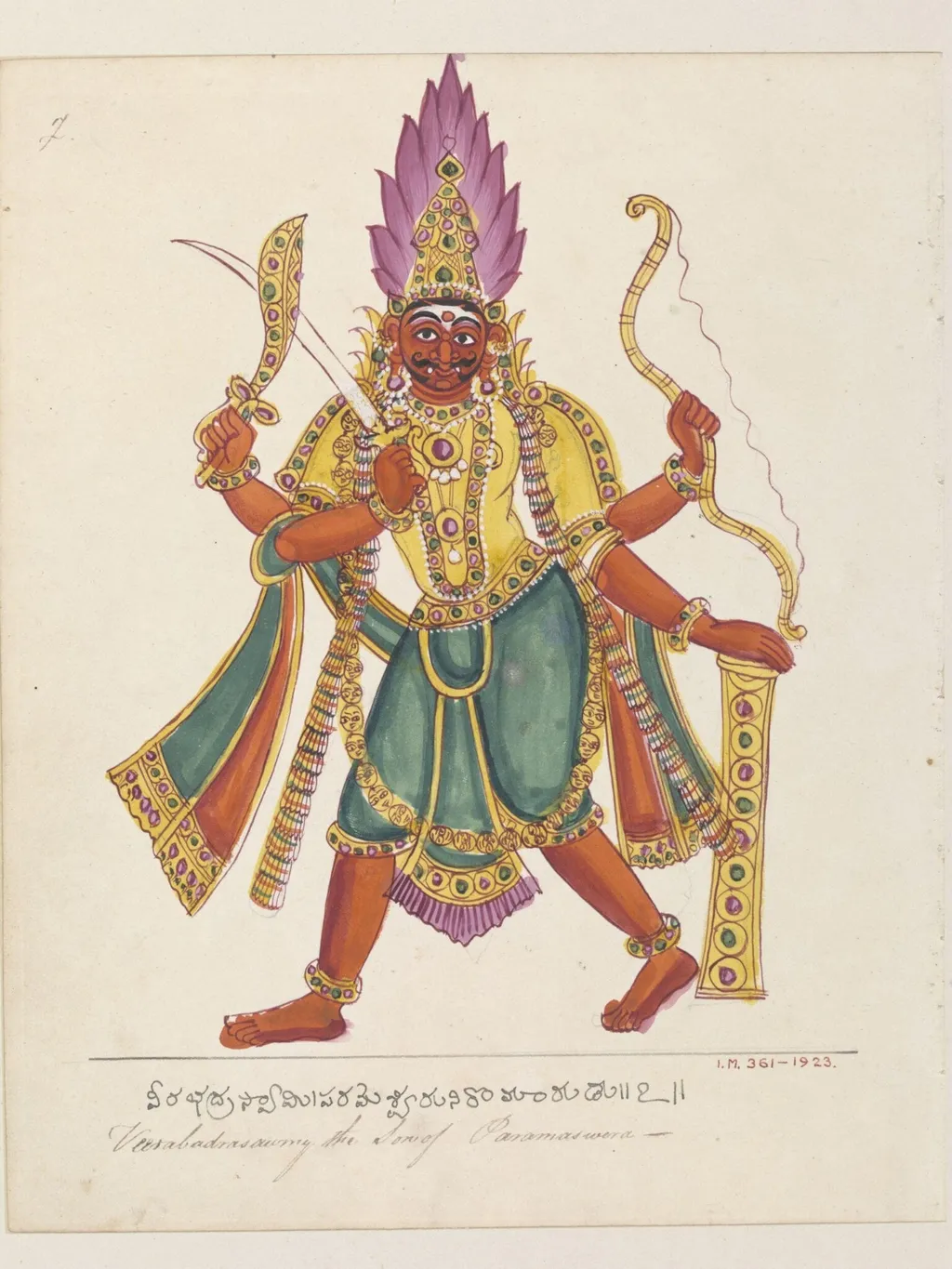
Virabhadra, the son of Shiva. is a paint painting by the Romanticist artist Unknown. It dates from 1820 and is held in the collection of the Victoria and Albert Museum. Virabhadra, the son of Shiva, is depicted in a dynamic, four-armed pose, advancing to the left.
About this work
Overview
Virabhadra, the son of Shiva, is depicted in a dynamic, four-armed pose, advancing to the left. The painting showcases the mythological warrior in vibrant attire and regalia, embodying fierce determination.
Subject & Meaning
As the son of Shiva, Virabhadra represents divine vengeance, created to avenge a wrong done to Shiva's wife. His portrayal conveys powerful, fierce attributes, aligning with his role in Hindu mythology.
Technique & Style
The artwork features bold, bright colors (scarlet, yellow, green) and intricate details, characteristic of early 19th-century Indian painting styles. The combination of ornate armor, flowing cloth, and symbolic elements (flames, feathered plume) enhances the figure's dramatic presence.
History & Provenance
The painting is dated to 1820 and attributed to an unknown artist, reflecting the anonymous nature of many traditional Indian artworks from this period.
Context
Virabhadra's depiction fits within the broader tradition of illustrating Hindu mythological figures in Indian art during the 19th century, emphasizing the blend of religious narrative and artistic expression.
Artist & collection

 Domestic Scene
 Giacomo and Cardinal Marco, investing Andrea, Abbot of San Zeno, with his Benefice
 The Nymph of Fontainebleau
 Portrait of a Woman
 Madonna and Child with Saints in the Enclosed Garden
 Venus and Minerva
 Family Group of Four on Sofa
 Wall painting from Room H of the Villa of P. Fannius Synistor at Boscoreale
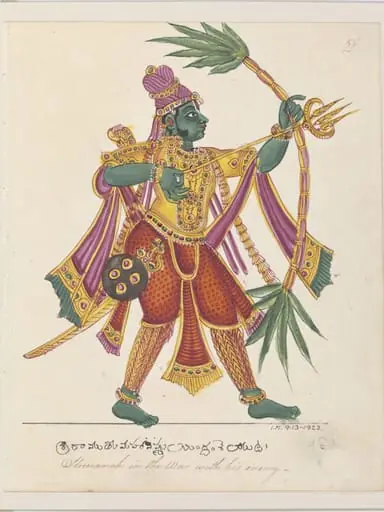 A green-skinned warrior
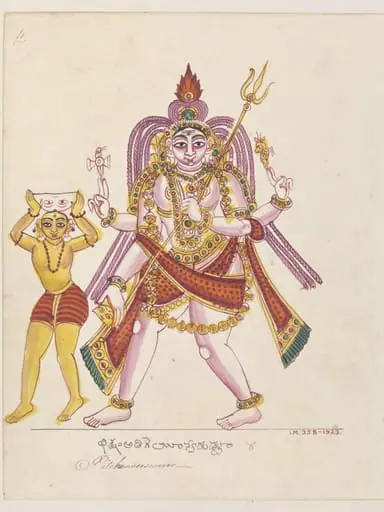 Shiva in his form as Bichandi or Bhikshatana
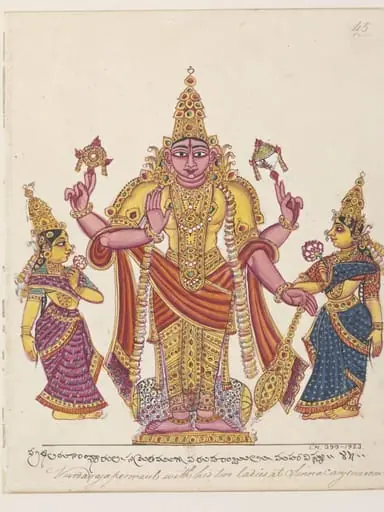 Vishnu as Varadarajaswami with his two 'shaktis', Shri Devi and Bhumi Devi.
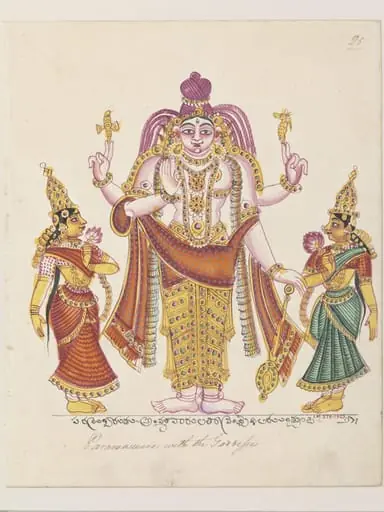 Harihara attended by Parvati and Lakshmi
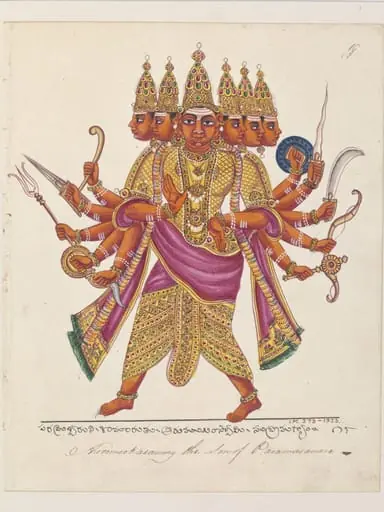 Subrahmanya, with six heads, in his form as Shanmukha (Arumukha)
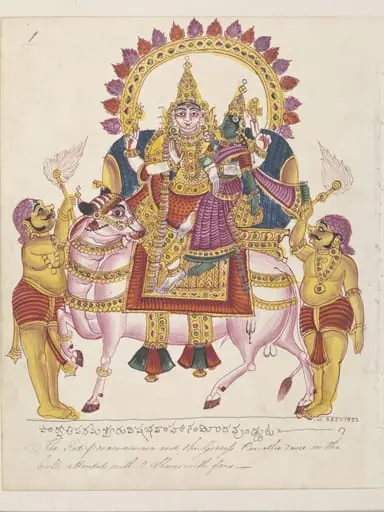 Shiva and Parvati on the bull Nandi
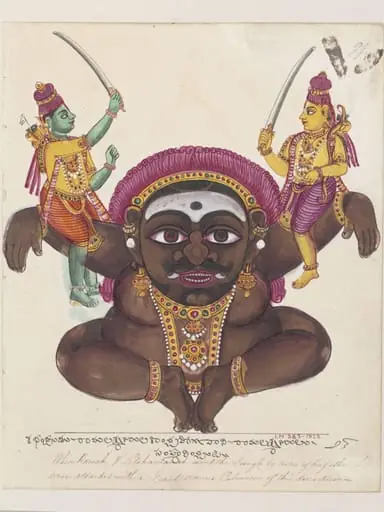 The rakshasa Kabandha supporting Rama and Lakshmana on his arms.