Artwork
Sugriva
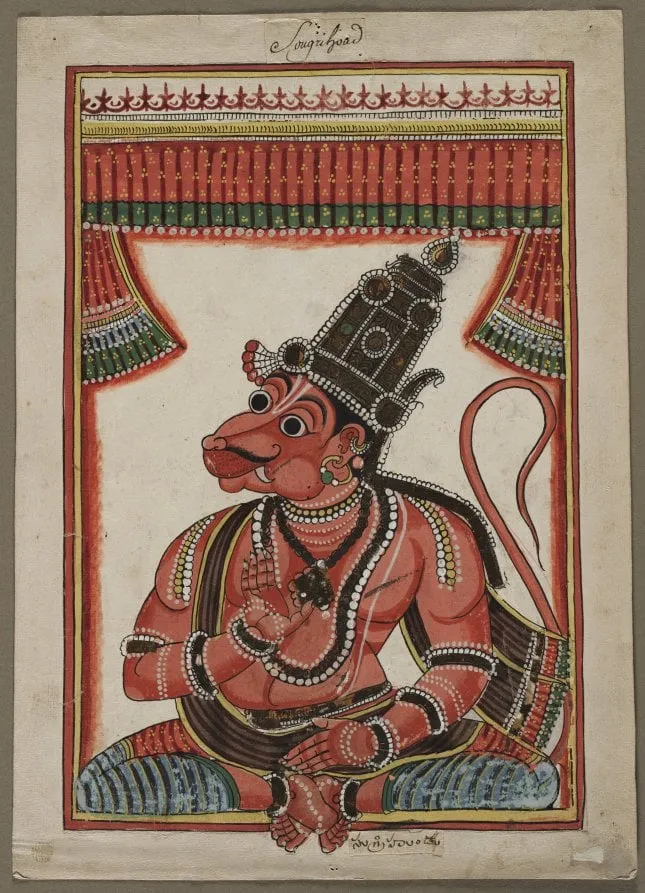
Sugriva is an unspecified painting by the Baroque artist Unknown. It dates from 1720 and is held in the collection of the Cleveland Museum of Art.
About this work
Overview
The work depicts Sugriva, the monkey king from the Ramayana, seated in a cross‑legged pose with his right hand raised in a reassuring gesture. He is crowned, adorned with jewelry, and framed by a modest gold halo, conveying his regal status within the narrative.
Subject & Meaning
Sugrava is shown offering comfort, a visual echo of his role as Rama’s loyal companion in the battle against Ravana. The raised hand conveys the traditional "fear not" sign, emphasizing his protective and supportive character in the epic tale.
Technique & Style
Executed by South Indian muralists, the painting combines the flat, decorative qualities of temple frescoes with a restrained palette. The gold halo and intricate jewelry reflect conventional iconography, while the simplified background highlights the figure’s gesture.
History & Provenance
Created in the 18th century for French Jesuit missionaries, the piece formed part of a series intended to teach European clergy about local deities and literary heroes. The artists adapted their temple mural techniques to produce images suitable for a foreign audience.
Context
During the 1700s, Jesuit missions in Andhra Pradesh sought visual aids to convey Hindu narratives to missionaries unfamiliar with Indian culture. This painting illustrates the reciprocal exchange in which Indian artists modified traditional forms to meet the educational needs of the French clergy.
Artist & collection

 Domestic Scene
 Giacomo and Cardinal Marco, investing Andrea, Abbot of San Zeno, with his Benefice
 The Nymph of Fontainebleau
 Portrait of a Woman
 Madonna and Child with Saints in the Enclosed Garden
 Venus and Minerva
 Family Group of Four on Sofa
 Wall painting from Room H of the Villa of P. Fannius Synistor at Boscoreale
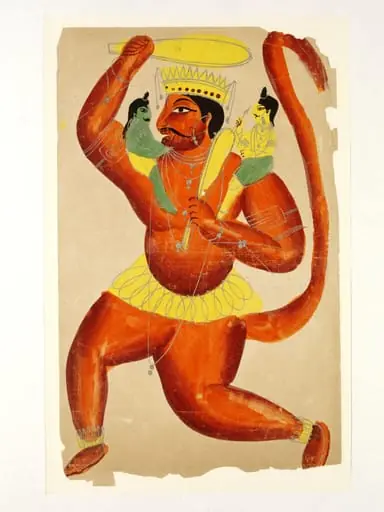 Mahabir. Rama and Lakshmana
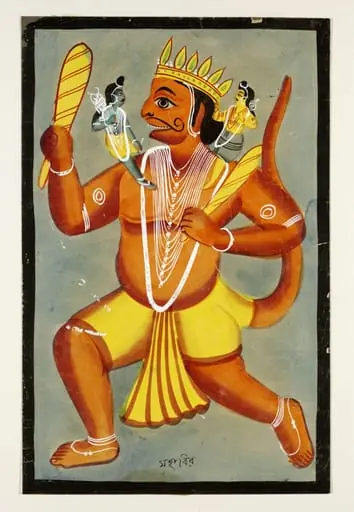 Mahabir, Rama and Lakshmana
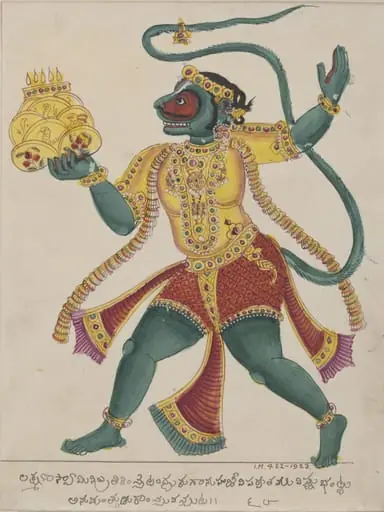 Hanuman
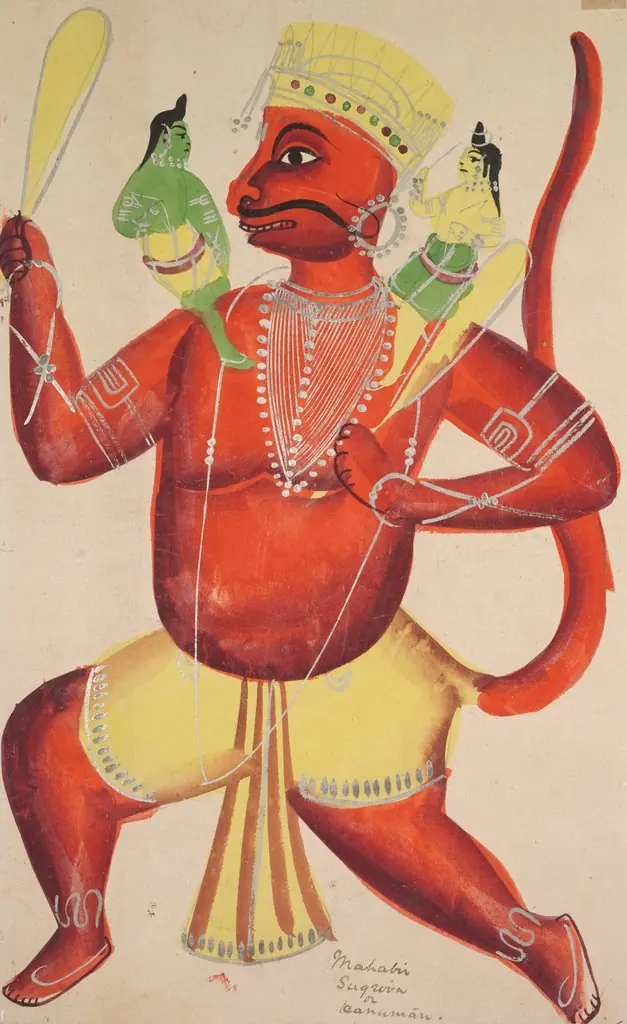 Hanuman with Rama and Lakshmana on his shoulders, from a Kalighat album
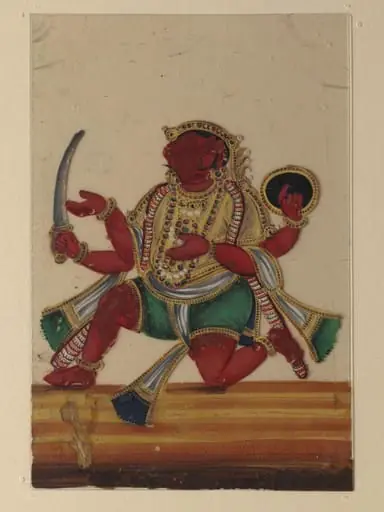 One of twelve paintings of Hindu deities.
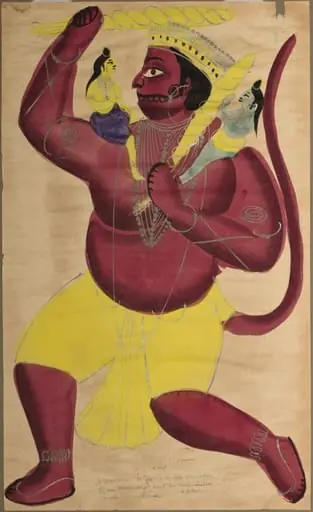 Hanuman
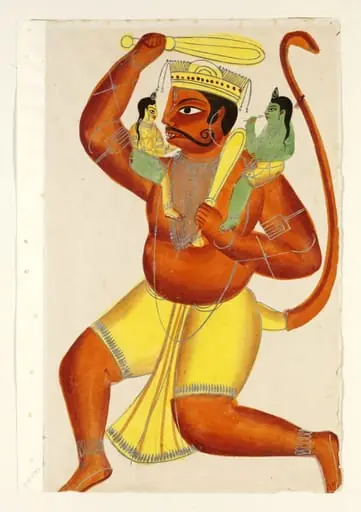 Hanuman, Rama and Lakshmana
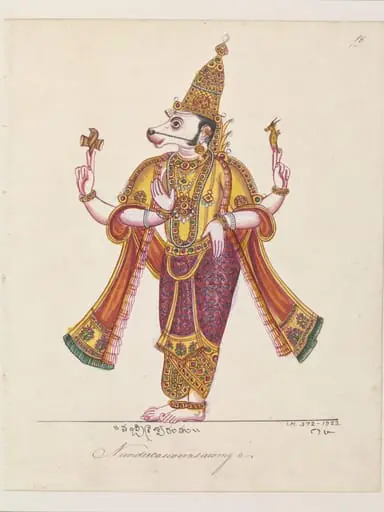 Nandikeshvara, the anthropomorphic form of Nandi and attendant of Shiva.
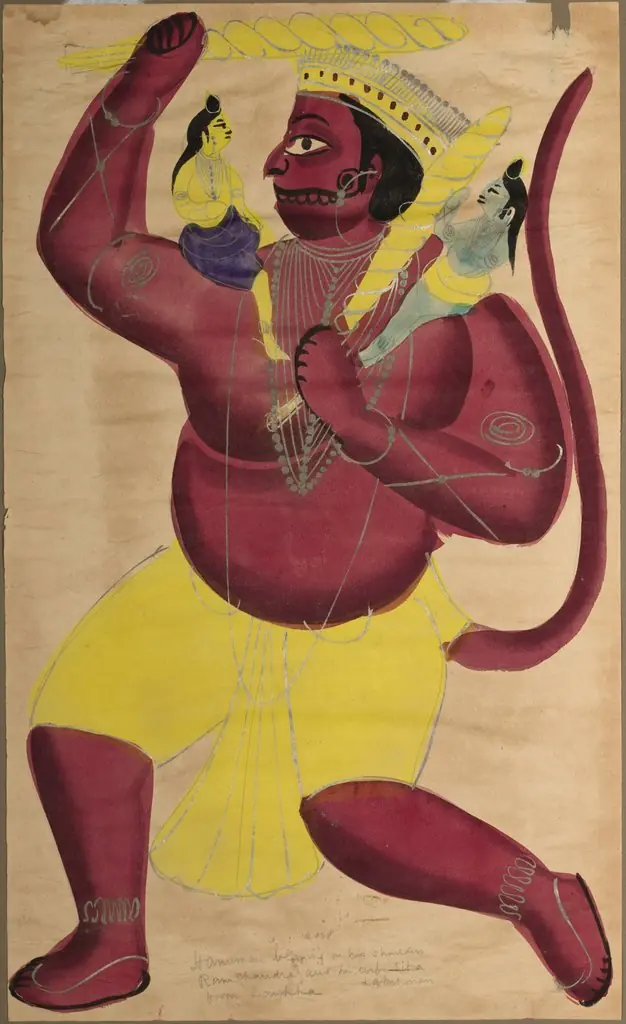 Hanuman
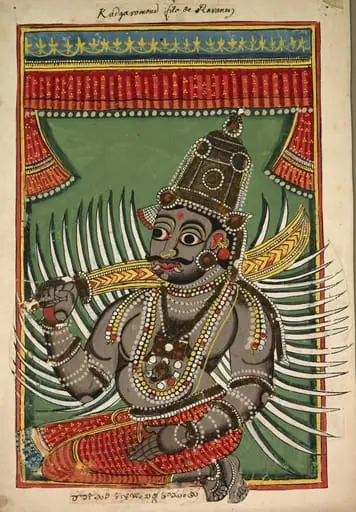 Khadgaroma, Son of Ravana